







































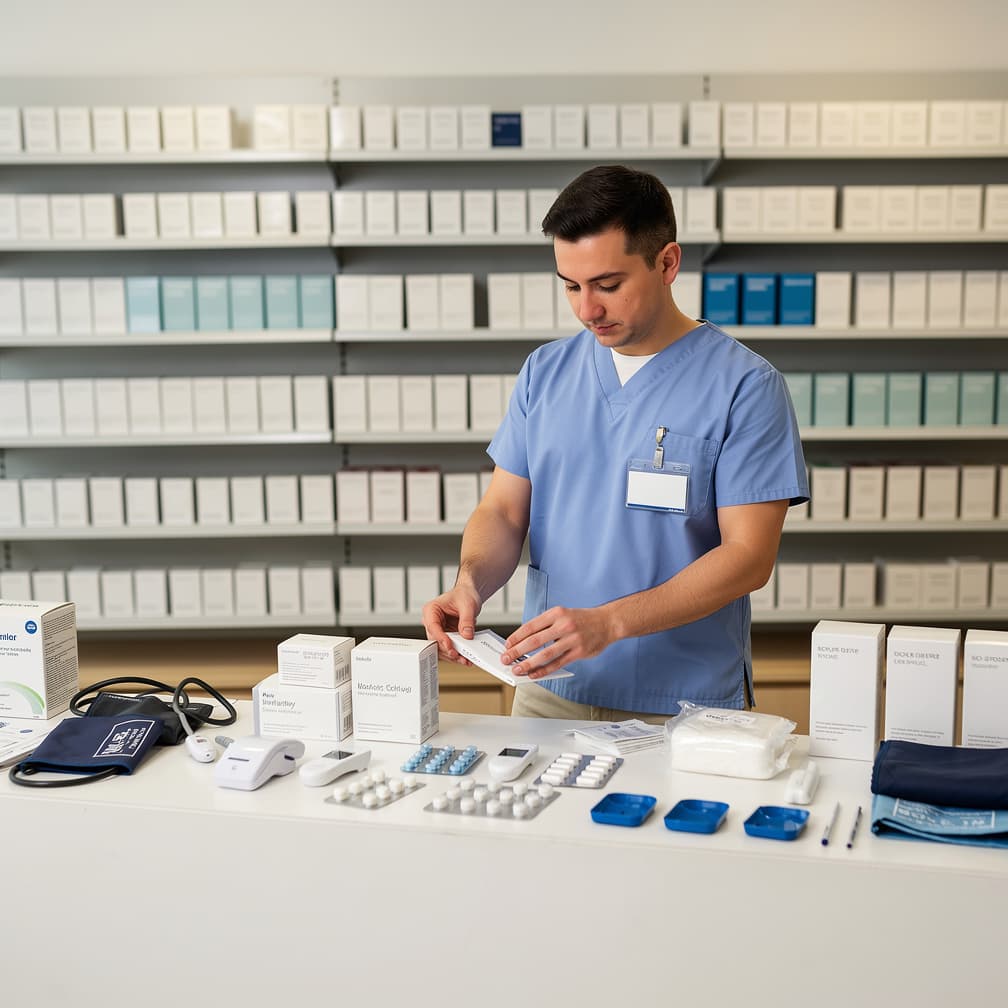

As a medical supplies store in Palm Coast, you hand strangers equipment and then watch them try it. That is the job. It is also a liability posture no online seller has, and it is the reason your insurance conversation starts with the sales floor rather than the balance sheet. Medical supplies store insurance in Palm Coast sits over a business that is part retail, part fitting room, part warehouse, and each part fails differently. Shelving falls. Stock walks out. A customer blames a device for an injury that happened at home. Sort your exposures into those buckets before you shop, because a quote you cannot explain to yourself is a quote you cannot compare.
What Makes Palm Coast Different
Cheaper rent does not buy cheaper coverage, because the exposure follows the inventory rather than the lease. A quiet market can still hold a showroom of lift chairs, oxygen concentrators, and a stockroom worth more than the fixtures. What a thin market does change is the cost of being closed, since your buyers have farther to go and longer to wait. That pushes the value of income protection up even where the property values are modest. It also means the deductible you choose is a real decision rather than a rounding error. A high deductible on a small storefront can eat a month of margin in one loss. Price two deductibles rather than one when you compare quotes in Florida. The right answer depends on cash on hand, not on what a Palm Coast neighbor chose.
Local Risk Factors in Palm Coast
A week of boarded windows costs a supplies store more than the plywood. Customers who need a walker or a monitor today will not wait for you to reopen, and the reorder you placed sits on a truck somewhere inland. Income terms decide what happens during that week, and they generally turn on physical damage rather than on a closed road, which is the detail owners miss. If a Palm Coast store shuts because an evacuation order went out, that is usually not the same thing as a covered loss. A business owners policy can help cover the property side and the income tail, subject to what triggers the payment. Read the trigger language before a Florida storm makes it urgent.
What Coverage Does a Medical Supplies Store in Palm Coast Need?
General Liability
Landlords, shopping centers, and referral partners ask for this one by name before they hand over keys or send you customers. It is the line for third-party injury and property damage: the customer who goes down in an aisle, the rollator that clips a display and hurts a bystander. It typically leaves out injuries to your own staff and damage to property you already own.
Example: A customer leans on a rollator to test it, the display base shifts, and she lands on the tile; general liability may respond to the injury claim and the defense that follows it.
Commercial Property
Flood sits outside this form and gets priced on its own, which is the first thing worth knowing. Inside it is the rest of your physical world: shelving, display fixtures, the counter, and a stockroom of braces, monitors, and powered chairs. Fire, storm damage, vandalism, and theft are the usual triggers, subject to the conditions your policy attaches.
Example: Wind lifts part of the roof over a stockroom and a night of rain reaches forty cartons of dressings; commercial property could pick up the stock and the repairs, depending on your terms.
Professional Liability
Where General Liability answers for the fall in the aisle, this line answers for what was said before it. Fitting a brace, sizing a walker, or explaining how a monitor should be used is advice, and advice gets blamed later. It is meant for allegations that a recommendation was wrong or unsuitable, and it generally does not reach physical damage.
Example: An adult son says the wrong brace was sold for his father's shoulder and the fall afterward was your fault; professional liability might carry the defense even where the claim goes nowhere.
Business Owners Policy
A Business Owners Policy is what most small storefronts end up buying: liability and property in one form, usually with income terms attached. For a supplies store that means the aisle, the stockroom, and the weeks after a fire all in a single place. Packages differ between carriers, so what one includes another may leave out, and rising water is generally outside every version.
Example: A fire two units down closes your Palm Coast store for six weeks; a business owners policy might help cover the smoke-damaged stock and, subject to its terms, the income lost while the doors stayed shut.
How Much Does Medical Supplies Store Insurance Cost in Palm Coast?
Medical Supplies Store Insurance is a bundle of separate policies, priced separately. The ranges below are typical figures for Palm Coast for each line; a quote prices each one against your own operations.
| Coverage | Typical range | What moves your price |
|---|---|---|
| General Liability Insurance | $75 - $220 per month | Industry and risk classification, annual revenue, number of employees |
| Commercial Property Insurance | $150 - $480 per month | Building value and construction type, roof age and condition, fire protection class |
| Professional Liability Insurance | $95 - $330 per month | The services you actually perform, annual revenue or billed fees, limit and retention selected |
| Business Owners Policy Insurance | $170 - $470 per month | Annual revenue and industry class, building and contents values, square footage and building age |
Prices shown are general estimates, not guaranteed rates or quotes. Your actual premium will depend on the insurer, coverage selected, business details, location, claims history, and other underwriting factors. Learn about our pricing methodology.
What Are the Insurance Requirements for a Medical Supplies Store in Palm Coast?
Workers' comp is generally required once you have 4 or more employees. Florida generally requires employers to carry workers' compensation at that point. Common exemptions include sole proprietors, partners, and corporate officers (up to 4). Confirm current thresholds with your state's workers' compensation agency before you hire.
Flood damage is typically excluded from standard policies. Standard commercial property and builders-risk-type policies typically exclude flood. Given Palm Coast's coastal flood exposure, a separate flood policy is worth pricing; FEMA's National Flood Insurance Program is the usual starting point.
Where to verify licensing and coverage rules. The Florida Office of Insurance Regulation publishes consumer guidance and current insurance requirements for Florida businesses. When a contract or lease demands specific wording, the Florida Office of Insurance Regulation's guidance is the authoritative place to check.
Get Your Medical Supplies Store Quote in Palm Coast
Compare rates from multiple carriers. Free quotes, no obligation.
Operating in Palm Coast
- Bulk contracts arrive with insurance clauses written for suppliers ten times your size. The limit in that clause is a cost of the account, and participating carriers in Florida will not all agree to write it.
- Claims history follows the business rather than the storefront. Moving down the road or changing the sign does not reset what an underwriter in Florida sees at your next renewal.
- General Liability limits get tested by defense costs before anyone decides who was at fault, which is why the number printed on your certificate matters more than the incident that triggered it.
- A shopping center office can sit on your keys until a current certificate reaches their file, and a policy that lapsed quietly in Palm Coast turns a move-in week into a move-in month.
How to Buy: Advice for Palm Coast Owners
Write one honest paragraph about what happens between your counter and a customer's home. Do you sell a boxed device, or do you measure, fit, adjust, and explain how it is used? The second version carries an exposure the first does not, because advice can be blamed later even when the equipment was fine. Professional Liability is the line built for that allegation, and it typically sits apart from the one answering for a fall in the showroom. Get both quoted rather than assuming a single policy handles the whole picture, and ask each carrier to say in writing which complaints belong where. The Florida Office of Insurance Regulation publishes consumer guidance on coverage terms if a definition is unclear. Then compare participating carriers in Florida on that same paragraph, which CPK is built to make painless.
FAQ
Medical Supplies Store Insurance in Palm Coast: FAQ
General Liability is the line built for a third-party injury on your floor, and it typically handles defense costs as well as any settlement. Whether it responds depends on the facts and on your policy wording, so nothing here is automatic. The bigger question is the limit, because defense costs can sit inside it, which means legal bills eat the money meant for the claim itself. Ask each quote where defense sits.
That allegation is about advice and suitability rather than a fall in the store, and it usually points at Professional Liability rather than the line answering for the aisle. Response depends on wording, on whether you fitted or only sold the item, and on what was said at the counter. Keep notes of what a customer was told and what they signed. Documentation decides more of these than policy language does.
Yes, and it is common. Being listed as an additional insured is an endorsement your carrier has to agree to, not a note you write on a form yourself. Availability and cost vary by carrier and by the wording the landlord demands, so ask before you sign the lease rather than after. If a property manager in Palm Coast rejects your certificate, it is usually the wording that failed, not the coverage.
One incident draws on the per-occurrence limit, which is the ceiling for a single claim. The aggregate is a second ceiling, and every claim you file in the policy term draws against it. A store with steady walk-in traffic can produce more than one injury claim in a year, and each one draws on the same annual pot. Two slips and a product complaint can quietly use up an aggregate that looked generous the day you bought it. Ask what happens to the limit after the first claim.
Stolen stock is a property question rather than a liability one, and Commercial Property is where the answer usually lives. Whether it responds can depend on conditions written into the policy: locks, alarms, records showing what was on the shelf, and a reporting window. Small high-value items leaving in a bag during business hours are treated differently from a break-in. Ask each carrier in Florida what evidence they expect before you need to produce it.
Generally not. Flood usually sits outside a standard property form and gets priced as its own decision, which surprises owners whose stockroom sits at ground level. Water from a burst pipe inside the building is a different matter and is often treated as a covered event, subject to your wording. The two get confused constantly. Ask which one your quote is describing, in those exact words.
Sources
- 1.Florida Office of Insurance Regulation(Florida Office of Insurance Regulation publishes consumer guidance for insurance buyers.)
- 2.FEMA / FloodSmart(Flood coverage is typically purchased separately; FEMA administers the National Flood Insurance Program.)


