







































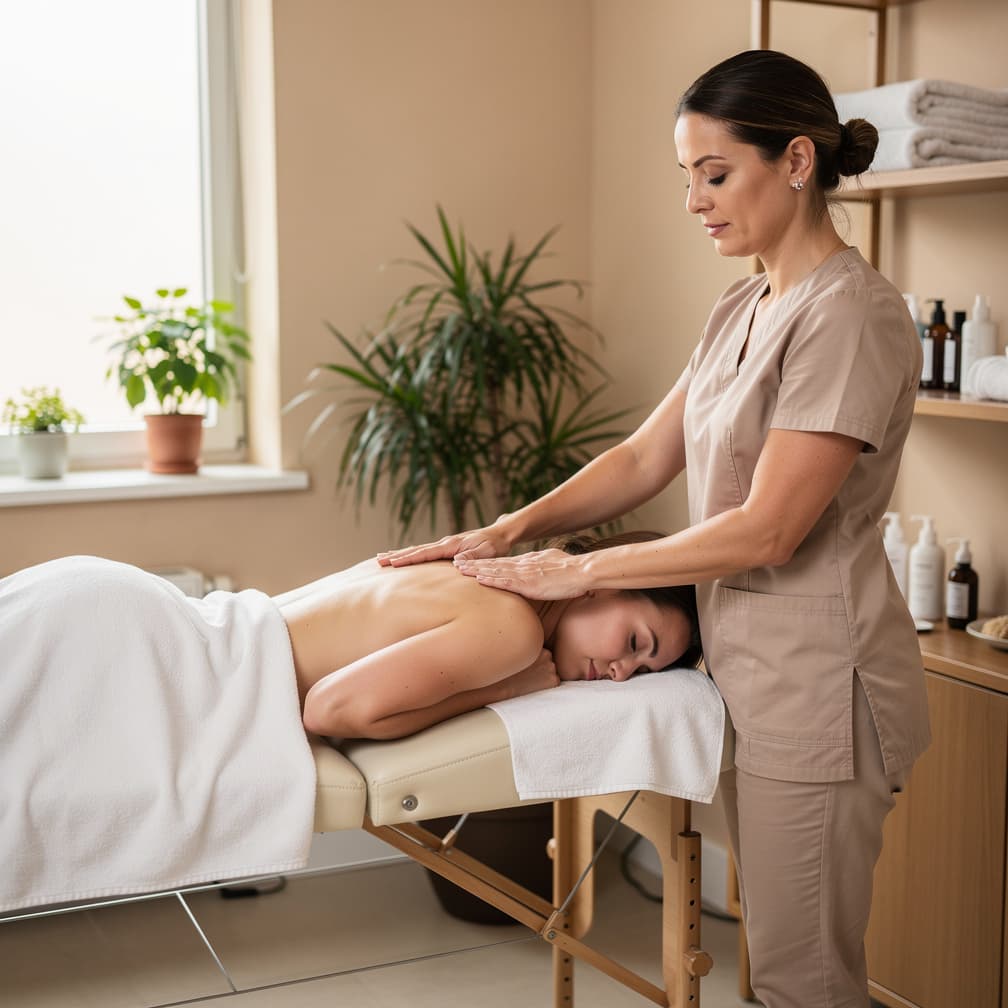

As a massage business in St. Petersburg, you carry a risk most storefronts never think about: your work is pressure applied to somebody else's body, and the results get reported by the person who received them. Massage business insurance in St. Petersburg starts there, with the claim nobody can photograph, inspect, or measure. The rest is more familiar. Wet floors, borrowed rooms, stolen equipment, a fire in a neighbouring unit that shuts your suite for a month. Two of those have obvious price tags. The other two do not, and those are the ones that end careers. Intake forms, session notes, and a client's own words written down at the time are what separate a defensible complaint from an expensive one.
What Makes St. Petersburg Different
Property managers in large buildings tend to run one insurance clause across every tenant they sign. The coffee shop downstairs and your treatment suite get handed the same limits and the same wording. That is convenient for the building and clumsy for you, since your risks share almost nothing with theirs. Pinellas County has about 32,000 businesses, so a standard clause is the only way a large landlord can run a portfolio at all. You can ask for the wording to be read against what you actually do, and occasionally it moves. More often it does not, and the clause becomes your minimum whether or not it fits a massage practice. The mistake is treating that minimum as an answer rather than the opening bid on a real decision. Buy to the clause and you have satisfied a landlord, not a client with a lawyer.
Local Risk Factors in St. Petersburg
Hurricane season closes a studio before the storm arrives, because clients cancel a massage the moment a forecast turns serious. That lost week is revenue rather than damage, and property forms react to damage. What the wind does to your suite afterward is the covered question: glass out of a window, water through a roof, and a room full of tables and linens that absorbed both. Commercial Property is generally where that sits, subject to a deductible that may be written as a percentage in coastal Florida counties rather than a flat figure. Ask which version applies to a St. Petersburg address, because the two produce very different bills.
What Coverage Does a Massage Business in St. Petersburg Need?
Professional Liability
A client who says the session left them in more pain than they arrived with is making a claim about your judgement rather than your floor. Professional Liability is the line generally aimed at that: the alleged injury, the skin reaction, the pressure that went further than it should have. It typically does nothing about a slip in the hallway.
Example: Two days after a deep tissue session a client sees a doctor about a strained shoulder and sends a demand letter naming your studio; Professional Liability may respond to the claim and to the defense that follows it.
General Liability
Wet floors, tight hallways, and clients moving slowly after a treatment produce the ordinary injuries that have nothing to do with your hands. General Liability is what landlords and hosts want proof of, and it can help cover a client's fall on your premises or a coat ruined in your room. Complaints about the treatment itself sit elsewhere.
Example: A client stands up too quickly, catches a table leg, and breaks a wrist on a St. Petersburg reception floor; general liability limits are typically what the resulting claim gets argued against.
Commercial Property
Tables, warmers, linens, oil stock, cabinetry, and the leasehold work you paid for are the studio, and all of it sits inside a few small rooms. Commercial Property is generally built around fire, storm, theft, and vandalism damage to those things, subject to your deductible. Rising water is usually excluded and priced as a separate decision.
Example: A fire in the unit next door leaves four massage tables and every set of linens smoke-damaged; a commercial property claim could cover replacing the contents once their values are documented.
Business Owners Policy
Buying the property side and the premises liability side apart usually costs more than buying them together, which is why a Business Owners Policy is the common starting structure for a studio with its own suite. It often adds interruption terms for the weeks a covered loss keeps rooms closed. The treatment complaint is usually not inside it.
Example: A storm opens the roof above a St. Petersburg studio and the rooms sit closed for three weeks; a business owners policy might answer for the damaged contents and for part of the income lost while everything dries.
How Much Does Massage Business Insurance Cost in St. Petersburg?
Massage Business Insurance is a bundle of separate policies, priced separately. The ranges below are typical figures for St. Petersburg for each line; a quote prices each one against your own operations.
| Coverage | Typical range | What moves your price |
|---|---|---|
| Professional Liability Insurance | $50 - $170 per month | The services you actually perform, annual revenue or billed fees, limit and retention selected |
| General Liability Insurance | $50 - $170 per month | Industry and risk classification, annual revenue, number of employees |
| Commercial Property Insurance | $80 - $280 per month | Building value and construction type, roof age and condition, fire protection class |
| Business Owners Policy Insurance | $95 - $310 per month | Annual revenue and industry class, building and contents values, square footage and building age |
Prices shown are general estimates, not guaranteed rates or quotes. Your actual premium will depend on the insurer, coverage selected, business details, location, claims history, and other underwriting factors. Learn about our pricing methodology.
What Are the Insurance Requirements for a Massage Business in St. Petersburg?
Workers' comp is generally required once you have 4 or more employees. Florida generally requires employers to carry workers' compensation at that point. Common exemptions include sole proprietors, partners, and corporate officers (up to 4). Confirm current thresholds with your state's workers' compensation agency before you hire.
Flood damage is typically excluded from standard policies. Standard commercial property and builders-risk-type policies typically exclude flood. Given St. Petersburg's coastal flood exposure, a separate flood policy is worth pricing; FEMA's National Flood Insurance Program is the usual starting point.
Where to verify licensing and coverage rules. The Florida Office of Insurance Regulation publishes consumer guidance and current insurance requirements for Florida businesses. When a contract or lease demands specific wording, the Florida Office of Insurance Regulation's guidance is the authoritative place to check.
Get Your Massage Business Quote in St. Petersburg
Compare rates from multiple carriers. Free quotes, no obligation.
Operating in St. Petersburg
- Hot stone warmers, hydrocollators, and wax pots all run hot inside a small room, and a burn complaint arrives the way an oil rash does: quietly, three days later.
- Linens cost the least of anything in the suite and get ruined by water first, and a claim gets trimmed to whatever you can prove you owned when an adjuster in Florida asks.
- Your tables live where a flood starts, because everything in a treatment room sits at floor level and almost nothing in it is stored on a shelf.
- Cancellations from a storm week in St. Petersburg are lost revenue rather than a property loss, and no form treats an empty schedule as damage on its own.
How to Buy: Advice for St. Petersburg Owners
Deductibles are the term owners skim and later regret. A high one reads well on a quote and badly on the morning a pipe upstairs lets go and every linen in the suite is soaked. Ask what each deductible option does to the monthly figure, then ask whether a quiet month could genuinely fund it. Commercial Property deductibles and liability deductibles are often different numbers, and some forms apply a percentage instead of a flat amount. The percentage version is the one that surprises people. A Business Owners Policy bundles both sides into one contract, and the deductibles inside it still behave separately. The Florida Office of Insurance Regulation publishes consumer guidance on how deductibles are applied under commercial property forms. Take two or three options to several participating carriers and let the St. Petersburg comparison turn on your cash position rather than the sticker.
FAQ
Massage Business Insurance in St. Petersburg: FAQ
Underwriters read a claim's resolution as closely as its allegation, so a complaint that was documented and handled cleanly reads very differently from one with no paper behind it. Nothing has to have been paid out for a complaint to show up on a submission. Keep intake forms and session notes, because they are what make a resolved complaint look resolved to somebody reading the file years later.
Not automatically, and this is where studios get caught. Whoever performed the session tends to be named in a complaint alongside the business, and a form may or may not reach an independent contractor working under your name. Ask the question in writing, list the contractors on the application, and ask each of them what they hold. Participating carriers in Florida treat that exposure differently, so the answer moves the price.
The occurrence figure is what a single client's claim can reach. The aggregate is what an entire policy year can spend across every claim combined. A studio with a full schedule works through an aggregate faster, and once it is exhausted the next complaint meets nothing. Contracts often specify both numbers for exactly that reason. Ask whether defense costs come out of those limits, since that changes what the numbers are worth.
Timing turns on whether the form is written on a claims-made or an occurrence basis. A claims-made policy generally responds to claims reported while it is in force, which is why a lapse can cost you long after you stopped working. Prior acts wording controls how far back it looks. Ask for that paragraph in writing, because two quotes with identical limits can answer this in opposite directions.
Landlords commonly ask for proof before handing over keys, and the insurance article in a commercial lease usually names the limits and endorsements a tenant has to carry. That puts the shopping before the signing. Ask for that section in writing early, because it quietly decides part of what you buy. A certificate for a St. Petersburg suite is quick to issue once a policy exists; the policy is the part that takes time.
Room count, revenue, staff hours, the services on your menu, and your complaint history do most of the work. The address matters less than owners expect. Anything involving heat, suction, or heavy pressure moves the number, and so does a claim from three years ago that nobody ever paid out. A quote built without those questions is a placeholder. Participating carriers in Florida weigh the same facts differently, which is why one quote settles nothing.
Sources
- 1.U.S. Census Bureau, County Business Patterns (2022), Pinellas County(Pinellas County has about 32,000 business establishments.)
- 2.Florida Office of Insurance Regulation(Florida Office of Insurance Regulation publishes consumer guidance for insurance buyers.)
- 3.FEMA / FloodSmart(Flood coverage is typically purchased separately; FEMA administers the National Flood Insurance Program.)


