







































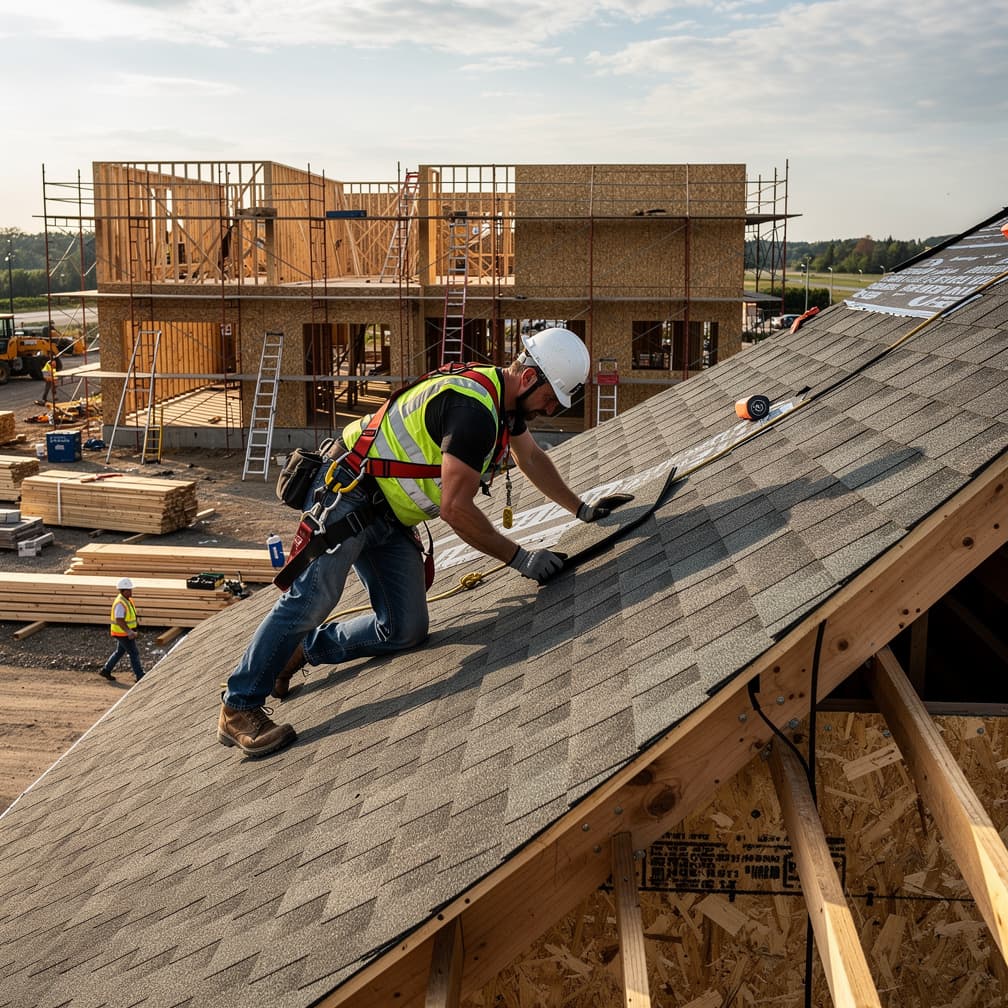

As a roofing contractor in St. Petersburg, your commercial work arrives wrapped in a contract template written by somebody who has never been on a roof. It names additional insureds, primary and noncontributory wording, and a waiver of subrogation, and it wants all of that on one certificate. Roofing insurance in St. Petersburg either carries those endorsements or it does not, and you cannot promise them at signing and add them afterward without a carrier agreeing. Dense markets run on that paper because the parties are layered: an owner, a manager, a general contractor, and two subs on one building. A single dropped bundle can pull every one of them into the same claim. Get the requirements page in front of the quote, not after it.
What Makes St. Petersburg Different
Your certificate holder list gets long in a busy market, and long lists are where clerical mistakes turn into contract breaches. Every commercial job adds names, and every name expects to hear about it if the policy changes or lapses. Compliance software checks those dates without a human involved, so an unnoticed gap flags you as noncompliant automatically. A crew in St. Petersburg can be turned away at a gate over a date a broker could have fixed in an hour. Commercial specs escalate as well: the same owner may want higher limits on the tower than on the small retail building. Buying to the highest spec you regularly meet usually costs less than buying twice in one year. Ask a carrier in Florida how mid-term changes and certificate reissues get handled. Administration is the part of this trade nobody bids for.
Local Risk Factors in St. Petersburg
A shredded job trailer and a yard of scattered material is how a storm greets a roofing contractor, and the customers calling afterward do not care. Wind and water can be treated very differently on the same form, and the split between them is where these claims get argued for months. Inland Marine may answer for equipment that travels, though a policy can carry separate wind deductibles or exclusions in coastal parts of Florida. Getting back to work takes trucks, gear, and people, and a storm can take all three in one night. Ask what your form says about wind before St. Petersburg is inside a cone, not after.
What Coverage Does a Roofing in St. Petersburg Need?
General Liability
Owners, general contractors, and permit desks ask for this line before any other, and roofing contracts usually name it by limit. It can respond to third-party bodily injury and property damage arising out of your work: a dumpster cracking a driveway, a bundle crushing a fence, water finding a customer's ceiling. Redoing your own installed roof is typically excluded as workmanship.
Example: A ladder tips against a bay window during a tear-off and the glass goes through onto a couch. The homeowner's repair bill, and the demand letter behind it, is the kind of claim this line is meant to take on.
Workers Compensation
A fall from a roof, a ladder, or scaffolding is the loss this line exists for. Medical bills, wage replacement, and the employer liability side of an injury claim generally run through it, and a general contractor in St. Petersburg can demand proof before your crew sets foot on the site. Subcontractors without their own policy typically get counted onto your payroll at audit.
Example: A helper misses the second rung coming off a wet roof and breaks a wrist. The emergency room visit and the weeks he cannot swing a hammer are what this coverage is intended to absorb.
Commercial Auto
Personal auto policies commonly step aside once a truck is titled to the business, hauls debris, or tows a loaded trailer, and that gap is where roofers get caught. This line is built for company trucks, trailers, and the drive between jobs, and it may answer for accidents, some theft, and vehicle damage. Rates ride on the vehicle list and the records of whoever drives.
Example: A trailer of tear-off waste comes loose on a turn and takes out a parked car. The other owner's repair, plus any injury claim riding behind it, is what a commercial vehicle policy could be called on to settle.
Tools & Equipment (Inland Marine)
Compressors, nail guns, hoists, ladders, and the trailer they ride in are the property this line follows from job to job. It can help cover theft or damage while gear is in transit or parked at a site, which a fixed property policy generally does not reach. Wear, rust, and mechanical breakdown stay outside it, and theft from an unlocked truck is a common dispute.
Example: A trailer strapped up outside a job site overnight is gone by morning, along with two compressors and a generator. With serial numbers and values already scheduled, that theft is the sort of loss this coverage may take up.
Commercial Umbrella
Underlying limits look adequate right up until a fall on a commercial roof pulls four parties and their lawyers into one file. Sitting above General Liability and the vehicle policy, this line can extend limits once those beneath it are exhausted, and some contracts require it outright. It follows the coverage below, so a loss excluded there is generally excluded here too.
Example: A homeowner is hurt when scaffolding gives way, and the settlement plus defense cost runs past the limit underneath. The layer above is where the remainder of that claim might land.
How Much Does Roofing Insurance Cost in St. Petersburg?
Roofing Insurance is a bundle of separate policies, priced separately. The ranges below are typical figures for St. Petersburg for each line, except workers compensation, which is rated per $100 of payroll; a quote prices each one against your own operations.
| Coverage | Typical range | What moves your price |
|---|---|---|
| General Liability Insurance | $550 - $1,750 per month | Industry and risk classification, annual revenue, number of employees |
| Workers Compensation Insurance | $0.75 - $2.74 per $100 of payroll | Employee classification codes, total annual payroll, experience modification rate |
| Commercial Auto Insurance | $470 - $1,500 per month | Fleet size and vehicle types, driver records and experience, coverage limits and deductibles |
| Inland Marine Insurance | $70 - $310 per month | Total insured value of the scheduled property, type and age of the equipment, where it is stored and how far it travels |
| Commercial Umbrella Insurance | $180 - $675 per month | Umbrella limit requested, limits carried on the underlying policies, loss history on those underlying policies |
Prices shown are general estimates, not guaranteed rates or quotes. Your actual premium will depend on the insurer, coverage selected, business details, location, claims history, and other underwriting factors. Learn about our pricing methodology.
What Are the Insurance Requirements for a Roofing in St. Petersburg?
Workers' comp is generally required once you have 4 or more employees. Florida generally requires employers to carry workers' compensation at that point. Common exemptions include sole proprietors, partners, and corporate officers (up to 4). Confirm current thresholds with your state's workers' compensation agency before you hire.
State auto liability minimums apply to business vehicles. Florida's minimum auto liability limits are $0/$0/$10,000 (bodily injury per person / per accident / property damage). Contracts and lenders often require more than the state floor.
Where to verify licensing and coverage rules. The Florida Office of Insurance Regulation publishes consumer guidance and current insurance requirements for Florida businesses. When a contract or lease demands specific wording, the Florida Office of Insurance Regulation's guidance is the authoritative place to check.
Get Your Roofing Quote in St. Petersburg
Compare rates from multiple carriers. Free quotes, no obligation.
Operating in St. Petersburg
- A commercial site in St. Petersburg can turn your crew away at the gate over an expired certificate date, and the hours your people spend standing around are payroll you already owe.
- Subs who cannot produce their own certificate become your payroll at audit, charged at your class rate. Collecting that paper before the first day is the least glamorous money you will ever save.
- Trailers loaded with compressors and nail guns sit at a job overnight because nobody wants to unload twice. The gear that disappears is rarely insured the way its owner assumed it was.
- Ladders get set on soft ground, on a slope, or on a deck board that shifts. That one decision moves more workers comp dollars in roofing than any safety poster ever will.
How to Buy: Advice for St. Petersburg Owners
Subcontractors are the fastest route to a surprise bill in this trade. If a sub cannot produce their own certificate, an auditor will typically add their pay to your payroll at your class rate. That one mechanic has ended more good years than any claim has. Collect certificates before the first day, hold them for the whole policy term, and check expiration dates at renewal. Workers Compensation and General Liability both feel that decision, since an uninsured sub looks like an employee to one and an exposure to the other. Check the Florida Office of Insurance Regulation's guidance before deciding how you classify the people who work for you. Then compare quotes from participating carriers in Florida, asking each one what proof of subcontractor coverage it expects you to keep.
FAQ
Roofing Insurance in St. Petersburg: FAQ
Payroll split between office and field, gross receipts, a vehicle list with drivers, an equipment list with values, and your loss runs. Underwriters also ask about steep-slope percentage, working height, torch operations, and how much you subcontract. Vague estimates get priced as worst-case estimates. Bring the identical packet to every participating carrier in Florida so the quotes are actually comparable.
Standard property forms generally exclude flood, and that gap follows shingle bundles, underlayment, and equipment sitting in a yard or a trailer. Flood coverage is written and priced separately, often through the federal program. Inland Marine might respond to some water events for gear in transit, though rising water is usually carved out of it. Read the form on this point before a wet season, not during one.
Loss runs follow the business for roughly five years, and underwriters read frequency as a management issue rather than as bad luck. Several small water claims can cost more at renewal than one serious file does. An open claim is worse still, because the reserve is a guess that sits against you until it closes. Ask your carrier to close whatever is genuinely finished before you shop.
Cancelling between seasons is how contractors end up with a gap on a loss run, and a gap is a question at every future renewal. Certificate holders check dates year round, and a lapse can drop you off a vendor list you spent years getting onto. Trucks and stored equipment stay exposed while the crew is home. Coverage in Florida can often be adjusted rather than dropped.
Cost comes out of payroll, the vehicles on your schedule, how much steep-slope work you take, and your claim history. Workers Compensation is usually the largest piece for a crew-based roofer, and it is rated per hundred dollars of payroll rather than as a flat monthly charge. The cost table further down this page lists what each line runs. Two roofers with the same truck can land far apart.
Usually not the roof itself. Liability forms generally treat redoing your own work as a business cost rather than an accident, which is the workmanship exclusion doing exactly what it was written to do. Damage the leak causes to the rest of the building, the ceilings, insulation, and flooring, is where General Liability might answer instead. Read that exclusion in your Florida policy before you assume either way.
Sources
- 1.Florida Office of Insurance Regulation(Florida Office of Insurance Regulation publishes consumer guidance for insurance buyers.)


