







































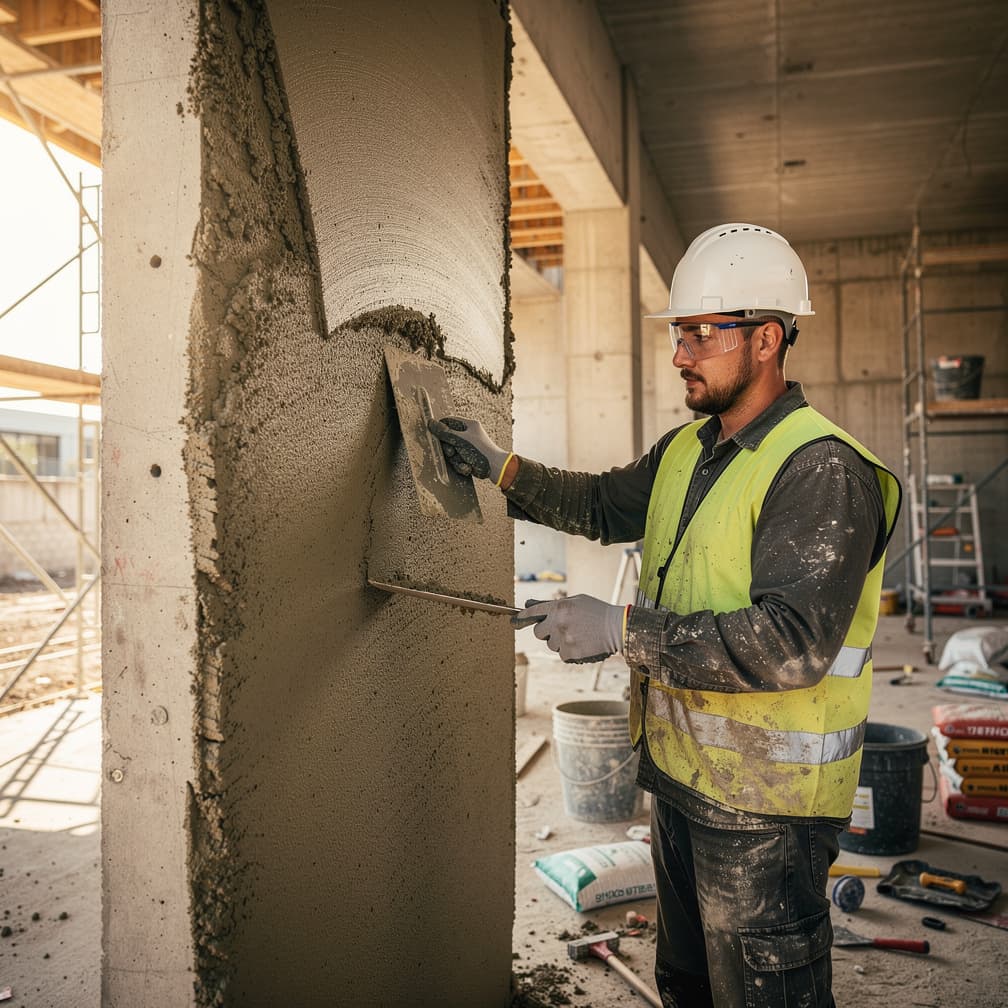

Overspray drifts. A hopper gun on a windy elevation can freckle a neighbor's siding, a client's windows, and two cars parked at the curb, and none of that mess is your own work to fix. Those third-party repairs are the everyday claim in this trade, and they get settled while your crew is still on the wall. The line that matters for plastering and stucco contractor insurance in Tampa sits right there: damage to somebody else's property is one conversation, and tearing out your own cracked finish coat is a different one your policy might not join. A subcontract you signed for a builder in Hillsborough County probably set your limits already, so read it before you shop. Then compare what participating carriers want to see, starting with payroll and your loss runs.
What Makes Tampa Different
Payroll grows faster than revenue when the market keeps your crews on big commercial elevations all season. Workers' Compensation rides on payroll, which makes it the line that moves most as a schedule fills up. Tall work, long runs, and heavy scaffold hours all land in that number without anybody announcing it. Every one of those inputs is visible to an underwriter, and every one of them carries its own rate. The lever you control is classification accuracy rather than the rate itself, and it is worth real money. Split apprentice hours, supervisory hours, and field hours correctly instead of dumping everything into one code. An audit finds the difference eventually, and finding it late means paying for it in one lump. Hand participating carriers in Florida your Tampa payroll summary and ask which classes they used.
Local Risk Factors in Tampa
Boarded jobsites mean idle crews, and idle crews still get paid while the mixer sits. The aftermath is worse than the storm for this trade, because exterior repair demand in Tampa arrives all at once and material gets scarce. Sand, mix, and lath move on price, and the owners waiting on you lose patience with a schedule you do not control. Wind can also take your own staging, since loose lath, tarps, and stacked board become somebody else's property damage once they travel. General Liability is generally the line for third-party damage like that, and how you secured the site is the whole argument. Photograph the site before you walk away from it. Then ask what a windstorm deductible does to a claim on a Hillsborough County yard.
What Coverage Does a Plastering & Stucco Contractor in Tampa Need?
General Liability
Builders, property managers, and permit counters ask for this one by name before a crew mobilizes. It can help cover third-party injury and the damage your work does to somebody else's property: a cracked window, a neighbor's siding under drifted spray, a homeowner who slips on wet material. Redoing your own defective stucco is typically excluded, and that boundary is where most disputes in this trade live.
Example: A gust carries hopper spray across a driveway and onto two parked cars during a finish coat. The repair bills land inside a week, and General Liability may pick them up once your deductible clears.
Workers Compensation
A general contractor rarely lets an uninsured crew onto a site, and who must carry this varies by state. For your own employees it can respond to medical costs and lost wages after a scaffold fall, a heat illness, or a lime burn. It generally does nothing for an injured homeowner or a passerby, since that is a liability question instead.
Example: A plasterer steps off the second lift and lands wrong, and the shoulder needs surgery and four months away. Workers' Compensation is generally the line that handles the medical bills and part of the lost wages.
Commercial Auto
Personal auto forms commonly exclude the pickup the moment it is towing a mixer to a jobsite, which is where this line begins. It might respond when your truck or trailer damages another vehicle or somebody's property, and it rates on drivers, radius, and what you haul. Leaving a driver off the schedule is the omission that turns a wreck into a bill you fund alone.
Example: The hitch lets go on a grade and a loaded mixer rolls into the car behind you on a Tampa run. Commercial Auto could take the other driver's damage, subject to the limits on your schedule.
Commercial Property
Pumps, hoppers, scaffold sections, hand tools, and pallets of bagged mix are what this line is meant to sit on, along with the yard or shop holding them. Theft, fire, and storm damage are the usual triggers. Flood typically falls outside it and gets priced separately, and gear left at a jobsite may need its own extension.
Example: A trailer gets cut open overnight at the yard, and the pump, two hoses, and a rack of scaffold are gone by dawn. With the equipment scheduled, Commercial Property might fund the replacement rather than your next draw.
How Much Does Plastering & Stucco Contractor Insurance Cost in Tampa?
Plastering & Stucco Contractor Insurance is a bundle of separate policies, priced separately. The ranges below are typical figures for Tampa for each line, except workers compensation, which is rated per $100 of payroll; a quote prices each one against your own operations.
| Coverage | Typical range | What moves your price |
|---|---|---|
| General Liability Insurance | $290 - $1,000 per month | Industry and risk classification, annual revenue, number of employees |
| Workers Compensation Insurance | $0.75 - $2.74 per $100 of payroll | Employee classification codes, total annual payroll, experience modification rate |
| Commercial Auto Insurance | $270 - $825 per month | Fleet size and vehicle types, driver records and experience, coverage limits and deductibles |
| Commercial Property Insurance | $120 - $500 per month | Building value and construction type, roof age and condition, fire protection class |
Prices shown are general estimates, not guaranteed rates or quotes. Your actual premium will depend on the insurer, coverage selected, business details, location, claims history, and other underwriting factors. Learn about our pricing methodology.
What Are the Insurance Requirements for a Plastering & Stucco Contractor in Tampa?
Workers' comp is generally required once you have 4 or more employees. Florida generally requires employers to carry workers' compensation at that point. Common exemptions include sole proprietors, partners, and corporate officers (up to 4). Confirm current thresholds with your state's workers' compensation agency before you hire.
State auto liability minimums apply to business vehicles. Florida's minimum auto liability limits are $0/$0/$10,000 (bodily injury per person / per accident / property damage). Contracts and lenders often require more than the state floor.
Flood damage is typically excluded from standard policies. Standard commercial property and builders-risk-type policies typically exclude flood. Given Tampa's coastal flood exposure, a separate flood policy is worth pricing; FEMA's National Flood Insurance Program is the usual starting point.
Where to verify licensing and coverage rules. The Florida Office of Insurance Regulation publishes consumer guidance and current insurance requirements for Florida businesses. When a contract or lease demands specific wording, the Florida Office of Insurance Regulation's guidance is the authoritative place to check.
Get Your Plastering & Stucco Contractor Quote in Tampa
Compare rates from multiple carriers. Free quotes, no obligation.
Operating in Tampa
- Lath, mesh, and corner bead get delivered before your crew arrives, so material on the site is your problem until it goes on the wall. Nobody signs for a stack that disappears overnight.
- Mixers get towed on public roads several times a week, and a trailer with a loaded mixer behind a pickup handles nothing like an empty one. Vehicle exposure in this trade lives on the hitch, and it follows you across Hillsborough County.
- Cure times do not negotiate with a schedule, and pressure to accelerate a wall is where the defect argument begins. The rushed coat is the one you meet again in a moisture report.
- Crews work on stilts inside and on scaffold outside, often on the same job in the same week. Height is the fact underwriters in Florida price, and it moves your payroll classification more than the trade name does.
How to Buy: Advice for Tampa Owners
Put your expiration date somewhere you cannot ignore it, then work backward a full month. A lapse is mainly a work stoppage: badges stop, portals reject, and a property manager in Tampa can pull your access. Renewal is also the only moment you hold real leverage, so spend it fixing whatever annoyed you all year. Ask about General Liability wording that survives completed operations, and ask whether your Commercial Auto radius still matches reality. Bring an updated equipment schedule, because insuring last year's gear is a slow way to lose a claim. The Florida Office of Insurance Regulation publishes consumer guidance on policy renewal and cancellation, including your notice rights. Then run the renewal past participating carriers instead of accepting the first offer that lands.
FAQ
Plastering & Stucco Contractor Insurance in Tampa: FAQ
Generally not by itself. Property forms are built around physical damage to property you own, and a lost week is not damage. Business interruption thinking usually starts with a covered damage event before anything else. Your subcontract, rather than your policy, decides whether a weather delay buys you time or costs you money. Read the delay clause before the season starts.
Start from what your contracts demand, since the strictest exhibit you sign sets your floor. Then look at the largest elevation you work on and ask what a full strip and recoat would cost once remediation is attached. The aggregate matters as much as the per occurrence number, because one wall can produce several claimants. A limit that clears your worst contract is easier to bid with in Tampa.
Usually not the way owners assume. An uninsured sub's cost can get treated as your payroll at audit, which raises your Workers' Compensation bill after the fact. Collect a certificate from every sub and hold it for the whole policy period. That paperwork is the difference between a clean audit and an unbudgeted invoice on a Hillsborough County job.
Payroll by class, a vehicle list with drivers, an equipment schedule with real values, your loss runs, and a description of your job mix. Heights, the share of exterior stucco versus interior plaster, and subcontractor use all get asked about. Have it ready as one packet. Sending that same packet to several participating carriers in Florida is the only way a comparison means anything.
Yes, and that is the defining feature of this trade. Moisture behind stucco can work quietly for years before a stain shows up inside a room. Whether a policy responds then depends on completed operations wording and on which policy was in force when the work was done. Ask how your form handles work you finished and left in Tampa, because that answer outlives the invoice.
Nothing on paper may force it when a homeowner hires you directly, and the exposure is identical either way. A cracked wall that lets water into framing can produce a claim two years after the last coat cures. General Liability is the line that usually answers when your work damages the rest of the house. Buy it for the wall you might have to argue about rather than for the size of the invoice.
Sources
- 1.Florida Office of Insurance Regulation(Florida Office of Insurance Regulation publishes consumer guidance for insurance buyers.)
- 2.FEMA / FloodSmart(Flood coverage is typically purchased separately; FEMA administers the National Flood Insurance Program.)


