







































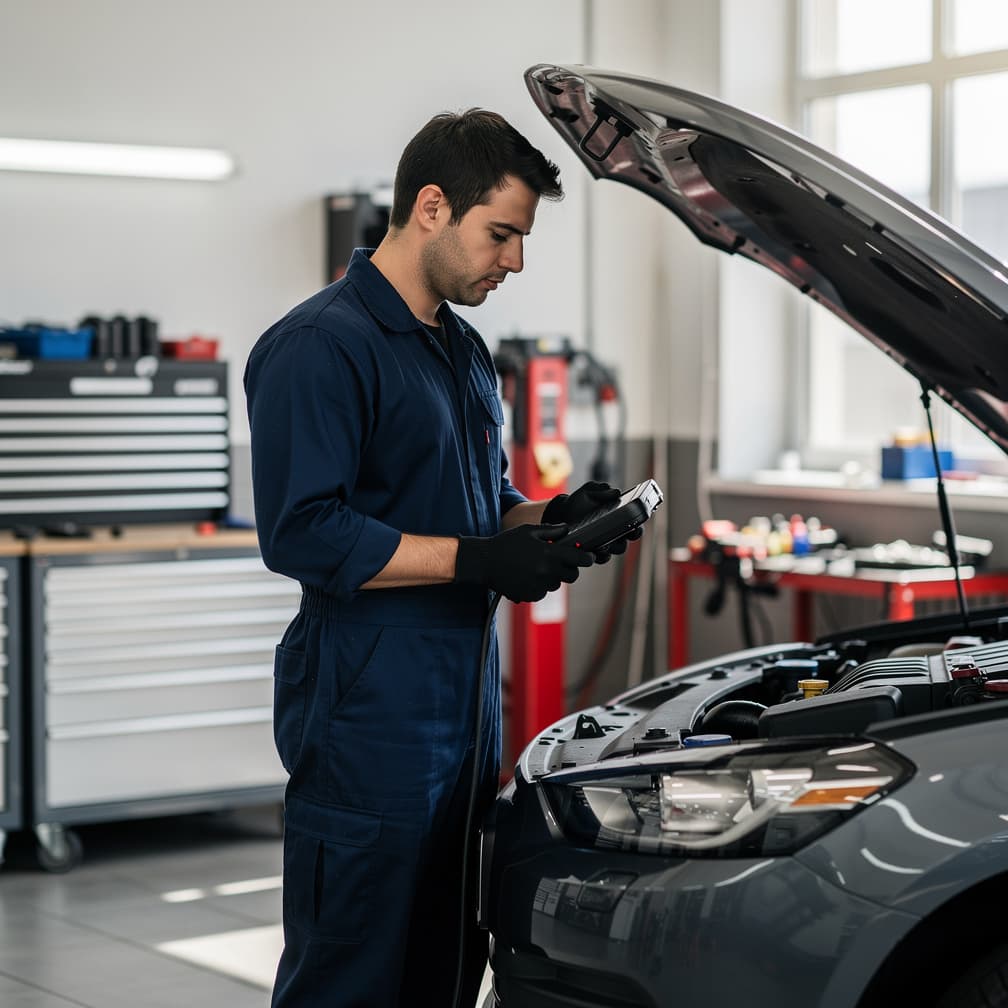

As an auto mechanic in Atlanta, you end up responsible for other people's property every time a key lands on your counter. That exposure separates a repair shop from nearly any other storefront, and auto mechanic insurance in Atlanta is organized around it. A car dented while a tech backs it out of a bay, a truck stolen from the lot after hours, a vehicle scorched in a fire that started elsewhere on the block: each of them is your problem first and the owner's insurer's problem second. Your own building, tools, and technicians sit on top of that. Four triggers, four lines, one shop. The sections below explain which line answers which trigger, what the published ranges look like, and what a quote will ask you to document.
What Makes Atlanta Different
Premium for a repair shop moves on three things you can name out loud: payroll, property values, and the vehicles in your custody. A dense market around Atlanta pushes all three up at the same time. Rebuild costs climb where labor and materials are contested, so the building limit that made sense five years ago may not hold now. Wages climb for the same reason, and payroll is the rating base for the technician side. The lot matters too, since a booked shop holds more customer cars overnight than a slow one does. Trimming the building limit to hold the monthly number down usually surfaces as a coinsurance penalty at claim time. That penalty comes off your side of the loss, in cash, in the week you can least afford it. Price the limits against today's replacement cost, then compare quotes across Georgia on that basis.
Local Risk Factors in Atlanta
Tornado and severe storm damage arrives with almost no warning, which removes the one thing that would help: time to move the cars. A shop can lose the roof, the bay doors, and a lot full of vehicles in the same few minutes, and wind driven debris does not distinguish between your compressor and a customer's hood. Commercial Property may respond to wind damage to the building, the lifts, and the tool chests, subject to the deductible you agreed to and how the form treats the age of the roof. The customer cars sit on a different line entirely. A shop in Atlanta that has never separated those two exposures in its own head will end up doing it on the phone with an adjuster in Georgia, which is the wrong moment.
What Coverage Does an Auto Mechanic in Atlanta Need?
General Liability
Landlords and fleet accounts usually ask for this one by name before anything else. It is aimed at third parties: the customer who slips near the parts counter, the visitor whose property gets damaged in your waiting area, and the legal costs that follow either. Damage to vehicles in your care typically falls outside it, which is where a separate line takes over.
Example: A customer steps past the yellow line to watch a car come off the lift, slips on hydraulic fluid, and breaks a wrist; general liability can help cover the medical claim and the defense costs behind it.
Commercial Property
Flood damage sits outside this form and gets priced as its own decision, which is the first thing worth knowing about it. What remains is the shop itself: the building, the lifts, the compressors, the tool chests, and the parts inventory, against fire, storm, theft, and vandalism. Mechanical breakdown of equipment commonly needs an endorsement of its own.
Example: A break-in empties two tool chests and takes the alignment machine out of an Atlanta shop overnight; commercial property could respond to the replacement cost, subject to the deductible and how the policy treats theft.
Garage Keepers
The cars in your bays belong to somebody else, and that single fact is why this line exists. It is built around vehicles in your care, custody, or control, and it can answer when one is damaged, stolen, or burned while you hold the keys. Limits are often written per vehicle and in the aggregate. Wear and tear and faulty repair work typically sit outside it.
Example: A technician backs a customer's truck out of a bay and clips a post, denting the bed panel; garage keepers is generally the line that responds to a vehicle damaged in your custody.
Workers Compensation
Where the other lines answer to customers and their property, this one answers to your technicians. It can take in medical costs, wage replacement, and rehabilitation after a work injury, and it prices off payroll and job classification rather than off revenue. Requirements vary by state and by headcount, so what a shop in Georgia must carry is worth confirming rather than assuming.
Example: A technician tears a shoulder pulling a head off a block and misses eight weeks; workers compensation could pick up the treatment and part of the wages lost during the recovery.
How Much Does Auto Mechanic Insurance Cost in Atlanta?
Auto Mechanic Insurance is a bundle of separate policies, priced separately. The ranges below are typical figures for Atlanta for each line, except workers compensation, which is rated per $100 of payroll; a quote prices each one against your own operations.
| Coverage | Typical range | What moves your price |
|---|---|---|
| General Liability Insurance | $140 - $480 per month | Industry and risk classification, annual revenue, number of employees |
| Commercial Property Insurance | $140 - $500 per month | Building value and construction type, roof age and condition, fire protection class |
| Garage Keepers Insurance | Varies | Quoted individually based on your operations and limits |
| Workers Compensation Insurance | $0.75 - $2.74 per $100 of payroll | Employee classification codes, total annual payroll, experience modification rate |
Prices shown are general estimates, not guaranteed rates or quotes. Your actual premium will depend on the insurer, coverage selected, business details, location, claims history, and other underwriting factors. Learn about our pricing methodology.
What Are the Insurance Requirements for an Auto Mechanic in Atlanta?
Workers' comp is generally required once you have 3 or more employees. Georgia generally requires employers to carry workers' compensation at that point. Common exemptions include sole proprietors, partners, and corporate officers. Confirm current thresholds with your state's workers' compensation agency before you hire.
Flood damage is typically excluded from standard policies. Standard commercial property and builders-risk-type policies typically exclude flood damage. Flood exposure varies address by address, so check your premises in FEMA's Flood Map Service Center before deciding; if you sit in a mapped flood zone, a separate policy through the National Flood Insurance Program is the usual starting point.
Where to verify licensing and coverage rules. The Georgia Office of Insurance and Safety Fire Commissioner publishes consumer guidance and current insurance requirements for Georgia businesses. When a contract or lease demands specific wording, the Georgia Office of Insurance and Safety Fire Commissioner's guidance is the authoritative place to check.
Get Your Auto Mechanic Quote in Atlanta
Compare rates from multiple carriers. Free quotes, no obligation.
Operating in Atlanta
- Vehicles left in the lot after close are the shop's exposure whether or not anyone was working on them, and whether the lot is fenced and lit is a question every application asks.
- A shop in Atlanta that reorganizes from a sole proprietorship into an LLC keeps issuing certificates in the old name until somebody updates the policy, and an adjuster is who notices.
- Welding on the premises changes the conversation. Underwriters treat hot work as its own hazard, and a shop that added it without telling anyone has a coverage argument waiting to happen.
- Equipment leases carry insurance clauses of their own. A lift financing agreement in Atlanta can name the lessor, set a limit tied to the machine, and require proof before delivery.
How to Buy: Advice for Atlanta Owners
Buying one line at a time is how shops end up with gaps between the policies. The visitor who slips draws on General Liability, the customer's car that got hit draws on Garage Keepers, and the technician who tore a rotator cuff draws on Workers Compensation. A shop that buys those from three directions on three dates rarely notices where one form stops and the next begins. Look at the whole set together, on one date, with one renewal. Some packages bundle the building and liability sides for a small shop, though the vehicles in your care usually stay separate regardless. The Georgia Office of Insurance and Safety Fire Commissioner publishes consumer guidance on packaged commercial policies. Give a shop in Atlanta one sitting with the whole picture, then compare quotes from participating carriers as a set rather than as unrelated purchases.
FAQ
Auto Mechanic Insurance in Atlanta: FAQ
The work can stop. A landlord in Atlanta who treats current coverage as a condition of the lease may hold you to it, and a fleet account can park a work order until the paperwork is on file. A lapse nobody noticed idles a bay for days. The policy may still be in force while the certificate is stale, and nobody asking for proof cares about that distinction.
That turns on business income terms rather than on the building limit. Those clauses commonly carry a waiting period, a restoration period, and a requirement that you document lost revenue. A shop in Atlanta closed for six weeks loses customers to whoever is open, and the income clause is the only part of the policy that speaks to it. Ask what triggers the clause before you need it.
Because revenue is rarely the rating base. Payroll drives the technician line, and raises move it even when sales do not. Replacement costs for the building and its contents have climbed, which lifts the property side. A claim from two years ago follows a shop through several renewals. An audit can also true up an estimate that was optimistic the day the policy was written.
You can certainly be asked to answer for it, and the answer depends on your policy rather than on the weather. Vehicles in your care sit outside a standard building form, so the line covering customer cars is where that claim lives. Ask whether the form contemplates weather perils and whether an open lot gets treated differently than an enclosed bay. A shop in Fulton County without covered parking should confirm it specifically.
Your own property policy was written for your building and your equipment, and a customer's vehicle is neither. Garage Keepers is the line built for cars in your care, custody, or control, and it could respond when one is damaged, stolen, or burned while you hold it. Limits are often written per vehicle and in the aggregate, so ask which one applies to a full lot.
It turns on drivers you can list. Annual payroll and how the technicians are classified, the replacement value of the building and its contents, how many customer vehicles stay on the lot after close, and your claims record all feed the number. Foot traffic through the shop matters too. Two shops with identical revenue can land far apart, because the rating inputs describe the work rather than the sales.
Sources
- 1.Georgia Office of Insurance and Safety Fire Commissioner(Georgia Office of Insurance and Safety Fire Commissioner publishes consumer guidance for insurance buyers.)
- 2.FEMA / FloodSmart(Flood coverage is typically purchased separately; FEMA administers the National Flood Insurance Program.)


