







































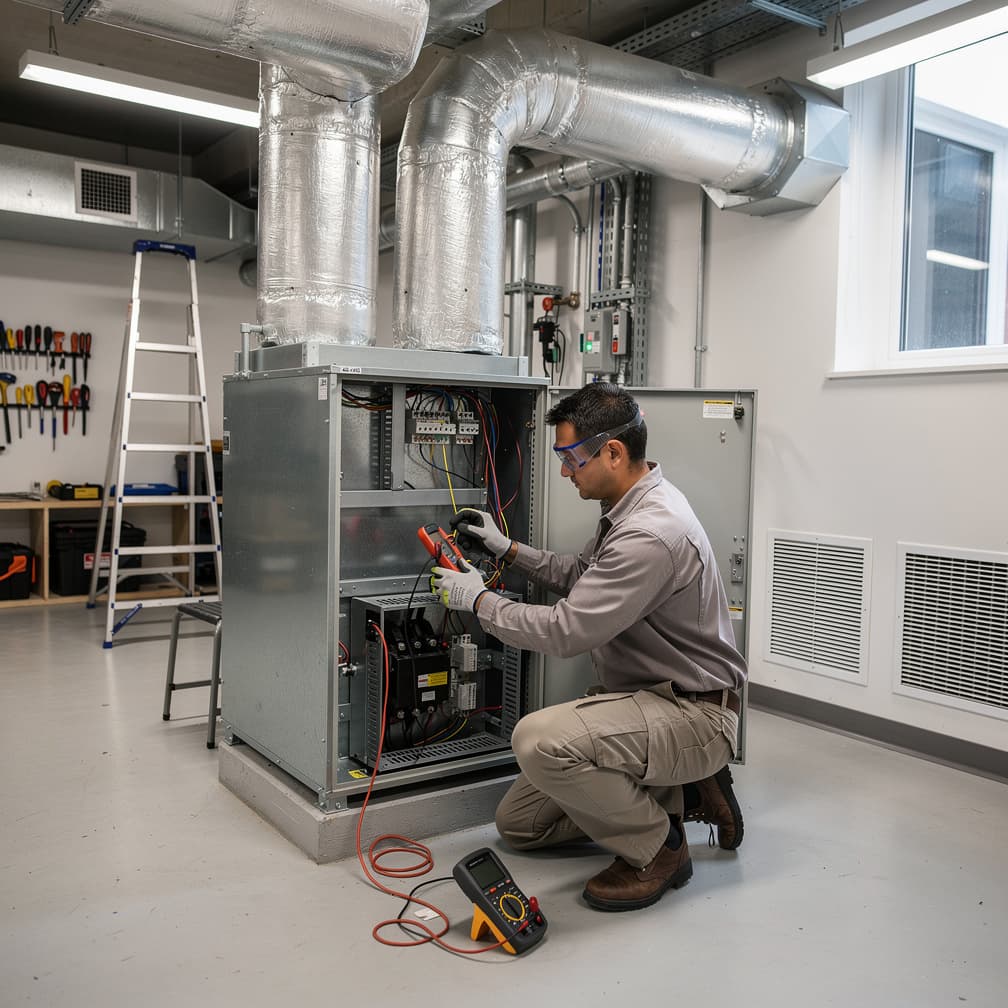

Carbon monoxide turns a routine furnace repair into the worst call of a career. A cracked heat exchanger you signed off on, a flue you reconnected, a combustion test you ran in a hurry: the allegation is bodily injury, and it names the last person who touched the equipment. That exposure is why HVAC technician insurance in Atlanta is worth more than a checkbox at a permit counter. Defense costs start the day a letter arrives, long before anyone decides whether you did anything wrong. Some forms can pay that defense inside the limit, which quietly shrinks the money left for a settlement. Ask which way your form is written before you compare two quotes that look identical on price. The rest of this page lays out what participating carriers in Georgia want to see.
What Makes Atlanta Different
Limits are a cost driver you choose, and in a contract-heavy market the contract chooses for you. A vendor agreement naming a high per-occurrence limit becomes a line item in your monthly premium. The cheap way to reach it is usually excess above your primary rather than a bigger primary. The expensive way is discovering the requirement after you have already bound a policy for the year. Payroll and vehicles still do the heavy lifting on price, and neither is negotiable at quote time. What is negotiable is how accurately you describe them, which sounds obvious and gets botched routinely. A submission in Atlanta that omits a second van is a submission that gets corrected later. Corrections at audit are cash, so tell participating carriers in Georgia everything on the first pass.
Local Risk Factors in Atlanta
Before the next line of storms, take an hour and photograph the equipment in your van with the serial numbers visible. Tornado and severe-storm losses arrive fast, and documentation you did not gather beforehand is documentation you argue about afterward. Gear damaged or scattered when a van gets hit is the loss you can actually insure, and Inland Marine is the line usually written for equipment on the move. Rising water that follows the storm is a different question, because standard forms typically exclude flood and it is priced separately. Ask where the boundary sits between wind-driven rain and flood on your own wording. Then ask what participating carriers in Georgia want from an Atlanta claim on the first day.
What Coverage Does an HVAC Technician in Atlanta Need?
General Liability
Third-party injury and property damage arising out of your work is what this line is written for: a customer who slips near your equipment, a ceiling ruined by a condensate line you installed, a claim that lands months after the job closed. Damage to your own workmanship is commonly excluded, and property managers usually demand this policy by name before you start.
Example: A drain pan you replaced overflows into the finished basement below, and the homeowner's insurer sends a demand letter with photographs attached. A liability form may answer for the restoration work, subject to its exclusions.
Workers Compensation
Your helper falls off a ladder at a rooftop unit and the medical bills start the same afternoon. This is the system that generally handles those costs and the lost wages behind them, and it operates separately from the liability policy. Rules vary by state, and uninsured subcontractors are commonly counted as your payroll at audit.
Example: A technician overheats in an attic during a heat run and spends two days in a clinic. The employer's coverage is typically what handles the treatment and the wages missed, depending on the state's rules.
Commercial Auto
Personal auto policies typically exclude the business use you do all day, which is the gap this line fills. It is meant for the vans and trucks you drive between calls, the helpers who drive them, and the liability when one of them causes an accident. Cargo in the back is usually a separate question.
Example: Your van rear-ends a car at a light while loaded with a new condenser and a full parts run. The commercial vehicle policy is generally what deals with the other driver's damage and injuries.
Tools & Equipment (Inland Marine)
Gauges, recovery machines, vacuum pumps, torch sets, and the ladder rack are the assets this trade actually loses, and they live in a van rather than at an address. Coverage here generally follows the item between jobs, subject to per-item limits and the values you declare. Wear and tear and mechanical breakdown are commonly excluded.
Example: A locked van in Atlanta is broken into overnight and the recovery machine, two gauge sets, and a vacuum pump are gone before the first call. The scheduled equipment might be replaced under this line, depending on the limits you chose.
Commercial Umbrella
A vendor agreement asking for higher limits than your primary carries is the usual reason a shop buys excess capacity. It sits above the liability and auto policies underneath it and generally follows their terms, which means an exclusion below stays an exclusion above. It does not broaden what those policies already say.
Example: One flooded floor of an Atlanta building produces claims from the owner, the tenant, and the tenant's insurer, and the primary limit runs out first. Excess capacity above it could pick up what remains, subject to the underlying terms.
How Much Does HVAC Technician Insurance Cost in Atlanta?
HVAC Technician Insurance is a bundle of separate policies, priced separately. The ranges below are typical figures for Atlanta for each line, except workers compensation, which is rated per $100 of payroll; a quote prices each one against your own operations.
| Coverage | Typical range | What moves your price |
|---|---|---|
| General Liability Insurance | $100 - $340 per month | Industry and risk classification, annual revenue, number of employees |
| Workers Compensation Insurance | $0.75 - $2.74 per $100 of payroll | Employee classification codes, total annual payroll, experience modification rate |
| Commercial Auto Insurance | $300 - $825 per month | Fleet size and vehicle types, driver records and experience, coverage limits and deductibles |
| Inland Marine Insurance | $30 - $120 per month | Total insured value of the scheduled property, type and age of the equipment, where it is stored and how far it travels |
| Commercial Umbrella Insurance | $75 - $250 per month | Umbrella limit requested, limits carried on the underlying policies, loss history on those underlying policies |
Prices shown are general estimates, not guaranteed rates or quotes. Your actual premium will depend on the insurer, coverage selected, business details, location, claims history, and other underwriting factors. Learn about our pricing methodology.
What Are the Insurance Requirements for an HVAC Technician in Atlanta?
Workers' comp is generally required once you have 3 or more employees. Georgia generally requires employers to carry workers' compensation at that point. Common exemptions include sole proprietors, partners, and corporate officers. Confirm current thresholds with your state's workers' compensation agency before you hire.
State auto liability minimums apply to business vehicles. Georgia's minimum auto liability limits are $25,000/$50,000/$25,000 (bodily injury per person / per accident / property damage). Contracts and lenders often require more than the state floor.
Where to verify licensing and coverage rules. The Georgia Office of Insurance and Safety Fire Commissioner publishes consumer guidance and current insurance requirements for Georgia businesses. When a contract or lease demands specific wording, the Georgia Office of Insurance and Safety Fire Commissioner's guidance is the authoritative place to check.
Get Your HVAC Technician Quote in Atlanta
Compare rates from multiple carriers. Free quotes, no obligation.
Operating in Atlanta
- A helper running for parts in their own car is a vehicle exposure your Commercial Auto policy may never have been told about.
- Supply houses and rental yards in Fulton County can ask for a certificate before releasing equipment on account, and the document has to name them correctly to be accepted.
- Uninsured subcontractors commonly get counted as your payroll at audit, so the certificate you forgot to collect from an Atlanta sub in the spring becomes a bill in the fall.
- Work stops when a building owner's compliance portal rejects your certificate over an entity name, and nobody in that chain cares that the tenant has no heat.
How to Buy: Advice for Atlanta Owners
Certificates cause more lost work in this trade than lawsuits do. Decide up front who will issue them and what the standard wording needs to say, because a job stops while a document is missing. Ask a carrier whether additional insured status gets added by blanket endorsement when a written contract requires it, or one certificate holder at a time. The blanket version is easier to live with once you have a handful of property managers. Confirm whether the endorsement includes completed operations, because service work generates claims after you leave. If a contract asks for excess limits, the Commercial Umbrella shows up on the same certificate and needs its own confirmation. General Liability is the policy those certificates describe, so get its wording right first. The Georgia Office of Insurance and Safety Fire Commissioner publishes the current requirements for reporting a commercial claim. CPK lines up quotes from participating carriers in Georgia so the wording, and not price alone, decides.
FAQ
HVAC Technician Insurance in Atlanta: FAQ
That is a third-party bodily injury claim, and it does not matter that the equipment was only there for ten minutes. General Liability is the line usually written for injury to someone who is not your employee. Defense costs can start before anyone decides whether you were careless, and some forms pay those costs inside the limit rather than on top of it. Ask which structure your quote uses.
It depends on the form and on what is alleged. Bodily injury claims tied to combustion byproducts can raise pollution wording that policies treat unevenly, so the exclusion page matters more than the price page. Ask in writing how the form handles carbon monoxide allegations before you bind. Ask also whether defense sits inside or outside the limit, since these claims cost money long before fault is settled.
The per-occurrence limit is the most a policy might pay for one event, like one flooded ceiling. The aggregate is what every claim in one policy year has to share between them. A bad year of completed-operations claims can erode the aggregate quietly, and the limit a contract requires is usually the per-occurrence number. Ask a participating carrier in Georgia what your aggregate looks like after two claims, not after none.
Yes, and it is routine. When a homeowner's carrier pays for water damage it believes your install caused, it can pursue you for what it paid out. That is called subrogation, and it arrives as a letter with photographs and a number at the bottom. Your liability policy is what turns that letter into your carrier's problem instead of yours. Waivers of subrogation in a contract change the direction of the same idea.
Turnaround depends on the carrier and the agent servicing the policy, so nobody can promise a timeframe. What you can control is having the policy in force before you need the document, and knowing the exact entity name, address, and wording the holder wants. A certificate with the wrong name gets rejected as often as one that arrives late. Ask what the holder's exhibit requires and send it once, correctly.
It depends on what you sign. A vendor agreement asking for limits above your primary is the usual reason, and Commercial Umbrella capacity above an existing policy is often cheaper than raising the primary to match. It generally follows the terms underneath it, so an exclusion below stays an exclusion above. If nobody asks for high limits, the case is about severity: one bad water loss in a large home.
Sources
- 1.Georgia Office of Insurance and Safety Fire Commissioner(Georgia Office of Insurance and Safety Fire Commissioner publishes consumer guidance for insurance buyers.)


