







































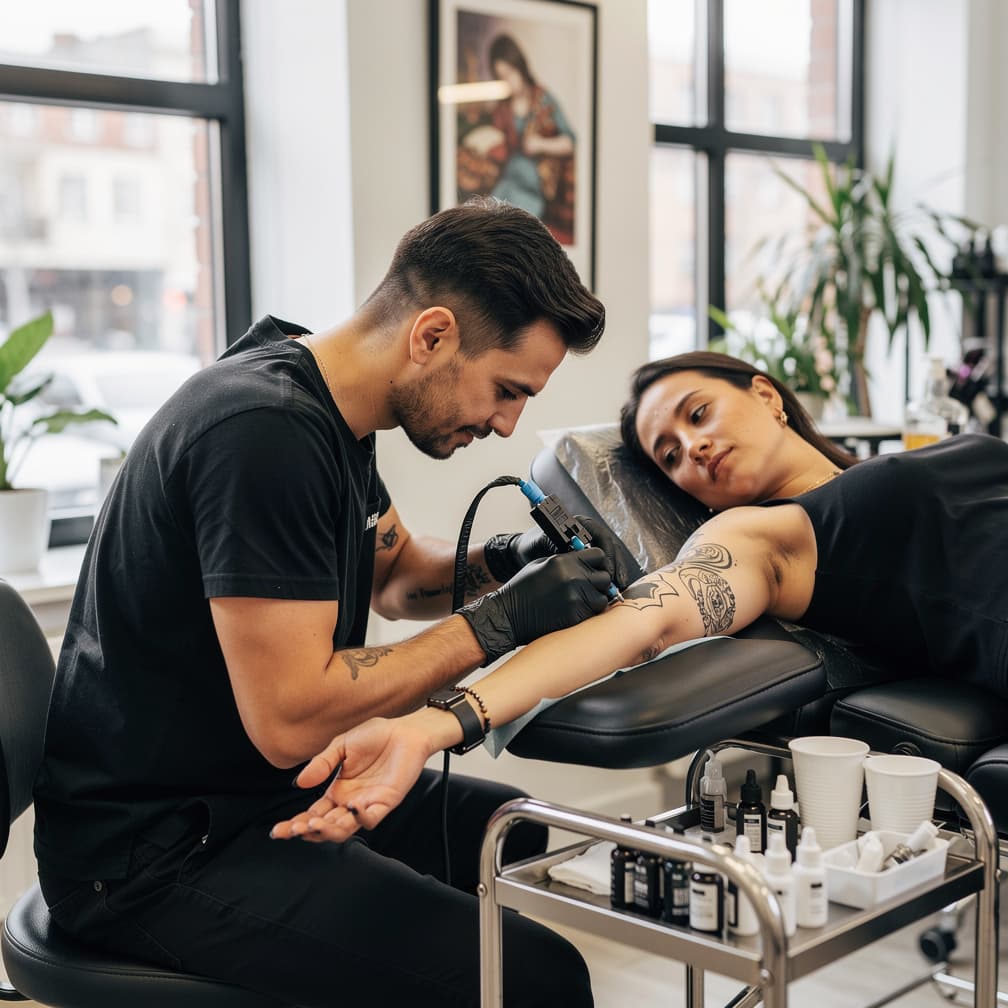

Quotes for a small-market studio often come back thinner, because fewer carriers write body art work and fewer adjusters handle the claims. That changes how long you wait, not what a claim costs you. A claim in Muscogee County can sit while an adjuster drives in from somewhere else, and your chairs stay cold in the meantime. Tattoo shop insurance in Columbus is worth pricing early for that reason, before a lease deadline forces the decision for you. A Business Owners Policy bundles property and liability and can start from $50 a month, which is often the simplest way for a one-room shop to close two gaps at once. Bundles have edges, though, and the edges are where flood, wear, and breakdown usually sit.
What Makes Columbus Different
Thin markets cut some of your costs and raise others, and insurance does not always follow the rent. Fewer carriers write body art work, so the quotes you can gather may be genuinely few. About 4,500 businesses operate in Muscogee County, a book small enough that one bad loss year moves renewals. Your own claims history carries more weight when the pool of similar local shops stays small. A single infection complaint on your record can follow a quote through several renewal cycles. Documenting consent, aftercare, and sterilization costs nothing and changes the story your quote gets to tell. Gear values matter as much: an underinsured machine bench is a decision you make by accident. Price the shop you have, then compare what each quote assumed about the shop you described.
Local Risk Factors in Columbus
Tornadoes and severe storms are a debris problem before they are a wind problem, and a tattoo studio's front is mostly glass. A window blown out at night leaves the machines beyond your control until somebody boards it, and the rain comes in that same hour. Ink stock, chairs, and the front desk of a Columbus studio take the water even when the structure holds. Commercial Property is generally the line written for sudden physical damage of that kind, subject to your deductible. What it will not do is restore the week you lost or the appointments that walked, unless the form carries an income provision. Ask which of the two you actually bought before the season reaches Georgia.
What Coverage Does a Tattoo Shop in Columbus Need?
Professional Liability
A client says the tattoo left them with an infection, or a reaction they blame on your ink, and the argument is about the service itself. That is the ground Professional Liability is written for: allegations that the work performed caused harm. It generally will not reach damage to your own gear or a visitor's fall in the lobby.
Example: Weeks after a session, a client's arm reacts badly and a letter arrives naming the shop and the artist; Professional Liability may respond to the claim and to the defense that follows it.
General Liability
Landlords and convention hosts ask for this one by name, and a lease clause is usually written around it. General Liability typically answers for third-party injury and property damage tied to your premises and operations: the visitor who slips near the restroom, the jacket ruined at the front desk. Claims about the tattoo work itself generally sit elsewhere.
Example: A friend waiting on a client trips over a power cord in a Columbus shop and breaks a wrist; general liability limits are what the injury claim then gets measured against.
Commercial Property
Flood typically sits outside this form, and wear on a machine counts as maintenance rather than a claim, so the exclusions deserve a read before anything else. What Commercial Property is generally built for is the sudden loss: fire, storm damage, theft, and vandalism hitting your machines, chairs, cabinets, and ink stock. Settlement tracks the values you put on file.
Example: A break-in overnight clears the bench of machines and power supplies; with serial numbers and current values already on file, a property claim can move toward replacing them quickly.
Business Owners Policy
Buying the property line and the liability line separately is one route; a Business Owners Policy is the other, bundling them into a single purchase that often carries an income provision. For a one-room studio the bundle is usually the shorter conversation. What it commonly leaves out is the claim about the tattoo service itself.
Example: Smoke from a neighboring unit closes a Columbus studio for ten days; a business owners policy might address the cleaning bill along with the bookings lost while the doors stay shut.
How Much Does Tattoo Shop Insurance Cost in Columbus?
Tattoo Shop Insurance is a bundle of separate policies, priced separately. The ranges below are typical figures for Columbus for each line; a quote prices each one against your own operations.
| Coverage | Typical range | What moves your price |
|---|---|---|
| Professional Liability Insurance | $85 - $290 per month | The services you actually perform, annual revenue or billed fees, limit and retention selected |
| General Liability Insurance | $65 - $220 per month | Industry and risk classification, annual revenue, number of employees |
| Commercial Property Insurance | $65 - $220 per month | Building value and construction type, roof age and condition, fire protection class |
| Business Owners Policy Insurance | $100 - $290 per month | Annual revenue and industry class, building and contents values, square footage and building age |
Prices shown are general estimates, not guaranteed rates or quotes. Your actual premium will depend on the insurer, coverage selected, business details, location, claims history, and other underwriting factors. Learn about our pricing methodology.
What Are the Insurance Requirements for a Tattoo Shop in Columbus?
Workers' comp is generally required once you have 3 or more employees. Georgia generally requires employers to carry workers' compensation at that point. Common exemptions include sole proprietors, partners, and corporate officers. Confirm current thresholds with your state's workers' compensation agency before you hire.
Flood damage is typically excluded from standard policies. Standard commercial property and builders-risk-type policies typically exclude flood damage. Flood exposure varies address by address, so check your premises in FEMA's Flood Map Service Center before deciding; if you sit in a mapped flood zone, a separate policy through the National Flood Insurance Program is the usual starting point.
Where to verify licensing and coverage rules. The Georgia Office of Insurance and Safety Fire Commissioner publishes consumer guidance and current insurance requirements for Georgia businesses. When a contract or lease demands specific wording, the Georgia Office of Insurance and Safety Fire Commissioner's guidance is the authoritative place to check.
Get Your Tattoo Shop Quote in Columbus
Compare rates from multiple carriers. Free quotes, no obligation.
Operating in Columbus
- Pigment and needle inventory turns over constantly, so an equipment list written the year you opened describes a shop that no longer exists.
- Break-ins take the machines and power supplies first, because that gear has a resale market, and replacing it means waiting on a shipment rather than driving across Columbus.
- A client posting healing photos is doing your marketing until the healing goes wrong, and then the same photos become somebody else's evidence.
- Street-level glass makes a studio visible and makes it a target, and a smashed front window is a boarded weekend plus a calendar you rebook by hand.
How to Buy: Advice for Columbus Owners
Timing decides more here than shopping does. Coverage bound the week you open answered nothing during the buildout, when contractors were in the space and your gear was arriving in boxes. Coverage bound the day a lease demands it is coverage priced under pressure. Give yourself three weeks: gather the file, get General Liability and Commercial Property quotes for the Columbus address separately, then get a Business Owners Policy quote and weigh the bundle against the parts. Renewal is the same exercise in reverse and deserves the same three weeks. Set a reminder sixty days ahead of a Columbus renewal so the decision stays yours rather than the calendar's. CPK exists for that window: quotes from participating carriers, side by side, before a deadline picks for you.
FAQ
Tattoo Shop Insurance in Columbus: FAQ
Yes. The insurance clause in a commercial lease is a negotiated term, and it stops being negotiable the moment you sign your name. A landlord in Columbus can name a liability limit, an additional insured, and a date by which the certificate must exist. Price that limit before signing, because the number in the clause is the number you carry for years.
Intentional harm is excluded everywhere. Wear and tear on a machine is maintenance rather than a claim. Flood usually sits outside a property form and gets priced on its own. Fines and licensing trouble are generally their own matter entirely. And a client who simply dislikes the finished artwork is a refund conversation, not usually a coverage one.
Renewal is the moment a policy quietly stops matching the shop. Gear grows, artists come and go, services get added, and the limits sit where they were three years ago. Re-running the numbers against your current roster and gear list costs you an hour. CPK lets you compare quotes from participating carriers for a Columbus shop on one set of facts.
The lease usually answers before the law does: no certificate, no keys. Most landlords want proof of liability coverage in hand before you take possession, and many cities tie a body art permit to an inspection you would rather not fail. Requirements vary by state, and the Georgia Office of Insurance and Safety Fire Commissioner publishes the current requirements for commercial coverage. Price the coverage while the lease is still a draft.
Cost tracks your floor space, artist count, service list, the value of the gear at each station, and your claims history. A one-artist studio and a six-chair shop offering piercing get priced nowhere near each other. The published ranges on this page show the spread by line. A quote turns that spread into a real number for your Columbus shop.
Usually not the way owners hope. General Liability generally answers for injuries and property damage that happen on your premises, a slip near the front desk being the classic example. An allegation that the tattoo service itself caused harm is a professional exposure, and Professional Liability is the line typically written for it. Read both forms before assuming either reaches the other's territory.
Sources
- 1.U.S. Census Bureau, County Business Patterns (2022), Muscogee County(Muscogee County has about 4,500 business establishments.)
- 2.Georgia Office of Insurance and Safety Fire Commissioner(Georgia Office of Insurance and Safety Fire Commissioner publishes consumer guidance for insurance buyers.)
- 3.FEMA / FloodSmart(Flood coverage is typically purchased separately; FEMA administers the National Flood Insurance Program.)


