







































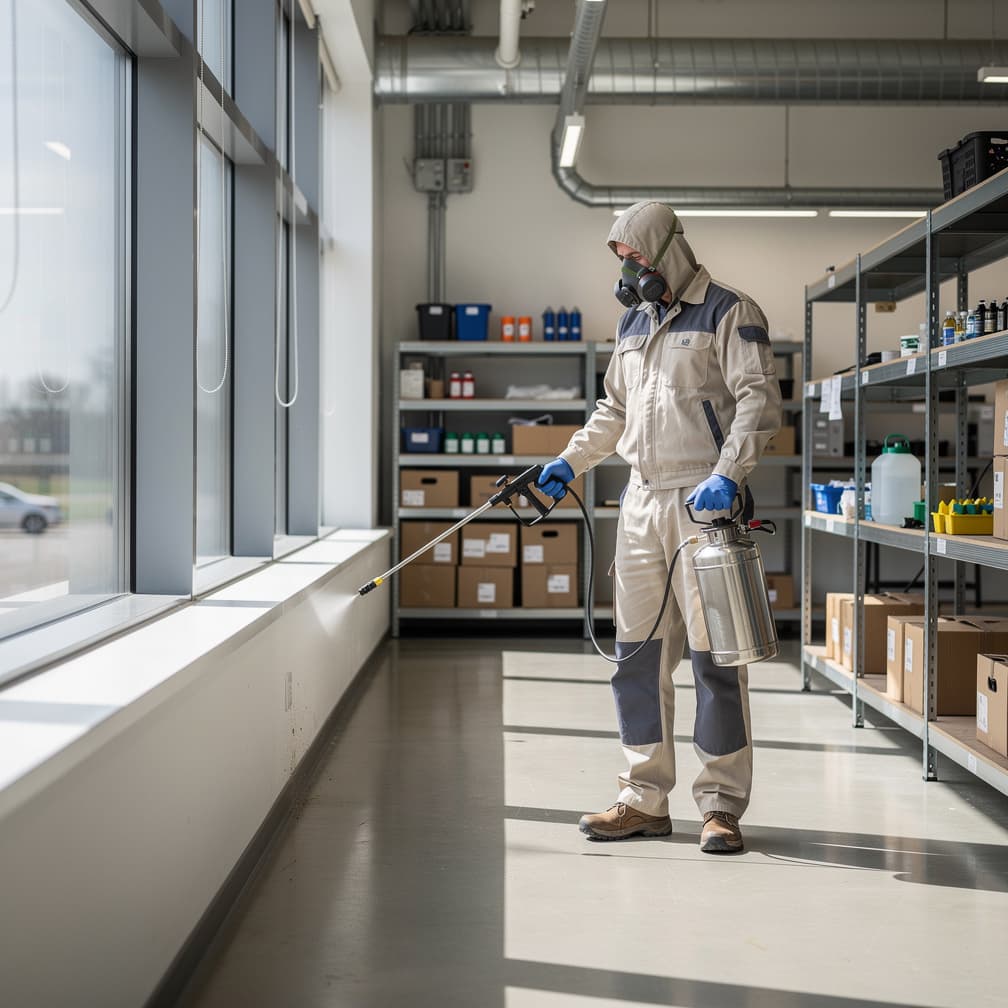

Slip and fall claims start in the most ordinary way. A technician finishes a perimeter treatment, a homeowner walks the wet baseboard ten minutes later, and a wrist breaks on a tile floor. Nobody did anything reckless, and the medical bills arrive anyway. Pest control insurance in Macon exists for that gap between careful work and a bad outcome, and general liability is the line most owners lean on when a customer gets hurt during a service visit. Injury claims on someone else's property have a long tail, because the person who fell keeps treating the injury long after your technician has moved on. Your policy limits have to survive that tail, and carriers writing route work in Georgia price it accordingly. The comparison below starts with the exposures a route operation carries into every house it enters.
What Makes Macon Different
Storm weeks hit route businesses in the schedule first and the building second. When the roads around Macon are bad, your technicians either drive them anyway or the revenue stops. Neither option is good, and the first one is how vehicles get damaged. A pileup of missed stops also drags customer complaints into the next month. Coverage in Georgia responds to damage rather than to a backlog, and that is the part owners learn late. If a treatment gets rushed after a stoppage and something goes wrong, the claim looks routine to your carrier and expensive to you. Weather is an operational risk that arrives dressed as an insurance question. Plan the catch-up week deliberately rather than letting it plan you.
Local Risk Factors in Macon
Severe storms hit a pest control business in the yard first. Trucks sit outside, loaded, and hail or debris in a straight-line wind can take out a windshield, a tank, and a day of stops in the same minute. Damage that would be trivial to a parked car is expensive here, because the vehicle is the workplace for every stop in Macon. Commercial auto may respond to that damage where comprehensive terms are on the schedule, which is not automatic on every policy. The stops you miss while a truck is in the shop are yours to absorb. Confirm with a carrier in Georgia which vehicles carry which terms, before a storm makes the question urgent.
What Coverage Does a Pest Control in Macon Need?
General Liability
Every service visit puts your technician inside somebody else's building, and this is the line that answers when the visit goes wrong. It can help cover property damage from a misapplied treatment, a customer hurt during the appointment, and the legal costs that follow. Landlords and commercial accounts generally demand it before granting access. It typically does not respond to damage to your own equipment, or to work done deliberately outside a label.
Example: A technician sprays near an aquarium, the fish die, and the customer wants the tank, the stock, and the cabinetry replaced. General liability could respond to that property damage claim, subject to your limit.
Commercial Auto
Route trucks are the largest severity exposure most pest control operations carry, and personal auto policies commonly exclude business use entirely. This line is meant for vehicles you own and operate: liability when a technician causes an accident, and physical damage to the truck itself where those terms are on the schedule. A vehicle that never made it onto the schedule may be treated as uninsured when the claim arrives.
Example: A loaded van rear-ends a sedan on the way to the second stop, and two people go to the hospital. Commercial auto is designed to answer for the injuries and the other vehicle, up to the limit you bought.
Workers Compensation
Technicians climb, crawl, lift tanks, and handle materials in attics that run far hotter than the outside air. When one of them gets hurt on the job, this is the coverage intended to handle medical care and lost wages, and it exists partly so an injured worker does not have to sue you to be treated. Rating runs per hundred dollars of payroll, and how you classify roles moves the price. Requirements vary by state.
Example: A technician passes out in a crawlspace during a long afternoon and needs an emergency room. Workers compensation is meant to pick up the treatment and the time off, subject to how the state handles the claim.
Commercial Property
Shop, chemical inventory, sprayers, spare parts, and the monitoring gear waiting to go out are what this line is built around. It could help cover that property when fire, theft, or a covered event damages it at your insured location. Equipment that travels or sits in a vehicle overnight is often treated separately, sometimes with its own limit. Standard forms typically exclude flood, which is bought and priced on its own.
Example: A break-in at the shop takes three sprayers, a stock of concentrate, and the detection equipment for the whole week's route. A property policy could help with the replacement, depending on your deductible and schedule.
How Much Does Pest Control Insurance Cost in Macon?
Pest Control Insurance is a bundle of separate policies, priced separately. The ranges below are typical figures for Macon for each line, except workers compensation, which is rated per $100 of payroll; a quote prices each one against your own operations.
| Coverage | Typical range | What moves your price |
|---|---|---|
| General Liability Insurance | $130 - $450 per month | Industry and risk classification, annual revenue, number of employees |
| Commercial Auto Insurance | $310 - $775 per month | Fleet size and vehicle types, driver records and experience, coverage limits and deductibles |
| Workers Compensation Insurance | $0.75 - $2.74 per $100 of payroll | Employee classification codes, total annual payroll, experience modification rate |
| Commercial Property Insurance | $90 - $330 per month | Building value and construction type, roof age and condition, fire protection class |
Prices shown are general estimates, not guaranteed rates or quotes. Your actual premium will depend on the insurer, coverage selected, business details, location, claims history, and other underwriting factors. Learn about our pricing methodology.
What Are the Insurance Requirements for a Pest Control in Macon?
Workers' comp is generally required once you have 3 or more employees. Georgia generally requires employers to carry workers' compensation at that point. Common exemptions include sole proprietors, partners, and corporate officers. Confirm current thresholds with your state's workers' compensation agency before you hire.
State auto liability minimums apply to business vehicles. Georgia's minimum auto liability limits are $25,000/$50,000/$25,000 (bodily injury per person / per accident / property damage). Contracts and lenders often require more than the state floor.
Flood damage is typically excluded from standard policies. Standard commercial property and builders-risk-type policies typically exclude flood damage. Flood exposure varies address by address, so check your premises in FEMA's Flood Map Service Center before deciding; if you sit in a mapped flood zone, a separate policy through the National Flood Insurance Program is the usual starting point.
Where to verify licensing and coverage rules. The Georgia Office of Insurance and Safety Fire Commissioner publishes consumer guidance and current insurance requirements for Georgia businesses. When a contract or lease demands specific wording, the Georgia Office of Insurance and Safety Fire Commissioner's guidance is the authoritative place to check.
Get Your Pest Control Quote in Macon
Compare rates from multiple carriers. Free quotes, no obligation.
Operating in Macon
- About 12 pest control businesses operate in Bibb County, so a customer who is unhappy with your handling of a claim has somewhere else to call by the afternoon.
- A property manager in Macon can suspend your building access the morning a certificate expires, even when the policy behind it renewed on time. The stop still sits on the route sheet, and nobody pays for the drive.
- Technicians work alone inside occupied homes, which means the only account of what happened in that hour is a service ticket. When a claim arrives months later, that ticket is either your defense or the other side's exhibit, and carriers in Georgia will ask for it first.
- Concentrate is stored, mixed, and carried in a vehicle all day, so a spill is a vehicle event, a property event, and a customer conversation at once. Which policy answers depends on where the liquid landed.
How to Buy: Advice for Macon Owners
Ask what your policy will not do before you ask what it costs. General Liability generally excludes damage to your own property, and it typically will not respond to work performed outside a label or a certification on purpose. Commercial Auto may exclude a vehicle nobody added to the schedule, which is how a newly bought truck becomes an uninsured truck. Workers Compensation obligations depend on how your technicians are classified, and misclassification surfaces during an audit rather than during a good year. Write those gaps down, then decide which you can live with and which need closing. Rules vary by state, so check the Georgia Office of Insurance and Safety Fire Commissioner's guidance before deciding. CPK lets you put those questions to participating carriers in Georgia and compare the answers, not only the premiums.
FAQ
Pest Control Insurance in Macon: FAQ
Anyone can file, and these claims often arrive weeks after the visit. Bodily injury allegations tied to material handling get argued over causation, and the argument costs money whether or not it succeeds. General liability commonly includes defense, though whether those costs sit inside your limit or outside it varies by policy and matters enormously. Service tickets and product records are what a defense gets built from, and a technician working a Macon route generates both every day.
Generally not. Personal auto policies commonly exclude vehicles used in a business, which means a claim from a route stop can be denied on a policy you have paid into for years. A truck carrying tanks, sprayers, and a technician on the clock reads as a commercial vehicle to a carrier regardless of whose name is on the title. The vehicle needs to sit on a commercial auto policy.
An additional insured endorsement extends your policy to defend and answer for another party, usually the client whose building you enter. Clients ask for it so a claim arising from your work lands on your insurer rather than theirs. The endorsement your policy allows and the wording a contract demands are not always the same document, so send the insurance page to whoever is quoting you before you sign.
The per-occurrence limit is the most a policy may pay for one claim. The aggregate is the most it may pay across the whole policy term. A route business making hundreds of customer visits a month can generate several claims in one year, so the aggregate is the number that actually runs dry. Two claims settled at half your per-occurrence limit can eat more of the aggregate than owners expect, and carriers in Georgia restore nothing midterm.
Sometimes, and the details decide it. Commercial property forms might help cover business equipment, but where the property sits when it disappears often changes the answer, and tools left in an unattended vehicle are a common gap. Some policies handle equipment away from your premises under separate wording with its own limit. Ask specifically about overnight vehicle storage before you assume anything.
Often the same day once a policy is in force, though the process is worth settling before somebody needs it at eight in the morning. Decide who in your shop can request one and where the file lives. The bigger delay is usually the endorsement behind it, since naming a new party can take an underwriter days. Ask whether your policy allows blanket additional-insured wording, which removes most of that wait.
Sources
- 1.U.S. Census Bureau, County Business Patterns (2023), Bibb County(Bibb County has about 12 businesses in this trade's category (NAICS group 561710).)
- 2.Georgia Office of Insurance and Safety Fire Commissioner(Georgia Office of Insurance and Safety Fire Commissioner publishes consumer guidance for insurance buyers.)
- 3.FEMA / FloodSmart(Flood coverage is typically purchased separately; FEMA administers the National Flood Insurance Program.)


