







































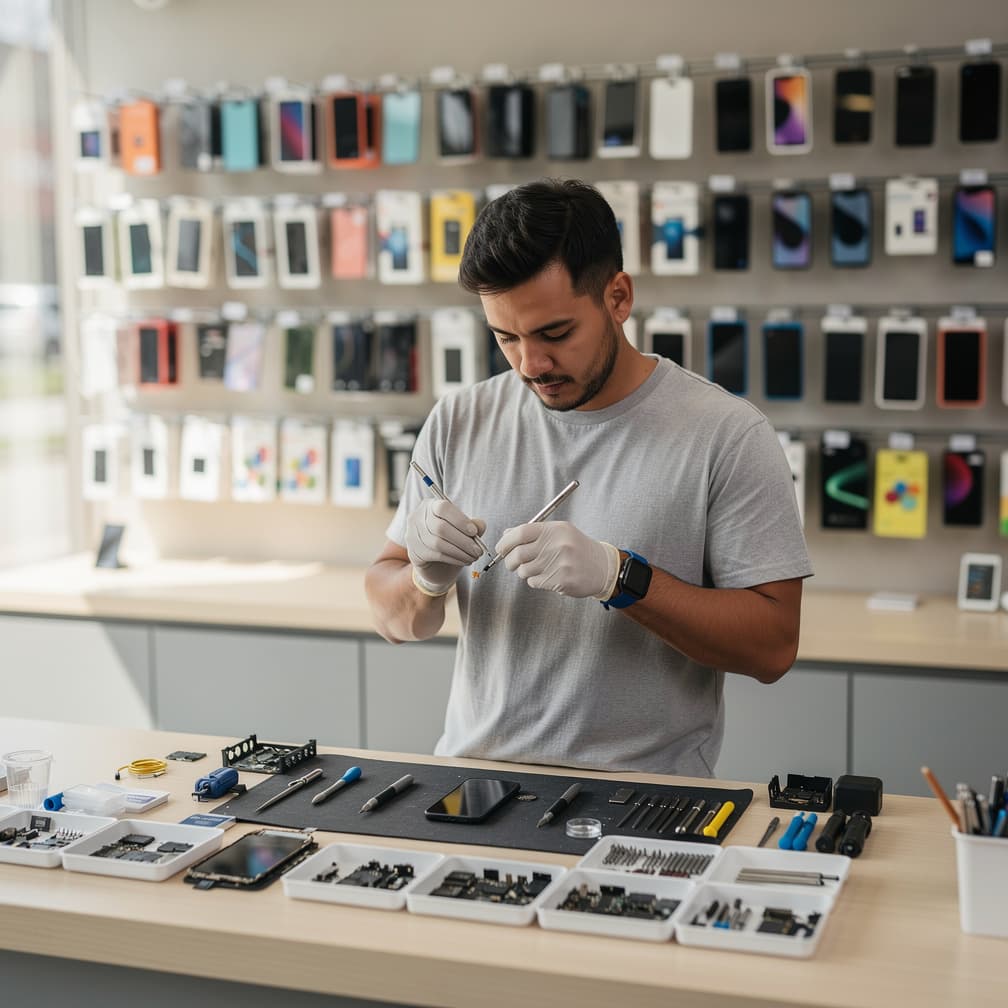

As a storefront repairing phones in Hilo, you compete on turnaround, and turnaround is what breaks when something in your own shop stops working. A dead reflow station, a flooded stockroom, or a stolen parts tray does not only cost the gear; it costs the queue behind it. Customers promised an hour do not wait a week. Lost income is the quiet half of a property loss and the half owners discover late. Cell phone repair insurance in Hilo is worth reading for what it says about revenue, not only about equipment. Ask that question out loud when you compare quotes. Below, each line is broken out with its published range and the details participating carriers ask for.
What Makes Hilo Different
Weather disruption hits a thin market harder, because the vendors who put you back together are further away. A damaged storefront in Hawaii County waits on contractors, parts, and an adjuster who may be booked solid. The repair queue does not wait, and customers with cracked screens find another option within a week. Getting those customers back afterward is a marketing problem that no policy will ever touch. What a policy may reach is the gear, the inventory, and the income during a documented closure. Documentation is the operative word, since a claim is only as good as your records of it. Keep a current equipment list and a device intake log somewhere outside your Hilo shop. A backup stored on the same bench as the loss is not a backup at all.
Local Risk Factors in Hilo
Hurricane season closes a repair shop before the wind ever arrives, because an evacuation order empties a shopping center and a boarded storefront takes no tickets. Devices already on your bench stay there, unfinished and still your responsibility, and customers in Hilo scatter for a week or more. When the block reopens, the queue is longer and the parts shipment is late. Commercial Property can help cover physical damage from wind, subject to a separate wind or named storm deductible that is often a percentage rather than a flat amount in Hawaii. Read that deductible line before a forecast makes it interesting.
What Coverage Does a Cell Phone Repair in Hilo Need?
General Liability
Landlords and mall operators ask for this line by name before they hand over a space, and business accounts ask for it before they hand over devices. It generally reaches injuries to customers on your floor and damage you cause to property that is not in your care. Phones on your bench are usually in your care, so that exposure commonly sits outside it.
Example: A customer waiting on a battery swap slips on a wet entry mat and breaks a wrist; general liability could help cover the medical claim and the defense costs behind it.
Commercial Property
Benches, soldering stations, programming rigs, and a cabinet of screens and batteries are the assets a repair shop cannot bill without. This line is generally written to respond to fire, theft, vandalism, and many water losses affecting that property, subject to your limit and deductible. Flood typically sits outside it and is bought separately.
Example: A break-in clears the parts cabinet and two diagnostic units overnight in Hilo; commercial property may respond to the stolen equipment and inventory once the deductible is met.
Professional Liability
Where general liability stops is where this line starts. Allegations that a repair was done badly, left incomplete, or caused a device to fail afterward are workmanship disputes rather than accidents, and this coverage is intended for them. Claims arrive late, sometimes months after a ticket closes, so the wording about when a claim is made matters.
Example: A logic board dies a week after a screen replacement, the customer says the repair caused it and bills you for lost work time; professional liability might answer that dispute.
Business Owners Policy
If you run one storefront and want one certificate, this package is usually where the conversation starts. It bundles general liability with commercial property, and it often includes business income cover for a documented closure following a covered loss. It does not automatically reach workmanship claims or flood, and shops tend to learn that late.
Example: A fire next door smokes out your shop for three weeks; a business owners policy could pick up the cleanup and some of the income lost while the doors stayed shut.
How Much Does Cell Phone Repair Insurance Cost in Hilo?
Cell Phone Repair Insurance is a bundle of separate policies, priced separately. The ranges below are typical figures for Hilo for each line; a quote prices each one against your own operations.
| Coverage | Typical range | What moves your price |
|---|---|---|
| General Liability Insurance | $50 - $150 per month | Industry and risk classification, annual revenue, number of employees |
| Commercial Property Insurance | $100 - $310 per month | Building value and construction type, roof age and condition, fire protection class |
| Professional Liability Insurance | $65 - $200 per month | The services you actually perform, annual revenue or billed fees, limit and retention selected |
| Business Owners Policy Insurance | $100 - $280 per month | Annual revenue and industry class, building and contents values, square footage and building age |
Prices shown are general estimates, not guaranteed rates or quotes. Your actual premium will depend on the insurer, coverage selected, business details, location, claims history, and other underwriting factors. Learn about our pricing methodology.
What Are the Insurance Requirements for a Cell Phone Repair in Hilo?
Workers' comp is generally required once you have your first employee. Hawaii generally requires employers to carry workers' compensation at that point. Common exemptions include sole proprietors. Confirm current thresholds with your state's workers' compensation agency before you hire.
Flood damage is typically excluded from standard policies. Standard commercial property and builders-risk-type policies typically exclude flood. Given Hilo's coastal flood exposure, a separate flood policy is worth pricing; FEMA's National Flood Insurance Program is the usual starting point.
Where to verify licensing and coverage rules. The Hawaii Insurance Division publishes consumer guidance and current insurance requirements for Hawaii businesses. When a contract or lease demands specific wording, the Hawaii Insurance Division's guidance is the authoritative place to check.
Get Your Cell Phone Repair Quote in Hilo
Compare rates from multiple carriers. Free quotes, no obligation.
Operating in Hilo
- A property manager can hold your fixtures at the loading dock until a certificate naming the right entity is on file, so the spelling on that document matters as much as the limits behind it.
- Customer devices pile up in a drawer overnight, and that drawer holds more value than the register ever will. A break-in at a Hilo storefront takes the hardware and the tickets attached to it at once.
- A slip at the counter is the claim that has nothing to do with phones and everything to do with your floor, since customers wait standing while a screen is swapped.
- Intake photos cost nothing and settle more arguments than any clause you sign: half of all damage disputes are arguments about whether the crack existed before the device reached your Hilo bench.
How to Buy: Advice for Hilo Owners
Inventory is the quiet risk in this trade. Screens, batteries, and boards sit in a cabinet worth more than the invoices suggest, and a fire, a burst pipe, or a break-in takes the lot at once. Commercial Property is the line that speaks to that cabinet, and its limit should be a real number rather than a comfortable one. Count it once a year, at minimum. The second half of the conversation is income: a shop that cannot open cannot bill, and a Business Owners Policy often includes business income cover that a bare property policy may not. Ask which version you are being quoted. Check the Hawaii Insurance Division's guidance before deciding how much income cover to request. Then send that decision to participating carriers working in Hilo and see who prices it sensibly.
FAQ
Cell Phone Repair Insurance in Hilo: FAQ
Standard commercial property forms typically exclude flood, and that is one of the most common surprises after a wet week. Flood cover is priced and bought as a separate decision, and waiting periods often apply, so the day the water rises is too late to arrange it. If your stockroom sits at ground level with parts stacked low, raise that before you need the answer.
Customers frequently frame the loss as photos, accounts, and work access rather than hardware, and that framing changes which part of a policy can respond, or whether any part does. Standard forms deal with tangible property damage and treat data differently. Ask specifically how a claim over lost contacts or photos is handled. A backup policy signed at intake is worth more than any answer you get.
No. A building owner insures the building; your bench, your parts, and your customer devices are yours to insure. Owners conflate the two more often than any other point in a lease conversation, usually because the lease mentions insurance and appears to settle the subject. It settles the landlord's side of it. Your side starts with what the room holds on a normal evening, not with what the Hilo lease says about the roof.
Read the insurance schedule attached to it. Corporate agreements can demand higher limits, additional insured status, or a waiver of subrogation, and each of those carries a price you can find out in advance. Quote the account with its requirements attached, then decide whether the work still pays. Some accounts do not, and learning that before you sign a volume commitment in Hilo is cheaper than learning it after.
Intentional acts, ordinary wear and tear, and losses you knew about before the policy started are the usual honest gaps. Damage to devices in your custody often sits outside General Liability unless it has been specifically addressed. Flood typically stands outside a standard property form as well. None of these are fine print tricks; they are the shape of the product, and knowing them is how you choose between quotes.
That claim is about property you accepted into your care, and it is one of the trickier corners of a repair shop policy. General Liability commonly excludes damage to property in your custody, which surprises owners who assumed it was the catch-all. Some policies can be endorsed to reach it and some cannot. Ask that question by name before you buy, and get the answer in writing rather than in conversation.
Sources
- 1.Hawaii Insurance Division(Hawaii Insurance Division publishes consumer guidance for insurance buyers.)
- 2.FEMA / FloodSmart(Flood coverage is typically purchased separately; FEMA administers the National Flood Insurance Program.)


