







































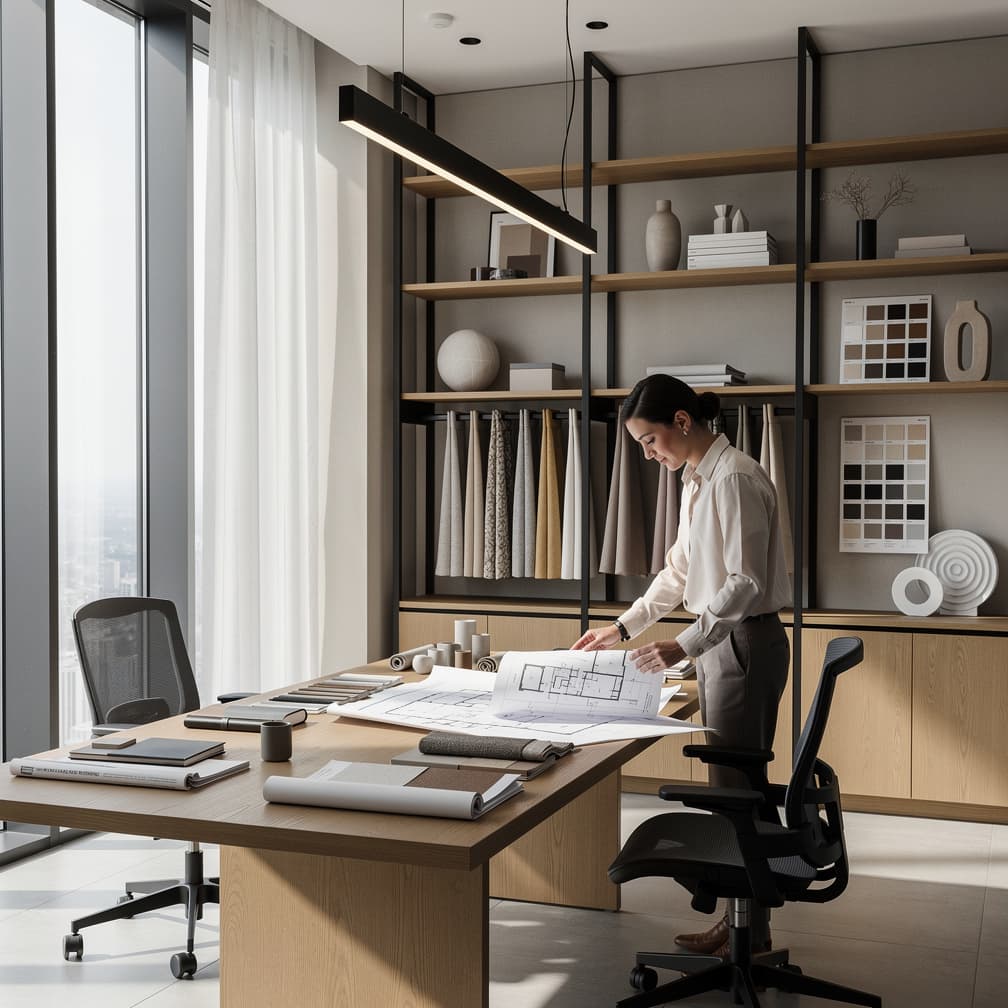

An installer drags a console table across a finished floor and leaves a gouge the client will not accept. Interior designer insurance in Honolulu is built for that afternoon, and for the quieter losses: the sofa specified in the wrong fabric, the vendor who ships six weeks late, the client who decides your drawing caused the cost overrun. Design work carries two separate risks that owners constantly confuse with each other. One is physical damage inside someone else's occupied space. The other is the argument about whether your judgment was sound. Different policies answer them, and a certificate naming only one can leave a real gap. The sections below sort out which line does what, what the published ranges look like, and how the pieces fit so you can compare quotes for a Honolulu practice without guessing.
What Makes Honolulu Different
Roof leaks, sprinkler failures, and water arriving from somewhere else are a design studio's quiet enemy. Fabric, paper, and finished samples do not survive water, and they are rarely inventoried properly. When a Honolulu building's problem soaks your space, the loss is yours to document and prove. Photographs taken today are worth more than any argument you can construct afterward. Ask what a policy assumes about property stored off site from your Honolulu studio, since overflow inventory is common and often unlisted. Ask whether an interruption is contemplated at all when a studio becomes unusable for weeks. Weather does not have to be dramatic to stop a practice for a month.
Local Risk Factors in Honolulu
After the storm passes, the work is triage: which orders survived, which vendors can still ship, and which Honolulu clients want to talk about anything at all. Projects pause, invoices pause, and a design practice with no billable hours still pays rent in Hawaii. Interruption terms are the piece most designers skip and the piece a long closure actually tests. Ask whether your form contemplates lost income when the studio is intact but the building is closed, since those are different facts. Confirm what the windstorm deductible does to a claim of that size before you decide the coverage is adequate.
What Coverage Does an Interior Designer in Honolulu Need?
Professional Liability
A client who says your layout, your product specification, or your advice created extra cost is making a claim about judgment, and this is the line generally built for that argument. It can help cover defense and settlement when negligence or an omission is alleged, whether or not the allegation turns out to be fair. Physical damage and injuries sit elsewhere.
Example: You specify a veneer that delaminates in a hot install, the client bills you for the rework, and professional liability may engage once the accusation lands, fairness aside.
General Liability
Landlords, building owners, and commercial clients ask for this one by name before your installers reach the freight elevator. It typically responds to third-party injury and to damage you cause in someone else's space, and it is the line certificates usually reference. Claims about your professional judgment fall outside it, which is why designers rarely carry it alone.
Example: A client catches a foot on a rolled rug during a consultation in your Honolulu studio; the injury claim that follows is what this line is intended to answer.
Commercial Property
Samples, boards, rugs held for a reveal, the plotter, and the machine your renderings live on are the assets designers forget to count. This line is priced off the contents figure you declare, and it may help cover fire, theft, vandalism, storm damage, and equipment breakdown. Rising water is typically excluded and gets bought back separately.
Example: A pipe above a leased studio lets go over a long weekend and a whole sample library absorbs the water; coverage could respond up to the limit you declared.
Business Owners Policy
Bundling is the point here: a package that folds the liability and property pieces together for practices that fit a standard mold, often with interruption terms attached. It can be a sensible base for a small studio in Honolulu. The professional exposure, which is the claim designers actually face, usually sits outside the package and needs its own line.
Example: Fire closes your studio for six weeks and both the ruined contents and the income you lose while it dries out may fall inside a single package, depending on the form.
How Much Does Interior Designer Insurance Cost in Honolulu?
Interior Designer Insurance is a bundle of separate policies, priced separately. The ranges below are typical figures for Honolulu for each line; a quote prices each one against your own operations.
| Coverage | Typical range | What moves your price |
|---|---|---|
| Professional Liability Insurance | $85 - $270 per month | The services you actually perform, annual revenue or billed fees, limit and retention selected |
| General Liability Insurance | $55 - $140 per month | Industry and risk classification, annual revenue, number of employees |
| Commercial Property Insurance | $65 - $210 per month | Building value and construction type, roof age and condition, fire protection class |
| Business Owners Policy Insurance | $85 - $230 per month | Annual revenue and industry class, building and contents values, square footage and building age |
Prices shown are general estimates, not guaranteed rates or quotes. Your actual premium will depend on the insurer, coverage selected, business details, location, claims history, and other underwriting factors. Learn about our pricing methodology.
What Are the Insurance Requirements for an Interior Designer in Honolulu?
Workers' comp is generally required once you have your first employee. Hawaii generally requires employers to carry workers' compensation at that point. Common exemptions include sole proprietors. Confirm current thresholds with your state's workers' compensation agency before you hire.
Flood damage is typically excluded from standard policies. Standard commercial property and builders-risk-type policies typically exclude flood. Given Honolulu's coastal flood exposure, a separate flood policy is worth pricing; FEMA's National Flood Insurance Program is the usual starting point.
Where to verify licensing and coverage rules. The Hawaii Insurance Division publishes consumer guidance and current insurance requirements for Hawaii businesses. When a contract or lease demands specific wording, the Hawaii Insurance Division's guidance is the authoritative place to check.
Get Your Interior Designer Quote in Honolulu
Compare rates from multiple carriers. Free quotes, no obligation.
Operating in Honolulu
- Renderings live on one machine more often than owners admit, and equipment breakdown stops billable work in a way no client will accept as a reason for delay.
- A property manager in Honolulu County can hold a work authorization until your certificate names the ownership entity rather than the building, and those two names are rarely identical.
- Subcontracted millwork and painting crews carry their own certificates, and diarying their expiration dates is cheaper than discovering a lapse when a client's floor is already damaged.
- Design fees rise with project size, and so does the number in any dispute, so a limit set when you were doing single rooms in Honolulu stops matching the work within a year.
How to Buy: Advice for Honolulu Owners
Start from the loss that would end the practice, not from the one that happens most often. A scratched floor is annoying; a claim saying your design decision cost a client six figures is existential. Professional Liability is the line built around that second scenario, and its limit deserves more thought than the price. Set the number against the largest project you expect to sign, then check what your contracts already demand. General Liability handles the physical side and is rarely the expensive part of the bill. Confirm the details with the Hawaii Insurance Division before deciding how much limit is enough for Honolulu work. Then run the same limits through CPK and see which participating carriers price them sensibly.
FAQ
Interior Designer Insurance in Honolulu: FAQ
One answers physical harm, the other answers judgment. If a client trips over a sample case in your studio, or an installer gouges a wall, General Liability is the line that could respond. If a client says your layout was wrong, your product choice failed, or your advice created extra cost, that is a professional claim and a different policy. Design practices tend to need both, because the two claims arrive from the same project through different doors.
Yes, and they routinely do. The insurance exhibit attached to a contract names a limit, and it is usually written for the largest vendor on the job rather than the designer. You can meet the number or lose the award; negotiating it marks you as difficult before work starts. Price the higher limit before you bid on a Honolulu project, so the requirement is arithmetic rather than a scramble on a deadline.
Expect questions about revenue, the value of what sits in your studio, your claims history, and the limits your contracts demand. Expect questions about scope too: whether you direct trades, oversee installation, specify structural changes, or hold client funds for furnishings. Vague answers get priced as uncertainty, which costs money. Write one honest paragraph describing the practice and hand the identical paragraph to every carrier so the quotes compare cleanly.
Usually not the shipment itself. A vendor's mistake is a vendor's contract problem, and your policy is not a substitute for their liability. What can get insurable is the claim that follows: the client argues you should have caught the error, verified the order, or managed the timeline, and now a Honolulu project cost more. That accusation aims at your professional judgment, and Professional Liability is generally the line built for it.
An additional insured is a party added to your policy so that your coverage can respond when they get pulled into a claim arising from your work. Landlords, building owners, and general contractors ask for it because it moves the first line of defense onto your paper instead of theirs. The wording matters more than the label. Ask whether the endorsement reaches your completed work, since a designer's complaints usually arrive after the room is finished.
The deductible is the part of a loss that stays on your side. If a fire ruins the sample library in a Honolulu studio, you absorb the deductible and the policy considers the rest, up to whatever limit you declared. A lower deductible costs more every month for comfort you may never use. A higher one is often the cheaper way to buy a bigger limit, which is the number that actually matters when a claim is large.
Sources
- 1.Hawaii Insurance Division(Hawaii Insurance Division publishes consumer guidance for insurance buyers.)
- 2.FEMA / FloodSmart(Flood coverage is typically purchased separately; FEMA administers the National Flood Insurance Program.)


