







































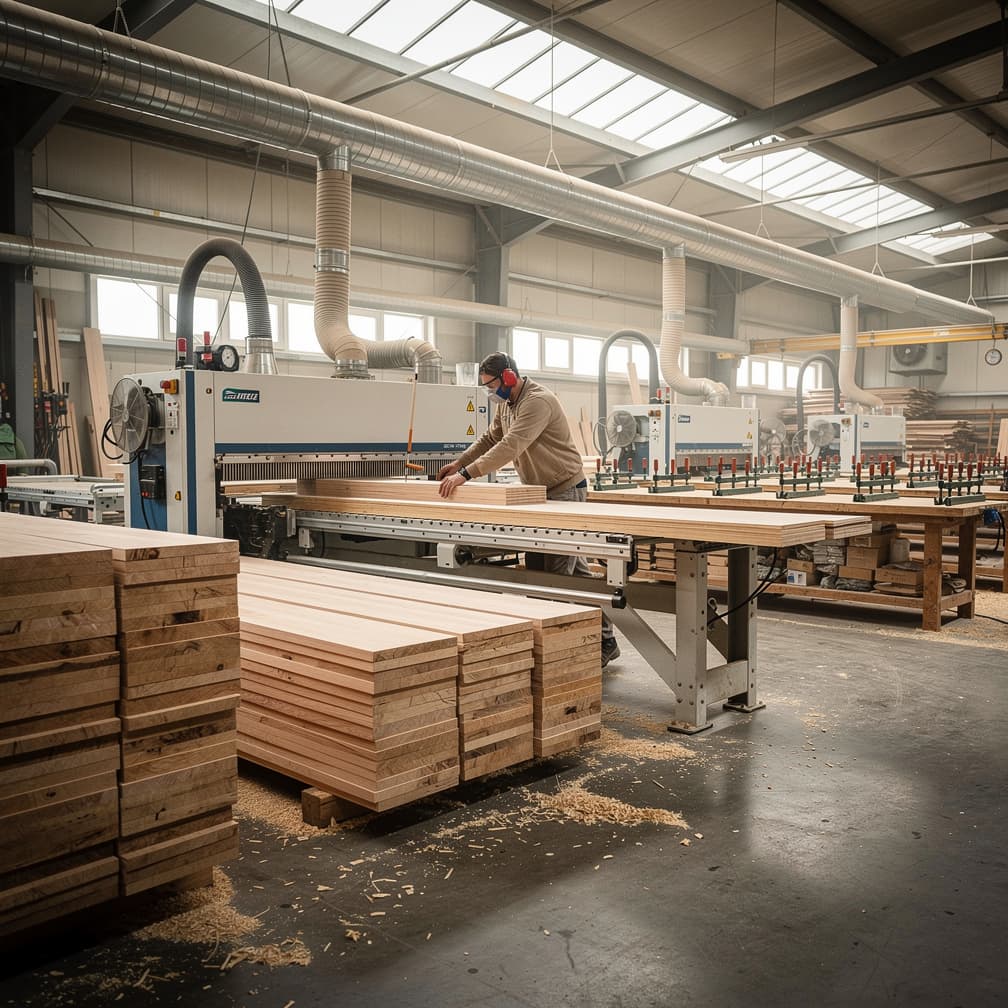

Tools coverage can start around $20 a month, and a low price is exactly why owners stop reading. Limits are where woodworking shop insurance in Honolulu fails quietly, because the equipment schedule you set on day one is still the schedule after four new machines arrive. A claim settles against what is listed, not against what is bolted to your floor. Add the wide belt sander, the dust collector, and the router table the day they land, and value them at what replacement actually costs now. Participating carriers in Hawaii read that list closely, and an honest one gets you a defensible answer at claim time. The same discipline applies to client work parked in your shop between milling and install, which owners rarely think to value at all. Fix the schedule, then shop the price.
What Makes Honolulu Different
Deductibles are the fastest thing you can change and the least examined. Raising one lowers the premium, and it moves money from a certainty you pay monthly into a shock you pay once. For a shop that shock arrives with the fire or the theft, which is the same week the revenue stops. Ask what number you could write a check for during a bad month, not during a good one. Limits work the other direction: low ones stay cheap right until a contract or a claim outgrows them. Machinery values, payroll, and loss history set the baseline, and these two levers move around it. A quote in Honolulu that beats another by a wide margin usually differs on exactly these terms. Line up the deductible and the limit first, then ask participating carriers in Hawaii to quote that same pair.
Local Risk Factors in Honolulu
Hurricane wind finds the roof of a shop building first, and everything under it is dust-sensitive, moisture-sensitive, or both. Once the envelope opens, rain reaches lumber racks, sheet goods, and a booth full of equipment that was never meant to be outdoors. Commercial Property may respond to wind damage and the water that follows through the opening, subject to a separate wind or hurricane deductible that can run as a percentage of building value. That number startles owners in Hawaii more than the premium ever did. Surge sits on the other side of the line entirely and is written on its own paper. Ask which deductible applies to a named storm before one reaches Honolulu.
What Coverage Does a Woodworking Shop in Honolulu Need?
General Liability
Landlords, builders, and property managers ask for this one by name before you unload or sign anything. It typically responds when a visitor gets hurt on your shop floor or when your crew damages something inside a customer's finished home, and defense costs usually sit inside it. Damage to the piece you built is generally a separate question.
Example: A designer walking the shop catches a boot on an extension cord near the jointer and breaks a wrist. The medical bills and any suit that follows are what a liability claim is meant to address.
Commercial Property
Flood and ordinary wear sit outside this form, and knowing that first makes the rest of it clear. What remains is the shop: the building if you own it, machinery bolted to the floor, lumber and sheet goods on the racks, and client work awaiting delivery, which often carries a smaller sublimit of its own.
Example: A pile of finishing rags ignites overnight and the fire takes the booth, the sander, and a rack of walnut billed to next month's job. Rebuilding that equipment and stock is what this line is generally written to handle.
Workers Compensation
Blades, dust, and heavy panels put your people in the way of predictable injuries. Coverage for a work-related injury generally handles medical care and a share of lost wages, and it is rated per hundred dollars of payroll by classification. What applies to your shop depends on where you operate and who is on the payroll.
Example: A helper feeding stock into the shaper loses focus late in a long shift and takes stitches across two fingers. The clinic visit and the days he cannot work are what this line typically picks up.
Tools & Equipment (Inland Marine)
Property coverage tends to stop at the building line, and this one follows the tools that leave it. Track saws, routers, clamps, and the kit that rides out to an install can be scheduled here, along with gear stored in a locked trailer. Items you never listed are usually the ones nobody pays for.
Example: A shop bay gets popped over the weekend and the router kit, the track saw, and a case of blades are gone before you open up on a Honolulu morning. A schedule with serial numbers is what a claim like that usually turns on.
How Much Does Woodworking Shop Insurance Cost in Honolulu?
Woodworking Shop Insurance is a bundle of separate policies, priced separately. The ranges below are typical figures for Honolulu for each line, except workers compensation, which is rated per $100 of payroll; a quote prices each one against your own operations.
| Coverage | Typical range | What moves your price |
|---|---|---|
| General Liability Insurance | $140 - $525 per month | Industry and risk classification, annual revenue, number of employees |
| Commercial Property Insurance | $350 - $1,275 per month | Building value and construction type, roof age and condition, fire protection class |
| Workers Compensation Insurance | $0.75 - $2.74 per $100 of payroll | Employee classification codes, total annual payroll, experience modification rate |
| Inland Marine Insurance | $45 - $180 per month | Total insured value of the scheduled property, type and age of the equipment, where it is stored and how far it travels |
Prices shown are general estimates, not guaranteed rates or quotes. Your actual premium will depend on the insurer, coverage selected, business details, location, claims history, and other underwriting factors. Learn about our pricing methodology.
What Are the Insurance Requirements for a Woodworking Shop in Honolulu?
Workers' comp is generally required once you have your first employee. Hawaii generally requires employers to carry workers' compensation at that point. Common exemptions include sole proprietors. Confirm current thresholds with your state's workers' compensation agency before you hire.
Flood damage is typically excluded from standard policies. Standard commercial property and builders-risk-type policies typically exclude flood. Given Honolulu's coastal flood exposure, a separate flood policy is worth pricing; FEMA's National Flood Insurance Program is the usual starting point.
Where to verify licensing and coverage rules. The Hawaii Insurance Division publishes consumer guidance and current insurance requirements for Hawaii businesses. When a contract or lease demands specific wording, the Hawaii Insurance Division's guidance is the authoritative place to check.
Get Your Woodworking Shop Quote in Honolulu
Compare rates from multiple carriers. Free quotes, no obligation.
Operating in Honolulu
- Machines fail on the job that matters most. A downed wide belt sander becomes a work order behind other work orders, and that queue is the loss nobody quoted.
- A property manager over a small fit-out in Honolulu can require a waiver of subrogation before you unload, and the request usually arrives with no warning.
- Deliveries put you on somebody's finished floor with a heavy counter and a helper walking backwards. Damage there is a claim without a single spark involved.
- The equipment schedule you wrote at the start ages badly, because machines keep arriving and nobody calls the carrier about them.
How to Buy: Advice for Honolulu Owners
Pull the lease and the last three contracts before you ask anybody for a number. Each of those documents names limits, endorsements, and parties, and those terms decide what you are actually shopping for. General Liability sits at the center of the request, and the additional insured wording a builder wants is an endorsement question your carrier has to answer. Add the equipment list next: every saw, the dust collector, the sander, and the portable tools that leave with an install crew. Inland Marine is priced off that list, and a stale list understates the loss. The Hawaii Insurance Division publishes consumer guidance on reading a commercial policy, which is worth an hour before you commit to anything. Then put one identical submission for your Honolulu shop in front of participating carriers through CPK and compare term by term rather than headline by headline.
FAQ
Woodworking Shop Insurance in Honolulu: FAQ
A landlord can require proof before handing over keys, and commercial leases usually spell out limits and endorsements in an exhibit. That is a contract term rather than a rule, so it varies building to building. A woodworking tenant tends to draw extra questions about the finishing area, dust collection, and how solvent rags get stored. Read the exhibit before signing, since the policy you buy has to match what you already promised a landlord in Honolulu.
Payroll, the replacement value of your machinery, your finishing setup, and your claims history do most of the work. A shop that sprays lacquer prices differently than one that finishes by hand, even at identical square footage. Limits and deductibles then push the number in either direction. Two quotes that look far apart usually differ on terms rather than on generosity, so line up the deductible and the limit before you compare the price.
General Liability is the line that typically responds when a visitor gets hurt on your floor, subject to the form and its limits. Pickup day and walkthroughs put people beside running machines and offcuts, and reasonable care is owed the moment they clear the door. Defense costs generally start when the demand letter arrives, long before fault gets settled. Whether a particular claim is paid depends on the facts and on your wording.
Inland Marine is built around portable property and commonly reaches tools away from the shop, though the schedule and the location wording decide the answer. Some policies limit items left in a trailer overnight or ask for signs of forced entry. A building-based form may stop at the wall. Keep serial numbers and photographs on file, because a theft claim tends to settle on the evidence you already had.
Property belonging to others gets handled its own way on most forms, often through a limited sublimit rather than your full property limit. Client work parked between milling and install is exactly what that wording contemplates, and the value is easy to outgrow without noticing. Work in progress raises the same question, since the piece is worth far more than the lumber was. Ask for that sublimit in writing before a leak asks for you, and put the question to every carrier quoting your Honolulu shop.
It is an endorsement that can extend your policy's limit to another party for claims arising out of your work. A builder asks because it shifts some of the risk of your work onto paper you pay for. Blanket and scheduled versions behave differently, especially when somebody gets added after the job starts. Your carrier either issues the form your contract names or it does not, so ask before you sign rather than after.
Sources
- 1.Hawaii Insurance Division(Hawaii Insurance Division publishes consumer guidance for insurance buyers.)
- 2.FEMA / FloodSmart(Flood coverage is typically purchased separately; FEMA administers the National Flood Insurance Program.)


