







































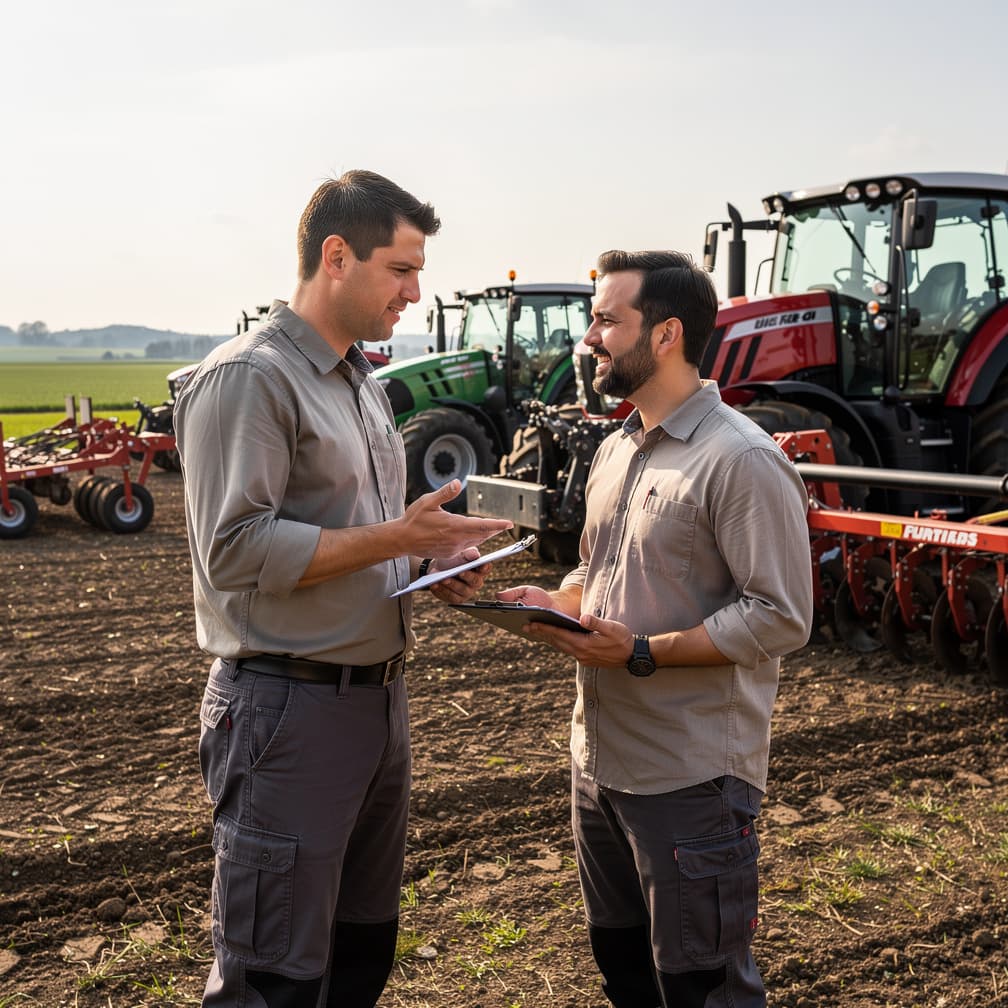

Loading a skid steer onto a trailer is where a lot of dealership claims begin: a strap lets go, the ramp shifts, and something expensive meets something else expensive. Agricultural equipment dealer insurance in Pearl City exists for that half hour and for the drive that follows it. Damage you do to a buyer's gate, driveway, or barn during delivery is third-party property damage, and it lands differently than damage to your own unit. Demonstrations create the same split, since the machine is yours and the field is not. Your techs meet a third version of the problem when a repair goes sideways on someone else's ground. Sorting which side of that line a loss falls on is what a Pearl City owner should settle at renewal, never during a claim.
What Makes Pearl City Different
Deductibles are the quietest price lever on a dealership policy and the least discussed one. Raising the property deductible lowers the monthly figure and moves that money onto your side of a loss. Whether the trade makes sense depends on cash rather than philosophy, and it shifts as the season shifts. Limits work the other way: they cost little at the margin and matter enormously in the one bad year. Underinsuring a lot full of iron to save a little each month is a bet against your own inventory. Your equipment schedule keeps that honest, so update it when the lot turns over. A dealership in Pearl City that reprices at renewal without touching the schedule is quoting last year's business. Bring current numbers to participating carriers in Hawaii and the comparison starts to mean something.
Local Risk Factors in Pearl City
Hurricane season turns an open equipment lot into a field of sails, since wind can shove a light attachment across gravel and drive rain into every seam of a building. A dealership in Pearl City on the coast plans deliveries around forecasts, because a loaded trailer is the last place anyone wants to be when a band moves through. Sales stop, the yard gets tied down, and staff spend a day securing iron instead of selling it. Commercial property may respond to the wind side of a named storm, subject to a separate windstorm deductible in many coastal areas. The surge and rising water that follow, though, are usually treated as flood and sit outside that form. Sort the wind-versus-water line with a carrier in Hawaii before a storm is on the map.
What Coverage Does an Agricultural Equipment Dealer in Pearl City Need?
General Liability
When a customer slips at the parts counter or a bystander is struck during a demo, this is the line a claim usually starts on. It can help cover third-party bodily injury and property damage tied to your premises and operations, including damage you do on a buyer's ground during delivery. It generally does not extend to your own inventory or to your employees, which sit under other forms.
Example: A shopper climbs down from a display combine, catches a boot on the ladder, and breaks a wrist on the pavement. The injury claim and the legal costs behind it are the kind of loss this coverage may take on.
Commercial Property
The building, the parts inventory, the shop contents, and the units on your lot are what this line is built around. It can respond to fire, storm, theft, and vandalism damage to that property, whether it sits under roof or out in the yard, depending on how the form treats open-lot storage. Flood is the notable carve-out, typically excluded and arranged separately.
Example: A hailstorm rolls through overnight and dents every hood in the front row. Repair or replacement of the damaged units parked on the lot is the sort of claim this coverage can help absorb.
Tools & Equipment (Inland Marine)
Where a property form tends to stop at the edge of the lot, this line follows the machinery that moves. It might help cover units in transit between your yard, a customer site, and the service area, along with the portable shop tools and diagnostic gear your techs carry off-premises. What it typically does not address is faulty repair work itself, which is a separate exposure.
Example: A skid steer bound for a farm outside Pearl City shifts on the trailer when a strap fails, and the loader arm bends against the rail. Damage to that unit in transit is what this coverage is meant to answer.
Workers Compensation
The people most likely to get hurt at a dealership are the techs under the machines and the hands moving iron in the yard. This line is rated against payroll rather than headcount, and it might help cover medical costs and lost wages when an employee is injured on the job. It does not answer for a customer's injury, which belongs to the liability side instead.
Example: A mechanic straining to free a seized transmission wrenches his back and misses three weeks of the busy season. The medical bills and the wage replacement are what this coverage tends to pick up.
How Much Does Agricultural Equipment Dealer Insurance Cost in Pearl City?
Agricultural Equipment Dealer Insurance is a bundle of separate policies, priced separately. The ranges below are typical figures for Pearl City for each line, except workers compensation, which is rated per $100 of payroll; a quote prices each one against your own operations.
| Coverage | Typical range | What moves your price |
|---|---|---|
| General Liability Insurance | $140 - $525 per month | Industry and risk classification, annual revenue, number of employees |
| Commercial Property Insurance | $430 - $1,575 per month | Building value and construction type, roof age and condition, fire protection class |
| Inland Marine Insurance | $120 - $550 per month | Total insured value of the scheduled property, type and age of the equipment, where it is stored and how far it travels |
| Workers Compensation Insurance | $0.75 - $2.74 per $100 of payroll | Employee classification codes, total annual payroll, experience modification rate |
Prices shown are general estimates, not guaranteed rates or quotes. Your actual premium will depend on the insurer, coverage selected, business details, location, claims history, and other underwriting factors. Learn about our pricing methodology.
What Are the Insurance Requirements for an Agricultural Equipment Dealer in Pearl City?
Workers' comp is generally required once you have your first employee. Hawaii generally requires employers to carry workers' compensation at that point. Common exemptions include sole proprietors. Confirm current thresholds with your state's workers' compensation agency before you hire.
Flood damage is typically excluded from standard policies. Standard commercial property and builders-risk-type policies typically exclude flood. Given Pearl City's coastal flood exposure, a separate flood policy is worth pricing; FEMA's National Flood Insurance Program is the usual starting point.
Where to verify licensing and coverage rules. The Hawaii Insurance Division publishes consumer guidance and current insurance requirements for Hawaii businesses. When a contract or lease demands specific wording, the Hawaii Insurance Division's guidance is the authoritative place to check.
Get Your Agricultural Equipment Dealer Quote in Pearl City
Compare rates from multiple carriers. Free quotes, no obligation.
Operating in Pearl City
- A floor plan lender treats the iron on your Pearl City lot as its collateral, and it can ask for proof of coverage on that inventory before funding the next unit you order.
- Attachments walk before machines do. A loader bucket, a mower deck, or a set of tires can leave a yard in the back of a pickup, and the loss surfaces on a schedule nobody updated.
- Customers climb on equipment unsupervised. A buyer who wants to feel the seat height is up three steps before anyone at the counter looks over, which is where showroom injury claims tend to begin.
- A property manager behind a leased yard in Pearl City can hold the keys until a certificate naming the entity is on file, so a lapsed renewal stops occupancy rather than only paperwork.
How to Buy: Advice for Pearl City Owners
Make a list of everyone holding a certificate from you, then check whether the list matches what you signed. Landlords, floor plan lenders, and commercial buyers all want proof, and each may want different wording on it. General Liability is usually the line those certificates reference, so its limit is the one other people's risk managers audit. Confirm whether your policy carries blanket additional-insured wording or whether each holder has to be scheduled by name. That single answer decides how much of your week the paperwork eats. Ask about Commercial Property too, since a landlord may want evidence on the building improvements you paid for. The Hawaii Insurance Division publishes consumer guidance on reading a certificate of insurance. Once the list and the wording line up, compare what participating carriers in Hawaii charge for the same package.
FAQ
Agricultural Equipment Dealer Insurance in Pearl City: FAQ
Cost tracks four things: payroll in the service bay, the value of iron on the lot, your revenue, and three years of loss history. A dealership running a busy shop prices differently than one that mostly moves units. Protection class and how isolated the yard sits overnight matter too. Nobody can quote you from a description of the trade alone, which is why the submission you send to carriers in Hawaii does most of the work.
General Liability is generally the line asked about first when a member of the public is hurt on your premises. It might respond to medical costs and to the legal expense that follows, subject to your limit and the policy terms. Check whether defense sits inside that limit, because a serious injury can burn through it while fault is still being argued. Your own employees sit under a different line entirely.
Not automatically. A property form draws a line between what sits under roof and what sits in the open, and the yard is where a dealership in Pearl City keeps most of its value. Some forms limit what they do for property left outdoors overnight, and some leave it out. Ask in writing before you assume the lot is included, and ask how the limit gets set for a full yard rather than an empty one.
Property in transit is its own question. Inland Marine is typically the line that thinks about equipment moving between your yard, a customer site, and the service area. Whether it applies at a given moment can depend on who owns the unit once it leaves, which is a contract question as much as an insurance one. Get the transfer point written into the sale paperwork, then confirm the form matches it.
A buyer wants your policy to answer for them if something goes wrong during your delivery or your service call on their ground. Additional-insured status is the endorsement that can do that, and it has to live on the policy rather than on a certificate. Some carriers offer blanket wording; others schedule each party by name. Ask for the endorsement itself, since a certificate only reports what already exists.
Property belonging to others in your care is a distinct exposure, and it is not the same thing as your own inventory. Inland Marine forms often address customer property held for service, sometimes under a separate limit. What that limit should be depends on the most valuable combine you would ever have in the bay at once. Ask how the form treats damage caused by the repair itself, since faulty work is commonly excluded.
Sources
- 1.Hawaii Insurance Division(Hawaii Insurance Division publishes consumer guidance for insurance buyers.)
- 2.FEMA / FloodSmart(Flood coverage is typically purchased separately; FEMA administers the National Flood Insurance Program.)


