







































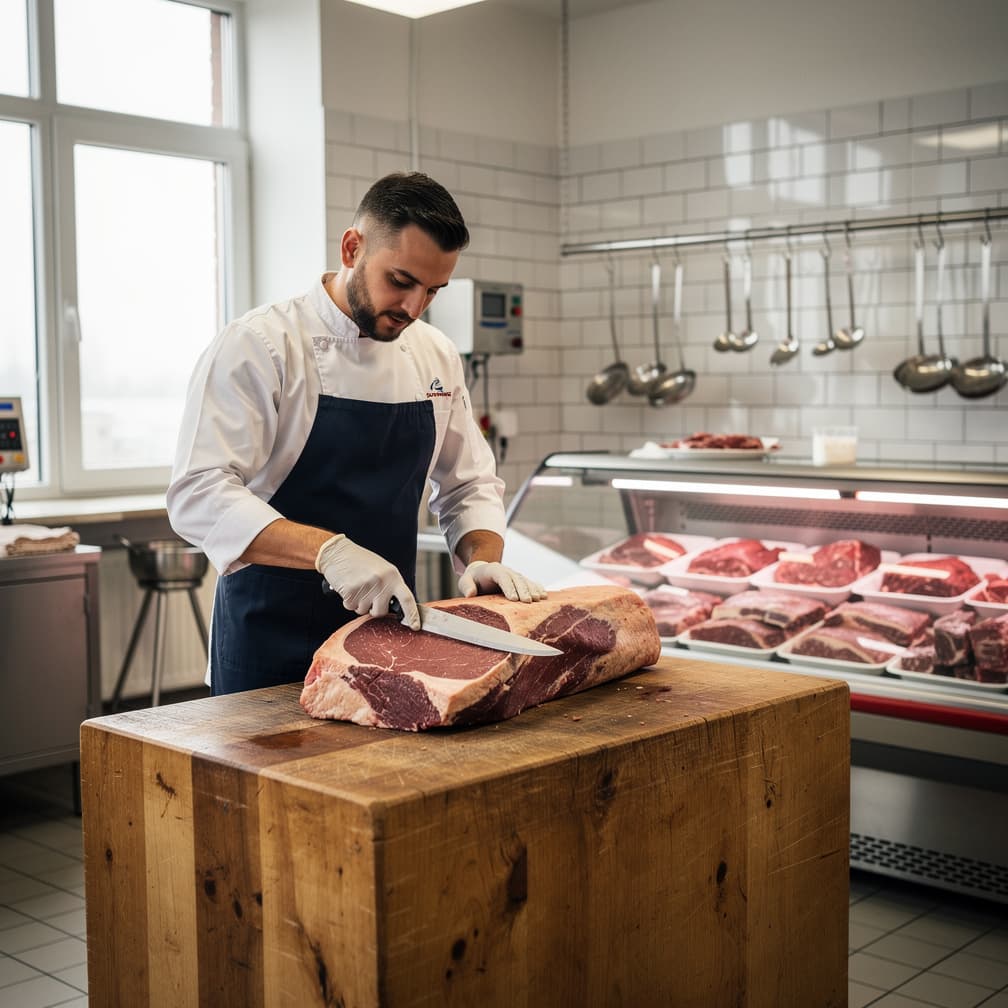

As a butcher shop in Nampa, your reputation travels through a small number of regular customers, and one counter injury can reach all of them before the claim file opens. That is the quiet reason butcher shop insurance in Nampa matters in a thin market: the money and the goodwill move together. A slip near the case, a cut from a sample knife, a delivery driver hurt in your back room, each one starts the same way, with a phone call you did not expect. Where the nearest shop is miles away you also absorb the outage yourself, because there is no neighbor with cooler space to hold your product while a compressor gets fixed. Ask what a policy expects of you when equipment fails and who decides what the lost product was worth. Then compare quotes from participating carriers on those terms.
What Makes Nampa Different
Deductibles are the quietest lever you control and the one owners look at last when they compare quotes. Raising one lowers the premium, and the difference sits in your pocket every month until a loss lands. The test is simple: could you write that check the week a cooler dies, without touching payroll? In a small market, where a repair can take longer, the answer needs a wider margin than you first think. Property deductibles and liability deductibles are separate, and participating carriers in Idaho can run several at once. Spoilage, where it appears on a policy at all, may carry its own terms, and those terms are where the money is. Read them before you accept the premium that made the quote attractive in the first place. A shop near Nampa with tight cash flow should treat the deductible as a coverage decision, not a discount.
Local Risk Factors in Nampa
Days of heavy smoke keep customers home and pull staff back to their families, and a shop can lose a week without a flame reaching the building. The product does not survive that if the power drops with it. Smoke also settles into surfaces a food business cannot simply wipe down, which turns a cleanup into a closure. Interruption terms, where a policy carries them, generally require physical damage before anything begins, and smoke may or may not qualify depending on the wording. Ask exactly what counts, whose property must be damaged, and how long the waiting period runs. Then ask what proof of product loss a carrier expects in Nampa, because a claim in Canyon County moves on records rather than on how bad the week felt.
What Coverage Does a Butcher Shop in Nampa Need?
General Liability
Landlords, market organizers, and wholesalers usually name this line when they ask for proof, and it is the one most butcher shops buy first. It can help cover third-party injury and property damage claims, a customer down on a wet floor or a cart through a neighbor's door, plus the defense behind them. Damage to your own equipment sits elsewhere.
Example: A customer steps off a wet mat near the case, breaks a wrist, and hires a lawyer six weeks later; general liability may answer for the injury claim and the defense that follows.
Commercial Property
Flood sits outside it, mechanical breakdown is commonly excluded, and wear on an aging compressor is not a claim. What remains is the core of a butcher shop's balance sheet: coolers, saws, slicers, scales, cases, and stock, against fire, theft, vandalism, and storm damage. Spoilage terms, where offered at all, usually arrive as a separate endorsement.
Example: A fire in the back room takes out two grinders and a wall of packaging overnight in Nampa; commercial property could pick up the repairs and the equipment replacement, subject to your deductible.
Workers Compensation
A cut, a burn on a sealer, a slip in the cold room: staff injuries in this trade are hands-on and frequent enough that carriers price them by job code rather than headcount. This line is generally intended to address medical care and a share of lost wages for employees hurt at work. Rules on who must carry it vary by state.
Example: A helper's hand slips on a band saw during a busy stretch and the shift ends at an urgent care clinic; Workers Compensation is typically meant to handle the treatment and the wages missed while the hand heals.
Business Owners Policy
Where liability and property get bought as two policies, this package puts them under one, which is a common structure for an owner-operated counter. It can suit a shop with equipment, inventory, and public foot traffic in Nampa. What sits inside varies by carrier, so the endorsement list, and what is missing from it, is the part worth reading.
Example: A pipe bursts over the display case and a customer slips in the runoff the same morning; a Business Owners Policy might address the property damage and the injury claim under one policy.
How Much Does Butcher Shop Insurance Cost in Nampa?
Butcher Shop Insurance is a bundle of separate policies, priced separately. The ranges below are typical figures for Nampa for each line, except workers compensation, which is rated per $100 of payroll; a quote prices each one against your own operations.
| Coverage | Typical range | What moves your price |
|---|---|---|
| General Liability Insurance | $55 - $180 per month | Industry and risk classification, annual revenue, number of employees |
| Commercial Property Insurance | $100 - $370 per month | Building value and construction type, roof age and condition, fire protection class |
| Workers Compensation Insurance | $0.75 - $2.74 per $100 of payroll | Employee classification codes, total annual payroll, experience modification rate |
| Business Owners Policy Insurance | $100 - $340 per month | Annual revenue and industry class, building and contents values, square footage and building age |
Prices shown are general estimates, not guaranteed rates or quotes. Your actual premium will depend on the insurer, coverage selected, business details, location, claims history, and other underwriting factors. Learn about our pricing methodology.
What Are the Insurance Requirements for a Butcher Shop in Nampa?
Workers' comp is generally required once you have your first employee. Idaho generally requires employers to carry workers' compensation at that point. Common exemptions include sole proprietors, working partners, and household domestic workers. Confirm current thresholds with your state's workers' compensation agency before you hire.
Flood damage is typically excluded from standard policies. Standard commercial property and builders-risk-type policies typically exclude flood damage. Flood exposure varies address by address, so check your premises in FEMA's Flood Map Service Center before deciding; if you sit in a mapped flood zone, a separate policy through the National Flood Insurance Program is the usual starting point.
Where to verify licensing and coverage rules. The Idaho Department of Insurance publishes consumer guidance and current insurance requirements for Idaho businesses. When a contract or lease demands specific wording, the Idaho Department of Insurance's guidance is the authoritative place to check.
Get Your Butcher Shop Quote in Nampa
Compare rates from multiple carriers. Free quotes, no obligation.
Operating in Nampa
- Your busiest hour in Nampa is also your riskiest one: crowded aisles, wet floors, and staff moving fast around blades is when the ordinary slip and the serious cut both happen.
- A sample tray on the counter is a small kindness with a liability attached, because children reach and parents let them, and a cut at the counter starts the same way a fall does.
- Temperature logs feel like busywork until a spoiled inventory claim asks what the box was doing at three in the morning, and the only answer worth having is a record.
- A Nampa storefront with glass at street level sits one accident away from an open shop, and boarding it up is a repair bill plus a day dark.
How to Buy: Advice for Nampa Owners
Equipment is where a butcher shop's property quote gets won or lost, so treat the schedule as the main document. Walk the shop with your phone and record every cooler, saw, grinder, slicer, scale, and case, with age and replacement cost. Ask whether Commercial Property values that equipment at replacement cost or actual cash value, because a decade-old walk-in prices very differently under each. Ask the same question about inventory, since meat is stock rather than equipment, and forms treat the two separately. If the answer is vague, get it in writing before you compare anything else. A Business Owners Policy may bundle these, though the valuation basis still lives in the fine print. The Idaho Department of Insurance publishes consumer guidance on how property claims get valued. Send that schedule to participating carriers unchanged and see which one prices your actual shop rather than a generic Nampa storefront.
FAQ
Butcher Shop Insurance in Nampa: FAQ
It can be a sensible core, since a Business Owners Policy generally bundles liability and property in one place for a small retail operation. Whether it is enough depends on what the package leaves out. Spoilage, equipment breakdown, and employee injuries are commonly handled separately or not at all. Read the endorsement list against your own equipment and staffing, and ask what must be added rather than assuming it sits inside.
Flood is generally excluded from standard property forms and gets handled as its own decision, priced separately. That surprises owners at street level, where a few inches of water can reach compressors, motors, and anything stored low. Ask what a policy says about water arriving from outside versus water from a burst pipe inside, because the two get treated very differently. The distinction decides whether you are filing a claim or paying for the repair.
An equipment schedule with ages and replacement costs, annual revenue, square footage, payroll by job code if you have staff, the insurance clause from your lease, and any loss runs. Estimates get priced defensively; facts get priced accurately. Send the same package to every carrier, because a comparison only means something when each one is reading the same shop.
An employee injury is the Workers Compensation question and a customer injury is the liability question, even when the same blade caused both. Those two lines sit in different places and answer to different rules, which vary by state. What tends to matter either way is the incident report written that day: time, task, guarding, training, and who was standing there. Write it before the shift ends.
More than one. Property and liability usually carry separate deductibles, and any spoilage or breakdown endorsement can carry its own terms on top. A single event can trigger two of them at once. The practical test is whether you could fund the property deductible the week a walk-in dies without touching payroll. If the answer is no, the premium you saved by raising it was borrowed from a bad month.
Sometimes, though not always, and organizers usually want their own name on a certificate before they assign a space. Off-site selling can change what a policy contemplates, so describe it at quote time rather than assuming the shop's coverage travels with the cooler. If a market near Nampa asks for wording your policy does not carry, that is a coverage question to settle with the carrier, not a form to sign quickly.
Sources
- 1.Idaho Department of Insurance(Idaho Department of Insurance publishes consumer guidance for insurance buyers.)
- 2.FEMA / FloodSmart(Flood coverage is typically purchased separately; FEMA administers the National Flood Insurance Program.)


