







































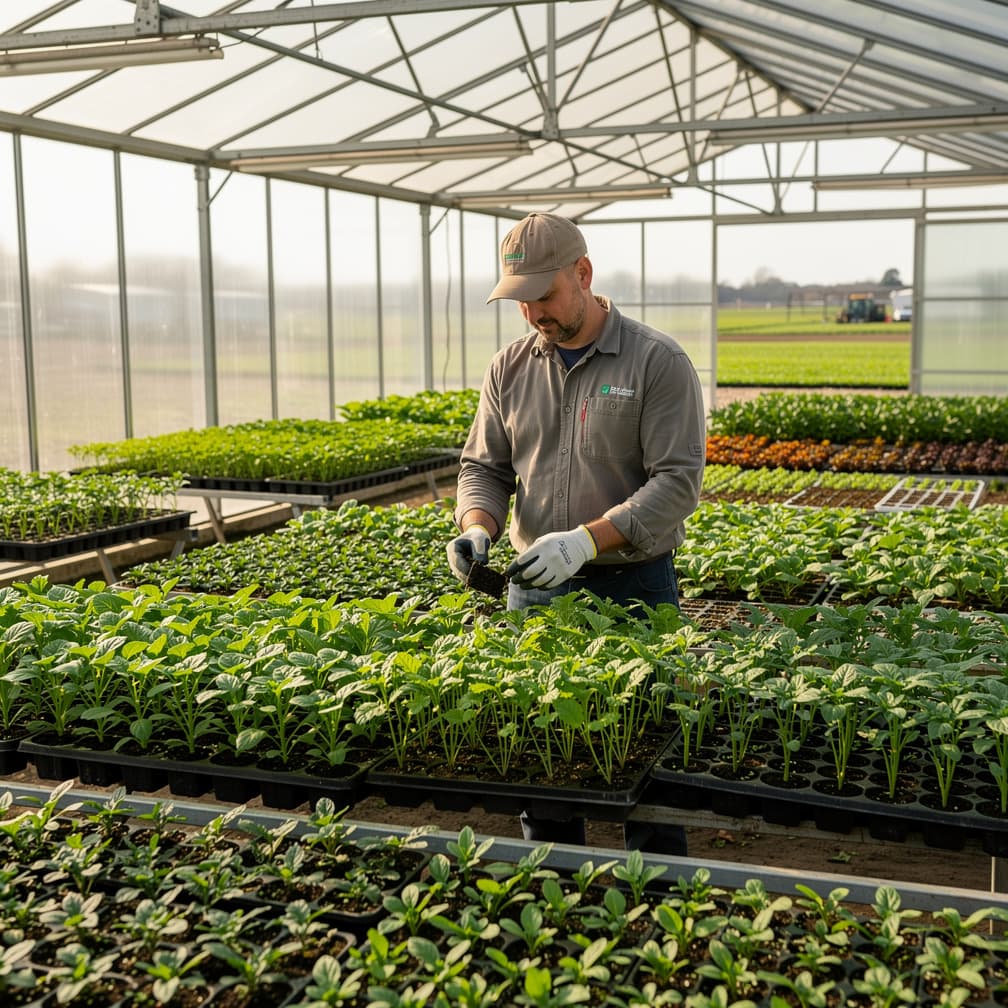

Quoted on its own, general liability for a nursery and greenhouse business can start around $35 a month, and that figure moves the moment payroll, retail square footage, or a claim history enters the file. Foot traffic is the driver owners underestimate: every customer walking a damp aisle is an injury waiting for a bad step, and a retail yard prices differently than a wholesale growing operation. Nursery and greenhouse insurance in Nampa gets quoted off what you tell underwriters, so vague answers buy vague pricing. Have payroll figures, building and greenhouse values, and an equipment list ready before you ask anyone for a number. Two participating carriers looking at the same yard in Nampa can land far apart on the same benches and the same aisles. Shop the file, not the renewal notice.
What Makes Nampa Different
Distance is a cost driver even when nobody prices it as one. Building costs, crew wages, and the going rate for a repair vendor all feed the number you are quoted, and a smaller market moves those inputs differently than a metro does. Rebuilding a greenhouse where materials ship in and labor drives in is not automatically cheaper, whatever an assessed value suggests. An insured value pulled off a tax record can leave you badly short after a total loss. Ask how the replacement figure on your buildings was set, and whether a rebuild in Nampa was ever actually priced. Ask what happens when the real cost runs past the schedule. With the nearest supplier of structural glazing sitting outside Canyon County, that question stops being academic. Fix the schedule before a loss makes it urgent.
Local Risk Factors in Nampa
Wildfire threatens a nursery from two directions, and only one of them is flame. Smoke and ash settle across an entire yard, and stock coated in ash is stock nobody buys, whether or not a single plant burned. Radiant heat can warp poly and crack glass from a distance. Commercial Property may respond to fire damage on structures and stock, though a smoke-only claim gets argued more often, since the damage is real and the physical loss is harder to demonstrate. Photograph the ash before anyone washes it off. Ask what your form says about smoke damage to living inventory in Nampa, and how participating carriers in Idaho have handled that kind of file before.
What Coverage Does a Nursery & Greenhouse in Nampa Need?
General Liability
Landlords, wholesale buyers, and event coordinators ask for this one by name before you open, ship, or set up a stand. It generally answers third-party injury and property damage: the shopper who goes down on a wet aisle, the basket that falls off its hook onto someone. Your own crew's injuries and damage to your own stock sit elsewhere.
Example: A customer reaches for a pot near the top of a display, the stack shifts, and a falling planter breaks her wrist beside the register. A claim like that might respond to her medical bills and the suit that follows.
Commercial Property
Glass, poly film, hoop ribs, benches, heaters, controllers, and the stock standing under all of it: this line is built around the things you own. Fire, storm damage, theft, and vandalism are the usual covered causes, subject to your values and your deductible. Flood typically sits outside it, and wear on hard-run equipment usually does too.
Example: A heater in the propagation house shorts overnight and fire takes the structure, the benches, and six weeks of seedlings with it. Commercial Property could pick up the rebuild and the lost stock, up to the values on your schedule.
Workers Compensation
General Liability does nothing for your own people, and that gap is what this line exists to fill. Medical care and lost wages after a work injury are the core of it: a back strained on a balled tree, a hand caught under a cart, heat illness in a closed house. Rules vary by state, and the Idaho Department of Insurance publishes the current requirements for employers.
Example: A seasonal hire lifts a heavy container off a low bench, feels something give in his back, and is out for a month at the worst point of the year. Workers Compensation might handle the treatment and part of his lost pay.
Business Owners Policy
Buying the property and liability pieces separately works fine; bundling them into a single form is often cheaper for a small yard, and that bundle is the Business Owners Policy. It typically packages buildings, stock, and third-party injury together, sometimes with income provisions attached. Unusual structures or heavy outdoor inventory can outgrow the form.
Example: Hail perforates the film on two houses in Nampa, the stock beneath is stripped bare, and sales stop for a month. One packaged policy might take the repairs, the ruined plants, and a share of the lost income together.
How Much Does Nursery & Greenhouse Insurance Cost in Nampa?
Nursery & Greenhouse Insurance is a bundle of separate policies, priced separately. The ranges below are typical figures for Nampa for each line, except workers compensation, which is rated per $100 of payroll; a quote prices each one against your own operations.
| Coverage | Typical range | What moves your price |
|---|---|---|
| General Liability Insurance | $65 - $220 per month | Industry and risk classification, annual revenue, number of employees |
| Commercial Property Insurance | $150 - $575 per month | Building value and construction type, roof age and condition, fire protection class |
| Workers Compensation Insurance | $0.75 - $2.74 per $100 of payroll | Employee classification codes, total annual payroll, experience modification rate |
| Business Owners Policy Insurance | $130 - $410 per month | Annual revenue and industry class, building and contents values, square footage and building age |
Prices shown are general estimates, not guaranteed rates or quotes. Your actual premium will depend on the insurer, coverage selected, business details, location, claims history, and other underwriting factors. Learn about our pricing methodology.
What Are the Insurance Requirements for a Nursery & Greenhouse in Nampa?
Workers' comp is generally required once you have your first employee. Idaho generally requires employers to carry workers' compensation at that point. Common exemptions include sole proprietors, working partners, and household domestic workers. Confirm current thresholds with your state's workers' compensation agency before you hire.
Flood damage is typically excluded from standard policies. Standard commercial property and builders-risk-type policies typically exclude flood damage. Flood exposure varies address by address, so check your premises in FEMA's Flood Map Service Center before deciding; if you sit in a mapped flood zone, a separate policy through the National Flood Insurance Program is the usual starting point.
Where to verify licensing and coverage rules. The Idaho Department of Insurance publishes consumer guidance and current insurance requirements for Idaho businesses. When a contract or lease demands specific wording, the Idaho Department of Insurance's guidance is the authoritative place to check.
Get Your Nursery & Greenhouse Quote in Nampa
Compare rates from multiple carriers. Free quotes, no obligation.
Operating in Nampa
- A wholesale buyer in Nampa can withhold a purchase order until the certificate names its parent entity correctly, and that correction takes days you do not have in the middle of the season.
- When the nearest glazier who repairs commercial growing structures works outside Canyon County, a torn house waits on their calendar. A claim payment shortens the paperwork, never the wait.
- An event coordinator in Nampa can demand limits somebody set years ago without ever seeing a plant stand. Meeting the number is usually faster than arguing about whether the number makes any sense.
- Stock stands outdoors under shade cloth for months, and policy forms treat outdoor property differently than goods behind a locked door. That distinction surfaces only after something is already gone.
How to Buy: Advice for Nampa Owners
Inventory is the exposure owners insure last and lose first. Pots, tools, trays, fittings, and stock disappear in small increments, and a deductible eats most of those losses before any policy engages. Decide what you would genuinely file on, then set the deductible where it makes sense rather than where it looks inexpensive. Commercial Property is where stock and equipment usually sit, and its definitions repay a slow read: outdoor property, property of others, and locked storage are often three separate things. A Business Owners Policy folds those same questions into one form for smaller yards. Check the Idaho Department of Insurance's guidance before deciding how much of the small stuff to carry yourself. Then ask participating carriers in Idaho to quote the inventory list you actually keep.
FAQ
Nursery & Greenhouse Insurance in Nampa: FAQ
Cost follows drivers rather than a map. Payroll, retail foot traffic, the values on your houses and stock, the deductible you pick, and your claim history do most of the work. A yard with heavy weekend retail prices differently than a wholesale grower of the same size. Building values in Nampa matter because rebuild costs are local. Quote identical limits across participating carriers and the real differences become visible.
Landlords and property managers ask before you take possession. Wholesale accounts and institutional buyers ask before shipping. Event coordinators ask before you set up a booth. Municipal purchasing offices ask before an order clears. None of them read the policy itself, only the certificate and the limits printed across it, so the wording has to be on file before the deadline rather than after it.
It depends on what killed them and how the form defines stock. Property coverage typically keys off physical damage from a covered cause, so a wind event that opens a house reads differently than a cold snap that simply outran the heaters. Living inventory also gets valued differently than packaged goods. Ask whether plants in the ground and plants in containers are handled the same way.
Usually not. Property forms typically exclude flood, and that gap gets filled by a separate flood policy rather than by an endorsement on the same form. Surface water pushing through a hoop house or across a sales yard is exactly the scenario that lands outside. If your ground sits low or drains slowly, price flood on its own and ask how long the waiting period runs.
Mechanical breakdown is its own conversation. Many property forms treat a failure inside the equipment as maintenance rather than a covered cause, while damage from a fire that heater started is handled differently. Equipment breakdown coverage can often be added, and it might respond to the burner itself and sometimes to stock lost when the temperature dropped. Ask which of those two your form actually includes.
Falls are the claim this trade sees most. General Liability can respond to a third party's injury, up to the limit you bought, and defense arrangements differ between forms. Your deductible comes first. What helps most is a record made before the fall: a written walkway routine, dated photographs, a log of when the aisles were last cleared. If a shopper in Nampa sues, that log argues for you.
Sources
- 1.Idaho Department of Insurance(Idaho Department of Insurance publishes consumer guidance for insurance buyers.)
- 2.FEMA / FloodSmart(Flood coverage is typically purchased separately; FEMA administers the National Flood Insurance Program.)


