







































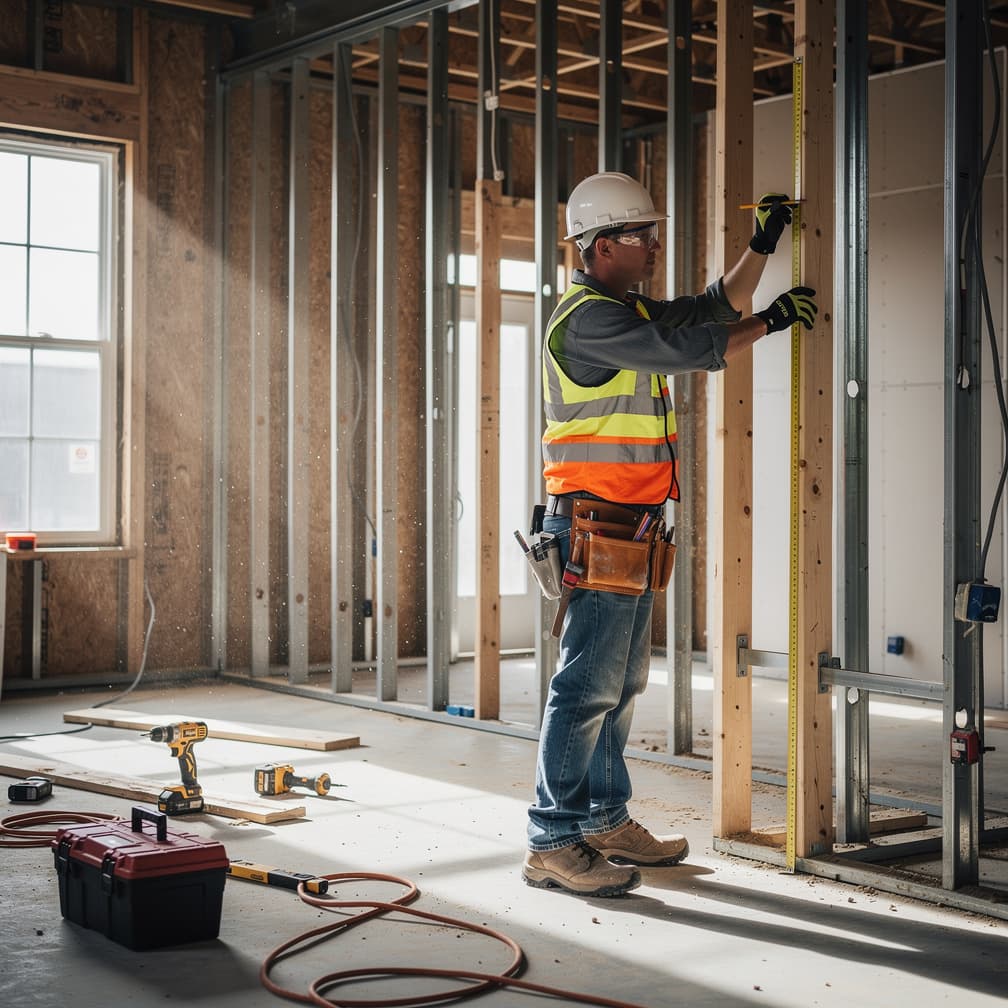

Drywall comes off and the joist behind it is split, and that was never in the estimate. The scope changes, the homeowner wants an answer, and the finished room next door now has a crack running through it. That argument is what renovation contractor insurance in Aurora gets bought to settle, because a scope fight can become a damage claim in one afternoon. Third-party claims from a remodel rarely arrive as one tidy bill. They arrive as a room that needs redoing, a client who stopped paying, and a sub pointing back at you. What you carry decides whether that fight is yours alone or shared with a participating carrier in Illinois. Read the sections below before you price the next demolition.
What Makes Aurora Different
Wind that lifts a tarp at two in the morning delivers water to a floor you just finished. The rework is unpaid, the schedule moves, and the client remembers the ceiling rather than the storm. Materials staged on site are the other casualty: cabinets, flooring, and trim all waiting for install. Storing a kitchen's worth of cabinetry in a house without doors is a decision, and it prices out. Stage deliveries against the work instead of against the discount for taking everything at once. That habit does more for your loss record than any endorsement you could buy this year. If an Aurora jobsite must hold materials, ask how a policy treats property stored where you are not the owner. The answer varies by form across Illinois, and it is a short question with a long consequence.
Local Risk Factors in Aurora
Before you set trusses or stand a wall in Aurora, check what the sky is doing, then check what your contract says about the days you lose to it. Both questions cost money and only one of them is insurance. Bracing that is temporary in name stays up for a week, and a week is long enough for a cell to find it. The gap remodelers discover late is that a stalled job is a business problem rather than a claim, since income protection generally depends on physical damage and a lost afternoon is not damage. Build the weather days into the schedule you sign in Illinois instead of hoping to make them up later.
What Coverage Does a Renovation Contractor in Aurora Need?
General Liability
The owner, the landlord, or the general contractor ahead of you asks for this one by name before your crew opens anything. It is the line generally written for a third party hurt on your jobsite and for damage you cause to somebody else's property while working. Intentional acts sit outside it, your own tools sit outside it, and so does the fee dispute when a scope argument turns ugly.
Example: A homeowner steps around the dust barrier, catches a heel on a pried-up threshold, and breaks a wrist in her own hallway. The medical bills and the letter from her lawyer are what this line may be called on to answer.
Workers Compensation
A framer drops a header on his hand at nine in the morning and the day changes for everyone on site. This line is built around employees hurt at work: lifting injuries, falls from planks, and heat illness in an unconditioned gut. It generally applies to your people rather than to subs carrying their own policies, though an uninsured sub can end up counted as yours at audit. Requirements vary by state.
Example: A helper carrying a cast iron tub down a stair tread that gave way spends the next six weeks off the job. Wage replacement and the medical side are what this coverage is intended to pick up.
Commercial Property
Flood sits outside this one, and so does anything parked on a jobsite you do not own, which catches remodelers out constantly. What it typically attaches to is a fixed location you occupy: a shop, an office, a yard, and the stock and benches inside them. If you run the business out of trucks and a rented storage unit, say so, because the answer may be a different form entirely.
Example: A fire in the shop takes the miter station, the racked lumber, and the paperwork drawer in one night. Rebuilding that room and replacing what stood in it is the sort of loss this policy is meant to address.
Tools & Equipment (Inland Marine)
Tools are the property that never sits still: in the truck, in a locked house overnight, loaned to a sub for a week. This line follows gear that moves rather than gear that lives at one address, and it commonly picks up theft, vandalism, and storm damage away from a shop. Wear, rust, and a blade that finally gave up are ordinary depreciation and usually fall outside it.
Example: Somebody pops the trailer at an Aurora jobsite overnight and clears out the nailers, the compressor, and two lifts. Replacing that kit fast enough to keep the crew working is what this coverage can help cover.
Commercial Umbrella
Where the underlying liability limit stops, this one starts, and that is the entire idea. It generally adds height above a policy already in force and may respond once that limit is used up, which means it inherits whatever the form beneath it leaves out. Contractors buy it when a lease demands a limit the base policy cannot reach, never as a patch for a gap.
Example: One demolition afternoon produces an injured guest, a flooded unit below, and separate demands from the building's owner and its manager. Once the base limit runs dry, this layer is designed to sit behind the rest.
How Much Does Renovation Contractor Insurance Cost in Aurora?
Renovation Contractor Insurance is a bundle of separate policies, priced separately. The ranges below are typical figures for Aurora for each line, except workers compensation, which is rated per $100 of payroll; a quote prices each one against your own operations.
| Coverage | Typical range | What moves your price |
|---|---|---|
| General Liability Insurance | $190 - $600 per month | Industry and risk classification, annual revenue, number of employees |
| Workers Compensation Insurance | $0.75 - $2.74 per $100 of payroll | Employee classification codes, total annual payroll, experience modification rate |
| Commercial Property Insurance | $65 - $240 per month | Building value and construction type, roof age and condition, fire protection class |
| Inland Marine Insurance | $40 - $160 per month | Total insured value of the scheduled property, type and age of the equipment, where it is stored and how far it travels |
| Commercial Umbrella Insurance | $75 - $260 per month | Umbrella limit requested, limits carried on the underlying policies, loss history on those underlying policies |
Prices shown are general estimates, not guaranteed rates or quotes. Your actual premium will depend on the insurer, coverage selected, business details, location, claims history, and other underwriting factors. Learn about our pricing methodology.
What Are the Insurance Requirements for a Renovation Contractor in Aurora?
Workers' comp is generally required once you have your first employee. Illinois generally requires employers to carry workers' compensation at that point. Common exemptions include sole proprietors, partners, and corporate officers owning all stock. Confirm current thresholds with your state's workers' compensation agency before you hire.
Flood damage is typically excluded from standard policies. Standard commercial property and builders-risk-type policies typically exclude flood damage. Flood exposure varies address by address, so check your premises in FEMA's Flood Map Service Center before deciding; if you sit in a mapped flood zone, a separate policy through the National Flood Insurance Program is the usual starting point.
Where to verify licensing and coverage rules. The Illinois Department of Insurance publishes consumer guidance and current insurance requirements for Illinois businesses. When a contract or lease demands specific wording, the Illinois Department of Insurance's guidance is the authoritative place to check.
Get Your Renovation Contractor Quote in Aurora
Compare rates from multiple carriers. Free quotes, no obligation.
Operating in Aurora
- Winning a bid in Aurora and running the job over in Kane County is ordinary, and neither address changes your obligations, though both end up printed on paperwork somebody checks.
- Photographs taken before the first swing settle the argument about pre-existing damage, and that argument shows up far more often than any claim does.
- A property manager in Aurora can hold your elevator reservation until the certificate lands on file, which turns a lapse between policies into a lost start date rather than a billing question.
- Homeowners stay in the house through most remodels, so your jobsite has a civilian walking through it every evening to inspect the day's work and find the day's dust.
How to Buy: Advice for Aurora Owners
Gear moves constantly on a remodel: to the site, into the house, back to the trailer, then out again. Inland Marine is the line usually written for that pattern, and the questions to ask are about location rather than value. Is the property meant to be covered while it sits in a locked house overnight? While it rides in a trailer? While it is loaned to a sub for a week? Those answers vary by form, and they matter more than the number on the declarations page. Commercial Property typically attaches to a fixed location, so never assume it follows the toolbox into an Aurora basement. Compare quotes from participating carriers in Illinois on the location questions first and the price second.
FAQ
Renovation Contractor Insurance in Aurora: FAQ
Owners and property managers commonly ask for a certificate before your crew touches anything, and plenty of contracts make proof of coverage a condition of the start date. That demand comes from the client, not from us. Requirements also vary by state, and the Illinois Department of Insurance publishes the current requirements for contractors. Have the document lined up before you sign, since a start date rarely moves to wait for paperwork.
Price tracks a handful of things you control and one you do not. Payroll and the share of demolition in your work drive the employee side. Annual receipts drive the liability side. Claims history trails you between carriers for years. The value of the tools you haul sets the equipment number. Where you work moves the total far less than any of those, so a quote for Aurora really starts with your books.
General Liability is the line generally written for damage you cause to somebody else's property while working. The wording is where it gets interesting: some forms treat the part of the house you were actively working on differently from the rest of it. A scratched hallway and the bathroom you were mid-tile can land on opposite sides of that boundary. Read the section before a claim makes you read it.
Usually yes, through an endorsement the carrier has to issue, and it is a different animal from naming that homeowner as a certificate holder. A holder simply receives a copy of the document. An additional insured gains a real interest in your policy. Contracts often demand the endorsement and then attach specific wording, so send the actual contract language rather than your summary of it.
That turns on which form you bought and where the tools were sitting. Inland Marine is commonly written for equipment that moves between jobs, and it could respond to theft from a locked house or a trailer. Property tied to a fixed address typically does not follow the toolbox. Ask the location question directly, since a remodeling kit spends its life away from any building you own, whether the job sits in Aurora or an hour out.
The scope changes and the money conversation begins, which is a contract problem before it is an insurance one. A change-order clause written in plain language settles it faster than any policy could. Coverage enters when the discovery causes damage to the rest of the home, or when the dispute becomes a claim about your work. Photograph the cavity the hour you open it, every time.
Sources
- 1.Illinois Department of Insurance(Illinois Department of Insurance publishes consumer guidance for insurance buyers.)
- 2.FEMA / FloodSmart(Flood coverage is typically purchased separately; FEMA administers the National Flood Insurance Program.)


