







































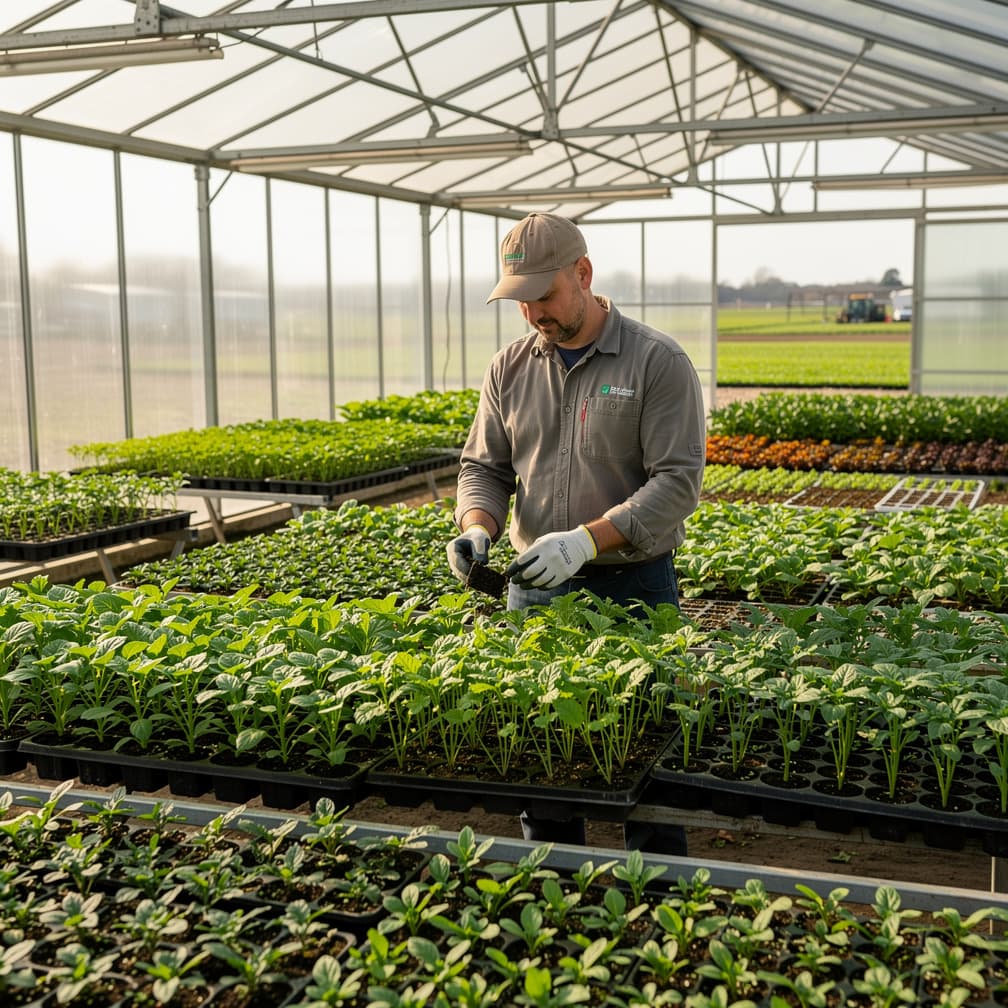

Wet concrete under a misting bench puts more customers on the ground than any storm ever does. A shopper steps over a hose loop, catches a pallet edge, and the claim starts before the cart is even righted. That is the ordinary shape of a loss here, and it is why nursery and greenhouse insurance in Chicago gets bought before the first warm weekend rather than after it. Retail aisles, benches, carts, and a loading apron put strangers inside a working growing operation all day long. A landlord can ask for proof of coverage before your gates open at all. Your limits decide how much of a serious injury you absorb yourself. This page walks through what actually moves those limits for a nursery and greenhouse business in Chicago.
What Makes Chicago Different
Landlords ask first, and they ask in writing. A commercial lease can require proof of coverage before keys change hands, name the owner as an additional insured, and set limits you did not choose. Retail space in a busy market gets leased on the landlord's paper, and that paper travels with the property manager rather than with you. If a landlord in Chicago demands a limit above what your own risk suggests, you still have to meet it. Insurance requirements are a lease term like rent, and they do not soften because your operation is small. Read the clause before you sign it, not after the benches are already inside. Price to the clause or to your own exposure, whichever runs higher. Ask participating carriers in Illinois to quote it as written, and treat that number as your real budget.
Local Risk Factors in Chicago
Tornado and straight-line wind do not negotiate with a hoop house. A severe cell can flatten a structure in seconds, drive debris through the glass of the one beside it, and leave stock exposed to whatever weather comes next. Damage from flying debris usually reads as wind damage on a property form, which is the good news, while water arriving through the new opening can turn into a different argument. Commercial Property may respond to the structures and the stock inside them, subject to your deductible and to the values on your schedule. Ask what your form says about debris removal, since clearing a collapsed house off a sales yard is expensive and that cost is not always inside the limit. Settle it for your Chicago operation before storm season in Illinois.
What Coverage Does a Nursery & Greenhouse in Chicago Need?
General Liability
Landlords, wholesale buyers, and event coordinators ask for this one by name before you open, ship, or set up a stand. It generally answers third-party injury and property damage: the shopper who goes down on a wet aisle, the basket that falls off its hook onto someone. Your own crew's injuries and damage to your own stock sit elsewhere.
Example: A customer reaches for a pot near the top of a display, the stack shifts, and a falling planter breaks her wrist beside the register. A claim like that can respond to her medical bills and the suit that follows.
Commercial Property
Glass, poly film, hoop ribs, benches, heaters, controllers, and the stock standing under all of it: this line is built around the things you own. Fire, storm damage, theft, and vandalism are the usual covered causes, subject to your values and your deductible. Flood typically sits outside it, and wear on hard-run equipment usually does too.
Example: A heater in the propagation house shorts overnight and fire takes the structure, the benches, and six weeks of seedlings with it. Commercial Property could pick up the rebuild and the lost stock, up to the values on your schedule.
Workers Compensation
General Liability does nothing for your own people, and that gap is what this line exists to fill. Medical care and lost wages after a work injury are the core of it: a back strained on a balled tree, a hand caught under a cart, heat illness in a closed house. Rules vary by state, and the Illinois Department of Insurance publishes the current requirements for employers.
Example: A seasonal hire lifts a heavy container off a low bench, feels something give in his back, and is out for a month at the worst point of the year. Workers Compensation might handle the treatment and part of his lost pay.
Business Owners Policy
Buying the property and liability pieces separately works fine; bundling them into a single form is often cheaper for a small yard, and that bundle is the Business Owners Policy. It typically packages buildings, stock, and third-party injury together, sometimes with income provisions attached. Unusual structures or heavy outdoor inventory can outgrow the form.
Example: Hail perforates the film on two houses in Chicago, the stock beneath is stripped bare, and sales stop for a month. One packaged policy might take the repairs, the ruined plants, and a share of the lost income together.
How Much Does Nursery & Greenhouse Insurance Cost in Chicago?
Nursery & Greenhouse Insurance is a bundle of separate policies, priced separately. The ranges below are typical figures for Chicago for each line, except workers compensation, which is rated per $100 of payroll; a quote prices each one against your own operations.
| Coverage | Typical range | What moves your price |
|---|---|---|
| General Liability Insurance | $85 - $270 per month | Industry and risk classification, annual revenue, number of employees |
| Commercial Property Insurance | $190 - $750 per month | Building value and construction type, roof age and condition, fire protection class |
| Workers Compensation Insurance | $0.75 - $2.74 per $100 of payroll | Employee classification codes, total annual payroll, experience modification rate |
| Business Owners Policy Insurance | $160 - $470 per month | Annual revenue and industry class, building and contents values, square footage and building age |
Prices shown are general estimates, not guaranteed rates or quotes. Your actual premium will depend on the insurer, coverage selected, business details, location, claims history, and other underwriting factors. Learn about our pricing methodology.
What Are the Insurance Requirements for a Nursery & Greenhouse in Chicago?
Workers' comp is generally required once you have your first employee. Illinois generally requires employers to carry workers' compensation at that point. Common exemptions include sole proprietors, partners, and corporate officers owning all stock. Confirm current thresholds with your state's workers' compensation agency before you hire.
Flood damage is typically excluded from standard policies. Standard commercial property and builders-risk-type policies typically exclude flood damage. Flood exposure varies address by address, so check your premises in FEMA's Flood Map Service Center before deciding; if you sit in a mapped flood zone, a separate policy through the National Flood Insurance Program is the usual starting point.
Where to verify licensing and coverage rules. The Illinois Department of Insurance publishes consumer guidance and current insurance requirements for Illinois businesses. When a contract or lease demands specific wording, the Illinois Department of Insurance's guidance is the authoritative place to check.
Get Your Nursery & Greenhouse Quote in Chicago
Compare rates from multiple carriers. Free quotes, no obligation.
Operating in Chicago
- Participating carriers in Illinois value a greenhouse differently, so two quotes on the same buildings can carry replacement figures far apart. The figure you accepted is the figure you are insured for.
- A property manager can hold your keys until a certificate carrying the exact entity name is on file. A policy that lapsed over the quiet months turns a signed lease into a waiting room.
- Aisles in a Chicago yard get hosed down at opening and stay slick for the first hour, which is exactly when the earliest customers arrive. Most injury claims here start on a surface you wet on purpose.
- Baskets hang at head height over a walkway all season, and the hooks fatigue where nobody is looking. One coming down on a shopper starts a claim before anyone thinks to inspect the hardware.
How to Buy: Advice for Chicago Owners
Time the shopping to your quiet weeks. An underwriter reviewing your file in the middle of the rush gets your worst attention and your roughest numbers, and you take the first workable quote because trucks are waiting. Start early and you can ask real questions: what a Business Owners Policy leaves out for a yard with stock standing outdoors, whether Commercial Property values reflect what a greenhouse costs to rebuild now. Renewal dates are movable, and so is your own calendar. If your Chicago season opens the week the weather turns, the file should be finished well before that. The Illinois Department of Insurance publishes consumer guidance on shopping for commercial coverage. Compare participating carriers while you still have time to walk away from one of them.
FAQ
Nursery & Greenhouse Insurance in Chicago: FAQ
Ask whoever services the policy, and send the lease clause rather than describing it from memory. Wording is what matters: primary and noncontributory language, notice of cancellation, and the exact legal entity name are the three things that get certificates bounced. Some policies add additional insureds by blanket endorsement, others one request at a time. Find out which yours does before a deadline lands.
Income provisions inside a property form can respond after a covered physical loss, and the phrase doing the work there is covered physical loss. A ruined season with an intact building usually gets nothing. Two details decide the outcome: the waiting period before income coverage starts, and how earnings get measured for a business that books most of its year in a handful of weeks.
One caps a single claim. The other caps what the whole term can draw, no matter how many claims arrive. A yard with heavy foot traffic can produce several small injury claims in one busy season, and each draws down the aggregate whether it settles or not. When the aggregate empties, the certificate you send out still looks identical. Ask what erodes it and whether defense costs sit inside the limit.
Usually yes, which is why small thefts rarely become claims. Bags of soil, hand tools, trays, and brass fittings walk off in amounts that sit below most deductibles, so you absorb them quietly. The deductible you chose to lower a premium is the number you pay on each of those losses. Decide what you would genuinely file on, then set it at a level you could cover in a dead week.
Often, though it turns on the form and the location. Policies describe covered premises specifically, and a tent or lot on ground you do not own can sit outside that description. If a site in Chicago requires proof of coverage naming the property owner, that request is a separate step from extending your own coverage to the spot. Ask about both before you commit to the space.
Payroll by job type, annual revenue, square footage under glass, values on every structure, an equipment list with ages, your retail versus wholesale mix, and a few years of claims. If your Cook County operation runs both retail and growing, they want the split. Anything left vague gets filled with an assumption, and assumptions favor the carrier. Send the identical file to everyone you ask.
Sources
- 1.Illinois Department of Insurance(Illinois Department of Insurance publishes consumer guidance for insurance buyers.)
- 2.FEMA / FloodSmart(Flood coverage is typically purchased separately; FEMA administers the National Flood Insurance Program.)


