Updated July 16, 2026

On-Hook Towing Insurance in Chicago
Space costs change towing decisions here before a claim ever happens. Chicago's median household income sits at $75,134, so a dented door or scratched bumper is not a minor annoyance to the owner but a real financial event they will chase you over. The vehicles you pick up from dense commercial corridors and enclosed garages often represent a repair or total-loss dispute that an owner will press hard if handling goes wrong. Your on-hook towing insurance in Chicago should be reviewed with realistic per-vehicle limits and a deductible your cash flow can actually absorb after a bad week. That matters even more if your routes include tight alleys, lower-clearance garages, or busy commercial blocks where a simple hookup can turn into a mirror strike, underbody scrape, or loading damage allegation. Before you renew, line up your heaviest tows, your most difficult pickup locations, and the highest-value vehicles you handled in the last year, then ask for those scenarios to be stress-tested on the quote.
On-Hook Towing Insurance Risk Factors in Chicago
Chicago's top risk factors include Tornado damage, Hail damage, Severe storm damage, and Wind damage.
Illinois has a high climate risk rating. Top hazards: Tornado (Very High), Severe Storm (High), Flooding (High), Winter Storm (High). The state's expected annual loss from natural hazards is $3.2B, which influences on-hook towing insurance premiums and may affect coverage availability in high-risk areas.
What On-Hook Towing Insurance Covers
Illinois buyers usually get the most value from this review by focusing on situations like winter recoveries, tight urban pickups, and disputed handoffs where damage allegations are hardest to defend. The practical question is whether your policy terms line up with how your drivers secure vehicles, where they pick them up, and what condition those vehicles are already in before the tow starts.
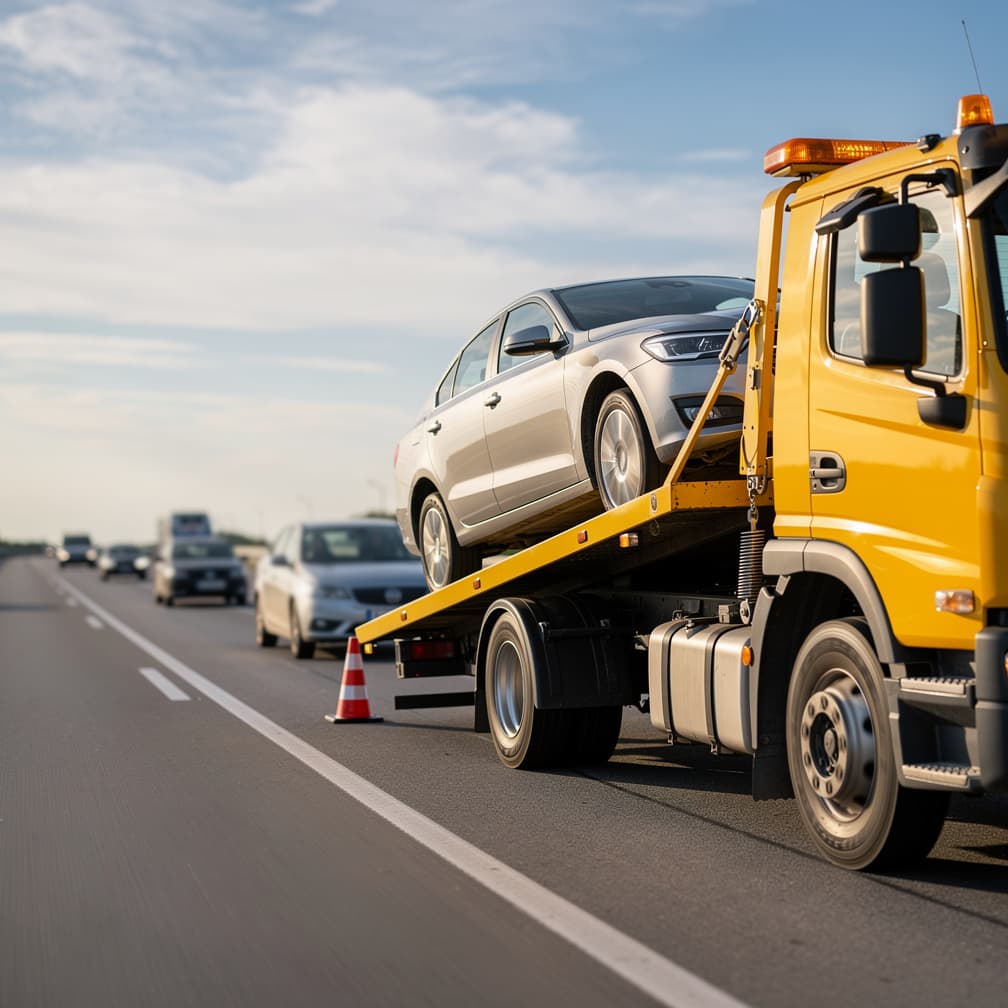
That matters here because a claim often turns on the handoff details. A vehicle pulled from a tight city alley, a disabled SUV loaded during freezing rain, or a low-clearance car moved from a parking structure can all produce different damage allegations even though each job is still a tow. You want to review how the policy addresses loading and unloading steps, wheel-lift versus flatbed work, and whether any vehicle types or job types are limited, excluded, or subject to special conditions.
You should also look closely at the evidence your insurer will expect after a loss. Pre-tow photos, dispatch notes, signed condition reports, hookup procedures, and destination receipts can all matter if a customer says the damage happened while the vehicle was in your care. If your operation handles police work, private property impounds, dealer moves, or after-hours roadside calls, ask for those workflows to be reflected in the underwriting submission so the quote matches the exposure. Confirm the covered towing methods, the claim reporting steps, the deductible you can absorb without straining cash flow, and any endorsements needed for the mix of work you actually accept each week.
Coverage Included

Collision on Hook
Covers damage to towed vehicles from collisions during transport.

Comprehensive on Hook
Covers theft, fire, and weather damage to vehicles being towed.
Loading & Unloading
Covers damage during the process of loading and unloading vehicles.
Winching Coverage
Covers damage to vehicles during winching and recovery operations.

Multiple Vehicle
Covers all vehicles on multi-car carriers and rollback flatbeds.
Industries & Insurance Needs in Chicago
Cook County business density is the local demand signal that changes how a towing operator should think about on-hook exposure. The county has 134,846 business establishments, so your trucks are more likely to work vendor lots, medical offices, retail centers, garages, and commercial properties where authorization, access, and release timing all matter as much as the tow itself. The county mix also leans toward professional, scientific, and technical services at 14.2%, health care and social assistance at 11.9%, and retail trade at 10.1%, so a meaningful share of calls can involve employee parking, patient or visitor vehicles, delivery areas, and customer-facing lots where damage allegations escalate quickly. That is a reason to review not just the on-hook limit, but also dispatch records, photo procedures, lot diagrams, and whether your policy setup fits the kinds of commercial accounts you actually serve.
What Makes Chicago Different
In a spread-out market, a tow can be mostly about distance and roadside recovery. Here, the harder part is often controlled access. Narrow garage entries and tight alley approaches shape your daily risk, and impatient property managers who want a vehicle moved now only add to the pressure. That operating environment raises the odds of low-speed handling claims, disputed pre-existing damage, and arguments about exactly when the vehicle condition changed. You want to think through where vehicles are hooked, how they are documented before movement, whether drivers can decline unsafe pickups, and how quickly photos and dispatch notes can be produced if an owner challenges the tow. If your book includes impounds, private property work, and account-based commercial towing, ask for the quote to be built around those job types instead of a one-size-fits-all towing profile.
Our Recommendation for Chicago
Your actual call mix tells you more about your exposure than your truck count does. Police-related work and private property towing carry different dispute risks than shop-to-shop moves or higher-value vehicle transport, so each category deserves its own review. Then compare your per-vehicle limit against the most expensive unit you realistically tow, not the average sedan you see most days. If your drivers work tight garages or dense commercial blocks, ask whether a higher deductible really saves money once minor handling claims are considered. Operationally, your drivers should capture time-stamped intake photos and note wheel condition, existing body damage, and clearance issues before they move the vehicle. For account work, keep lot maps, authorization contacts, and release procedures organized so a claim file does not depend on memory. If you are comparing quotes, ask each one to respond to the same real local scenarios so you can see where terms differ before the next difficult pickup.
Get On-Hook Towing Insurance in Chicago
Enter your ZIP code to compare on-hook towing insurance rates from carriers in Chicago, IL.
Business insurance starting at $25/mo
FAQ
Frequently Asked Questions
Chicago garage work raises the chance of low-speed contact claims during hookup, loading, and exit. If you regularly handle enclosed parking or tight access points, review per-vehicle limits against the highest-value units you actually tow, not just your most common calls.
Cook County has 134,846 business establishments, so private lots and office properties can make up a large share of local towing work. With that many potential account locations, your documentation procedures and account-specific exposure need careful review before you request a quote.
Cook County's largest business sectors include professional services, health care, and retail. Those settings often involve employee, patient, visitor, and customer vehicles, so authorization and condition photos matter.
Chicago's median household income is $75,134, which means many owners will closely scrutinize repair costs and loss handling after a towing incident. Expect longer disputes and higher settlement pressure, so weigh your deductible choice accordingly.
Police rotation work often brings stricter contract review and more claim scrutiny once a vehicle is in your care. You should review whether your limits, towing methods, and documentation process may need to match the assignments you accept before joining or renewing a rotation agreement.
Weather can complicate loading, winching, and unloading, especially when visibility and road conditions are poor. That makes pre-tow photos, driver notes, and clear dispatch records more important if a customer later disputes when damage occurred.
Insurance complaints are handled through the Illinois Department of Insurance, the state's insurance regulator. If you are comparing policies or reviewing a claim issue, confirm producer licensing, policy documents, and complaint options through that department.
Repair shops can need this review if they tow customer vehicles as part of daily operations. The key issue is not your company label. It is whether a customer's vehicle is attached to your truck or carried by it during transport.
Sources
- 1.U.S. Census Bureau, ACS 5-Year Estimates, table B19013(Chicago median household income is $75,134.)
- 2.U.S. Census Bureau, County Business Patterns, Cook County(Cook County has 134,846 business establishments.; Cook County business mix includes professional, scientific, and technical services at 14.2%, health care and social assistance at 11.9%, and retail trade at 10.1%.)
Updated July 16, 2026