







































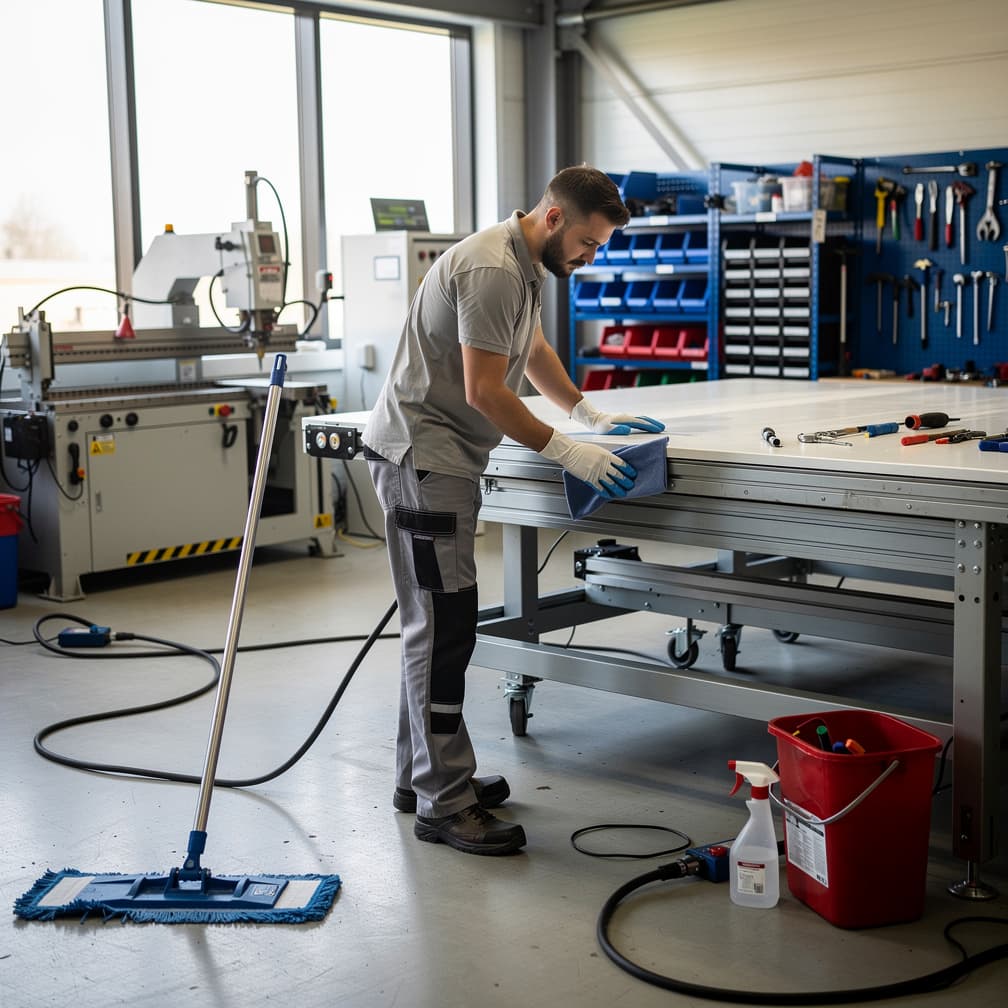

Glass breaks quietly. A cart clips a display case, a mirror lets go off the wall, and the invoice arrives long after your crew has driven home. In a thin market word travels, and a damage claim you argue about follows your name to the next building. Cleaning service insurance in Springfield exists mostly for that gap between the work and the aftermath. Your van is part of it too, since supplies, a buffer, and a ladder sit in it overnight in whatever spot you can park. Sangamon County may not have a deep bench of repair vendors, so replacing damaged client property can take longer than anyone likes. Ask what a policy does about that delay, and what it leaves you holding, before you sign the first contract of the year.
What Makes Springfield Different
Fewer local competitors sounds like leverage until the day you need another crew to finish a job. A team short on people cannot always borrow one, and the contract does not care why. The same thinness shows up after a loss, when the vendor who repairs the damaged floor is far away. Longer repair timelines mean the client stays unhappy longer, whatever the policy eventually does. About 44 cleaning services in Sangamon County mean underwriters also see less local claims data on this trade. Pricing then leans harder on your own record, which cuts both ways depending on your history. A clean loss run is worth more here than a persuasive story about how careful your crew is. Keep the incident notes, the training records, and the photos; they are the only evidence you own.
Local Risk Factors in Springfield
A van with its windows out and a rack of supplies soaked is the ordinary storm loss for this trade, and it happens while nobody is driving. Comprehensive coverage on a Commercial Auto policy might respond to that damage, subject to the deductible you chose back when the premium mattered more than the repair. Equipment inside the vehicle can be treated as a separate question with its own limit, and that split surprises owners more than the storm does. Add up what the buffer, the extractor, and the supplies are worth, then ask where each of them sits. A crew in Springfield without machines cannot work, and downtime after a Sangamon County storm runs longer than the repair when shops are backed up.
What Coverage Does a Cleaning Service in Springfield Need?
General Liability
Nearly every cleaning contract names this line, because a fall in a client hallway is the loss a building owner is worried about. General Liability may answer for bodily injury to a tenant or visitor and for damage to property you do not own, subject to the form you buy. Property in your care, custody, or control is typically excluded, so the floor you are servicing can sit outside it.
Example: A visitor slips on a lobby floor your crew finished twenty minutes earlier and sues over a broken wrist. Defense costs and a settlement of that kind may fall inside the policy, subject to your limits.
Workers Compensation
A crew member comes off a ladder during high dusting, and the medical bill and the lost wages are a payroll matter rather than a liability one. Workers Compensation is rated per hundred dollars of payroll and on job classification, so a floor tech and an office cleaner price differently. What is required varies by state and by how workers are classified.
Example: A night crew member slips carrying an extractor down a stairwell and misses six weeks. Treatment and a share of lost wages are typically handled through this line, depending on how the claim gets classified.
Commercial Auto
Personal auto forms typically exclude business use, which is where cleaning crews get caught: the van carrying supplies between job sites sits outside that policy the moment it is working. Commercial Auto is written for the use and may respond to collision damage, injury to others, and, where comprehensive is included, theft or storm damage. Equipment inside the vehicle is often a separate question with its own limit.
Example: A van rear-ends a car at a light on the way to the second job of the day, with a buffer and a case of solution in the back. Repairs and the other driver's claim could be handled here, subject to the deductible.
Business Owners Policy
Where General Liability deals with what your crew does to other people, a Business Owners Policy bundles that liability with coverage for property you own: the machines, the supplies, the contents of a storage space. Small cleaning operations buy it for the simplicity. Equipment away from your own premises is often limited, and rising water generally sits outside the form entirely.
Example: A storage space is broken into overnight in Springfield, and the buffer, the extractor, and a pallet of supplies are gone before the first shift. A theft loss like that is commonly what this policy is meant to address.
How Much Does Cleaning Service Insurance Cost in Springfield?
Cleaning Service Insurance is a bundle of separate policies, priced separately. The ranges below are typical figures for Springfield for each line, except workers compensation, which is rated per $100 of payroll; a quote prices each one against your own operations.
| Coverage | Typical range | What moves your price |
|---|---|---|
| General Liability Insurance | $50 - $150 per month | Industry and risk classification, annual revenue, number of employees |
| Workers Compensation Insurance | $0.75 - $2.74 per $100 of payroll | Employee classification codes, total annual payroll, experience modification rate |
| Commercial Auto Insurance | $130 - $370 per month | Fleet size and vehicle types, driver records and experience, coverage limits and deductibles |
| Business Owners Policy Insurance | $55 - $150 per month | Annual revenue and industry class, building and contents values, square footage and building age |
Prices shown are general estimates, not guaranteed rates or quotes. Your actual premium will depend on the insurer, coverage selected, business details, location, claims history, and other underwriting factors. Learn about our pricing methodology.
What Are the Insurance Requirements for a Cleaning Service in Springfield?
Workers' comp is generally required once you have your first employee. Illinois generally requires employers to carry workers' compensation at that point. Common exemptions include sole proprietors, partners, and corporate officers owning all stock. Confirm current thresholds with your state's workers' compensation agency before you hire.
State auto liability minimums apply to business vehicles. Illinois's minimum auto liability limits are $25,000/$50,000/$20,000 (bodily injury per person / per accident / property damage). Contracts and lenders often require more than the state floor.
Flood damage is typically excluded from standard policies. Standard commercial property and builders-risk-type policies typically exclude flood damage. Flood exposure varies address by address, so check your premises in FEMA's Flood Map Service Center before deciding; if you sit in a mapped flood zone, a separate policy through the National Flood Insurance Program is the usual starting point.
Where to verify licensing and coverage rules. The Illinois Department of Insurance publishes consumer guidance and current insurance requirements for Illinois businesses. When a contract or lease demands specific wording, the Illinois Department of Insurance's guidance is the authoritative place to check.
Get Your Cleaning Service Quote in Springfield
Compare rates from multiple carriers. Free quotes, no obligation.
Operating in Springfield
- Long routes put a van in traffic for more of the day than the mopping takes, and a crew crossing Sangamon County is exposed to the road well before it reaches a floor.
- Keys, codes, and after-hours access make your crew the only party inside the building, which means an unexplained loss in it starts with a question about you. Keep a record of who held what.
- A caution sign costs almost nothing and is the first thing anyone asks about after a visitor falls in a hallway your crew just finished. Its absence tends to be the whole claim.
- Move-out cleans end with a property manager in Springfield wanting photos before the keys change hands, and those photos become your record of what was already damaged when the crew arrived.
How to Buy: Advice for Springfield Owners
If your crew works after hours in buildings full of other people's property, the injury question cuts two ways. A tenant who falls is a liability claim; a crew member who comes off a ladder at midnight is a payroll claim, and the two follow different rules. Workers Compensation is rated on wages and job classification, and calling a floor tech an office cleaner is the kind of shortcut that unwinds at audit. Get the classifications right at the start. The Illinois Department of Insurance publishes the current requirements for employers, and those thresholds vary enough that guessing is a bad plan. General Liability handles the other half of that same night. Ask participating carriers to quote both together for your Springfield crew, since the conversation goes better when nothing is missing.
FAQ
Cleaning Service Insurance in Springfield: FAQ
One is the most a policy might pay for a single incident; the other is the ceiling for the entire policy year. A slip claim in the spring and a ruined floor in the autumn draw on the same annual pot, so a healthy per-occurrence figure on a certificate says nothing about what remains underneath. Ask whether the aggregate can be restored, and what that costs.
Personal auto forms typically exclude business use, so a vehicle carrying supplies between jobs can sit outside them entirely. Commercial Auto is written for that use and gets priced on the vehicles, the drivers, and the miles. If employees ever take their own cars on a run, ask about hired and non-owned exposure specifically, because it is easy to assume and expensive to assume wrongly.
Theft between appointments is one of the most ordinary losses in this trade, and where the property was kept changes the answer. A Business Owners Policy can bundle property coverage with liability, though coverage for equipment away from your own premises is often limited and sometimes optional. Total up what the buffer, the extractor, and the supplies are really worth before choosing a limit.
Payroll by job type, a list of vehicles and drivers, values for your machines, a description of the tasks your crew actually performs, and your loss runs. Guessing at any of them produces a number that changes later. Underwriters price the description they receive, so precision makes the quote resemble the bill. Put the same facts in front of every participating carrier in Illinois and the comparison means something.
An allegation like that tends to arrive days after the shift, and it is a bodily injury claim in shape even when nobody can prove much. General Liability may respond, subject to the pollution language in the form, which varies between carriers more than the premium does. Keep a current list of what your crew uses and where; that document does more than any argument later.
Usually, yes. Endorsements get added during a term all the time, and additional-insured wording is the most common request in this trade. It is not instant, though, and a compliance portal will not hold your start date while you wait. Begin the request when you start negotiating the contract in Springfield, not the week your crew is meant to badge in.
Sources
- 1.U.S. Census Bureau, County Business Patterns (2022), Sangamon County(Sangamon County has about 44 businesses in this trade's category (NAICS group 561720).)
- 2.Illinois Department of Insurance(Illinois Department of Insurance publishes consumer guidance for insurance buyers.)
- 3.FEMA / FloodSmart(Flood coverage is typically purchased separately; FEMA administers the National Flood Insurance Program.)


