







































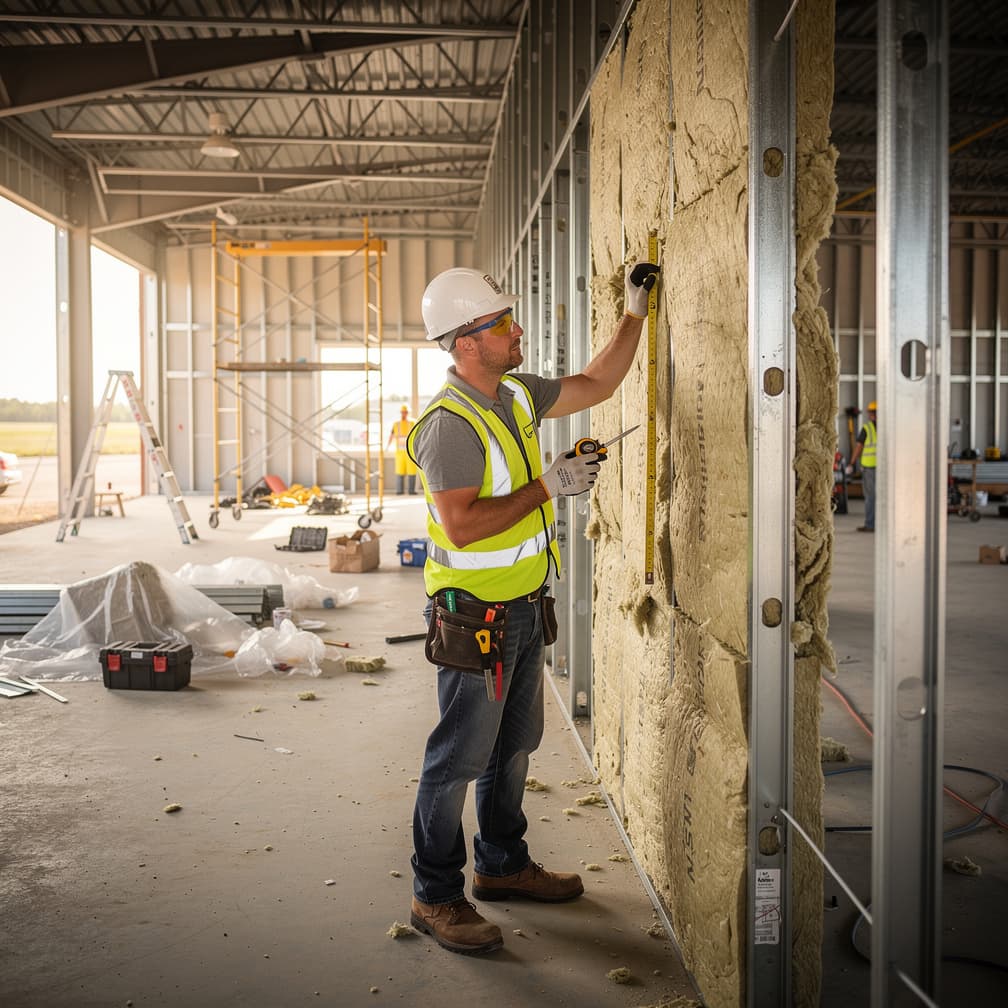

Pricing starts with three answers: what your payroll is, how many vehicles you run, and what your last few years of claims look like. None of those are local, which surprises owners shopping insulation contractor insurance in Fort Wayne and expecting a neighborhood number. Where Indiana genuinely matters is the form itself, since participating carriers file different exclusions and price an identical submission differently. A Commercial Umbrella sits on top of your other limits and only earns its keep once one of them runs dry. The narrowest form is usually the one hiding under the friendliest total. Read the exclusions for work in occupied homes before you read the price. Everything below is built to make that comparison faster.
What Makes Fort Wayne Different
Waivers of subrogation show up in most construction subcontracts, and they change what your carrier can do afterward. Signing one means your insurer gives up the right to chase whoever actually caused the loss. Carriers price that away, and many require the endorsement to exist before the contract ever gets signed. Signing first and endorsing later is the sequence that creates the coverage disputes nobody wants. If a general contractor in Fort Wayne hands you a stack at mobilization, the insurance page is not a formality. Pull it out, send it to whoever is quoting the policy, and get an answer in writing. Ten minutes there prevents the argument that starts after a hose knocks a sprinkler head loose. The paperwork sequence matters as much in Indiana as the limits everybody actually talks about.
Local Risk Factors in Fort Wayne
Before storm season, photograph what you keep and where you keep it. A claim for a wrecked trailer or a shop full of material gets settled with documentation, and nobody produces documentation after the fact. Your list should separate what is permanently mounted in a vehicle from what gets carried, because the two often sit under different forms and owners in Indiana routinely assume otherwise. The other half is your customers: an owner whose roof came off wants insulation replaced now, and a rushed job in Fort Wayne is where mistakes get made. Slow down enough to keep your own work clean, since a liability claim out of storm recovery counts the same as any other.
What Coverage Does an Insulation Contractor in Fort Wayne Need?
General Liability
Builders, property managers, and permit offices ask for this one by name before a crew gets on site. It can help cover third-party bodily injury and damage your work does to somebody else's property, from a cracked ceiling to a scratched hardwood floor. Redoing your own faulty installation generally sits outside it, and that boundary decides most disputes.
Example: A hose drags across a homeowner's stair rail on the way to the attic and pulls it off the wall. The repair claim may fall to this policy.
Workers Compensation
Where liability coverage looks after other people, this line looks after your own crew. Medical treatment and lost wages tied to a jobsite injury, or to an illness linked to insulation handling, are typically what it addresses. It rates against payroll and gets audited at year end. Whether an owner is included depends on Indiana.
Example: An installer working a summer attic goes down with heat illness and spends the night in a hospital. The treatment and the missed weeks are commonly handled here.
Commercial Auto
A pickup pulling a trailer of batts is doing business work, and a personal policy usually stops applying the moment it does. This line is meant for the vehicles you own or hire: liability after a collision, damage to the truck itself where that coverage was purchased, and the crew riding along. Mechanical breakdown typically sits outside it.
Example: Your driver misjudges a turn with a loaded trailer and clips a parked car outside a job in Fort Wayne. Repairs to both vehicles could be addressed under this coverage.
Commercial Umbrella
Limits, rather than gaps, are what this one addresses. It sits above General Liability and Commercial Auto and generally comes into play only once one of those has run out, which is why a subcontract demanding high limits often makes it the practical answer. Whatever the underlying form excludes, it usually excludes as well.
Example: A serious highway collision leaves injuries that run past the limit on your auto policy. The remainder might be picked up by the layer sitting above it.
How Much Does Insulation Contractor Insurance Cost in Fort Wayne?
Insulation Contractor Insurance is a bundle of separate policies, priced separately. The ranges below are typical figures for Fort Wayne for each line, except workers compensation, which is rated per $100 of payroll; a quote prices each one against your own operations.
| Coverage | Typical range | What moves your price |
|---|---|---|
| General Liability Insurance | $150 - $490 per month | Industry and risk classification, annual revenue, number of employees |
| Workers Compensation Insurance | $0.75 - $2.74 per $100 of payroll | Employee classification codes, total annual payroll, experience modification rate |
| Commercial Auto Insurance | $210 - $625 per month | Fleet size and vehicle types, driver records and experience, coverage limits and deductibles |
| Commercial Umbrella Insurance | $80 - $250 per month | Umbrella limit requested, limits carried on the underlying policies, loss history on those underlying policies |
Prices shown are general estimates, not guaranteed rates or quotes. Your actual premium will depend on the insurer, coverage selected, business details, location, claims history, and other underwriting factors. Learn about our pricing methodology.
What Are the Insurance Requirements for an Insulation Contractor in Fort Wayne?
Workers' comp is generally required once you have your first employee. Indiana generally requires employers to carry workers' compensation at that point. Common exemptions include sole proprietors, partners, and farmworkers. Confirm current thresholds with your state's workers' compensation agency before you hire.
State auto liability minimums apply to business vehicles. Indiana's minimum auto liability limits are $25,000/$50,000/$25,000 (bodily injury per person / per accident / property damage). Contracts and lenders often require more than the state floor.
Where to verify licensing and coverage rules. The Indiana Department of Insurance publishes consumer guidance and current insurance requirements for Indiana businesses. When a contract or lease demands specific wording, the Indiana Department of Insurance's guidance is the authoritative place to check.
Get Your Insulation Contractor Quote in Fort Wayne
Compare rates from multiple carriers. Free quotes, no obligation.
Operating in Fort Wayne
- A homeowner who signed nothing remembers the job differently than you do. Without a written scope and photographs, an adjuster has two stories and no way to choose between them.
- If a property manager in Fort Wayne requires proof before granting building access, a lapsed policy is not a paperwork problem. It is a locked door and a crew standing in the lobby.
- Insulation disappears behind drywall the same week you install it. The complaint about it can arrive two years later, which is why completed operations wording matters more here than the monthly premium does.
- Certificates expire on their own schedule, and if a builder in Allen County audits the project file midstream, an expired one can stop your crew at the gate until a new document lands.
How to Buy: Advice for Fort Wayne Owners
Sort out your own status before anything else. An owner who works in the attic is an exposure, and Workers Compensation treats owner inclusion and exclusion as a choice with real money on both sides. Excluding yourself lowers the premium and leaves your own injury outside the policy, which is a household decision as much as a business one. Rules for that election differ by state, so do not copy what a contractor in another market told you. The Indiana Department of Insurance publishes the current requirements for owner coverage elections. If you do exclude yourself, ask whether a General Liability claim arising from your own fall is even a claim. Raise it out loud while you are gathering quotes from participating carriers in Indiana, when the answer can still change what you buy.
FAQ
Insulation Contractor Insurance in Fort Wayne: FAQ
Usually not. An empty calendar is a business problem, and standard forms are built around physical damage and liability rather than lost scheduling. If bagged material got soaked or a trailer was damaged, that is a property question with its own answer. The canceled days themselves come out of your margin. Build float into your bids rather than expecting a policy to absorb the season.
A deductible is your share of every loss, so a repair smaller than it produces no payment and still creates a record once you report it. A low deductible makes it tempting to turn minor drywall repairs into claims, and a string of small claims can cost more at renewal than the repairs would have. Decide the number that makes a loss worth reporting, then hold to it.
Annual payroll broken out by role, gross receipts, a list of every vehicle and driver, and your loss runs for the last few years. Each of those prices a different piece, and a guess on any one of them produces a number that changes as soon as somebody checks it. Keep the insurance exhibit from your biggest contract nearby too, since it sets the limits you actually need.
No. Liability coverage exists for harm to other people and their property, and your own equipment is neither. A blower mounted permanently inside a truck is usually addressed on the vehicle side, while portable gear and staged material are a separate conversation with a separate form. Ask specifically about bags of material sitting at a Fort Wayne jobsite overnight, because that answer is rarely what owners assume.
That depends on who is quoting and whether the endorsements your contract demands already exist on the policy. A standard certificate can often be issued the same day, while one needing a new additional insured endorsement takes longer and may carry a mid-term fee. Ask about turnaround before you bind, because a builder who needs proof by morning will not wait on paperwork.
Because price is the last thing that varies. One form may exclude work in occupied dwellings, one may carry a lower aggregate, and one may skip an endorsement your contracts already require. Participating carriers in Indiana file different wording and price an identical submission differently, which is why the exclusions page deserves reading before the premium line. Compare what each policy agrees to answer, then compare the number.
Sources
- 1.Indiana Department of Insurance(Indiana Department of Insurance publishes consumer guidance for insurance buyers.)


