

































Updated July 19, 2026

Retail insurance in Indiana starts at the front door, where foot traffic drives injury claims and inventory concentrates value. Indiana adds a legal floor here, because workers compensation is required from the first employee [1]. Indiana weather adds a second layer, with tornado exposure showing up in property deductibles and terms before it shows up in premium. The cost drivers below map what actually moves retail quotes in the state.
Recommended Coverage for Retail in Indiana
Retail businesses face unique risks that require specific coverage types. Here are the policies most retail operations need:

General Liability
Essential coverage for every business, protect against third-party bodily injury, property damage, and advertising claims.

Commercial Property
Safeguard your business property, equipment, and inventory against damage and loss.

Business Owners Policy
Bundle property and liability coverage into one convenient, cost-effective policy for small businesses.

Workers Compensation
Help cover your employees' medical expenses and lost wages for work-related injuries and illnesses.

Commercial Crime
Protect your business from financial losses caused by employee theft, fraud, and other criminal acts.

Commercial Umbrella
Extend your liability limits beyond your primary policies for extra protection against catastrophic claims.
Retail Insurance Overview in Indiana
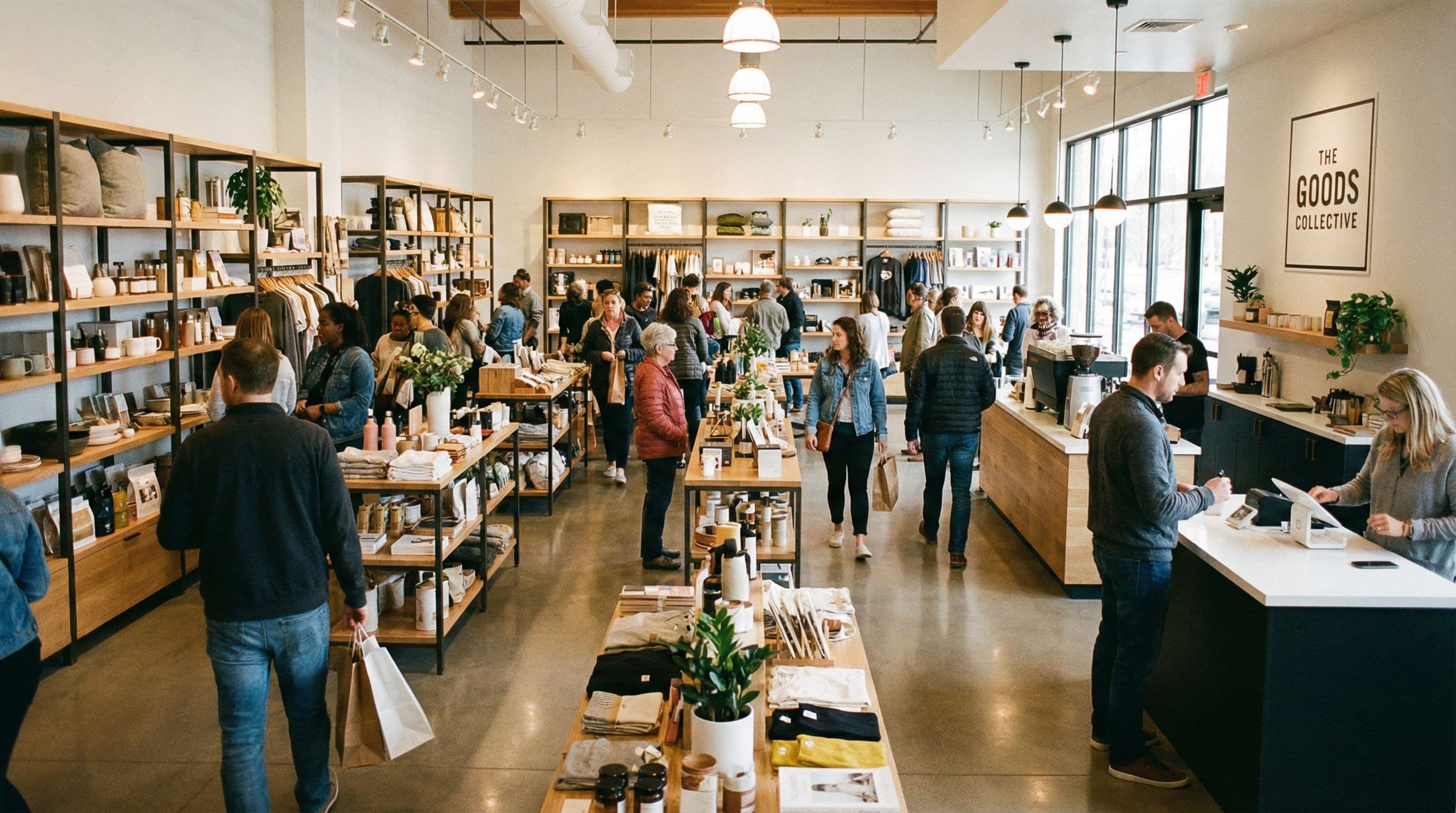
Running a retail business in Indiana means dealing with daily foot traffic, inventory management, and the occasional severe storm. Your insurance should reflect how you actually operate, whether you run a Main Street storefront, an Indianapolis mall kiosk, or a Fort Wayne e-commerce warehouse. A boutique owner in a mixed-use building probably loses sleep over customer injuries, while a multi-location chain likely focuses more on protecting stockrooms full of seasonal inventory. Indiana's retail scene leans heavily on small businesses, many operating in leased strip-mall spaces that face real tornado, flood, and winter storm threats each year. If your operation includes cash handling, refunds, or frequent transfers between the sales floor and stockroom, crime-related protection can also matter. The goal is to match your policy to the way your business actually functions, not a generic template.
Why Retail Businesses Need Insurance in Indiana
Third-party claims can arise from routine incidents that happen in stores, shopping centers, and mixed-use retail spaces across Indiana. Something as simple as a wet floor or a toppling display can send a customer to the ER and land you with medical bills, legal fees, and a settlement. General liability is often the foundation of a retail policy because it can help address the third-party claims that surface during normal operations, from a slip on a wet floor to a falling display. Indiana also adds practical considerations for retail owners. The Indiana Department of Insurance oversees the market, and workers compensation is required for most employers with at least one employee, with limited exemptions for sole proprietors, partners, farmworkers, and household employees. That matters for stores with sales associates, stockroom staff, or warehouse teams. Commercial property insurance is also important because Indiana's climate profile includes high tornado and severe storm risk, plus moderate flooding and winter storm exposure. Those hazards can damage your building, wipe out signage, ruin inventory, and sideline equipment. Retailers in Indianapolis, Fort Wayne, and Evansville may face different exposure based on foot traffic, lease terms, and storage setup. If you handle cash, gift cards, or frequent inventory transfers, commercial crime coverage may help address losses from employee theft, forgery, and certain fraud schemes. For larger stores or chains, commercial umbrella insurance can help add extra protection above underlying policies when a claim becomes catastrophic.
Indiana requires workers' comp for businesses with employees (exemptions may apply: Sole proprietors; Partners). Non-compliance can result in fines and personal liability for owners. Commercial auto minimums are $25,000/$50,000/$25,000.
Key Risks for Retail Businesses
Each of these risks can lead to claims that cost thousands, or more. Make sure your policy addresses every one:
- Customer slip-and-fall injuries
- Inventory theft or loss
- Product liability claims
- Property damage
- Employee dishonesty
Cost Factors for Retail Businesses in Indiana
What you pay depends on factors like store size, inventory value, sales volume, location, claims history, and merchandise type. A downtown boutique carries different risks than a mall kiosk or a warehouse fulfilling online orders, and insurers price accordingly. Foot traffic, lease terms, and how often you restock or transfer inventory can all influence your coverage needs. Indiana's market context also matters. Retail trade employs a significant share of the workforce, and top markets include Indianapolis, Fort Wayne, and Evansville, which means insurers pay close attention to local conditions when assessing exposure. Seasonal inventory spikes and multiple locations can shift your risk profile in ways that matter to underwriters. Climate risk is another factor. Severe weather in Indiana can drive up property costs for retailers, particularly when merchandise sits in vulnerable storefronts or warehouses. Pricing varies, so your quote should reflect your actual operations, lease obligations, and inventory levels rather than an average profile. The general liability that most retail businesses treat as their base policy averages about $40 to $120 per month in Indiana, a bit above the national average. That means setting aside a little more than generic online estimates suggest can keep you from coming up short at renewal. Payroll, revenue, and the exposures specific to your work drive where you land in that range.
Retail businesses typically carry several separately priced policies. The ranges below are typical figures for Indiana for each line, except workers compensation, which is rated per $100 of payroll; a quote prices each one against your own operations.
| Coverage | Typical range | What moves your price |
|---|---|---|
| General Liability Insurance | $40 - $120 per month | Industry and risk classification, annual revenue, number of employees |
| Commercial Property Insurance | $45 - $230 per month | Building value and construction type, roof age and condition, fire protection class |
| Business Owners Policy Insurance | $45 - $180 per month | Annual revenue and industry class, building and contents values, square footage and building age |
| Workers Compensation Insurance | $0.75 - $2.74 per $100 of payroll | Employee classification codes, total annual payroll, experience modification rate |
| Commercial Crime Insurance | $15 - $60 per month | Employees who handle money or inventory, internal controls and separation of duties, funds and securities on hand |
| Commercial Umbrella Insurance | $40 - $130 per month | Umbrella limit requested, limits carried on the underlying policies, loss history on those underlying policies |
Prices shown are general estimates, not guaranteed rates or quotes. Your actual premium will depend on the insurer, coverage selected, business details, location, claims history, and other underwriting factors. Learn about our pricing methodology.
State Requirements
Insurance Regulations in Indiana
Key regulatory requirements for businesses operating in IN.
Regulatory Authority
Workers' Compensation InsuranceRequired
Required for employers with 1+ employee.
Exempt categories
- Sole proprietors
- Partners
- Farmworkers
- Household employees
Commercial Auto Minimum Liability
$25,000/$50,000/$25,000 (bodily injury per person / per accident / property damage)
Source: Indiana Department of Insurance, U.S. Department of Labor
What Drives Retail Insurance Costs in Indiana
Foot traffic and premises claims
The more customers cross the floor, the more premises claims a carrier expects. General liability insurance limits and pricing typically follow foot traffic and past losses.
Inventory, theft, and shrink
Stock concentrates value in one room, and theft, fire, or water can reach it. Commercial property insurance can help cover inventory, and commercial crime insurance addresses employee dishonesty.
Tornado and wind
Storm claims drive commercial property pricing in this market, and wind or hail damage may carry a separate deductible. The context is Indiana's record of 117 federal disaster declarations [2].
Climate Risk Profile
Natural Disaster Risk in Indiana
Understanding climate-related risks helps determine appropriate insurance coverage levels.
Tornado
High
Severe Storm
High
Flooding
Moderate
Winter Storm
Moderate
Expected Annual Loss from Natural Hazards
$1.1B
estimated economic loss per year across Indiana
Source: FEMA National Risk Index
Insurance Tips for Retail Business Owners in Indiana
Match your property coverage to peak seasonal inventory, not just average stock. Holiday merchandise and back-to-school inventory can temporarily double what you have at risk.
Review lease requirements for shopping center, strip mall, and mixed-use retail locations so your liability and umbrella coverage meet the landlord's minimum limits.
Stores with steady foot traffic should prioritize liability limits high enough to handle customer injury claims without exhausting the policy.
Add commercial crime coverage if you handle cash, gift cards, refunds, or frequent inventory transfers between the sales floor, stockroom, and warehouse.
For warehouse-based e-commerce operations in Indiana, make sure your policy accounts for storage locations, shipping activity, and inventory movement.
If you employ staff, confirm workers compensation is in place, since it is required for most employers with at least one employee.
Consider a business owners policy if you want bundled coverage that combines property and liability in one package, subject to eligibility.
Ask how equipment breakdown and business interruption coverage would apply if a storm or other property damage forces you to halt sales or restocking.
Get Retail Insurance in Indiana
Enter your ZIP code to compare retail insurance rates from top carriers.
Business insurance starting at $25/mo
Retail Business Types in Indiana
Find insurance tailored to your specific retail business. Select your business type for coverage recommendations, pricing, and quotes:

Tailors Insurance
Get a tailors insurance quote built for alteration shops, seamstresses, and custom clothing businesses. Coverage can help with customer garment damage, liability coverage, and shop property needs.

Dry Cleaning & Laundry Insurance
Request a dry cleaning and laundry insurance quote built for garment-care businesses. Compare dry cleaner coverage, bailee liability insurance, and more.

Convenience Store Insurance
Get a convenience store insurance quote built for high foot traffic, cash handling, and food sales. Coverage can be tailored to your property, liability, and crime needs.

Liquor Store Insurance
Liquor store insurance helps protect alcohol retailers from property damage, theft, liability, and compliance-related claims. Request a liquor store insurance quote tailored to your location and operations.

Florist Insurance
Get florist insurance built around refrigeration, deliveries, and customer-facing shop risks. Compare coverage options and request a tailored quote for your retail flower shop.

Jewelry Store Insurance
Request a jewelry store insurance quote built for high-value inventory, theft exposure, and specialized valuation needs. Compare coverage options for showcases, back-room stock, and customer pieces.

Gas Station Insurance
Get a gas station insurance quote built around fuel handling, underground tanks, store operations, and location-specific requirements. Compare coverage options for your station, convenience store, and liability exposures.

Smoke Shop Insurance
Smoke shop insurance can help protect tobacco and vape retailers from product, property, and crime-related losses. Coverage can be tailored to your store’s location, inventory, and compliance needs.

Furniture Store Insurance
Get a furniture store insurance quote built for showroom traffic, delivery damage, and stored inventory. Compare coverage options for your store, warehouse, and deliveries.

Thrift Store Insurance
Get coverage built for donated inventory, customer injury, and store property. Request a thrift store insurance quote tailored to your resale shop, consignment shop, or secondhand store.

Pet Store Insurance
Get a pet store insurance quote built for retailers that sell live animals, pet food, and supplies. Compare liability, property, and business interruption options.

Hardware Store Insurance
Hardware stores face injury exposure in aisles, at the counter, and around tools, paint, and chemicals. Get coverage built for retail operations, inventory, and store incidents.

E-Commerce Business Insurance
E-commerce business insurance helps online sellers protect against product liability, cyber theft, and other digital-first risks. Request an ecommerce business insurance quote tailored to your store.

Grocery Store Insurance
Get a grocery store insurance quote designed for daily foot traffic, refrigerated inventory, and customer injury exposure. Coverage can be tailored for supermarkets, specialty food retailers, and multi-location stores.

Cell Phone Repair Insurance
Request a cell phone repair insurance quote built for repair counters, mall kiosks, and multi-location shops. Match coverage to device damage, data liability, and parts defects.

Craft Vendor Insurance
Get a craft vendor insurance quote for craft fairs, markets, and booth setups. Compare coverage for liability, inventory, and event property needs.

Arts & Crafts Store Insurance
Get an arts and crafts store insurance quote built for craft supply shops with flammable inventory, customer traffic, and property exposure. Coverage can be matched to your store layout, stock, and operations.

Bike Shop Insurance
Bike shops need coverage for customer injuries, repair work, inventory theft, and property loss. Get a quote-ready policy built for retail sales, service bays, and storefront risk.

Bookstore Insurance
Get a bookstore insurance quote built around your shop's property, inventory, and premises liability needs, with options that can help protect your storefront, stock, and income after a setback.

Candle Store Insurance
Get a candle store insurance quote built for candle retailers, wax product shops, and multi-location stores. Compare options for product liability, fire coverage, and property protection.

Candy Store Insurance
Get a candy store insurance quote for storefront property, customer foot traffic, and food-related liability exposures. Coverage can be tailored for retail candy shops, kiosks, and confectionery retailers.

Clothing Store Insurance
Get a clothing store insurance quote built for boutiques, apparel stores, and fashion retailers. Compare coverage for inventory, customer injury, and property needs.

Electronics Store Insurance
Request an electronics store insurance quote tailored to high-value inventory, customer claims, cyber risks, and retail property needs. Coverage options can fit a storefront, repair counter, or technology showroom.

Fabric Store Insurance
Get a fabric store insurance quote designed for textile retailers handling inventory, fixtures, and customer visits. Compare liability and property coverage options for your shop.

Luggage Store Insurance
Luggage store insurance can help protect retailers that sell luggage and travel accessories against customer injury claims, inventory losses, and premises damage. Compare quote options built around your storefront, stock, and daily foot traffic.

Medical Supplies Store Insurance
Get a medical supplies store insurance quote built for retail locations that sell patient-dependent products, durable equipment, and inventory customers rely on. Choose coverage that fits your storefront, showroom, and delivery needs.

Pawn Shop Insurance
Get a pawn shop insurance quote built around customer property, cash handling, inventory, and location-specific risk. Compare options for a single shop or multi-location operation.

Retail Store Insurance
Get a retail store insurance quote built around your shop's location, inventory, and customer traffic. Compare coverage options for liability, property, and business interruption.

Toy Store Insurance
A toy store insurance quote helps match your retail risks with the coverage you may need for customer injuries, property damage, and defective products. Compare options for your storefront, inventory, and daily operations.
Retail Insurance by City in Indiana
Insurance rates and requirements can vary by city. Find retail insurance information for your area in Indiana:
FAQ
Retail Insurance FAQ in Indiana
Coverage can vary, but it often focuses on general liability, commercial property, and options for commercial crime or commercial umbrella insurance. That can help address customer injury, bodily injury, property damage, inventory loss, theft, and certain third-party claims.
Cost varies by store size, sales volume, inventory value, location, claims history, and merchandise type. A boutique storefront, mall kiosk, or warehouse-based e-commerce operation may all price differently.
Workers compensation is required for most employers with at least one employee, with limited exemptions. Lease agreements may also require specific liability coverage limits, so review those terms before you buy.
General liability is commonly used for slip-and-fall and other third-party claims. Commercial property can help with fire, storm, vandalism, theft, and inventory-related losses, depending on the policy.
Yes, a business owners policy may bundle property and liability coverage, if your business qualifies. It can be a practical option for small business retail operations, but the right structure depends on your locations and exposures.
Commercial crime coverage is often the policy to review for employee theft, forgery, fraud, and certain computer-related concerns. It can be especially relevant if you handle cash, gift cards, or frequent stock transfers.
Look at your lease terms, customer volume, inventory value, and whether you operate in a shopping center, strip mall, downtown retail district, or multi-location chain. Higher traffic or larger stock levels may call for higher limits, and commercial umbrella insurance can add extra protection above underlying policies.
General liability and commercial property form the core, and many stores package them through a business owners policy. Add workers compensation once you have employees, commercial crime where staff handle cash or resellable stock, and umbrella limits when a lease or heavy foot traffic calls for more liability capacity.
Sources
- 1.Indiana Department of Insurance(Indiana requires workers compensation coverage from the first employee.)
- 2.FEMA Disaster Declarations(Indiana has 117 federal disaster declarations on record.)
- 3.BLS Quarterly Census of Employment and Wages (2024)(Retail workers in Indiana earn an average of $30,600 a year.)