







































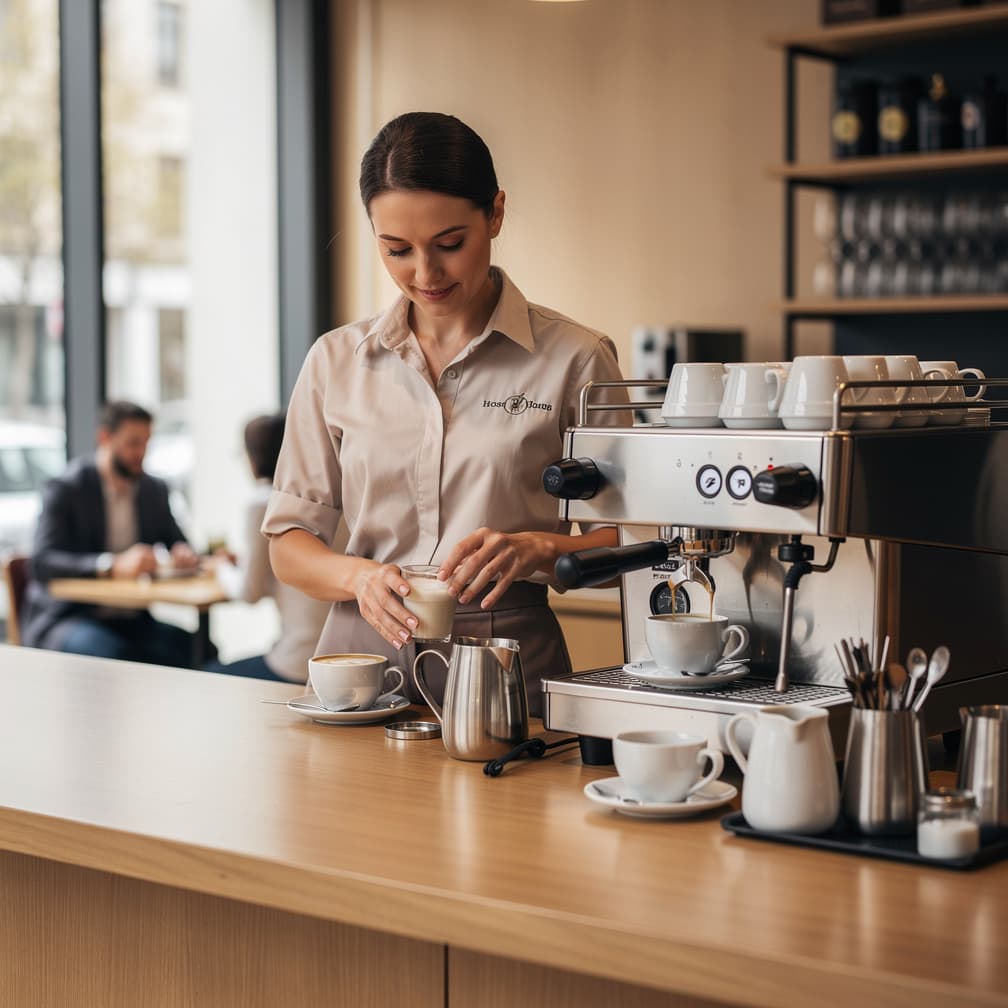

Wet shoes hit tile, a customer goes down between the door and the counter, and the claim lands on you rather than the person who mopped. Coffee shop insurance in South Bend exists for that minute: the slip near the entrance, the hot drink that ends up in a lap, the espresso machine that quits during the rush. A landlord behind a St. Joseph County storefront can ask for proof of coverage before the keys change hands, and an equipment lender can ask for it again before the grinder is financed. The certificate is the easy part. The harder question is whether the limits behind it match what your lease actually demands. What follows lays out what shops carry, where the published ranges sit, and which losses fall outside a standard policy, so you can price the decision instead of guessing at it.
What Makes South Bend Different
Bad weather stretches everything in a thin market, from the repair van to the parts it carries. A cracked front window in St. Joseph County can wait days for glass while your seats sit empty. That wait is not a coverage problem; it is a supply problem that becomes a money problem. Boarding up is fine for a night and terrible for a month of morning traffic. Ask whether temporary repairs and protecting property after a loss are recognized on your own form. Most forms expect you to prevent further damage, and some help fund the effort you make. Keep receipts for anything you buy in that scramble, because unreceipted costs rarely survive a review. The habit costs nothing and it separates reimbursement from a story about reimbursement in South Bend.
Local Risk Factors in South Bend
Tornado and severe storm damage arrives fast and unevenly: one block loses a roof, the next loses nothing, and a coffee shop with an intact building can still lose a week to no power and a closed street. Flying debris breaks the storefront glass, and rain follows it across the seating area and the fixtures. Commercial Property may respond to the broken glass, the soaked improvements, and the equipment underneath, subject to your deductible. What it generally will not do is answer for a quiet week when nothing on your premises broke. Ask a carrier in Indiana how the lost-income clause reads when the damage belongs to the utility or to a South Bend building that is not yours.
What Coverage Does a Coffee Shop in South Bend Need?
General Liability
Landlords, lenders, and event hosts ask for this one by name before anything gets signed. General Liability is generally meant to respond to customer injuries on your floor, hot-drink burns, damage you cause to a rented space, and the defense costs that follow a demand letter. Staff injuries and your own equipment sit elsewhere.
Example: A customer catches a bag strap on a stool, goes down beside the counter, and leaves with a wrist that swells overnight; general liability can help fund the claim and the lawyer who answers it.
Commercial Property
A grinder, three refrigerated cases, and the buildout you paid for add up faster than most owners guess. Commercial Property may respond to fire, theft, vandalism, and storm damage to your equipment, stock, fixtures, and improvements, subject to what you actually schedule. Flood typically sits outside it, and wear and tear always does.
Example: Overnight someone puts a brick through the storefront in South Bend and takes the register and two sacks of beans; commercial property may pick up the glass, the fixtures, and the stock once the deductible is met.
Business Owners Policy
Buying liability and property apart works; buying them together often costs less. A Business Owners Policy bundles both on one form for a small shop, and it can carry lost income after a covered loss. Packaged forms trim edges, so spoilage, equipment breakdown, and higher limits commonly live in endorsements rather than the base.
Example: A kitchen fire two doors down fills your seating area with smoke and closes you for eleven days; a business owners policy might answer for both the cleanup and the sales you never made.
Workers Compensation
Your staff, rather than your customers, is the subject of this one. Workers Compensation is generally intended to respond to a barista's steam burn, a back strain lifting milk crates, or a fall in the back-of-house, taking in medical care and lost wages. Rules vary by state, and the Indiana Department of Insurance publishes the current requirements for employers.
Example: A closing shift hits a wet floor behind the espresso bar and a barista lands hard on an elbow; workers compensation is designed to fund the treatment and the shifts missed afterward.
How Much Does Coffee Shop Insurance Cost in South Bend?
Coffee Shop Insurance is a bundle of separate policies, priced separately. The ranges below are typical figures for South Bend for each line, except workers compensation, which is rated per $100 of payroll; a quote prices each one against your own operations.
| Coverage | Typical range | What moves your price |
|---|---|---|
| General Liability Insurance | $45 - $140 per month | Industry and risk classification, annual revenue, number of employees |
| Commercial Property Insurance | $75 - $250 per month | Building value and construction type, roof age and condition, fire protection class |
| Business Owners Policy Insurance | $95 - $270 per month | Annual revenue and industry class, building and contents values, square footage and building age |
| Workers Compensation Insurance | $0.75 - $2.74 per $100 of payroll | Employee classification codes, total annual payroll, experience modification rate |
Prices shown are general estimates, not guaranteed rates or quotes. Your actual premium will depend on the insurer, coverage selected, business details, location, claims history, and other underwriting factors. Learn about our pricing methodology.
What Are the Insurance Requirements for a Coffee Shop in South Bend?
Workers' comp is generally required once you have your first employee. Indiana generally requires employers to carry workers' compensation at that point. Common exemptions include sole proprietors, partners, and farmworkers. Confirm current thresholds with your state's workers' compensation agency before you hire.
Flood damage is typically excluded from standard policies. Standard commercial property and builders-risk-type policies typically exclude flood damage. Flood exposure varies address by address, so check your premises in FEMA's Flood Map Service Center before deciding; if you sit in a mapped flood zone, a separate policy through the National Flood Insurance Program is the usual starting point.
Where to verify licensing and coverage rules. The Indiana Department of Insurance publishes consumer guidance and current insurance requirements for Indiana businesses. When a contract or lease demands specific wording, the Indiana Department of Insurance's guidance is the authoritative place to check.
Get Your Coffee Shop Quote in South Bend
Compare rates from multiple carriers. Free quotes, no obligation.
Operating in South Bend
- A landlord can hold the keys until your certificate lands on their desk, so a policy that binds the week you take possession is worth more than one that binds cheaper.
- A property manager in South Bend can demand the building entity named as an additional insured, and a certificate naming the wrong entity is the same as no certificate at all.
- Wet shoes cross your entrance every rainy morning, and the mat you buy is cheaper than the frequency record a single slip claim leaves behind on your file.
- Health inspections, hood service tags, and extinguisher checks are safety paperwork, and they double as underwriting facts a carrier in Indiana can ask you to produce after a fire.
How to Buy: Advice for South Bend Owners
Cost questions come first for most owners, so start with the drivers rather than the headline. General Liability for a small shop can start from $25/month at the thin end, and where you land depends on seating, hours, sales, and claims history. Very little about the address moves it. Property premium follows equipment values, and Workers Compensation follows payroll, which is why two shops on one block can pay very different totals. Deductibles and limits are the levers you control; claims history is the one you do not. If a quote in South Bend comes in far under everything else, find the limit before you celebrate. The Indiana Department of Insurance publishes consumer guidance on how small-business premiums are set. Then compare participating carriers at identical limits, because that is the only comparison that means anything.
FAQ
Coffee Shop Insurance in South Bend: FAQ
Usually before that. A landlord can require proof from the day you take possession, which is when contractors, deliveries, and a half-built kitchen already create exposure. General Liability is the piece most leases name, and the additional-insured endorsement behind it is what makes the certificate acceptable. Waiting until opening day leaves the buildout period uninsured and the keys in someone else's hand.
It depends on things you can measure: annual sales, seating, hours, payroll, claims history, and the replacement value of your equipment. Payroll drives the work injury side; the machines behind your counter drive the property side. Two shops on one block can land far apart on price for those reasons alone. Deductibles and limits are the levers you control, and claims history is the one you cannot.
A landlord can, before handing over keys. A lender financing equipment can. A caterer, an office with a standing order, or a market renting you a stall can each ask before the work starts. They may want different wording, and additional-insured status is not automatic on any form. Ask what the requester needs in writing, then send that request to your carrier rather than assuming.
That is the classic liability question. General Liability is generally meant to respond to bodily injury claims from customers, including burns, spills, and falls, along with the defense costs that follow. It typically will not answer for injuries to your own staff, which sit under a work injury policy instead. Intentional acts stay outside either one. Check the limit, and check whether defense costs erode it.
Generally not. Standard property forms typically exclude flood, and rising water gets priced as its own decision through a separate policy. That matters for a South Bend storefront with stock, a compressor, and a buildout sitting at ground level. Water from a burst pipe inside the building is treated differently from water that arrives through the door. Ask a carrier which category your worry falls into.
Mechanical failure is not the same thing as a covered peril. Standard property wording often leaves equipment breakdown out, and it gets added by endorsement where a carrier offers one. The bigger cost is usually the days you cannot serve, so ask what triggers the lost-income clause and how long the waiting period runs. Both answers decide whether a two-week repair is survivable.
Sources
- 1.Indiana Department of Insurance(Indiana Department of Insurance publishes consumer guidance for insurance buyers.)
- 2.FEMA / FloodSmart(Flood coverage is typically purchased separately; FEMA administers the National Flood Insurance Program.)


