







































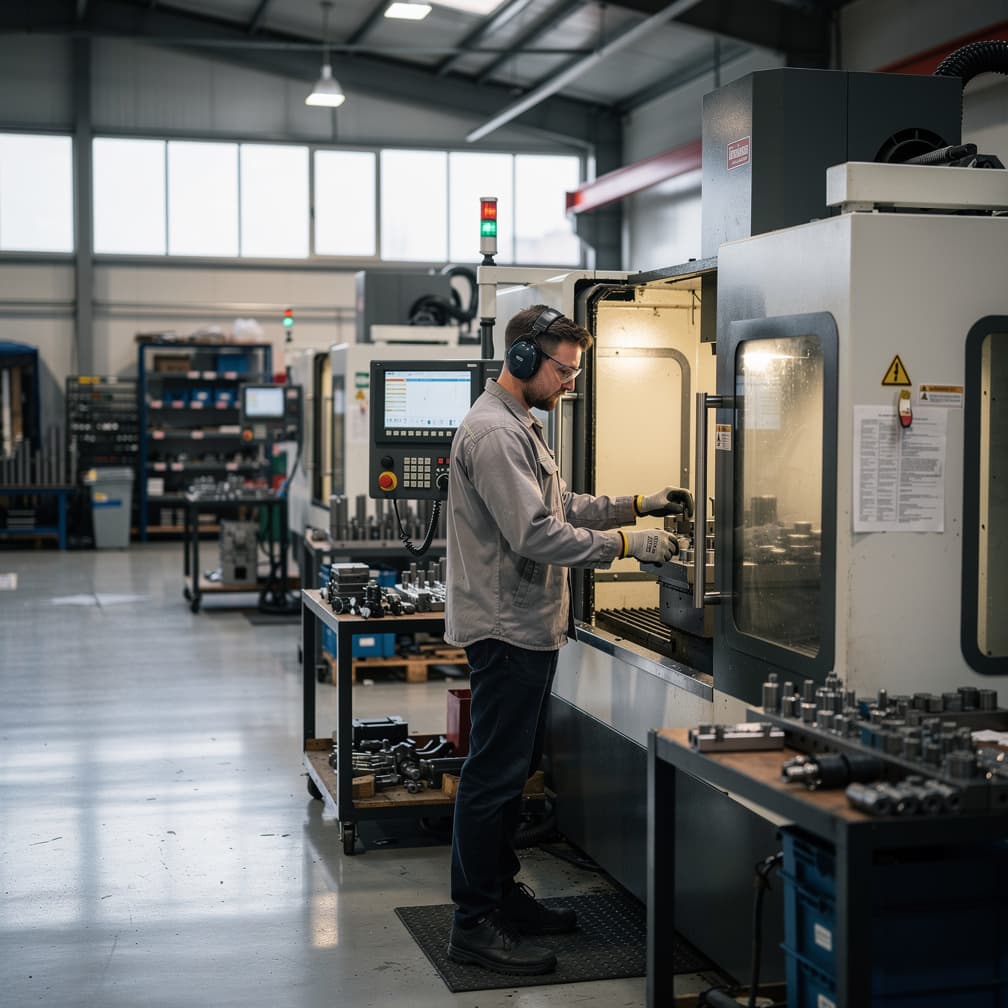

Theft in a shop rarely takes the machines. It takes the toolbox: indicators, gauge blocks, end mills, the micrometer set somebody spent a decade assembling. Those items sit outside your walls half the time anyway, riding to a plating vendor with a tote of parts or living in a job box at a customer's plant in St. Joseph County. Property coverage written for one fixed address can leave that mobile side thinner than owners expect, which is the sort of gap machine shop insurance in South Bend exists to close. Customer material raises the same question, because while somebody else's castings sit in your racks waiting on a second operation, you are holding value you do not own. Sort out who insures what before a break-in makes the question urgent.
What Makes South Bend Different
Proof of coverage still gets demanded in a small market, though it tends to arrive by email rather than through a portal. A buyer two counties away will never walk your floor, so the certificate is the only thing about you they actually see. That makes the document your whole first impression, and a stale one reads like a shop that lets things slide. When work in St. Joseph County runs through a handful of repeat customers, one withheld order is a real dent in the month. A shop in South Bend can lose a standing job over a lapsed effective date nobody thought to check. Set the reminder ahead of the renewal, then send the fresh certificate before anybody has to ask. No customer has ever complained about receiving proof early. It is the one piece of paperwork that gets you paid faster.
Local Risk Factors in South Bend
Tornado damage arrives in minutes and rarely spreads evenly: one bay loses its roof while the next stays untouched. For a shop that means grit and rain over open ways, and machines that were fine an hour ago now needing cleaning, alignment, and proof they still hold tolerance. Commercial Property may respond to the wind and to the water that follows it in, generally subject to your deductible. Participating carriers in Indiana write wind deductibles differently, so read yours before the season rather than during it. The alignment and re-qualification work is the part nobody quotes, and it decides when a shop in South Bend can ship again.
What Coverage Does a Machine Shop in South Bend Need?
General Liability
Buyers, landlords, and staffing agencies all ask for this one by name before work starts. It generally answers third-party claims: a delivery driver hurt in your aisle, a customer's property damaged, or a machined part that fails in service and takes something with it. Injuries to your own crew sit elsewhere, and it has nothing to say about your machines.
Example: A quality inspector walks your aisle, catches a foot on a coolant hose, and breaks a wrist. The medical bills and the suit behind them are the sort of third-party claim this line is meant to take on.
Commercial Property
Fire, storm, vandalism, and theft are the causes of loss it usually names, applied to the building, the machines bolted inside it, and the material sitting between operations. Wear, rust, and mechanical breakdown generally fall outside, and so does flood. The limit matters more than the premium here, since a limit set off a tax assessment rarely rebuilds a shop.
Example: A fire starting in a chip pan closes the shop for two months. Rebuilding the structure and replacing the machines standing under it is the loss this coverage is generally written to meet.
Workers Compensation
Hands, eyes, and backs work close to moving steel every hour of a shift, and this is the line built for the moment one of them loses. It typically handles medical treatment and part of the lost wages for your own employees. Rules on who has to carry it vary across Indiana, and buyers demand proof regardless. Cost tracks payroll rather than headcount.
Example: A machinist reaches in to clear a chip nest and the hand takes stitches and six weeks off the floor. Treatment and a share of the missing pay are what this coverage typically picks up.
Tools & Equipment (Inland Marine)
Commercial Property stops at an address, and this line follows the things that will not. Gauges, fixtures, indicators, and a job box parked at a customer's plant can be covered in transit or off site, depending on how they were scheduled. It is rated from the list you hand over, which is why a stale schedule is the usual reason a claim disappoints.
Example: A tote of fixtures and a micrometer set vanish from a customer's dock overnight in South Bend. Scheduled tooling is exactly what this line is intended to answer for.
Commercial Umbrella
Purchase orders ask for limits no small shop would pick on its own, and this is how those numbers get met. It sits above the underlying liability limits and generally comes into play only once they are used up. It typically raises the ceiling rather than widening what the form addresses, so a gap in the base stays a gap above it too.
Example: A part fails inside a customer's assembly and the claim runs past the underlying limit before the lawyers have finished arguing. The layer above is what would be left to respond.
How Much Does Machine Shop Insurance Cost in South Bend?
Machine Shop Insurance is a bundle of separate policies, priced separately. The ranges below are typical figures for South Bend for each line, except workers compensation, which is rated per $100 of payroll; a quote prices each one against your own operations.
| Coverage | Typical range | What moves your price |
|---|---|---|
| General Liability Insurance | $100 - $330 per month | Industry and risk classification, annual revenue, number of employees |
| Commercial Property Insurance | $170 - $600 per month | Building value and construction type, roof age and condition, fire protection class |
| Workers Compensation Insurance | $0.75 - $2.74 per $100 of payroll | Employee classification codes, total annual payroll, experience modification rate |
| Inland Marine Insurance | $30 - $140 per month | Total insured value of the scheduled property, type and age of the equipment, where it is stored and how far it travels |
| Commercial Umbrella Insurance | $80 - $240 per month | Umbrella limit requested, limits carried on the underlying policies, loss history on those underlying policies |
Prices shown are general estimates, not guaranteed rates or quotes. Your actual premium will depend on the insurer, coverage selected, business details, location, claims history, and other underwriting factors. Learn about our pricing methodology.
What Are the Insurance Requirements for a Machine Shop in South Bend?
Workers' comp is generally required once you have your first employee. Indiana generally requires employers to carry workers' compensation at that point. Common exemptions include sole proprietors, partners, and farmworkers. Confirm current thresholds with your state's workers' compensation agency before you hire.
Flood damage is typically excluded from standard policies. Standard commercial property and builders-risk-type policies typically exclude flood damage. Flood exposure varies address by address, so check your premises in FEMA's Flood Map Service Center before deciding; if you sit in a mapped flood zone, a separate policy through the National Flood Insurance Program is the usual starting point.
Where to verify licensing and coverage rules. The Indiana Department of Insurance publishes consumer guidance and current insurance requirements for Indiana businesses. When a contract or lease demands specific wording, the Indiana Department of Insurance's guidance is the authoritative place to check.
Get Your Machine Shop Quote in South Bend
Compare rates from multiple carriers. Free quotes, no obligation.
Operating in South Bend
- Oily rags, chip pans, and a drum of coolant make a shop fire ordinary rather than exotic. A fire in South Bend also puts the marshal's report straight into your claim file.
- The temp who starts on a slow morning belongs to the staffing agency until the contract says otherwise, and that contract, not your handbook, decides whose claim an injury becomes.
- Customer material sits in your racks for weeks between operations, and a pallet of somebody else's forgings can be worth more than the machine standing next to it.
- Quality audits put an engineer with a clipboard in the aisle beside a running machine, and the visit gets scheduled by the customer rather than by you.
How to Buy: Advice for South Bend Owners
Compare deductibles at a fixed limit instead of comparing premiums at whatever deductible each carrier picked. Raising a Commercial Property deductible drops the premium fast, which is why quotes quietly do it, and the saving evaporates the first year two small losses land together. Set it against cash you could lose without borrowing, then hold it constant across every submission. Do the same with the Workers Compensation payroll estimate, because a low estimate makes a quote look sharp and gets corrected at audit anyway. A shop in South Bend pricing on shifting assumptions compares arithmetic, not carriers. The Indiana Department of Insurance publishes consumer guidance on how deductibles work. Fix the variables first, then let participating carriers compete on the one thing left over, which is price.
FAQ
Machine Shop Insurance in South Bend: FAQ
Coolant film, chips, and a pallet jack in the aisle put outside people on a slick floor, and a shop in South Bend takes deliveries most days. Since that driver is not your employee, the injury lands as a third-party bodily injury claim rather than a workers compensation one. General Liability is usually where it goes, and the limit gets tested by medical bills and lost wages together. Anything above the limit comes out of the shop.
The occurrence figure is the most a policy generally puts toward one event, such as a single visitor hurt in your aisle. The aggregate caps what the same policy term can absorb in total, across every event. Ship a bad batch to three customers and several smaller claims can eat that ceiling without any one of them looking large. Buyers write the occurrence number into their terms and never ask how much room is left in the aggregate.
Usually not the way owners hope. Property forms respond to causes of loss they name, and an operator error that wrecks a spindle often reads as mechanical breakdown rather than a named peril. Equipment breakdown coverage exists for that gap and is commonly added by endorsement. Ask specifically what your form treats as a covered cause of loss, because the machine that stops your schedule is the one worth arguing about in advance.
Because workers compensation rates against payroll rather than floor space, and it is often the largest line on a shop's bill. Class codes split that payroll by what people actually do, so a programmer at a desk and a machinist at a mill are not priced alike. Estimate it honestly at the start of the term, since the audit trues up the figure afterward and the correction arrives after the money is spent.
Standard commercial property forms typically exclude flood, and that surprises shops nowhere near a river. Flood cover is written and priced separately, and water backing up through a floor drain is usually its own endorsement again. Since a shop's electrical gear and machine bases sit at the lowest point in the building, this is a gap worth settling before the sump backs up rather than after.
Payroll split by job type, last year's receipts, a schedule of machines with values, and loss runs covering the past several years. Add the largest contract you work under, since its limits and naming demands shape the policy quoted for a shop in South Bend. Shops that hand all of that over get priced once. Shops that estimate get priced twice, and the second number arrives at audit.
Sources
- 1.Indiana Department of Insurance(Indiana Department of Insurance publishes consumer guidance for insurance buyers.)
- 2.FEMA / FloodSmart(Flood coverage is typically purchased separately; FEMA administers the National Flood Insurance Program.)


