







































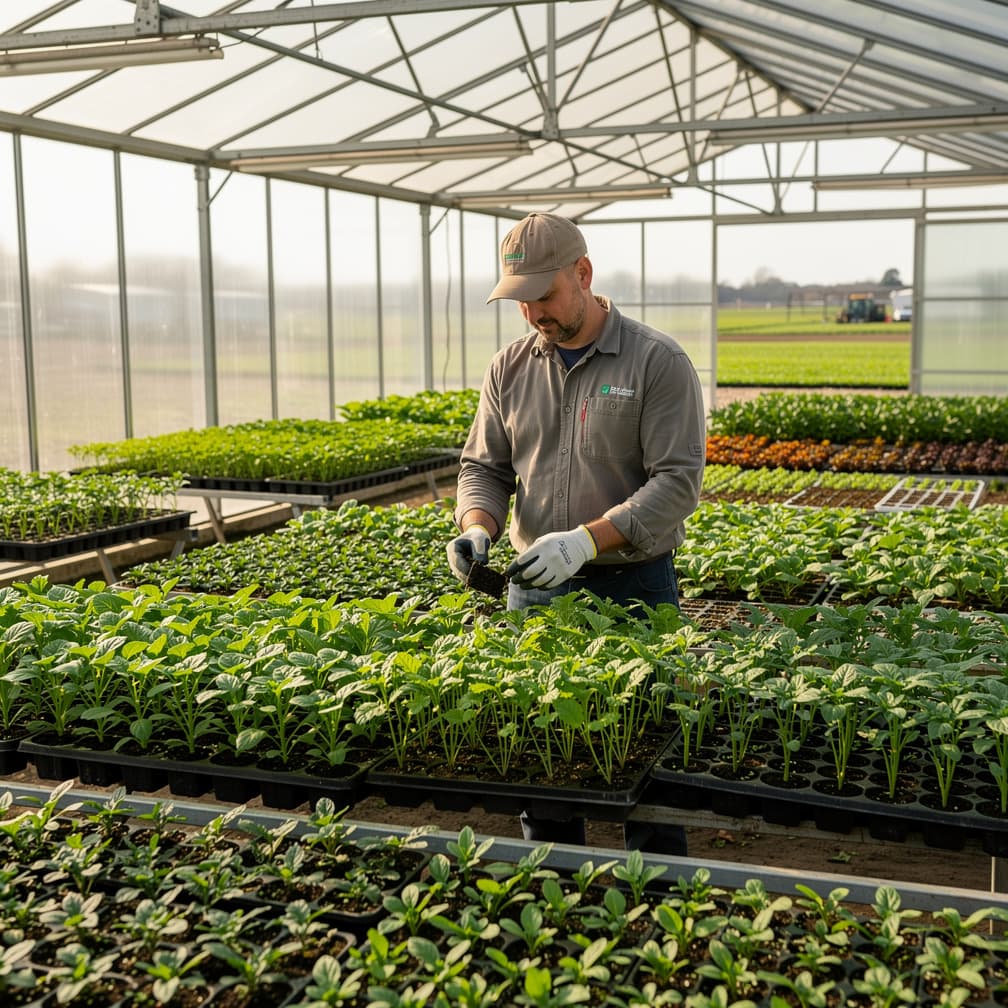

Theft in this trade is quiet. Bags of soil, trays of stock, hand tools, and brass fittings walk off overnight, and each hit is small enough to shrug at until a season of them adds up. Inventory and equipment sit at the center of nursery and greenhouse insurance in South Bend, and the details owners skip are the ones that matter: what counts as your property, what sits outside under shade cloth versus locked in a shed, what the form expects you to do about security. A deductible can swallow a run of small thefts whole. When your claims contact works out of another county entirely, the photographs you took before the loss do the arguing for you. Document the yard, keep receipts, and compare what participating carriers in Indiana do with the same inventory list.
What Makes South Bend Different
A storm week stalls sales, then keeps stalling them. Customers stay home, deliveries slip, and stock that was ready to move sits another week going leggy in the trays. Damage is only the visible half of a weather event for this trade. The other half is the calendar, because a growing operation sells into a window that does not reopen. When the crews who tarp a torn house are a long drive from South Bend, that window shuts faster. Ask how a form measures lost income when the building survived and the season did not. Ask what counts as physical damage, since income provisions usually key off that trigger. Participating carriers in Indiana answer that differently, so ask before the season rather than during it.
Local Risk Factors in South Bend
Tornado and straight-line wind do not negotiate with a hoop house. A severe cell can flatten a structure in seconds, drive debris through the glass of the one beside it, and leave stock exposed to whatever weather comes next. Damage from flying debris usually reads as wind damage on a property form, which is the good news, while water arriving through the new opening can turn into a different argument. Commercial Property may respond to the structures and the stock inside them, subject to your deductible and to the values on your schedule. Ask what your form says about debris removal, since clearing a collapsed house off a sales yard is expensive and that cost is not always inside the limit. Settle it for your South Bend operation before storm season in Indiana.
What Coverage Does a Nursery & Greenhouse in South Bend Need?
General Liability
Landlords, wholesale buyers, and event coordinators ask for this one by name before you open, ship, or set up a stand. It generally answers third-party injury and property damage: the shopper who goes down on a wet aisle, the basket that falls off its hook onto someone. Your own crew's injuries and damage to your own stock sit elsewhere.
Example: A customer reaches for a pot near the top of a display, the stack shifts, and a falling planter breaks her wrist beside the register. A claim like that may respond to her medical bills and the suit that follows.
Commercial Property
Glass, poly film, hoop ribs, benches, heaters, controllers, and the stock standing under all of it: this line is built around the things you own. Fire, storm damage, theft, and vandalism are the usual covered causes, subject to your values and your deductible. Flood typically sits outside it, and wear on hard-run equipment usually does too.
Example: A heater in the propagation house shorts overnight and fire takes the structure, the benches, and six weeks of seedlings with it. Commercial Property could pick up the rebuild and the lost stock, up to the values on your schedule.
Workers Compensation
General Liability does nothing for your own people, and that gap is what this line exists to fill. Medical care and lost wages after a work injury are the core of it: a back strained on a balled tree, a hand caught under a cart, heat illness in a closed house. Rules vary by state, and the Indiana Department of Insurance publishes the current requirements for employers.
Example: A seasonal hire lifts a heavy container off a low bench, feels something give in his back, and is out for a month at the worst point of the year. Workers Compensation might handle the treatment and part of his lost pay.
Business Owners Policy
Buying the property and liability pieces separately works fine; bundling them into a single form is often cheaper for a small yard, and that bundle is the Business Owners Policy. It typically packages buildings, stock, and third-party injury together, sometimes with income provisions attached. Unusual structures or heavy outdoor inventory can outgrow the form.
Example: Hail perforates the film on two houses in South Bend, the stock beneath is stripped bare, and sales stop for a month. One packaged policy might take the repairs, the ruined plants, and a share of the lost income together.
How Much Does Nursery & Greenhouse Insurance Cost in South Bend?
Nursery & Greenhouse Insurance is a bundle of separate policies, priced separately. The ranges below are typical figures for South Bend for each line, except workers compensation, which is rated per $100 of payroll; a quote prices each one against your own operations.
| Coverage | Typical range | What moves your price |
|---|---|---|
| General Liability Insurance | $70 - $220 per month | Industry and risk classification, annual revenue, number of employees |
| Commercial Property Insurance | $160 - $625 per month | Building value and construction type, roof age and condition, fire protection class |
| Workers Compensation Insurance | $0.75 - $2.74 per $100 of payroll | Employee classification codes, total annual payroll, experience modification rate |
| Business Owners Policy Insurance | $140 - $420 per month | Annual revenue and industry class, building and contents values, square footage and building age |
Prices shown are general estimates, not guaranteed rates or quotes. Your actual premium will depend on the insurer, coverage selected, business details, location, claims history, and other underwriting factors. Learn about our pricing methodology.
What Are the Insurance Requirements for a Nursery & Greenhouse in South Bend?
Workers' comp is generally required once you have your first employee. Indiana generally requires employers to carry workers' compensation at that point. Common exemptions include sole proprietors, partners, and farmworkers. Confirm current thresholds with your state's workers' compensation agency before you hire.
Flood damage is typically excluded from standard policies. Standard commercial property and builders-risk-type policies typically exclude flood damage. Flood exposure varies address by address, so check your premises in FEMA's Flood Map Service Center before deciding; if you sit in a mapped flood zone, a separate policy through the National Flood Insurance Program is the usual starting point.
Where to verify licensing and coverage rules. The Indiana Department of Insurance publishes consumer guidance and current insurance requirements for Indiana businesses. When a contract or lease demands specific wording, the Indiana Department of Insurance's guidance is the authoritative place to check.
Get Your Nursery & Greenhouse Quote in South Bend
Compare rates from multiple carriers. Free quotes, no obligation.
Operating in South Bend
- A misting line that lets go overnight can soak product, wiring, and floor before anyone arrives. Water from your own equipment and water that fell from the sky are two separate conversations with an adjuster.
- Family helps out on the busiest weekends and nobody writes any of it down. When one of them gets hurt lifting a balled tree, who counted as an employee gets decided by somebody other than you.
- Planting work at a customer's home puts your crew on ground you do not control. Damage you cause out there is a different exposure than anything that happens inside your own gates.
- A landlord in South Bend can require notice of cancellation and primary wording your current form does not carry. Finding that out at signing costs you an endorsement fee and a week you had other plans for.
How to Buy: Advice for South Bend Owners
Hiring your first seasonal helper changes your insurance file the same day. Workers Compensation rules vary by state and by payroll, and guessing has consequences in both directions. The Indiana Department of Insurance publishes the current requirements for employers in Indiana, which is where that question belongs. General Liability generally does nothing for your own crew's injuries, and owners conflate the two constantly. Sort out who is an employee, who is a contractor, and who is family helping on a busy weekend, then put it in writing. Bring the finished payroll picture to participating carriers and compare what each of them does with a season that runs hot for six weeks and quiet for the rest.
FAQ
Nursery & Greenhouse Insurance in South Bend: FAQ
Owning the ground removes the landlord who would have demanded proof. It does not remove the customer who falls. Ownership raises the property question instead, since the glass, the poly, the growing structures, and the sheds are all yours to replace. Wholesale buyers and event coordinators still ask for certificates regardless of the deed. If your South Bend yard is paid off, the risk moved onto your own balance sheet.
Nobody hands you a slip that says insurance, but the people around you ask anyway. A landlord in South Bend can want proof before keys change hands, and a wholesale supplier can want a certificate before the first delivery lands. Past the paperwork, the day you let strangers walk your aisles is the day a fall becomes your problem. General Liability is the line those requests usually name.
Cost follows drivers rather than a map. Payroll, retail foot traffic, the values on your houses and stock, the deductible you pick, and your claim history do most of the work. A yard with heavy weekend retail prices differently than a wholesale grower of the same size. Building values in South Bend matter because rebuild costs are local. Quote identical limits across participating carriers and the real differences become visible.
Landlords and property managers ask before you take possession. Wholesale accounts and institutional buyers ask before shipping. Event coordinators ask before you set up a booth. Municipal purchasing offices ask before an order clears. None of them read the policy itself, only the certificate and the limits printed across it, so the wording has to be on file before the deadline rather than after it.
It depends on what killed them and how the form defines stock. Property coverage typically keys off physical damage from a covered cause, so a wind event that opens a house reads differently than a cold snap that simply outran the heaters. Living inventory also gets valued differently than packaged goods. Ask whether plants in the ground and plants in containers are handled the same way.
Usually not. Property forms typically exclude flood, and that gap gets filled by a separate flood policy rather than by an endorsement on the same form. Surface water pushing through a hoop house or across a sales yard is exactly the scenario that lands outside. If your ground sits low or drains slowly, price flood on its own and ask how long the waiting period runs.
Sources
- 1.Indiana Department of Insurance(Indiana Department of Insurance publishes consumer guidance for insurance buyers.)
- 2.FEMA / FloodSmart(Flood coverage is typically purchased separately; FEMA administers the National Flood Insurance Program.)


