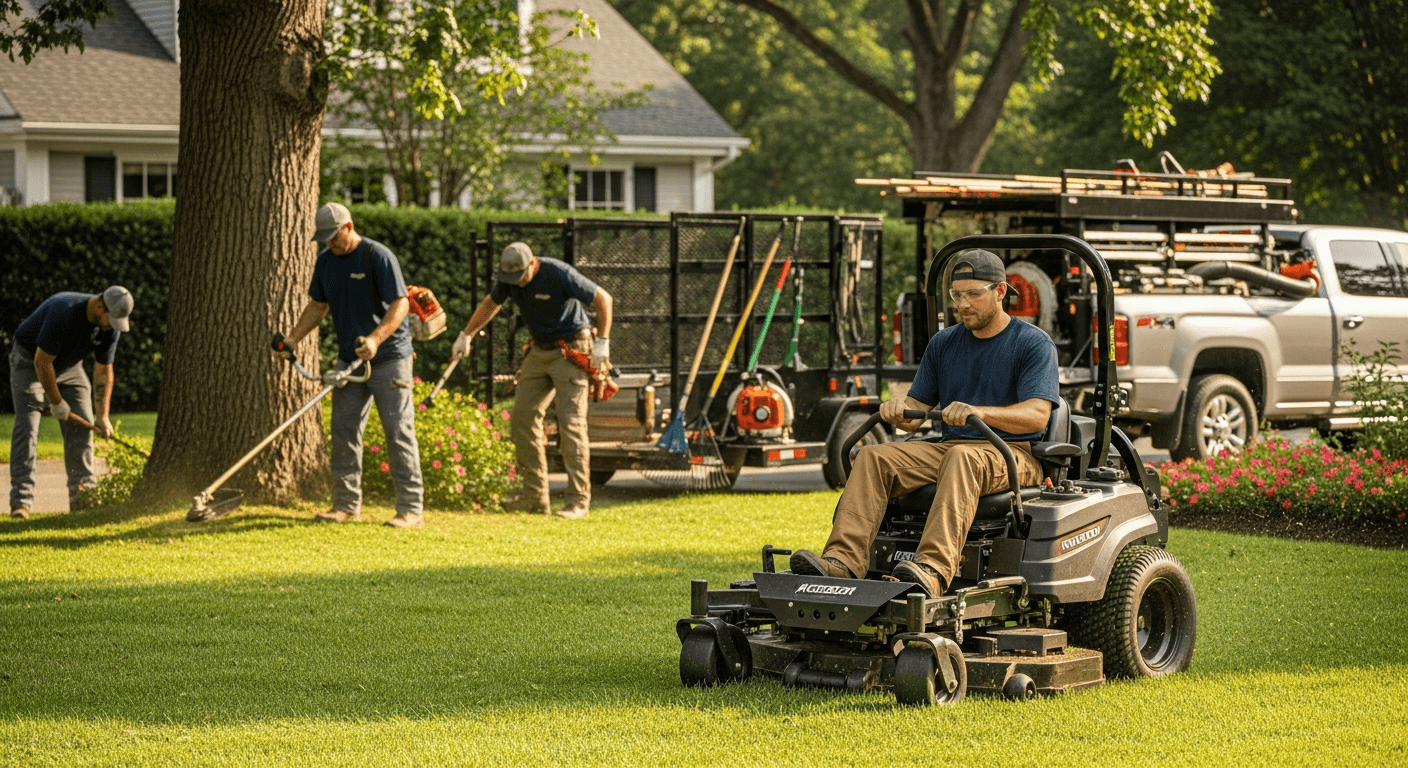

Average Landscaping Insurance Costs
Landscaping businesses typically pay between $800 and $2,600 per year for a general liability policy with standard $1 million per occurrence limits. The wide range reflects the diversity within the landscaping industry, from solo lawn maintenance operators to large companies performing hardscaping, irrigation, and tree removal services. Your specific costs depend on revenue, employee count, services offered, and geographic location.
Workers' compensation insurance is often the largest expense for landscaping companies with employees. Landscaping is classified as a high-risk occupation due to the use of power equipment, exposure to weather extremes, heavy lifting, and operation of commercial vehicles. Workers' comp rates for landscaping typically range from $5 to $12 per $100 of payroll, making it one of the more expensive industries to insure. Within that band, payroll, claims history, and classification determine where you land.
Commercial auto insurance rounds out the program, with trucks, trailers, and specialty vehicles like skid steers each rated separately. Equipment coverage through an inland marine policy or equipment floater is priced on the total value of your mowers, blowers, trimmers, and other gear. All told, a small landscaping company with a few employees typically spends $8,000 to $18,000 per year on insurance, a figure that moves with payroll, vehicles, equipment values, and services performed.
Landscaping Insurance is a bundle of separate policies, priced separately. The ranges below are typical figures nationally for each line, except workers compensation, which is rated per $100 of payroll; a quote prices each one against your own operations.
| Coverage | Typical range | What moves your price |
|---|---|---|
| General Liability Insurance | $65 - $220 per month | Industry and risk classification, annual revenue, number of employees |
| Workers Compensation Insurance | $0.75 - $2.74 per $100 of payroll | Employee classification codes, total annual payroll, experience modification rate |
| Commercial Auto Insurance | $200 - $625 per month | Fleet size and vehicle types, driver records and experience, coverage limits and deductibles |
| Inland Marine Insurance | $25 - $100 per month | Total insured value of the scheduled property, type and age of the equipment, where it is stored and how far it travels |
Prices shown are general estimates, not guaranteed rates or quotes. Your actual premium will depend on the insurer, coverage selected, business details, location, claims history, and other underwriting factors. Learn about our pricing methodology.
Factors Driving Landscaping Insurance Costs
The services you offer have the biggest impact on your landscaping insurance costs. Basic lawn care and maintenance services including mowing, edging, leaf removal, and seasonal cleanup are classified as lower risk and command lower premiums. Hardscaping services like retaining walls, patios, and walkways carry moderate risk due to the potential for structural failures. Tree services including removal, trimming, and stump grinding are among the highest-risk landscaping activities due to the potential for catastrophic property damage, serious bodily injury, and the use of heavy equipment.
Your crew size and payroll directly drive workers' compensation costs, which are typically the largest line item in a landscaping company's insurance budget. More employees means more payroll, more exposure, and higher premiums. The experience modification factor for your business adjusts your base rate up or down based on your actual claims history compared to others in your industry. A clean safety record can reduce your workers' comp costs by 20 percent or more through a favorable experience mod.
Geographic location affects pricing through both state-level rate differences and local cost-of-living factors. States with higher workers' comp rates and more litigious environments cost more to operate in. Seasonal factors also play a role, as landscapers in northern climates who operate seasonally may pay less than year-round operations in sunbelt states, though some carriers charge minimum premiums regardless of operating season.
Cost by Business Size and Service Mix
Solo lawn care operators with no employees avoid workers compensation entirely, so their program usually consists of general liability from the low end of the $800 to $2,600 range, commercial auto, and a small equipment floater. This is the most affordable tier in the landscaping industry and is often sufficient for operators performing standard lawn maintenance services.
Small landscaping companies with two to five employees offering a mix of maintenance and installation services typically spend $8,000 to $18,000 per year on insurance. Workers' compensation is the dominant cost for these businesses, and the services offered beyond basic maintenance add incrementally to general liability premiums. Commercial auto coverage for multiple vehicles adds significantly to the total.
Mid-size landscaping companies with six to twenty employees and comprehensive service offerings including hardscaping, irrigation, and tree services can expect insurance costs of $20,000 to $50,000 or more annually. At this size, the company's safety record and experience modification factor become increasingly important in determining costs. Companies at this level should invest in formal safety programs, training documentation, and loss control measures to manage their insurance expenses.
Large landscaping operations with multiple crews and diverse service lines often see insurance costs exceeding $50,000 to $100,000 per year. These companies benefit most from working with a licensed insurance professional who can help compare options and structure a coverage program across policy lines.
Reducing Your Landscaping Insurance Costs
Implementing a formal safety program is the single most effective way to reduce landscaping insurance costs over time. Carriers evaluate your commitment to safety when pricing your coverage, and documented safety protocols, regular training sessions, and a culture of safety awareness all contribute to lower premiums. Track and report all safety activities, near-miss incidents, and training completions to demonstrate your program's effectiveness.
Proper employee classification saves money on workers' compensation. If you have employees who perform office work, sales, or other non-field duties, make sure they are classified separately from your field crews. Office workers carry a much lower workers' comp rate than field laborers, and mixing classifications inflates your premium. Work with a licensed insurance professional to ensure every employee is correctly classified.
Maintain your equipment to manufacturer specifications and document all maintenance activities. Well-maintained equipment is less likely to cause injuries or property damage, and carriers view maintenance records favorably. Similarly, implement and enforce vehicle safety policies including regular inspections, driver screening, and GPS monitoring to reduce commercial auto claims and premiums.
Bundling all policies with one carrier can yield multi-policy discounts and simplify your insurance management. Annual policy reviews ensure your coverage keeps pace with your business growth without unnecessary gaps or overlaps.
Get a Landscaping Insurance Quote
Getting accurate landscaping insurance quotes requires detailed information about your operations. Before requesting quotes, prepare your annual revenue, complete employee roster with job duties and payroll by classification, equipment list with values, vehicle inventory, services offered, and claims history for the past five years. The more accurate your information, the more accurate your quotes will be.
CPK Insurance helps you compare coverage options for landscaping and outdoor service businesses and may connect you with participating licensed insurance providers. Participating providers include carriers familiar with the specific risks landscapers face, from mowing crews to tree work. Whether you are a solo operator looking for basic coverage or a large landscaping company needing a comprehensive insurance program, get a quote with CPK Insurance and connect with a licensed insurance professional.
Request a Quote Comparison
Enter your ZIP code to compare insurance rates from top carriers.
Updated July 17, 2026