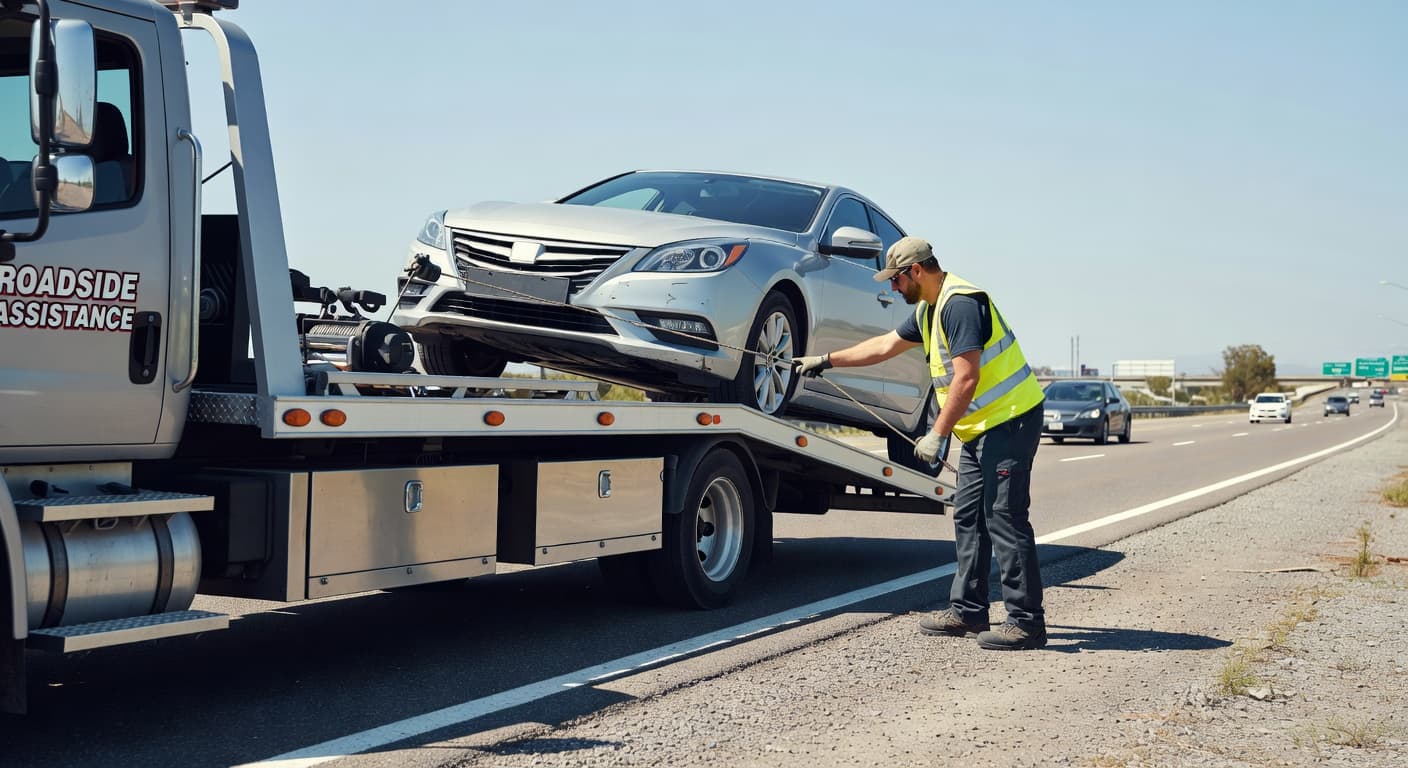

Average Tow Truck Insurance Costs
Tow truck insurance is among the most expensive commercial auto coverages in the industry, with the average tow truck operator paying between $6,000 and $12,000 per truck per year for a comprehensive insurance package. Single-truck owner-operators can sometimes find basic coverage toward the lower end of that range, while larger towing companies with multiple trucks, storage lots, and repair facilities can easily spend $50,000 or more per year on their total insurance program.
The high cost of tow truck insurance reflects the concentrated risk profile of the towing industry. Tow truck operators face hazards that few other businesses encounter on a daily basis. You are working alongside busy highways and interstates in all weather conditions, often at night, hooking up and transporting vehicles owned by other people. The combination of high-traffic roadside exposure, responsibility for customers' vehicles, and the heavy-duty equipment involved creates a risk environment that carriers price accordingly.
Many tow truck operators are frustrated by the difficulty of finding affordable coverage, and for good reason. The towing industry has experienced significant losses in recent years, causing some carriers to exit the market entirely and others to raise rates sharply. This reduced carrier appetite has limited competition and driven up premiums across the board. However, specialized tow truck insurance programs still exist, and comparing quotes from providers that know the towing industry can make a real difference in the rates you find. CPK Insurance helps you compare options and may connect you with participating licensed insurance providers that write this class of business.
Towing Company Insurance is a bundle of separate policies, priced separately. The ranges below are typical figures nationally for each line, except workers compensation, which is rated per $100 of payroll; a quote prices each one against your own operations.
| Coverage | Typical range | What moves your price |
|---|---|---|
| Commercial Auto Insurance | $1,025 - $3,500 per month | Fleet size and vehicle types, driver records and experience, coverage limits and deductibles |
| Garage Keepers Insurance | Varies | Quoted individually based on your operations and limits |
| On-Hook Towing Insurance | Varies | Quoted individually based on your operations and limits |
| General Liability Insurance | $130 - $460 per month | Industry and risk classification, annual revenue, number of employees |
| Workers Compensation Insurance | $0.75 - $2.74 per $100 of payroll | Employee classification codes, total annual payroll, experience modification rate |
Prices shown are general estimates, not guaranteed rates or quotes. Your actual premium will depend on the insurer, coverage selected, business details, location, claims history, and other underwriting factors. Learn about our pricing methodology.
Types of Coverage Tow Trucks Need
Tow truck operators need a specialized insurance package that goes well beyond standard commercial auto coverage. Commercial auto liability insurance is the foundation, helping cover bodily injury and property damage you cause to others while operating your tow truck. Most states require minimum liability limits for commercial vehicles, but towing companies should carry at least $1 million in combined single limit liability. Many municipalities and motor clubs like AAA require even higher limits, sometimes $1.5 million or $2 million, before they will add you to their approved provider lists.
On-hook towing coverage is unique to the towing industry and can help protect vehicles that are being transported by your tow truck. If a customer's vehicle is damaged while hooked to your truck, whether from an accident, fire, or other covered peril, on-hook coverage can help pay for the damage. This is distinct from your auto liability coverage, which covers third-party claims. On-hook coverage applies to the specific vehicle you are towing and is essential for every tow truck operator; limit selection is covered in detail later in this article.
Garagekeepers legal liability insurance applies to customers' vehicles stored at your facility, whether in a storage lot, impound yard, or repair garage, and is critical for any towing company that operates an impound lot or offers vehicle storage. Physical damage coverage for your own tow trucks includes collision and comprehensive protection, helping cover repair or replacement costs if your truck is damaged in an accident, stolen, or damaged by weather or fire.
Additional coverages to consider include commercial general liability for your premises, workers compensation for your employees, commercial property insurance for your shop and office, and garage liability coverage if you perform any repair or maintenance work. An umbrella policy providing additional limits above your primary coverages is highly recommended given the potential severity of towing-related claims.
Factors That Affect Tow Truck Insurance Premiums
The number and type of tow trucks in your fleet have a direct impact on your insurance costs. Light-duty wheel-lift and flatbed trucks used for passenger vehicles and small trucks are the least expensive to insure, while medium-duty wreckers, heavy-duty rotators, and specialized recovery equipment command significantly higher premiums. A light-duty flatbed sits at the affordable end of the spectrum, while a heavy-duty rotator capable of recovering overturned semi-trucks could cost $10,000 to $18,000 per year due to the higher vehicle value and the more hazardous recovery operations it performs.
Your drivers' experience and records are scrutinized more closely in towing than in most other commercial auto classes. Carriers want to see drivers with CDL experience, clean MVR records, and ideally specific tow truck operating experience. Inexperienced drivers, drivers under age 25, and drivers with moving violations or at-fault accidents on their records substantially increase your premiums. Some carriers will not write a towing operation if any driver has a DUI within the past five years, and most charge steep surcharges for drivers with multiple violations.
The geographic area where you operate is a significant factor. Tow truck companies in congested urban areas with heavy highway traffic face more exposure to roadside accidents and vehicle damage than those in rural areas. Companies that perform freeway service patrol contracts or respond to highway incidents for state agencies are typically charged higher premiums because of the high-speed traffic exposure inherent in these operations.
Your annual revenue, the number of tows performed per year, and the types of towing services you offer all affect pricing. Consent towing, where you are called by the vehicle owner or their representative, is viewed as lower risk than non-consent towing, which involves towing vehicles from private property without the owner's permission. Non-consent towing generates more damage claims and confrontational situations, leading to higher premiums. Your claims history over the past three to five years is one of the most influential factors, with even one or two significant claims potentially doubling your rates at renewal.
Insurance Costs by Tow Truck Type
Light-duty flatbed tow trucks, which carry passenger vehicles and small trucks on a tilting platform, are the most common and least expensive type to insure. Annual insurance costs for a light-duty flatbed are typically the lowest of any truck type. These trucks are popular because they minimize the risk of damage to the towed vehicle, which in turn reduces on-hook claims. The flatbed design also makes loading and unloading safer for the operator, reducing workers compensation exposure.
Light-duty wheel-lift trucks, which use a hydraulic mechanism to lift the drive wheels of a vehicle off the ground, are priced similarly to flatbeds. However, wheel-lift trucks tend to generate slightly more on-hook damage claims because the towed vehicle remains in contact with the road surface through two wheels, increasing the potential for transmission damage, tire damage, and bumper scratches. Integrated tow trucks that combine a wheel-lift with a flatbed or additional cargo area may cost $5,000 to $9,000 per year to insure.
Medium-duty wreckers designed for towing larger vehicles like delivery trucks, RVs, and box trucks cost $7,000 to $12,000 per year to insure. These trucks are heavier, operate in more challenging recovery situations, and tow higher-value vehicles, all of which increase both liability and on-hook coverage costs. Medium-duty operators often handle more complex roadside recoveries that carry additional risk.
Heavy-duty tow trucks and rotator wreckers sit at the top of the cost spectrum, with annual insurance premiums ranging from $10,000 to $20,000 or more per unit. These machines can cost $300,000 to over $1 million to purchase, making physical damage coverage alone a significant expense. Heavy-duty operators recover semi-trucks, construction equipment, and other large vehicles from accident scenes, ditches, and rollover situations. The complexity and danger of these operations, combined with the high value of both the tow truck and the vehicles being recovered, make this the most expensive towing class to insure. Get a quote with CPK Insurance and connect with a licensed insurance professional who can help you compare options for your fleet composition.
On-Hook and Garagekeepers Coverage Explained
On-hook towing coverage is the signature coverage of the towing industry and one that every tow truck operator must understand thoroughly. This coverage can help protect you against claims for damage to vehicles while they are being towed by your truck, from the moment you hook up until the vehicle is safely unloaded at its destination. Common on-hook claims include damage from straps or chains during loading, transmission damage from improper towing methods, body damage from road debris while being towed, and total losses from accidents that occur while a customer's vehicle is on your truck or hook.
On-hook coverage limits should reflect the maximum value of any single vehicle you might tow. Most towing companies carry on-hook limits of $75,000 to $150,000 per vehicle. If you routinely tow luxury vehicles, classic cars, or commercial vehicles with higher values, you may need limits of $200,000 or more. The cost of on-hook coverage varies based on your limits, deductible, number of trucks, and claims history, but typically adds $500 to $2,000 per truck per year to your overall premium. Choosing whether to write on-hook coverage on a primary or excess basis and whether to include collision-only or comprehensive perils are decisions that affect both coverage quality and cost.
Garagekeepers legal liability insurance picks up where on-hook coverage leaves off, helping protect customers' vehicles while they are stored at your lot or facility. This is particularly important for companies that operate impound lots, storage yards, or repair garages. Garagekeepers coverage responds to damage from fire, theft, vandalism, hail, wind, and collision while a vehicle is in your care, custody, and control at your premises, subject to policy terms. Coverage can be written on a legal liability basis, meaning it only pays if you are found legally responsible for the damage, or on a direct primary basis, which pays regardless of fault.
Garagekeepers limits are based on the maximum total value of all vehicles stored at your facility at any one time. If your lot holds 50 vehicles with an average value of $15,000 each, you need at least that total value in garagekeepers limits. Garagekeepers coverage costs vary widely based on limits, the security measures at your storage facility, and your claims history, but typically runs $1,000 to $5,000 per year. Facilities with perimeter fencing, security cameras, adequate lighting, and on-site personnel receive better rates than open lots with minimal security.
How to Save on Tow Truck Insurance
The tow truck insurance market is challenging, but there are proven strategies for keeping your premiums as low as possible without sacrificing essential coverage. The most impactful step is hiring and retaining experienced, safe drivers. Every driver on your policy with a clean record and multiple years of tow truck experience helps your overall pricing. Conversely, every driver with violations, limited experience, or a history of on-hook damage claims hurts your pricing significantly. Invest in thorough driver screening, ongoing training, and performance monitoring to build and maintain a safe driving team.
Install dash cameras on every truck in your fleet. Dual-facing cameras that record both the road ahead and the cab interior are increasingly expected by tow truck insurance carriers. These cameras protect you against fraudulent third-party claims, provide evidence in accident disputes, and help you monitor driver behavior. Many carriers offer 5 to 10 percent discounts for fleets equipped with functional dash cameras. GPS tracking systems are another technology investment that carriers value, as they allow you to monitor speed, idle time, and route compliance.
Maintain detailed documentation for every tow, including photographs of the vehicle before hookup, during transport, and at delivery. This documentation process adds a few minutes to each job but can save you thousands of dollars in disputed on-hook damage claims. When a customer claims their vehicle was damaged during towing, pre-tow photographs often prove the damage existed before you touched the vehicle. This documentation discipline directly reduces your claims frequency and helps keep your premiums under control.
Compare quotes from carriers that actively write towing risks. The towing market is highly specialized, with only a handful of carriers in this class of business, so knowing which ones are currently competitive and what underwriting information they need matters. CPK Insurance is a general insurance comparison marketplace that can help you compare options from participating licensed insurance providers that write towing risks. Additional savings strategies include increasing your deductibles if your cash flow supports it, bundling your auto, general liability, and property coverages with a single carrier, maintaining your trucks in excellent mechanical condition to reduce breakdown-related incidents, and joining industry associations like the Towing and Recovery Association of America, which sometimes offer access to group insurance programs with discounted rates.
Request a Quote Comparison
Enter your ZIP code to compare insurance rates from top carriers.
Updated July 17, 2026