
Updated July 16, 2026

Homeowners Insurance in Cedar Rapids
The gap between market value and rebuild cost is where Cedar Rapids policyholders tend to get caught. Many homes here trade at values that look manageable, but your policy still needs to track what it would actually cost to repair or rebuild after a major loss. The local median home value is $177,100 against a median household income of $67,859, so a family earning the median wage could face nearly three years of pretax earnings to fully replace a home if their dwelling limit comes up short. A practical review begins with the replacement cost estimate, then moves through roof age, siding type, basement finish level, and whether your personal property schedule still reflects what is actually in the home.
Iowa has a high climate risk rating. Top hazards: Tornado (Very High), Severe Storm (Very High), Flooding (High), Winter Storm (High). The state's expected annual loss from natural hazards is $1.8B, which influences homeowners insurance premiums and may affect coverage availability in high-risk areas.
What Homeowners Insurance Covers
In Iowa, the useful review is not the basic policy outline. It is how the policy responds to the loss patterns your property is more likely to see. If your home sits in an area that deals with severe convective storms, the practical question is whether your roof settlement would be based on full replacement cost or reduced for age and wear under the policy terms. That one distinction can materially change what comes out of your pocket after a hail or wind claim.
Basement homes call for a direct look at water exposure. Standard homeowners forms may cover sudden and accidental water damage from certain internal plumbing failures. Water that backs up through a sewer, drain, or sump system is often handled differently and may require an added endorsement. If you keep finished flooring, furniture, or electronics below grade, ask for that exposure to be reviewed directly instead of assuming the base form handles it the way you expect.
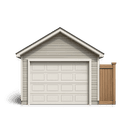
Detached structures also matter more on many Iowa properties than they do in denser neighborhoods. A garage, shed, fence line, or small workshop can push you to check whether the default other structures limit is enough. If you store tools, lawn equipment, or seasonal machinery there, confirm how those items are valued after a covered loss.
Liability deserves the same property-specific approach. Trampolines, dogs, recreational vehicles kept at home, and frequent guests all change what you should ask an agent to review. Before you buy, walk the property and make a list of roof age, basement finish level, detached buildings, retaining walls, and any drainage or sump setup so the quote reflects the real risk.
Coverage Included

Dwelling
Repairs or rebuilds your home itself, the walls, roof, floors, built-in appliances, and attached structures like a garage, after a covered loss. Set this limit to the full cost of rebuilding, not market value.
Other Structures
Detached structures on your property, such as a fence, shed, detached garage, or gazebo. Usually set at about 10 percent of your dwelling limit [2].

Personal Property
Your belongings, furniture, clothing, electronics, and appliances, generally written at 50 to 70 percent of your dwelling limit [2]. High-value items like jewelry and art carry special limits.

Additional Living Expenses
Also called loss of use. Pays your added living costs, hotel stays, meals, and a temporary rental, while a covered loss makes your home uninhabitable. Usually set at about 20 percent of your dwelling limit.

Liability
Covers you if someone is injured on your property, or you damage someone else's property, and you are found responsible. The standard $100,000 limit [2] is often raised to $300,000 or $500,000.

Medical Payments
Pays small medical bills, commonly $1,000 to $5,000, if a guest is hurt at your home regardless of fault, without a formal liability claim.
Homeowners Insurance Cost in Cedar Rapids
Average Cost in Iowa
$110 - $240
per month
In Iowa, homeowners insurance premiums typically run $110 - $240 per month, which tends to run 3% below the national range of $110 - $250 per month.
- Home replacement cost, age, and construction type
- Roof age, material, and condition
- ZIP code and local weather risk (wind, hail, wildfire, hurricane)
- Coverage limits and endorsements
- All-peril and percentage wind/hail deductibles
- Claims history and insurance score where allowed
Typical range for many standard homeowners profiles; lower-risk homes fall below it and coastal, wildfire, or older-roof homes can run well above. Final pricing depends on property details, location, underwriting, and selected coverage.
Prices shown are general estimates, not guaranteed rates or quotes. Your actual premium will depend on the insurer, coverage selected, personal details, location, claims history, and other underwriting factors. Learn about our pricing methodology.
Homeowners pricing in Iowa usually moves on property details more than broad averages. The better question is what in your file is pushing the quote up or down. Many homes see premiums roughly in the range of $110 to $240 per month, depending on rebuilding cost, roof age and material, prior claims, deductible choice, basement exposure, and whether the carrier sees elevated wind or hail risk at the address. That range gives you a starting point so a quote of $180 does not feel arbitrary and a quote of $300 prompts a real question about what is driving the difference. If your own quote lands outside that range, it is not automatically a red flag. A home with a newer roof, no basement, and a clean claims history can reasonably come in lower, while a larger property with an older roof and finished lower level can push higher. The range is a rough benchmark, not a rule.
A newer roof often helps, but the material and installation quality still matter. An older roof, visible wear, or prior storm damage can narrow your options or change the deductible structure. Finished basements can also raise the amount at risk because flooring, drywall, trim, and stored property add claim severity when water gets where it should not.
Carriers also look at the amount of dwelling coverage requested, whether you add water backup protection, the liability limit you choose, and how much loss you agree to absorb through the deductible. If you want to control premium without stripping the policy down, test a higher deductible against the savings and keep the comparison on the same coverage terms. Do not compare one quote with replacement cost on the roof against another with more restrictive loss settlement and assume the cheaper one is the better buy. Ask each carrier to show the deductible, roof settlement language, water backup option, and any separate wind or hail terms in writing before you decide.
What Affects Homeowners Insurance Rates in Cedar Rapids
Affordability is part of the buying decision here, but it should be tied to limits, not treated as a reason to underinsure the house. Cedar Rapids has a median household income of $67,859, so many owners are balancing escrow pressure, deductibles, and upgrade costs at the same time. A home can appear modestly priced while still needing careful replacement cost work, especially if you have added finishes, outbuildings, or higher grade interior materials. That combination changes the conversation: instead of shopping only for the lowest payment, compare how each quote handles dwelling limits, loss settlement, water backup options, and deductible structure. If a quote comes in lower, check what moved. A smaller premium can reflect a higher deductible, tighter sublimits, or less favorable settlement terms, not just a better fit.
What Makes Cedar Rapids Different
Buyers here can be tempted to anchor coverage to purchase price, tax assessment, or an old estimate from a prior policy. That shortcut can leave real gaps if the home has been improved over time or if detached structures and basement finishes are not fully reflected. Ask how the quote accounts for roof materials, exterior cladding, attached and detached structures, and any interior upgrades that would be expensive to replace consistently after a covered loss. If the estimate looks low compared with the way the house is actually built and finished, press for a line-by-line review before you bind or renew.
Our Recommendation for Cedar Rapids
Start with a policy check that is specific to the house, not just the address. Review the replacement cost estimate, then verify whether recent remodeling, a finished basement, a deck, shed, or garage changes the dwelling or other structures limits you carry. Compare deductible options side by side and ask how each one changes your out-of-pocket responsibility after a wind or water-related claim. If you keep higher-value jewelry, tools, collectibles, or electronics, ask whether scheduled personal property makes more sense than relying on standard sublimits. If you work from home or store business equipment at the house, mention that before quoting so the carrier can walk through any limits that may apply.
Get Homeowners Insurance in Cedar Rapids
Enter your ZIP code to compare homeowners insurance rates from carriers in Cedar Rapids, IA.
Home insurance starting at $50/mo
FAQ
Frequently Asked Questions
Your policy needs limits that reflect how the house would be repaired or rebuilt, including upgrades, detached structures, and finished areas. Market value alone will not tell you whether your coverage can handle the actual cost of reconstruction.
Begin with the dwelling estimate, roof age, siding type, basement finish level, and deductible structure. Then compare how each quote handles loss settlement and optional endorsements, so a lower premium does not hide a thinner policy.
Linn County has 5,809 business establishments, which means roughly one business exists for every eleven residents. That density makes work-from-home setups and stored business property common enough to flag during quoting. If you store business property or regularly work from home, ask how your homeowners policy treats those exposures.
Linn County's leading sectors are health care and social assistance at 13.1%, retail trade at 11.9%, and construction at 10%, which means more than a third of the local workforce is in fields where tools, uniforms, or inventory may travel between job sites and the house. When gear and stock move that freely, they can easily end up at your address without you thinking to mention it. Ask how your policy treats that property before a claim does.
Iowa policies do not all handle roof claims the same way. One quote may settle a covered hail loss more favorably than another, so you should compare roof settlement language, deductibles, and any wind or hail terms before committing.
Iowa basement homes often warrant a close review of water backup protection. If you have a sump pump, floor drain, or finished lower level, ask whether backup through drains or sump systems needs an endorsement instead of assuming the base policy includes it.
Iowa homeowners policies often include some coverage for detached structures, but the default amount may not fit a larger lot or a more substantial outbuilding. Review garages, sheds, fences, and workshops individually before you rely on the standard limit.
Iowa insurance oversight runs through the Iowa Insurance Division, so that is the regulator to know when you are reviewing policy documents, complaint channels, or carrier conduct. Keep your buying focus on the quote terms, endorsements, and deductible structure.
Sources
- 1.U.S. Census Bureau, ACS 5-Year Estimates, table B25077(The local median home value is $177,100.)
- 2.U.S. Census Bureau, ACS 5-Year Estimates, table B19013(Median household income is $67,859.)
- 3.U.S. Census Bureau, County Business Patterns, Linn County(Linn County has 5,809 business establishments.; Linn County's leading sectors are health care and social assistance at 13.1%, retail trade at 11.9%, and construction at 10%.)
Updated July 16, 2026