Updated July 16, 2026

Builders Risk Insurance in Davenport
Retail trade leads the Scott County business mix, with health care and food service close behind. That matters because much of the local construction work is tenant build-out, remodel, and finish work tied to occupied commercial property. If you are reviewing builders risk insurance in Davenport, the question is often less about a remote ground-up site and more about how materials, fixtures, and partially completed work move through a live corridor of stores, clinics, restaurants, and mixed-use properties. Retail trade makes up 13.6% of establishments, health care and social assistance 11.5%, and accommodation and food services 10.9%. In practical terms, you are more likely to juggle delivery timing, interior finish sequencing, and owner-furnished items that all need to be scheduled and valued correctly. A quote here should match whether you are renovating an occupied storefront, improving a medical office, or finishing a restaurant space with long-lead equipment and staged materials. Before binding, line up the project value, temporary storage, and who is responsible for installed versus uninstalled property.
Builders Risk Insurance Risk Factors in Davenport
Davenport's top risk factors include Tornado damage, Hail damage, Severe storm damage, and Wind damage.
Iowa has a high climate risk rating. Top hazards: Tornado (Very High), Severe Storm (Very High), Flooding (High), Winter Storm (High). The state's expected annual loss from natural hazards is $1.8B, which influences builders risk insurance premiums and may affect coverage availability in high-risk areas.
What Builders Risk Insurance Covers
The useful question is not whether a builders risk policy applies to construction generally. The useful question is which parts of your specific job are inside the coverage grant, which are limited, and which need to be scheduled or endorsed before materials arrive on site. A new build outside a town center, an addition to an occupied commercial property, and a gut renovation in an older neighborhood can create very different property exposures even when the contract value looks similar.
Start by reviewing how your policy treats materials after delivery but before installation. If your project depends on staged deliveries, off-site storage, or owner-supplied items, ask where coverage begins and where it pauses. The same goes for temporary works, fencing, scaffolding, construction forms, and job trailers if those items matter to your budget after a loss. On a remodel, pin down whether existing structures are excluded, limited, or available by endorsement, because that point often drives the biggest misunderstanding after a water or collapse claim.
You should also read the causes of loss section with weather in mind. Wind, hail, and water entry can happen before the building is dried in, so test the policy against those scenarios. Ask how the policy handles debris removal, pollutant cleanup if building materials are damaged, and soft cost options that can help cover added interest, real estate taxes, and administrative overhead if a covered property loss delays completion. If employee theft exposures matter on your job, confirm whether that belongs in this policy or in separate crime coverage instead of assuming it is automatically included.
Coverage Included

Structure Coverage
Covers the building or structure under construction.

Materials on Site
Covers building materials stored at the construction site.

Materials in Transit
Covers materials being transported to the job site.
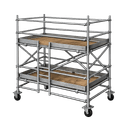
Temporary Structures
Covers scaffolding, fencing, and temporary buildings.

Soft Costs
Covers additional expenses from construction delays due to covered losses.

Equipment Coverage
Covers permanently installed fixtures and equipment.
What Makes Davenport Different
Renovation work in occupied spaces is what shifts the buying calculus here. In a market shaped by storefronts, care facilities, and hospitality spaces, many projects are not isolated new builds. They are interior renovations, additions, and fit-outs where construction happens next to ongoing operations, existing structures, and scheduled openings. Scott County has 4,545 business establishments. That density means your project likely shares a wall or parking lot with an active business, so you will want to confirm who is named on the policy and whose improvements are included. You may need to confirm whether the policy value includes tenant improvements, owner-supplied materials, and equipment that arrives before installation. You should also check how the form treats existing structures if the job is an addition or major remodel, because that line can matter more here than on a clean vacant-site build. Describe the job as it will actually be built, including specific materials, timelines, and occupancy conditions.
Our Recommendation for Davenport
Begin with the contract documents rather than jumping straight to the application. For a local remodel or tenant improvement, ask your agent to review the total completed value, the construction timeline, where materials are stored before installation, and whether any owner-furnished items need to be scheduled. If the job touches an existing building, ask specifically where coverage stops and where another property policy needs to respond. That point is easy to miss on additions and interior work. If financing is involved, confirm the lender's insurance requirements early so the named insured, mortgage interest, and valuation method are aligned before closing. Davenport's median home value is $162,900. That figure tells you a construction loss on even a modest residential project could consume a significant share of local household equity, so accurate limits are worth the extra attention. If you are building or renovating for resale or rental, bring the budget, draw schedule, and scope summary to your quote request so the policy can be reviewed against the real exposure instead of a rough estimate.
Get Builders Risk Insurance in Davenport
Enter your ZIP code to compare builders risk insurance rates from carriers in Davenport, IA.
Business insurance starting at $25/mo
FAQ
Frequently Asked Questions
Storefront remodels should be quoted with the full completed value, major materials, fixtures, and any owner-furnished items that arrive before installation. If the space stays occupied during work, ask how the policy treats the existing structure versus the new work.
Restaurant build-outs often involve interior finish work, equipment deliveries, and phased completion inside an existing building. That makes it important to review installed and uninstalled property, temporary storage, and whether the policy matches a tenant improvement rather than a ground-up build.
Scott County has 4,545 business establishments. That concentration means your project probably borders a neighboring operation with its own financial stake in the outcome, so confirm who is named on the policy and whose materials or improvements are included.
Renovation jobs should be valued carefully because partial work, finish materials, and preinstalled components can add up quickly. With a median home value of $162,900 locally, even a modest residential project can justify a closer review of limits and valuation.
Financed projects should have the lender requirements checked before closing, including named insureds, mortgage interest, and the required valuation basis. The Iowa Insurance Division serves as the state's insurance regulator if a dispute or filing question arises.
The buyer is usually the party the contract makes responsible for the work before completion, often the owner or general contractor. Review the agreement first, then confirm the named insureds and lender interests before materials are delivered.
Projects often need close review of storm-related property terms because weather can damage unfinished work before turnover. Coverage depends on the policy's causes of loss, exclusions, deductibles, and whether the damaged property is actually included.
Renovation projects often need builders risk review when structural work, roofing, or major interior rebuilds expose the property to loss during construction. The key question is whether the policy addresses only new work or also any existing structures.
Sources
- 1.U.S. Census Bureau, County Business Patterns, Scott County(In Scott County, retail trade accounts for 13.6% of establishments, health care and social assistance 11.5%, and accommodation and food services 10.9%.; Scott County has 4,545 business establishments.)
- 2.U.S. Census Bureau, ACS 5-Year Estimates, table B25077(Davenport's median home value is $162,900.)
- 3.Iowa Insurance Division(Iowa Insurance Division is Iowa's insurance regulator.)
Updated July 16, 2026