







































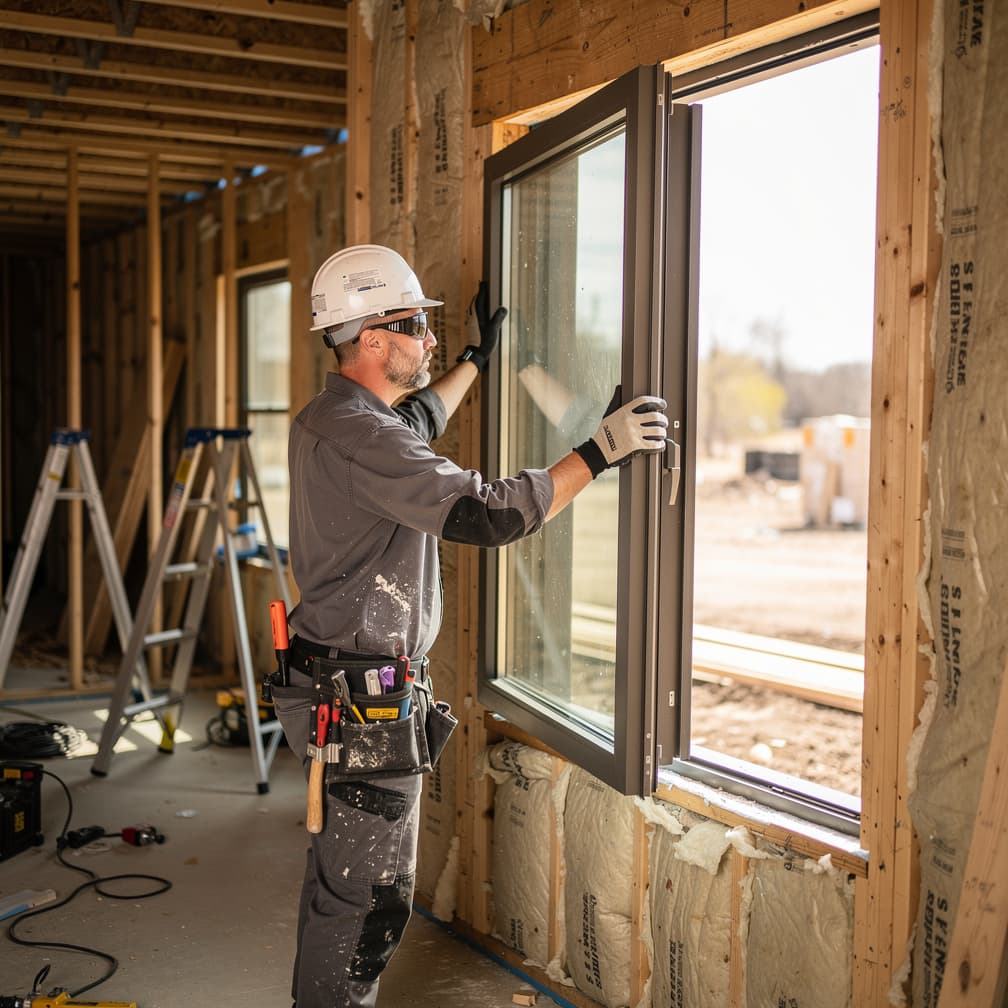

General liability for a window and door installer typically starts around $35 a month, which is less than the invoice for one shattered insulated glass unit. That gap is the whole argument for window and door installer insurance in Des Moines: a small premium buys the answer to losses you cannot absorb. Payroll, vehicle count, and the share of your work that is commercial move the number far more than the city on your invoices. A crew of four setting storefront glass prices nothing like a solo installer swapping double hungs. Claims history moves it again, and one property damage claim can follow you through several renewals. The comparison below shows what actually drives your quote in Des Moines and what you can safely ignore.
What Makes Des Moines Different
Owners want to know who pays before they let you take their front door out. That question has a real answer only if your policy is current and its limits are known. Being able to answer it on the spot in Des Moines wins work from installers who mumble. Keep the certificate, the limits, and the expiration date in one screenshot on your phone. A homeowner in Des Moines deciding between two bids will take the one that removed their worry. Call it a sales advantage rather than a coverage strategy, because your competitors ignore it entirely. The policy answers for the bad day, and the proof of it wins you the good ones. Both are worth what you spend, and only one of them shows up on the invoice.
Local Risk Factors in Des Moines
Ladders and staging left standing when a squall line arrives become projectiles aimed at somebody else's property. A ladder through a neighbor's window is a third-party claim, and General Liability may respond depending on whether securing it was reasonable and possible. The forecast becomes the evidence: a carrier will ask what you knew and when you knew it. Taking staging down in Des Moines costs an hour, and the alternative costs a deductible plus an awkward renewal conversation. Keep a written end-of-day routine for every Polk County job so the answer to that question stays boring.
What Coverage Does a Window & Door Installer in Des Moines Need?
General Liability
General contractors, property managers, and permit desks ask for this one by name before a crew opens a wall. It can help cover third-party bodily injury and damage to a client's property, the gouged floor or the ruined trim beside an opening. It typically excludes your own faulty workmanship and any injury to your employees.
Example: A frame slips off the horses and gouges a client's new hardwood on the way down. The repair invoice and the argument that follows are what this line is generally meant to take on.
Workers Compensation
Nothing else on this page answers when an installer tears a shoulder lifting a patio door, which is the whole reason this line exists. It is intended to handle medical treatment and a share of lost wages for crew hurt on the job. Rules about who must be covered vary by state, and payroll is what it gets rated on.
Example: Two installers carry a storefront unit up a stairwell and the one walking backwards misses a step. Treatment, time away, and the wage gap that follows can fall to this coverage.
Commercial Auto
Your personal policy typically excludes the truck the moment it is hauling frames for money, and that gap is what this line fills. It might respond to injury and property damage you cause on the road, and comprehensive can be added for the van itself. Trailers usually have to be scheduled by name, so ask.
Example: A van pulls out of a Des Moines supply yard with a loaded trailer and clips a parked car. Repairs to the other vehicle and any injury claim behind it are what this policy is designed to address.
Tools & Equipment (Inland Marine)
Saws, ladders, levels, and a trailer full of frames are the property that never sits still, and a shop policy usually stops at the shop door. This line is built for gear in transit, in a locked van, or staged at a jobsite. Theft and damage are the common triggers, and storage conditions decide a great deal.
Example: Somebody cuts the lock on a trailer parked overnight behind a Des Moines jobsite and takes every cordless tool inside it. Replacing that kit is the sort of loss this coverage often picks up.
How Much Does Window & Door Installer Insurance Cost in Des Moines?
Window & Door Installer Insurance is a bundle of separate policies, priced separately. The ranges below are typical figures for Des Moines for each line, except workers compensation, which is rated per $100 of payroll; a quote prices each one against your own operations.
| Coverage | Typical range | What moves your price |
|---|---|---|
| General Liability Insurance | $130 - $400 per month | Industry and risk classification, annual revenue, number of employees |
| Workers Compensation Insurance | $0.75 - $2.74 per $100 of payroll | Employee classification codes, total annual payroll, experience modification rate |
| Commercial Auto Insurance | $190 - $550 per month | Fleet size and vehicle types, driver records and experience, coverage limits and deductibles |
| Inland Marine Insurance | $30 - $120 per month | Total insured value of the scheduled property, type and age of the equipment, where it is stored and how far it travels |
Prices shown are general estimates, not guaranteed rates or quotes. Your actual premium will depend on the insurer, coverage selected, business details, location, claims history, and other underwriting factors. Learn about our pricing methodology.
What Are the Insurance Requirements for a Window & Door Installer in Des Moines?
Workers' comp is generally required once you have your first employee. Iowa generally requires employers to carry workers' compensation at that point. Common exemptions include sole proprietors, partners, and some agricultural workers. Confirm current thresholds with your state's workers' compensation agency before you hire.
State auto liability minimums apply to business vehicles. Iowa's minimum auto liability limits are $20,000/$40,000/$15,000 (bodily injury per person / per accident / property damage). Contracts and lenders often require more than the state floor.
Where to verify licensing and coverage rules. The Iowa Insurance Division publishes consumer guidance and current insurance requirements for Iowa businesses. When a contract or lease demands specific wording, the Iowa Insurance Division's guidance is the authoritative place to check.
Get Your Window & Door Installer Quote in Des Moines
Compare rates from multiple carriers. Free quotes, no obligation.
Operating in Des Moines
- Glass suppliers deliver on their own terms, so a shipment that arrives damaged has a claim window measured in hours, and signing for it without inspecting it closes that window for you.
- A Des Moines schedule that crosses county lines in one week means your vehicles run a wider radius than the one you described to a carrier, and radius is a rated item.
- Delivery lands before the crew does, and a pallet of units sitting in a client's Des Moines garage for a week is your property inside somebody else's building. Where it sits changes which form might answer if it gets damaged.
- A property manager in Des Moines can hold your dock access until the certificate is on file, so a lapsed renewal stops a crew that is already standing there with the glass.
How to Buy: Advice for Des Moines Owners
Adding your first employee is the moment this whole conversation changes. Until then the exposure is your own body and your own tools; the day somebody else lifts a door with you, payroll enters the picture. Workers Compensation rules and thresholds vary by state, and the answer for one installer differs from the answer for four. Confirm the details with the Iowa Insurance Division before you decide it does not apply to you in Iowa. General Liability does not answer for employee injuries, which is the gap people discover at the worst possible moment. If your Des Moines crew changes mid-year, tell the carrier then instead of at audit. Bring the real headcount to CPK and let participating carriers quote the shop you actually run today.
FAQ
Window & Door Installer Insurance in Des Moines: FAQ
The unit itself is usually your loss rather than a liability claim, because General Liability is built for damage to other people's property instead of the product in your hands. If the shattering pane cuts a bystander or gouges a client's floor, that is a different question, and the liability side can respond. Glass in transit or staged on site can fall under an equipment form, depending on how your policy is written.
An additional insured endorsement extends your liability policy to a client, so a claim arising from your work reaches your carrier rather than theirs. Builders and property managers ask for it because it moves the cost of your mistakes off their balance sheet. Blanket versions apply to any client your contract requires; specific versions get issued per project. Match the wording your contract names, because form numbers are not interchangeable.
Usually not. General Liability typically excludes your own faulty workmanship, so tearing out and resetting a badly installed unit comes out of your pocket. What it can respond to is the collateral damage: the swollen floor, the stained drywall, the ruined trim under a leak nobody noticed for a season. That line between your work and everything around it decides most install claims.
Homeowners can sue, and homeowners live inside the jobsite while you work in it. A scratched hardwood floor or a cracked tile under a patio door is the routine claim on residential installs, and it is exactly what General Liability is meant for. A homeowner in Des Moines may never ask for your certificate, and their lender or the permit office might.
That loss lands on an equipment form rather than a liability one. Inland Marine is designed for tools and gear that travel and get stored away from a shop, and it often responds to theft from a locked vehicle or trailer. Read the storage conditions closely, because coverage for an unlocked van is commonly restricted. Serial numbers and photographs make the claim move faster.
Once a policy is bound, most carriers can issue a certificate the same day, and the delay usually comes from the wording rather than the paper. Additional insured or waiver of subrogation language may need an endorsement, which takes longer to process. Ask your client for their exact requirement in writing before you request the document, so nothing has to be reissued twice.
Sources
- 1.Iowa Insurance Division(Iowa Insurance Division publishes consumer guidance for insurance buyers.)


