







































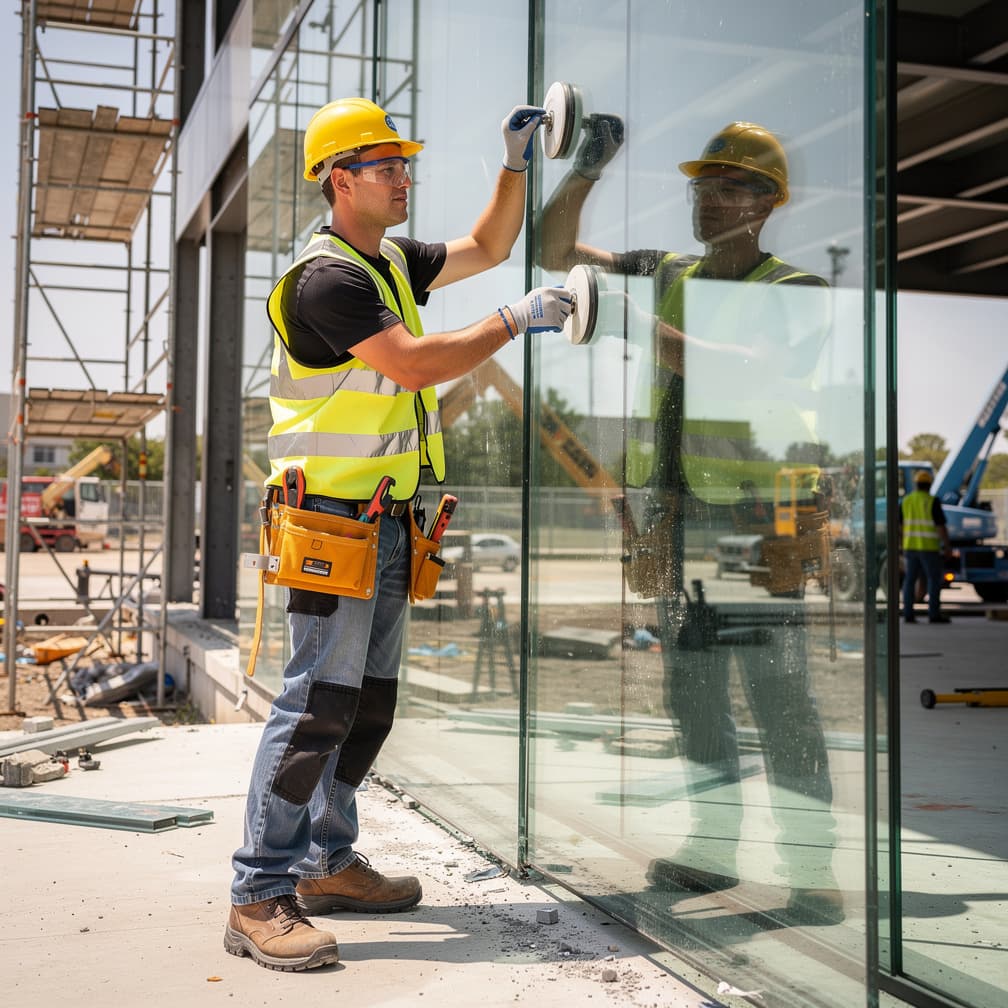

Payroll, and not population, sets most of what a glazier pays, which is why a thin market does not automatically mean a cheap policy. Glazier insurance in Topeka can price close to what a metro shop pays, because the risk of a dropped pane does not shrink with the map. What a small county does change is the claim side: fewer adjusters, fewer glass suppliers, and longer waits when a unit has to be reordered. Shawnee County may hold a short list of shops able to meet the certificate requirements on a commercial bid at all. That scarcity can work in your favor on the price of the job and against you on the timeline for a fix. Ask any quote how long a comparable claim usually takes to settle, then weigh that answer alongside the monthly figure.
What Makes Topeka Different
Handshake work still creates contracts, and a verbal scope is still a scope you can breach. Small residential jobs often run on nothing more than an invoice and a text message thread. That works until a customer says the frame was undamaged before you arrived that morning. Without a photo or a written scope, the argument is memory against memory, and memory loses. A written scope is the plainest risk control a glass shop can buy, and it costs nothing. If a commercial landlord in Topeka finally hires you, the exhibit arrives with real teeth. Shops used to handshake work get caught by limits and wording they never had to meet. Getting the certificate right the first time is what turns a one-off Topeka job into an account.
Local Risk Factors in Topeka
Deciding how much emergency work to take is the real storm-season question for a glass shop. The calls come faster than a two-truck operation can answer, and every one you accept is a night job on damaged property under unfamiliar conditions. Turning some of them down is a legitimate risk decision, and it costs less than a serious injury or a failed board-up. If you do take the surge, add the helpers to payroll while they are working and put the rented truck on the policy the day it arrives. The Kansas Insurance Department publishes the current requirements for reporting mid-term changes on commercial policies in Kansas. Storm work in Topeka pays well and prices badly when nobody told the carrier it happened.
What Coverage Does a Glazier in Topeka Need?
General Liability
General contractors and building owners are the ones who insist on this line, and the contract usually names the limit. It can help cover third-party injury and property damage arising out of your work: a passerby hurt near a work zone, a customer's floor wrecked by a dropped unit. The pane you damaged yourself is typically excluded as your own workmanship.
Example: A carried pane clips a display case in an occupied lobby and the retailer's stock goes with it; general liability is generally where that claim lands.
Commercial Property
Flood is left out of this form, and so is ordinary wear on your racks and cutting tools. What remains is the shop itself: stock, hardware, suction cups, and the equipment that would stop your work if it burned or walked out the door overnight. Coverage may respond to fire, theft, and vandalism, subject to the deductible you picked.
Example: Someone pries the shop door overnight and leaves with the suction cups, the tools, and half the staged hardware; a property claim could put the shop back to work.
Workers Compensation
A pane slips on a stairwell landing and an installer's hand is cut to the tendon. Medical bills and lost wages from that injury are what this line is meant for, and it prices against payroll rather than at a flat monthly rate. Contracts commonly demand it, and thresholds vary, so the Kansas Insurance Department publishes the current requirements.
Example: An installer overreaches on a lift setting an upper-floor unit and tears a shoulder; workers compensation is typically the line that handles the treatment and the missed weeks.
Commercial Auto
Your truck is the piece that moves everything else, which is why this line is written against a schedule of vehicles rather than against your business generally. It could help cover liability and damage from an accident while hauling panes, hardware, and crews between sites. The units strapped to the rack are cargo, and cargo is often a separate question.
Example: A loaded rack shifts during a hard stop on the way to a Topeka job and the truck ends up in a guardrail; commercial auto may pick up the vehicle side of it.
How Much Does Glazier Insurance Cost in Topeka?
Glazier Insurance is a bundle of separate policies, priced separately. The ranges below are typical figures for Topeka for each line, except workers compensation, which is rated per $100 of payroll; a quote prices each one against your own operations.
| Coverage | Typical range | What moves your price |
|---|---|---|
| General Liability Insurance | $160 - $525 per month | Industry and risk classification, annual revenue, number of employees |
| Commercial Property Insurance | $100 - $360 per month | Building value and construction type, roof age and condition, fire protection class |
| Workers Compensation Insurance | $0.75 - $2.74 per $100 of payroll | Employee classification codes, total annual payroll, experience modification rate |
| Commercial Auto Insurance | $210 - $600 per month | Fleet size and vehicle types, driver records and experience, coverage limits and deductibles |
Prices shown are general estimates, not guaranteed rates or quotes. Your actual premium will depend on the insurer, coverage selected, business details, location, claims history, and other underwriting factors. Learn about our pricing methodology.
What Are the Insurance Requirements for a Glazier in Topeka?
Workers' comp is generally required once you have your first employee. Kansas generally requires employers to carry workers' compensation at that point. Common exemptions include sole proprietors, partners, and members of LLCs. Confirm current thresholds with your state's workers' compensation agency before you hire.
State auto liability minimums apply to business vehicles. Kansas's minimum auto liability limits are $25,000/$50,000/$25,000 (bodily injury per person / per accident / property damage). Contracts and lenders often require more than the state floor.
Where to verify licensing and coverage rules. The Kansas Insurance Department publishes consumer guidance and current insurance requirements for Kansas businesses. When a contract or lease demands specific wording, the Kansas Insurance Department's guidance is the authoritative place to check.
Get Your Glazier Quote in Topeka
Compare rates from multiple carriers. Free quotes, no obligation.
Operating in Topeka
- Glass arrives when the supplier says it arrives, and a unit damaged in the shop before install can push a storefront opening back by weeks with no way to hurry the replacement.
- The truck is your warehouse for most of the working day, so a smash-and-grab in a Topeka parking lot can take out your hardware, your suction cups, and tomorrow's schedule at once.
- Occupied buildings are the hardest job sites: you carry a heavy pane past tenants, coffee cups, and children, and every one of them is a third party with a potential claim.
- Emergency board-ups get done at night by tired people, and a board that fails before you return turns into an argument about your workmanship rather than about the original break.
How to Buy: Advice for Topeka Owners
Think about the loss that would actually end your Topeka shop, then buy toward that. For most glass crews it is a third-party injury near the work area, a passerby or a tenant hurt by unsecured glass or a ladder, which is the exposure General Liability exists for. The pane is replaceable; the lawsuit is the part that runs long. Second on that list is the crew itself, and Workers Compensation is what stands between a bad fall and your payroll. Only after those two does the shop's own stock and equipment come up. Check the Kansas Insurance Department's guidance before deciding how those pieces fit together in Kansas. Then set your limits by what your worst job could cost rather than by what the certificate demands, and run those limits past participating carriers on CPK to see what the difference actually prices at.
FAQ
Glazier Insurance in Topeka: FAQ
Per-occurrence is the most a policy may pay for a single event, like one pane falling into one storefront. Aggregate is the ceiling across the whole policy term. A shop with several small breakage claims can burn through the aggregate and still face months of work with nothing left behind it. Check both numbers, because contracts often name only the per-occurrence one.
Yes, and you should tell your carrier rather than wait for the audit. Payroll drives the workers compensation figure, so a helper hired for six weeks is six weeks of exposure that has to be reported. Waiting turns it into a surprise bill at the end of the term. The same applies to any truck you borrow or rent to move units during a surge.
That is a completed-operations question, and it is worth asking about specifically. Some liability policies extend to damage caused by your finished work after you leave the site; others narrow it. The repair of your own faulty work is typically excluded either way, while the water damage that failure caused inside a tenant's space may be a different answer. Read that section before you sign.
In practice, yes. Contractors and property owners routinely require proof of coverage before a glass sub touches an opening, and the requirement lands in the contract rather than in the law. Expect the exhibit to name a limit, ask for additional-insured status, and demand a current certificate. Showing up without it is how a start date slips, because the work order sits until the paper clears.
Cost tracks a handful of drivers rather than a flat rate. Payroll and how each person is classified matter most, since a shop hand and an installer rate differently. After that come your vehicle list, the height you work at, your claims history, and the limits your contracts demand. The cost table on this page shows the published ranges; your own number in Topeka comes from those inputs.
Usually not, and this surprises people. The unit you damage while working on it is your own workmanship, and standard liability forms typically exclude the thing you were working on. What may respond is the collateral damage: the customer's floor, the frame, or the display case the pane went through. Ask any quote to walk that distinction through a real scenario before you buy.
Sources
- 1.Kansas Insurance Department(Kansas Insurance Department publishes consumer guidance for insurance buyers.)


