







































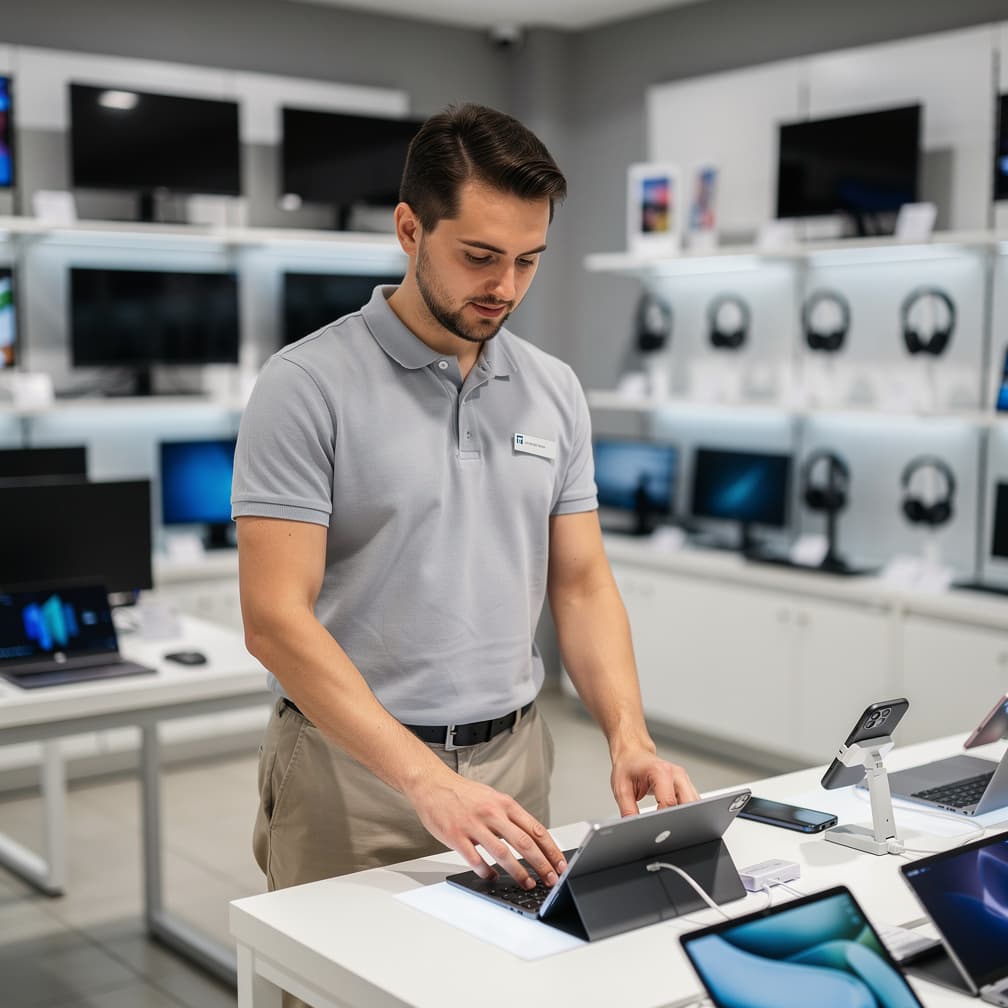

As an electronics store in Bowling Green, you may be the only counter within a long drive that fixes a cracked screen, and that reputation is an asset no policy rebuilds. Word travels in a small market, and a customer whose photos vanished on your bench tells everyone before telling you. Electronics store insurance in Bowling Green answers for money, never for goodwill, so the habits behind the counter matter as much as the limits on the page. A signed intake form, a backup step, and a locked drawer do more for a small shop than one more endorsement. Insurance is the backstop for the loss you could not prevent. It gets priced on the assumption that you tried. Bring evidence that you did, and the quote reflects it.
What Makes Bowling Green Different
Small-market leases often come from the person who owns the building, typed once and reused for years. That owner can still demand a certificate, and can still hold the keys until one lands in the inbox. Nothing about a short lease makes the insurance clause softer; it makes the clause harder to argue with. A shop in Warren County may also be the only tenant, which means shared-area disputes come straight to you. The parking lot, the sidewalk, and the entry mat all belong to whoever the lease says they belong to. A shopper who slips on that entry still sues the business whose name is on the door. Ask the owner which parties need naming before you request a certificate, since reissuing one costs days. The clause is short, and it decides who pays for a fall you did not cause. A second reissue for a shop in Warren County costs another week nobody budgeted for.
Local Risk Factors in Bowling Green
Cleanup after a severe storm starts with glass, and glass in a retail space means a floor nobody can walk on and a door that will not lock. A store in Warren County sits exposed until a crew arrives, and the crew is serving every other damaged building at the same time. Temporary boarding and overnight security are real costs during that window, and some property forms address them under debris removal or protection of property while others leave them with you. Ask which. The other cost is the trade lost while the corridor recovers, and interruption terms decide whether any of it comes back. Get the closure documented from the first hour in Bowling Green, because an adjuster reconstructs it later from whatever you kept.
What Coverage Does an Electronics Store in Bowling Green Need?
General Liability
Landlords, mall operators, and dealer agreements all ask for this one by name. For a store it is the line that answers when a shopper trips on a cord, a wall-mounted display comes loose, or a charger sold last month scorches a customer's desk. It typically excludes damage to a device you were repairing, and it does nothing for your own stock.
Example: A shopper backs into a demo table at a Bowling Green storefront, a tablet lands on her foot, and a lawyer's letter follows the hospital bill. Medical costs and defense may fall to this coverage.
Commercial Property
Flood, wear and tear, and anything damaged on purpose sit outside this one. What it does address is the building where you own it, the fixtures and locked cases, and the stock behind them: phones, tablets, laptops, and accessories lost to fire, burglary, or a burst pipe. Watch the sublimit on portable electronics, which can sit well under the headline limit.
Example: A back door gets pried open overnight and a case of handsets is emptied before anyone answers the alarm. The stolen inventory could be settled under this line, less the deductible and any sublimit.
Cyber Liability
Nothing on a property form addresses a stolen customer list. This one is meant for the digital half of a store: a breached card terminal, repair records pulled off a back-office machine, ransomware freezing the register on a busy afternoon. It commonly funds forensics, customer notification, legal advice, and sometimes the income lost while systems sit down.
Example: Someone slips malware onto the point-of-sale system and card data from a month of sales walks out the door. Notification costs, a forensic review, and the legal advice that follows might be picked up here.
Business Owners Policy
One package, two halves: the liability that answers for shoppers on your floor, and the property side covering stock behind the counter. Small retailers often buy it this way because a bundle can price better than separate lines. Cyber Liability is usually left out, and the theft sublimit still deserves reading before you sign anything.
Example: A pipe above the ceiling lets go, ruining a shelf of tablets and closing the floor for a week. Repairs, the ruined stock, and the interrupted income can each be handled inside the package.
How Much Does Electronics Store Insurance Cost in Bowling Green?
Electronics Store Insurance is a bundle of separate policies, priced separately. The ranges below are typical figures for Bowling Green for each line; a quote prices each one against your own operations.
| Coverage | Typical range | What moves your price |
|---|---|---|
| General Liability Insurance | $55 - $180 per month | Industry and risk classification, annual revenue, number of employees |
| Commercial Property Insurance | $120 - $420 per month | Building value and construction type, roof age and condition, fire protection class |
| Cyber Liability Insurance | $40 - $160 per month | Records held and how sensitive they are, annual revenue and industry, multi-factor authentication and backup practices |
| Business Owners Policy Insurance | $100 - $350 per month | Annual revenue and industry class, building and contents values, square footage and building age |
Prices shown are general estimates, not guaranteed rates or quotes. Your actual premium will depend on the insurer, coverage selected, business details, location, claims history, and other underwriting factors. Learn about our pricing methodology.
What Are the Insurance Requirements for an Electronics Store in Bowling Green?
Workers' comp is generally required once you have your first employee. Kentucky generally requires employers to carry workers' compensation at that point. Common exemptions include sole proprietors, partners, and members of LLCs. Confirm current thresholds with your state's workers' compensation agency before you hire.
Flood damage is typically excluded from standard policies. Standard commercial property and builders-risk-type policies typically exclude flood damage. Flood exposure varies address by address, so check your premises in FEMA's Flood Map Service Center before deciding; if you sit in a mapped flood zone, a separate policy through the National Flood Insurance Program is the usual starting point.
Where to verify licensing and coverage rules. The Kentucky Department of Insurance publishes consumer guidance and current insurance requirements for Kentucky businesses. When a contract or lease demands specific wording, the Kentucky Department of Insurance's guidance is the authoritative place to check.
Get Your Electronics Store Quote in Bowling Green
Compare rates from multiple carriers. Free quotes, no obligation.
Operating in Bowling Green
- After a break-in, one glass crew in Warren County may serve every storefront that needs a door replaced, so the wait to reopen has nothing to do with your policy.
- Renewal starts with a loss run, and every small claim you filed for convenience in Bowling Green sits on it, priced into the number you get handed.
- Delivery day puts cartons in the aisle for as long as it takes to unpack them, and a shopper who catches a toe on one turns ten minutes of convenience into an incident report.
- Demo units get tethered, and tethers get stretched across walkways by people who want a closer look. The trip hazard on a sales floor is the one you built on purpose.
How to Buy: Advice for Bowling Green Owners
Two quotes with the same premium can be very different policies, and the difference lives in the property section. One may settle a stolen laptop at replacement cost; another may depreciate it and call that fair. Ask which basis applies to Commercial Property, then ask the same about stock versus fixtures, because they are not always treated alike. Cyber Liability is the other place quotes diverge quietly, since notification costs and forensic work are sometimes capped low. Read those caps closely if a shop in Bowling Green runs card payments and keeps repair records. Check the Kentucky Department of Insurance's guidance before deciding how much of that risk to carry yourself. Then set the quotes side by side and let participating carriers compete on terms rather than on the headline figure.
FAQ
Electronics Store Insurance in Bowling Green: FAQ
Burglary losses typically fall on the property side of a policy, subject to the deductible and to any sublimit on portable electronics. That sublimit is where shops get surprised, since a cap written for general merchandise can look small next to a case of handsets. Alarm conditions matter too: a claim can be denied where the system was required by the policy and was not armed.
Possibly. A retailer can be pulled into a product claim even when someone else manufactured the item, because your name sits on the receipt. General Liability commonly includes products and completed operations, the part intended to respond to goods after they leave the shop. The maker's own coverage might pick it up, or might not, and that argument takes months while your policy handles the defense.
Not automatically. Property belonging to others in your care is treated separately from your own stock, often with a small limit and sometimes with an exclusion for work being performed on the item itself. Ask what that limit is and what triggers it. A signed intake form does work no policy does, and it keeps small disputes from turning into claims.
Yes, and most retail leases do. Naming the owner as an additional insured can extend your liability policy to their defense when a shopper falls in a shared entry and sues everyone with an address. A landlord in Bowling Green can hold keys, delay an opening, or call a lease in default until that endorsement shows on a certificate. Ask whether your quote includes it or bills for it.
A certificate holder simply receives proof that a policy exists, plus notice if it changes. An additional insured is added to the policy itself and can be defended under it. Landlords usually want the second and often accept a form showing only the first. The difference costs nothing until a claim names both of you, and at that point it costs plenty.
Usually yes. A pallet of phones sitting in a back room before opening day is stock at risk, and a policy that starts when the doors open leaves that week uninsured. Ask whether property in transit is included and what date the coverage binds. A shop in Bowling Green may also need a certificate before a landlord releases keys, which often sets the date for you.
Sources
- 1.Kentucky Department of Insurance(Kentucky Department of Insurance publishes consumer guidance for insurance buyers.)
- 2.FEMA / FloodSmart(Flood coverage is typically purchased separately; FEMA administers the National Flood Insurance Program.)


