







































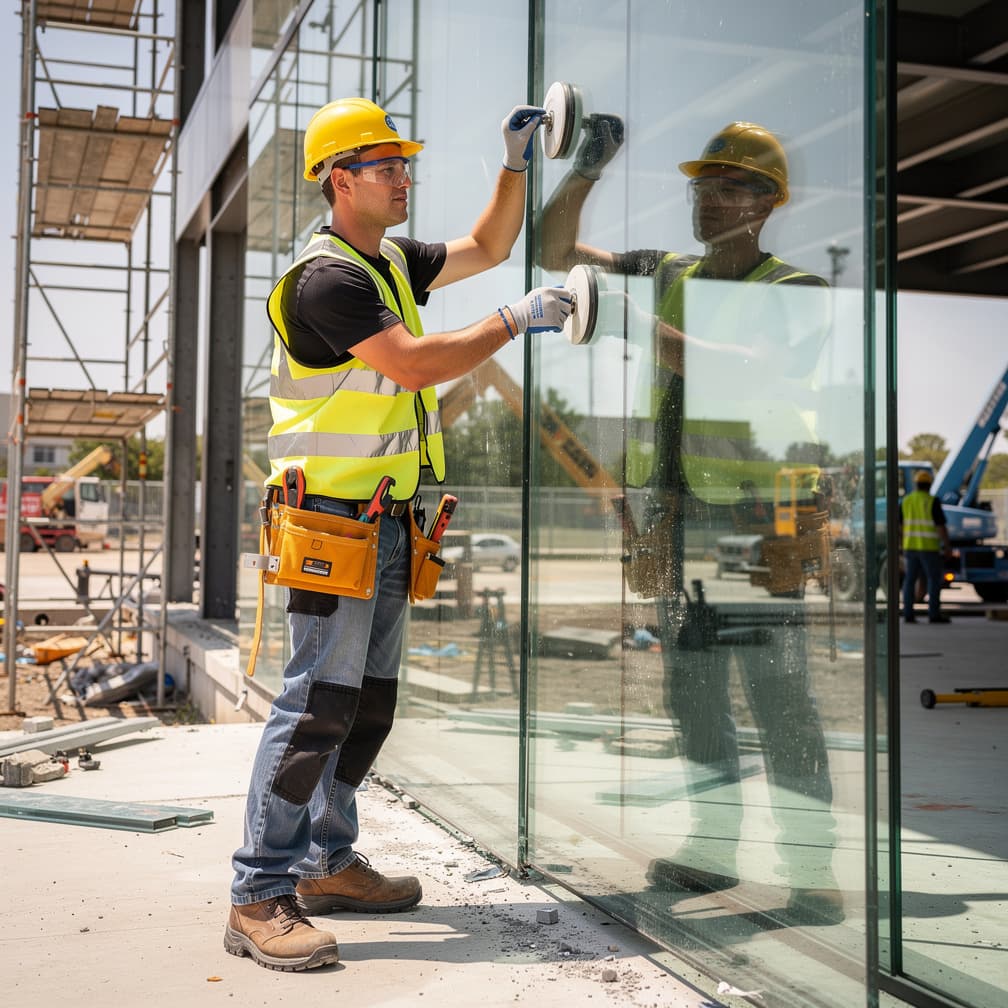

With about 3,000 businesses in Warren County, the commercial work available to a glazier is a short list you can name from memory. Glazier insurance in Bowling Green in a market that size is less about winning bids and more about not losing the two or three accounts that carry your year. One certificate lapse with your largest client is a much bigger event when no third or fourth client sits behind it. The same concentration cuts the other way on claims: a dispute with a repeat customer is a dispute with your income. Short supply lines are rare here, so a replacement unit can take weeks to arrive after a break. Ask what a quote does about the wait after a break, because the wait is what costs you here.
What Makes Bowling Green Different
Word of mouth is the compliance system in a thin market, and it is unforgiving. A homeowner who hears you had no coverage tells the next six people who need glass. Commercial clients still want the certificate, but the ask often arrives by text rather than portal. Informal does not mean optional, and an informal request is just as binding on the job. If a school board or a bank in Bowling Green hires you, the paperwork tightens immediately. Accounts like that are rare in a thin market, so losing one over a form actually hurts. Keep a current certificate on your phone and a copy with whoever answers your office line. The fastest way to lose a contract in Kentucky is to be uninsurable on the day it is offered.
Local Risk Factors in Bowling Green
Deciding how much emergency work to take is the real storm-season question for a glass shop. The calls come faster than a two-truck operation can answer, and every one you accept is a night job on damaged property under unfamiliar conditions. Turning some of them down is a legitimate risk decision, and it costs less than a serious injury or a failed board-up. If you do take the surge, add the helpers to payroll while they are working and put the rented truck on the policy the day it arrives. The Kentucky Department of Insurance publishes the current requirements for reporting mid-term changes on commercial policies in Kentucky. Storm work in Bowling Green pays well and prices badly when nobody told the carrier it happened.
What Coverage Does a Glazier in Bowling Green Need?
General Liability
General contractors and building owners are the ones who insist on this line, and the contract usually names the limit. It can help cover third-party injury and property damage arising out of your work: a passerby hurt near a work zone, a customer's floor wrecked by a dropped unit. The pane you damaged yourself is typically excluded as your own workmanship.
Example: A carried pane clips a display case in an occupied lobby and the retailer's stock goes with it; general liability is generally where that claim lands.
Commercial Property
Flood is left out of this form, and so is ordinary wear on your racks and cutting tools. What remains is the shop itself: stock, hardware, suction cups, and the equipment that would stop your work if it burned or walked out the door overnight. Coverage may respond to fire, theft, and vandalism, subject to the deductible you picked.
Example: Someone pries the shop door overnight and leaves with the suction cups, the tools, and half the staged hardware; a property claim could put the shop back to work.
Workers Compensation
A pane slips on a stairwell landing and an installer's hand is cut to the tendon. Medical bills and lost wages from that injury are what this line is meant for, and it prices against payroll rather than at a flat monthly rate. Contracts commonly demand it, and thresholds vary, so the Kentucky Department of Insurance publishes the current requirements.
Example: An installer overreaches on a lift setting an upper-floor unit and tears a shoulder; workers compensation is typically the line that handles the treatment and the missed weeks.
Commercial Auto
Your truck is the piece that moves everything else, which is why this line is written against a schedule of vehicles rather than against your business generally. It can help cover liability and damage from an accident while hauling panes, hardware, and crews between sites. The units strapped to the rack are cargo, and cargo is often a separate question.
Example: A loaded rack shifts during a hard stop on the way to a Bowling Green job and the truck ends up in a guardrail; commercial auto may pick up the vehicle side of it.
How Much Does Glazier Insurance Cost in Bowling Green?
Glazier Insurance is a bundle of separate policies, priced separately. The ranges below are typical figures for Bowling Green for each line, except workers compensation, which is rated per $100 of payroll; a quote prices each one against your own operations.
| Coverage | Typical range | What moves your price |
|---|---|---|
| General Liability Insurance | $180 - $575 per month | Industry and risk classification, annual revenue, number of employees |
| Commercial Property Insurance | $100 - $350 per month | Building value and construction type, roof age and condition, fire protection class |
| Workers Compensation Insurance | $0.75 - $2.74 per $100 of payroll | Employee classification codes, total annual payroll, experience modification rate |
| Commercial Auto Insurance | $220 - $625 per month | Fleet size and vehicle types, driver records and experience, coverage limits and deductibles |
Prices shown are general estimates, not guaranteed rates or quotes. Your actual premium will depend on the insurer, coverage selected, business details, location, claims history, and other underwriting factors. Learn about our pricing methodology.
What Are the Insurance Requirements for a Glazier in Bowling Green?
Workers' comp is generally required once you have your first employee. Kentucky generally requires employers to carry workers' compensation at that point. Common exemptions include sole proprietors, partners, and members of LLCs. Confirm current thresholds with your state's workers' compensation agency before you hire.
State auto liability minimums apply to business vehicles. Kentucky's minimum auto liability limits are $25,000/$50,000/$25,000 (bodily injury per person / per accident / property damage). Contracts and lenders often require more than the state floor.
Flood damage is typically excluded from standard policies. Standard commercial property and builders-risk-type policies typically exclude flood damage. Flood exposure varies address by address, so check your premises in FEMA's Flood Map Service Center before deciding; if you sit in a mapped flood zone, a separate policy through the National Flood Insurance Program is the usual starting point.
Where to verify licensing and coverage rules. The Kentucky Department of Insurance publishes consumer guidance and current insurance requirements for Kentucky businesses. When a contract or lease demands specific wording, the Kentucky Department of Insurance's guidance is the authoritative place to check.
Get Your Glazier Quote in Bowling Green
Compare rates from multiple carriers. Free quotes, no obligation.
Operating in Bowling Green
- Measuring wrong is a money problem: a custom unit ordered to the wrong dimension is scrap, and no policy is designed to answer a mistake made with a tape measure.
- Storefront work happens on someone else's schedule, and a Bowling Green shop that misses a promised install date over a paperwork problem rarely gets invited back to bid.
- Tempered and laminated units cannot be trimmed on site, so a frame that is out of square becomes a reorder and a second trip with a second chance to break something.
- A tenant in Bowling Green can name your shop in a claim months after install if water finds its way past a seal you set, long after the job looked finished.
How to Buy: Advice for Bowling Green Owners
Vehicles deserve their own line of questions, because a glazier's truck is a rolling warehouse and a moving liability at once. An accident on the way to a job is Commercial Auto territory, and the price moves with mileage, so a shop driving an hour each way across Warren County pays for those miles whether it means to or not. The load is a separate answer: the panes and hardware strapped to the rack are cargo, and cargo sitting in a locked truck overnight is often a Commercial Property question rather than an auto one. The gap between those two coverages is exactly where a loss can fall through, so make each quote say out loud where its coverage stops and the next line begins. The Kentucky Department of Insurance publishes consumer guidance on how commercial auto exposure is rated. A glazier in Bowling Green who pins that down can line up participating carriers on the specifics instead of the sticker.
FAQ
Glazier Insurance in Bowling Green: FAQ
It extends your policy's defense to your client for claims arising out of your work. Owners want it because it moves the first line of defense onto your paper instead of theirs. Two versions exist: blanket wording that reaches whoever your contract names, and a scheduled endorsement that reaches only the names typed on it. Scheduled endorsements go stale when management changes, so ask which one you are quoting.
The vehicle and the cargo are usually two different questions. Commercial auto is generally written around liability and physical damage to the truck itself. The units strapped to the rack are your property, and property in transit is often handled under a separate form or endorsement. Ask directly what happens when a sudden stop takes out a full order, because the answer varies by policy.
Yes, and that is one of the main reasons glass crews carry liability coverage. A sidewalk work zone, an unsecured pane, a ladder in a walkway, or debris from a break all put third parties inside your exposure. General Liability is generally designed for those bodily injury claims, and it commonly funds the defense as well as any settlement. The defense is often the larger cost.
The work stops before the coverage does. Vendor portals check expiration dates automatically, and a property manager in Bowling Green can freeze your work order the moment the date passes, even if your policy renewed on time. That is a paperwork failure with a real cost: idle crew, missed schedule, and an unhappy contractor. Put renewal dates on a calendar and upload the new certificate before the old one lapses.
No. Flood sits outside a standard Commercial Property form and gets bought separately where it is available. That gap catches shops storing stock and hardware at ground level, since water reaching the floor can ruin sealed units, frames, and packaging. If your shop or your storage location has any flood exposure, treat it as its own decision rather than an assumption.
Usually by someone else's contract. The insurance exhibit on a commercial job names a limit, and that number becomes your floor whether or not it matches your actual risk. A large owner and a small landlord in Bowling Green can demand very different figures for the same work. Buy to the strictest document you sign, since buying twice costs more than buying once at the right level.
Sources
- 1.U.S. Census Bureau, County Business Patterns (2022), Warren County(Warren County has about 3,000 business establishments.)
- 2.Kentucky Department of Insurance(Kentucky Department of Insurance publishes consumer guidance for insurance buyers.)
- 3.FEMA / FloodSmart(Flood coverage is typically purchased separately; FEMA administers the National Flood Insurance Program.)


