







































Updated July 10, 2026

Janitorial Service Insurance in Kentucky
A janitorial company in Kentucky has to think beyond basic cleaning schedules. Crews may move between offices in Frankfort, retail spaces near Louisville, schools in Lexington, and smaller buildings across rural counties, often carrying equipment, inventory, and supplies from site to site. That creates different insurance needs than a business that stays in one location. A janitorial service insurance quote in Kentucky should account for client-site slip and fall exposure, property damage, wet-floor incidents, theft or vandalism concerns, and storm-related interruptions that can disrupt a full day of work. Kentucky’s high tornado and flooding risk also makes it important to look closely at property coverage, business interruption, and how equipment is stored when not in use. If your team works in leased offices, shared storage spaces, or client buildings that ask for proof of coverage, the quote process needs to be practical and fast. The goal is to match liability coverage and property coverage to the way your cleaning company actually operates in Kentucky, not just to a generic small business template.
Climate Risk Profile
Natural Disaster Risk in Kentucky
Understanding climate-related risks helps determine appropriate insurance coverage levels.
Tornado
High
Flooding
Very High
Severe Storm
High
Landslide
Moderate
Expected Annual Loss from Natural Hazards
$980M
estimated economic loss per year across Kentucky
Source: FEMA National Risk Index
Risk Factors for Janitorial Service Businesses in Kentucky
- Kentucky tornado exposure can lead to building damage, equipment damage, and business interruption for janitorial crews storing supplies at client sites or in small local offices.
- Kentucky flooding can affect property coverage for cleaning businesses when supplies, mops, vacuums, and other equipment are stored in low-lying buildings or basements.
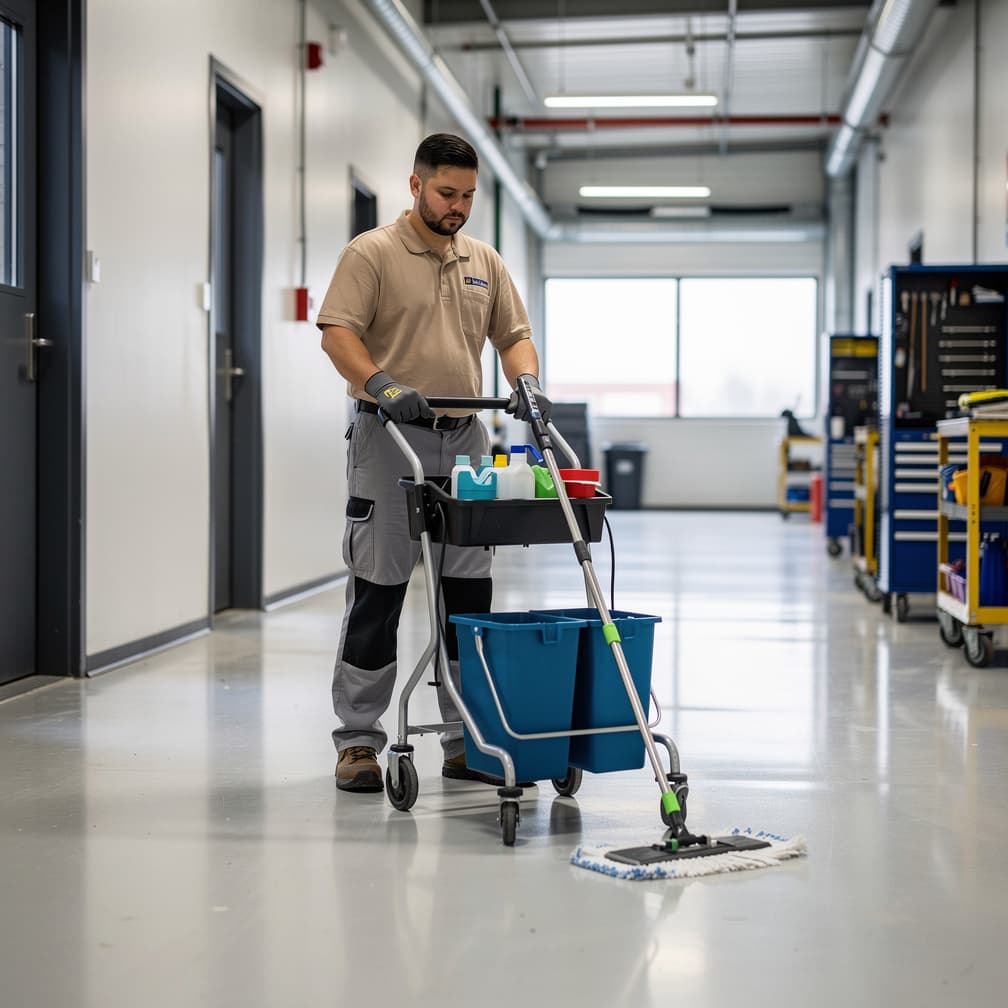
- Wet floors during and after service increase slip and fall risk for janitorial companies working in schools, offices, and retail spaces across Kentucky.
- Severe storms in Kentucky can cause storm damage, power loss, and cleanup delays that interrupt scheduled service for small business clients.
- Vandalism and theft concerns can affect inventory and equipment kept in vehicles, closets, or shared storage areas while crews move between Kentucky job sites.
How Kentucky compares with the national baseline
Property crime per 100,000 residents
1,870 vs 2,200 baseline
Property crime in Kentucky runs below the national average, at 1,870 vs 2,200 incidents per 100,000 residents.
Blue bar: Kentucky. Gray line: national baseline.
How Much Does Janitorial Service Insurance Cost in Kentucky?
Janitorial Service Insurance is a bundle of separate policies, priced separately. The ranges below are typical figures for Kentucky for each line, except workers compensation, which is rated per $100 of payroll; a quote prices each one against your own operations.
| Coverage | Typical range | What moves your price |
|---|---|---|
| General Liability Insurance | $60 - $170 per month | Industry and risk classification, annual revenue, number of employees |
| Commercial Property Insurance | $45 - $150 per month | Building value and construction type, roof age and condition, fire protection class |
| Workers Compensation Insurance | $0.75 - $2.74 per $100 of payroll | Employee classification codes, total annual payroll, experience modification rate |
| Business Owners Policy Insurance | $70 - $190 per month | Annual revenue and industry class, building and contents values, square footage and building age |
Prices shown are general estimates, not guaranteed rates or quotes. Your actual premium will depend on the insurer, coverage selected, business details, location, claims history, and other underwriting factors. Learn about our pricing methodology.
What Kentucky Requires for Janitorial Service Insurance
Non-compliance can result in fines, loss of contracts, and personal liability:
- Kentucky businesses with 1+ employees are required to carry workers' compensation insurance, with exemptions for sole proprietors, partners, members of LLCs, and farm laborers.
- Most commercial leases in Kentucky require proof of general liability coverage, so janitorial companies often need to show coverage before signing or renewing space agreements.
- Commercial auto liability minimums in Kentucky are $25,000/$50,000/$25,000, which matters if a janitorial business uses vehicles to move equipment between client locations.
- Janitorial buyers in Kentucky typically compare general liability, commercial property, workers' compensation, and business owners policy options when building a quote.
- The Kentucky Department of Insurance regulates coverage placement and market conduct, so policy details should be reviewed carefully before binding.
- Quote requests in Kentucky often need business details, job-site information, payroll or employee counts, and equipment values so carriers can evaluate liability coverage and property coverage needs.
| Requirement | What Kentucky law says |
|---|---|
| Auto liability minimums | $25,000/$50,000/$25,000 (bodily injury per person / per accident / property damage). These floors apply to personal and business vehicles alike; lenders and contracts often require more. |
| Workers compensation | Generally required once you have your first employee. Some roles are exempt, so confirm current thresholds before you hire. |
| Where to verify | Kentucky Department of Insurance publishes current requirements, consumer guides, and license lookups. |
Get Your Janitorial Service Insurance Quote in Kentucky
Compare rates from multiple carriers. Free quotes, no obligation.
Common Claims for Janitorial Service Businesses in Kentucky
A crew finishes mopping a hallway in a Kentucky office building, and a visitor slips on a wet floor before warning signs are fully in place.
A tornado or severe storm damages a janitorial company’s stored equipment and inventory, delaying service for several client accounts in Kentucky.
Cleaning supplies and machines kept in a shared storage room are vandalized or stolen, creating a property coverage claim for a Kentucky small business.
Preparing for Your Janitorial Service Insurance Quote in Kentucky
Your business address, service area, and whether you work in Frankfort, Louisville, Lexington, or multiple Kentucky locations.
Estimated payroll, number of workers, and whether you need workers' compensation because Kentucky requires it for businesses with 1+ employees.
A list of equipment, inventory, and storage locations so the quote can reflect property coverage needs for cleaning businesses.
Details about client-site work, vehicle use, and lease requirements so the carrier can price liability coverage and proof-of-insurance needs accurately.
Coverage Considerations in Kentucky
- General liability insurance is a core starting point for third-party claims, bodily injury, property damage, slip and fall, and legal defense tied to client-site work.
- Commercial property insurance helps protect equipment, inventory, and stored supplies from building damage, fire risk, theft, storm damage, vandalism, and some equipment breakdown concerns.
- Workers' compensation insurance is required in Kentucky for businesses with 1+ employees and can help with medical costs, lost wages, and rehabilitation after workplace injury.
- A business owners policy can bundle liability coverage and property coverage for small business janitorial operations that want a simpler quote process.
What Happens Without Proper Coverage?
Janitorial work puts your employees inside other people’s buildings, around their staff, visitors, inventory, and fixtures. That creates a level of day-to-day exposure that is easy to underestimate because the tasks are routine. Mopping a lobby, cleaning a restroom, emptying trash, or buffing a floor may be ordinary for your crew, but each task can lead to a claim if someone is hurt or property is damaged.
One common reason to carry janitorial service insurance is third-party injury and property damage risk. If a visitor slips near a recently cleaned entrance, if a cord stretches across a walkway, or if a chemical etches a finished surface, the client may expect your business to respond. General liability insurance is usually the first place to review how those claims may be handled, including defense and settlement considerations depending on your policy terms.
Another reason is the way clients buy cleaning services. Property managers, office tenants, medical offices, schools, and retail operators often want proof of liability insurance before they let a crew on site. Some contracts also set minimum limits, certificate requirements, or additional insured language. If you wait until the contract is signed to review insurance, you can end up scrambling to meet terms that affect price, eligibility, or both.
Property coverage matters as your business grows. A stolen vacuum may be manageable. Replacing multiple machines, stocked supplies, and office contents after a fire, theft, or other covered loss is a different problem. Commercial property insurance can help with those exposures, and a business owners policy may fit if you want property and liability coverage aligned in one policy structure.
If you are bidding larger accounts, adding supervisors, or storing more equipment between jobs, this is usually the right time to compare quotes. Ask for a review built around your contracts, payroll, cleaning methods, and where equipment is stored, so the policy matches the way your company actually operates.
Recommended Coverage for Janitorial Service Businesses
Based on the risks and requirements above, janitorial service businesses need these coverage types in Kentucky:

General Liability
Essential coverage for every business, protect against third-party bodily injury, property damage, and advertising claims.

Commercial Property
Safeguard your business property, equipment, and inventory against damage and loss.

Workers Compensation
Help cover your employees' medical expenses and lost wages for work-related injuries and illnesses.

Business Owners Policy
Bundle property and liability coverage into one convenient, cost-effective policy for small businesses.
Janitorial Service Insurance by City in Kentucky
Insurance needs and pricing for janitorial service businesses can vary across Kentucky. Find coverage information for your city:
Insurance Tips for Janitorial Service Owners
Review your service contracts before you shop, because liability limits, certificate wording, and additional insured requests can change which policy structure fits your accounts.
Separate office cleaning, floor care, post-construction cleanup, and porter services in your quote discussion, since each operation creates a different injury and property damage profile.
Make sure payroll is described by actual job duties, especially if supervisors clean, crews float between sites, or owners still work in the field regularly.
List major equipment and where it is stored between jobs, because vacuums, buffers, extractors, and supply inventory are easy to overlook until a loss happens.
Ask how a business owners policy compares with standalone general liability and commercial property coverage for your current size and location setup.
Review your hiring and subcontractor practices carefully, because uninsured labor and unclear supervision can create claim disputes that are harder to fix after an incident.
Bring a sample certificate request from a client or property manager, so you can confirm the quote can support the paperwork your accounts expect before work starts.
FAQ
Frequently Asked Questions About Janitorial Service Insurance in Kentucky
A Kentucky janitorial policy is often built around general liability insurance, commercial property insurance, workers' compensation, and sometimes a business owners policy. That mix can address bodily injury, property damage, slip and fall incidents, third-party claims, equipment, inventory, and legal defense tied to client-site work.
Pricing varies based on payroll, number of employees, equipment values, storage setup, service area, and the coverage limits you choose. Existing state data shows an average premium range of $69 to $276 per month in Kentucky, but actual quotes vary.
Kentucky buyers often need proof of general liability coverage for commercial leases, and businesses with 1+ employees must carry workers' compensation unless an exemption applies. Some clients may also ask for specific liability coverage or additional insured wording, depending on the contract.
A strong quote usually includes general liability for third-party claims, commercial property for equipment and inventory, workers' compensation if required, and a business owners policy when bundling makes sense. Those options help address building damage, theft, storm damage, and business interruption concerns.
Start with your business details, employee count, payroll, service locations, equipment list, and any lease or contract requirements. With that information, a carrier or broker can compare janitorial business insurance options and build a quote for your Kentucky operation.
Most owners combine general liability, workers compensation, and commercial property, with a business owners policy as the packaged alternative. The right mix depends on your contracts, whether employees work on site, what equipment you own, and where supplies are stored.
Because your crew works inside occupied buildings around visitors, tenants, and client property. Clients want confidence that you can respond if a slip and fall claim, accidental damage, or a related dispute happens during service.
Accidental damage caused during cleaning can be addressed, depending on your policy terms. Scratched surfaces, damaged fixtures, and chemical marks on specialty flooring are worth walking through explicitly, especially if you service higher-end interiors.
Updated March 31, 2026