


































Updated July 19, 2026

Automotive work in Kentucky means customer vehicles on your lifts, your lot, and your test drives, and each carries its own liability. One rule in Kentucky is set by statute, since workers compensation coverage is required from the first employee [1]. Kentucky adds a quiet gap on top of that, because standard commercial property policies typically exclude flood damage. The cost drivers below map what actually moves automotive quotes in the state.
Recommended Coverage for Automotive in Kentucky
Automotive businesses face unique risks that require specific coverage types. Here are the policies most automotive operations need:

General Liability
Essential coverage for every business, protect against third-party bodily injury, property damage, and advertising claims.

Commercial Auto
Protect your business vehicles and drivers with comprehensive commercial auto coverage.

Commercial Property
Safeguard your business property, equipment, and inventory against damage and loss.

Workers Compensation
Help cover your employees' medical expenses and lost wages for work-related injuries and illnesses.
Garage Keepers
Protect customers' vehicles while they're in your care, custody, or control.

Commercial Umbrella
Extend your liability limits beyond your primary policies for extra protection against catastrophic claims.
Automotive Insurance Overview in Kentucky
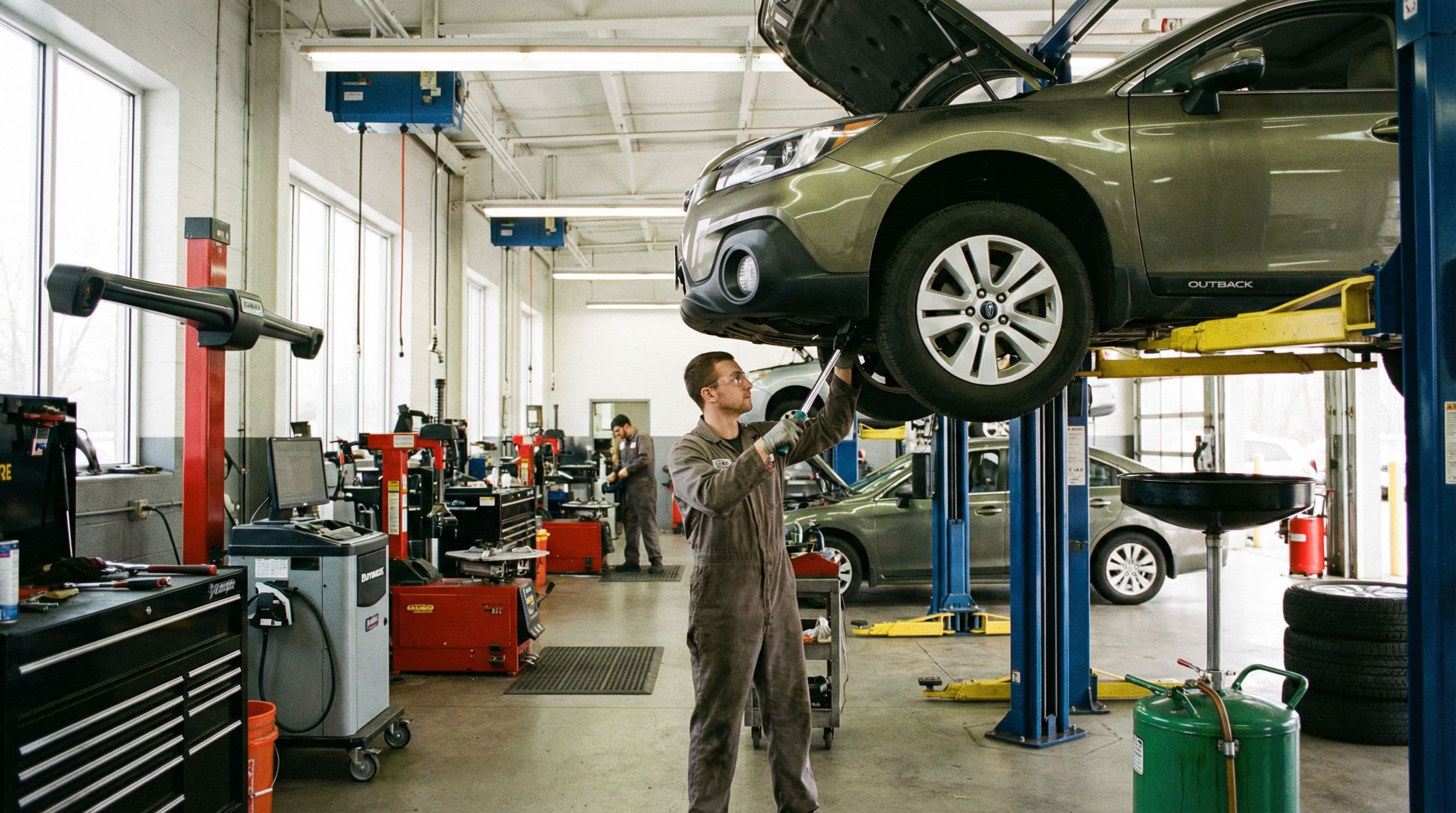
From Louisville service bays to Lexington dealerships, Kentucky automotive businesses face a mix of customer traffic, vehicle handling, and weather exposure that can change the insurance conversation fast. Automotive insurance in Kentucky is built around the realities of storing customer vehicles, moving inventory, running test drives, and protecting lifts, scanners, paint booths, and other specialty equipment. What you actually do on the lot drives your coverage mix, so a Frankfort repair shop looks different from a tire store in Bowling Green or a car wash near Covington. Kentucky's commercial auto minimums are $25,000/$50,000/$25,000, but many automotive operations need more than the state minimums to address third-party claims, legal defense, and higher-value vehicles in the shop. The Kentucky Department of Insurance sets the framework, but your location, payroll, vehicle count, and number of service bays ultimately shape what a quote looks like. When your business handles loaner cars, tow trucks, or customer vehicles left overnight, how your policy is structured matters as much as where you operate.
Why Automotive Businesses Need Insurance in Kentucky
Every automotive business in Kentucky carries risks that can turn a routine workday into a costly claim. A customer vehicle in your care can be exposed to several types of loss while parked at the shop or inside a service bay. If a customer slips in a waiting area or around slick floors in a repair zone, general liability insurance may help pay for medical bills, legal defense, and related settlements. Shops that run test drives, shuttle service, or parts delivery also need to think about vehicle accident exposure and how hired auto and non-owned auto use fits the operation.
Kentucky's climate adds another layer. The state carries high overall weather risk, with flooding rated very high and tornado and severe storm risks rated high. A single storm event can damage buildings, equipment, and customer vehicles at the same time, which matters for dealerships in Louisville, repair shops in Lexington, body shops in Bowling Green, and car washes across the state. When storm damage, building damage, or business interruption disrupts revenue, the right coverage can help keep your operation afloat. Specialty equipment can also be expensive to replace after a storm or equipment breakdown.
State rules matter too. Kentucky requires workers compensation insurance for repair shops with at least one employee, though exemptions apply to sole proprietors, partners, and LLC members. If you have employees, that makes employee safety and OSHA-related practices part of the insurance discussion. The right approach is to match your coverage limits to the actual exposures your business faces, not just the state minimums.
Kentucky requires workers' comp for businesses with employees (exemptions may apply: Sole proprietors; Partners). Non-compliance can result in fines and personal liability for owners. Commercial auto minimums are $25,000/$50,000/$25,000.
Key Risks for Automotive Businesses
Each of these risks can lead to claims that cost thousands, or more. Make sure your policy addresses every one:
- Vehicle damage while in your care
- Customer injury on premises
- Environmental contamination
- Employee workplace injuries
- Property and equipment damage
Cost Factors for Automotive Businesses in Kentucky
Automotive insurance cost in Kentucky varies by operation type, locations, annual revenue, payroll, vehicle count, and the value of customer vehicles handled on-site. A dealership with multiple lots, a body shop using spray equipment, or a repair shop with several lifts may need a different premium structure than a small tire shop or car wash. If your business uses tow trucks, loaner vehicles, shuttle vans, or a fleet of service vehicles, the way you use those vehicles can also affect pricing.
Kentucky's premium index is 94 for 2024, which means local rates run slightly below the national baseline and may translate into modestly lower quotes for some operations. The state has 340 insurers in the market, giving you real carrier diversity to shop, though not every insurer writes every operation type. Weather exposure matters too. High tornado risk, very high flooding risk, and severe storm risk can all affect what you pay for property coverage and protection for customer vehicles parked on your lot.
The quote you see will usually reflect your mix of liability, property, vehicle, and equipment exposures. To put a number on it, the general liability that most automotive businesses treat as their base policy averages about $85 to $340 per month in Kentucky. You should budget toward the higher end if your shop sees heavy foot traffic or handles high-value inventory. Payroll, revenue, and the exposures specific to your work drive where you land in that range.
Automotive businesses typically carry several separately priced policies. The ranges below are typical figures for Kentucky for each line, except workers compensation, which is rated per $100 of payroll; a quote prices each one against your own operations.
| Coverage | Typical range | What moves your price |
|---|---|---|
| General Liability Insurance | $85 - $340 per month | Industry and risk classification, annual revenue, number of employees |
| Commercial Auto Insurance | $200 - $750 per month | Fleet size and vehicle types, driver records and experience, coverage limits and deductibles |
| Commercial Property Insurance | $150 - $625 per month | Building value and construction type, roof age and condition, fire protection class |
| Workers Compensation Insurance | $0.75 - $2.74 per $100 of payroll | Employee classification codes, total annual payroll, experience modification rate |
| Garage Keepers Insurance | Varies | Quoted individually based on your operations and limits |
| Commercial Umbrella Insurance | $80 - $300 per month | Umbrella limit requested, limits carried on the underlying policies, loss history on those underlying policies |
Prices shown are general estimates, not guaranteed rates or quotes. Your actual premium will depend on the insurer, coverage selected, business details, location, claims history, and other underwriting factors. Learn about our pricing methodology.
State Requirements
Insurance Regulations in Kentucky
Key regulatory requirements for businesses operating in KY.
Regulatory Authority
Workers' Compensation InsuranceRequired
Required for employers with 1+ employee.
Exempt categories
- Sole proprietors
- Partners
- Members of LLCs
- Farm laborers
Commercial Auto Minimum Liability
$25,000/$50,000/$25,000 (bodily injury per person / per accident / property damage)
Source: Kentucky Department of Insurance, U.S. Department of Labor
What Drives Automotive Insurance Costs in Kentucky
Vehicles in your care
Damage to a customer's vehicle in your custody typically needs garagekeepers coverage, which sits alongside general liability insurance rather than inside it.
The shop floor
Lifts, fluids, and compressed air make shop injuries a steady workers compensation insurance exposure. Fluid disposal adds environmental liability that standard policies typically exclude.
Flood coverage
For a shop, flood exposure concentrates at ground level: customer vehicles on the lot, equipment in the bays, and parts in storage. A separate flood policy prices that gap by location and elevation. The context is Kentucky's record of 157 federal disaster declarations [2].
Payroll and workers compensation
Payroll is the base on which workers compensation premiums are computed, class code by class code. Kentucky requires coverage from the first employee [1].
Climate Risk Profile
Natural Disaster Risk in Kentucky
Understanding climate-related risks helps determine appropriate insurance coverage levels.
Tornado
High
Flooding
Very High
Severe Storm
High
Landslide
Moderate
Expected Annual Loss from Natural Hazards
$980M
estimated economic loss per year across Kentucky
Source: FEMA National Risk Index
Insurance Tips for Automotive Business Owners in Kentucky
Request garage keepers coverage if you regularly park, store, or repair customer vehicles, and confirm whether it addresses collision, comprehensive, or both.
Match your commercial auto policy to how you actually use vehicles, including test drives, shuttle vans, tow trucks, and parts delivery.
Review garage liability coverage for third-party claims tied to customer-accessible work zones.
Check your property policy against the replacement cost of lifts, diagnostic scanners, paint booths, tire machines, compressors, and other specialty equipment.
If your shop uses borrowed, rented, or employee-driven vehicles, ask how hired auto and non-owned auto exposures are handled in the policy structure.
For Kentucky repair shops with at least one employee, confirm your workers compensation policy meets state requirements and supports recovery after a workplace injury.
Consider umbrella coverage if your operation has multiple locations, higher vehicle values, or larger underlying policies that could face catastrophic claims or larger settlements.
Ask how storm damage, theft, vandalism, and business interruption are addressed, especially in areas exposed to flooding, tornadoes, and severe storms.
Get Automotive Insurance in Kentucky
Enter your ZIP code to compare automotive insurance rates from top carriers.
Business insurance starting at $25/mo
Automotive Business Types in Kentucky
Find insurance tailored to your specific automotive business. Select your business type for coverage recommendations, pricing, and quotes:

Auto Mechanic Insurance
Get coverage built for auto repair shops, from garage liability insurance to garage keepers coverage and commercial property insurance for auto shops. Request an auto mechanic insurance quote tailored to your bays, vehicles, tools, and location.

Towing Company Insurance
Protect tow trucks, customer vehicles, and roadside jobs with coverage built for towing operations. Request a towing company insurance quote tailored to your work, routes, and fleet size.

Auto Dealership Insurance
Get an auto dealership insurance quote built around lot liability, inventory, test drives, and property exposure. Coverage can be tailored for franchise stores, used car lots, and mixed operations.

Auto Tire Shop Insurance
Get an auto tire shop insurance quote built for tire installation, balancing, repair, and customer vehicle exposure. Coverage can be tailored for garagekeepers liability, property, and employee injury needs.

Auto Body Shop Insurance
Get an auto body shop insurance quote built around customer vehicles, paint booth exposure, shop property, and employee-related risks. Coverage options can be tailored for multi-bay shops, independent body shops, and collision repair shops that store vehicles on-site.

Auto Parts Store Insurance
Get an auto parts store insurance quote built around your counter sales, inventory storage, and store property. Coverage options can be tailored to your location, operations, and risk profile.

Car Wash Insurance
Get a car wash insurance quote tailored to your operation, from automated bays to self-service and full-service locations. Compare liability, property, and bundled coverage options.

Oil Change Station Insurance
Get an oil change station insurance quote built for quick-lube operations, customer vehicles, hazardous fluids, and shop property. Compare coverage options for one location or multiple bays.
Automotive Insurance by City in Kentucky
Insurance rates and requirements can vary by city. Find automotive insurance information for your area in Kentucky:
FAQ
Automotive Insurance FAQ in Kentucky
Garage keepers sits alongside the standard commercial set here, because customer vehicles in your care are the exposure that separates a shop from most other businesses. General liability, property, workers compensation, and commercial auto handle the premises, tools, staff, and road tests, with an umbrella considered as limit requirements grow.
More than almost any other automotive operation. Collision work keeps customer vehicles on site for days or weeks through teardown, parts delays, and refinishing, and damage to a vehicle in your custody is a different claim than damage to your own building or equipment.
If the business owns vehicles, offers pickup and delivery, or moves customer cars as part of operations, yes. The deciding facts are who drives, how frequently vehicles are handled, and whether any service happens off site.
Payroll, customer traffic, vehicle handling, mobile service, owned vehicles, property values, chosen limits, and claims history set the price. A shop that only mounts tires at one location rates differently from one that also runs alignments or fleet service on the road.
Garage keepers addresses damage involving customer vehicles in your care; general liability addresses third party injury and property damage arising from your premises and operations. A fire that burns four customer cars and injures a vendor in the lot touches both, which is why the two get reviewed together.
Lot operations, test drives, employee driving, and service department activity give dealerships more ways than most businesses to produce a large liability claim. When a lease, lender, or vendor agreement requires higher limits, an umbrella is also the usual way to meet those terms.
A coordinated account can sometimes hold all three, but the quote still needs each operation broken out clearly. Vehicle sales, collision work, mechanical service, and lot driving create different exposures that should not be blended casually.
A list of services, payroll by job type, driver details, owned vehicles, equipment values, building information, overnight vehicle counts, and current policy terms. That information lets the quote follow how the operation actually runs.
Sources
- 1.Kentucky Department of Insurance(Kentucky requires workers compensation coverage from the first employee.)
- 2.FEMA Disaster Declarations(Kentucky has 157 federal disaster declarations on record.)