







































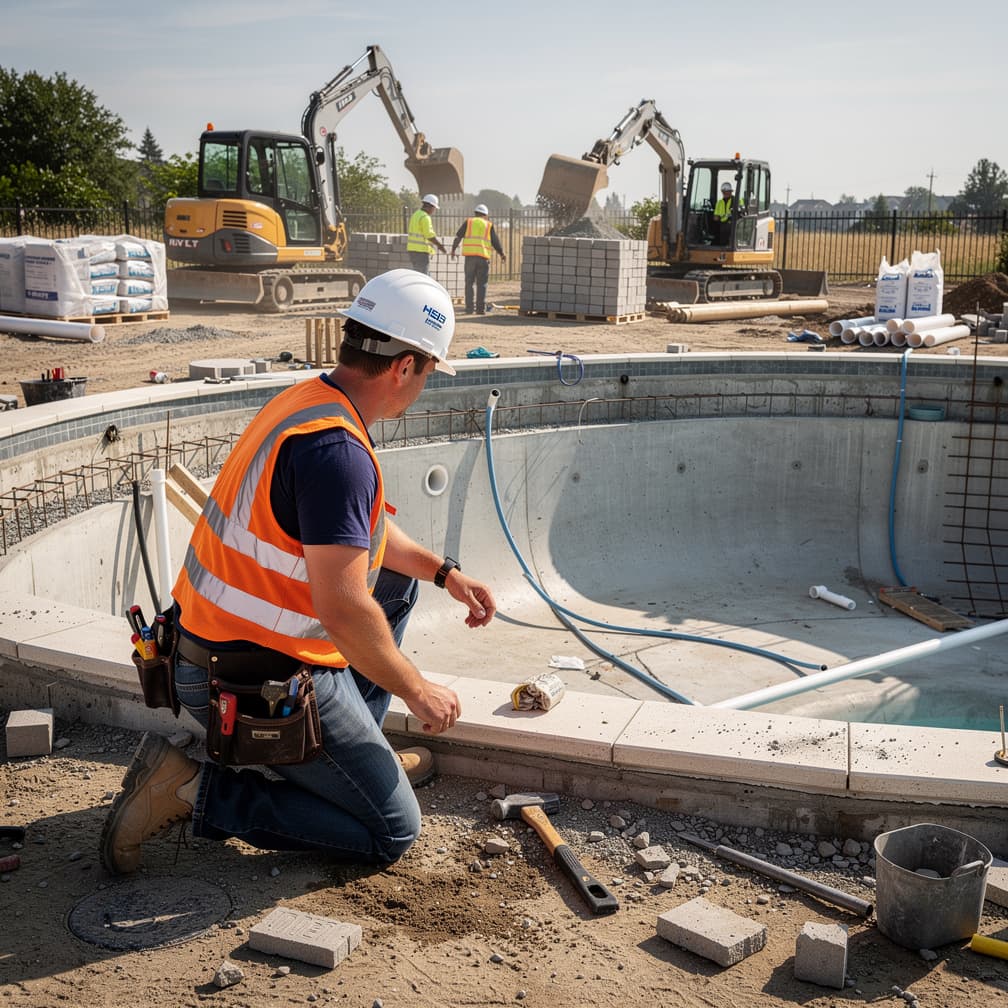

As a pool and spa contractor in Lexington, the job you finished last year can become your biggest exposure. Plaster, tile, and plumbing under a full pool do not announce their problems on schedule, and a call about a leak two seasons later is an argument about work you no longer control. Pool and spa contractor insurance in Lexington treats that completed job differently from the one you are digging today, and the difference is worth understanding before you need it. Whether coverage stays available for old work depends on how and when the policy was written, so a gap between policies is not a clean break. Contracts sometimes ask you to keep coverage in force for years after the final walkthrough. That request is not unreasonable, and it changes what you should buy. Check the coverage notes below against what your last three contracts actually promised.
What Makes Lexington Different
Handshake scopes are the norm on residential work, and they are also where most defect fights begin. A one-page contract that omits the barrier, the backfill, and the plaster warranty is an invitation to interpretation. Interpretation tends to favor whoever wrote nothing down least, and that is rarely the builder holding the shovel. Certificates matter here too, even when the client never asks and the job started as a favor. Write down what you are not doing, because exclusions in a contract are cheaper than exclusions in court. If a Lexington homeowner supplies their own tile, heater, or equipment, put that in the scope. Coverage follows your work, and your work is whatever the paperwork later says that it was. Participating carriers in Kentucky read that same paperwork the day a claim actually shows up.
Local Risk Factors in Lexington
A power cut across Fayette County idles the equipment pad, the pumps, and the crew, and a spa install with no electricity is a day nobody bills. Storms also fill an open excavation and undercut the walls, so the shell you formed may need doing again at your own cost. Rework on your own unfinished work is generally not an insured loss, and that catches builders out every season. What might answer is a third-party claim: a visitor hurt on a storm-wrecked site in Lexington is a General Liability question, subject to the policy's terms. Secure the hole first and worry about the calendar second.
What Coverage Does a Pool & Spa Contractor in Lexington Need?
General Liability
General contractors, property managers, and homeowners ask for this one by name before a crew starts. It typically responds to injury and property damage your work causes to other people: a visitor who falls into an open excavation, a driveway cracked by an excavator, a neighbor's irrigation main cut while trenching. Redoing the pool itself is generally your own cost.
Example: A homeowner steps around the barrier to admire the shell, slips on wet coping, and breaks a wrist; General Liability can help cover the defense and the claim that follows.
Workers Compensation
A plaster hand slips on wet coping, or a crew member wrecks a back lifting a heater onto the pad. Workers' Compensation generally handles medical care and lost wages for injuries on the job, and it is rated on payroll rather than revenue. Thresholds, owner treatment, and family exemptions vary by state, so confirm the details with the Kentucky Department of Insurance.
Example: A trencher kicks back and a crew member's hand needs surgery halfway through a build; the medical bills and the missed weeks may land on this coverage rather than on you.
Commercial Auto
A personal auto policy commonly excludes the work itself: hauling a trailer with a mini excavator, carrying chemicals, or running a crew between jobsites. Commercial Auto is written for that use and may respond to the damage and injuries you cause on the road. It gets rated on the vehicles, the radius, and the records behind the keys, and it stops at the tailgate.
Example: A loaded trailer swings wide on a turn and clips a parked car outside the job; the repairs to that car and any injury claim are what this line is meant to answer.
Tools & Equipment (Inland Marine)
Trenchers, pumps, compactors, saws, and the trailer hauling them are the property this line follows, at the jobsite, in transit, and parked in the yard. It works off a schedule, which means an unlisted pump is generally an uninsured pump. Values matter as much as the list, since replacement cost and actual cash value settle very differently.
Example: A trailer is cut open overnight outside a Lexington job and the tile saw and two pumps are gone by morning; a current schedule is usually the difference between a claim and a lesson.
Commercial Umbrella
Where the liability limit underneath runs out, this line can extend above it, and often above the vehicles too. Pool work produces the kind of claim that gets there: a serious injury at an open excavation, or a defect fight that runs for years. Commercial contracts sometimes demand a limit no single underlying policy carries.
Example: A guest is badly hurt at a pool your crew was still finishing and the claim runs past the limit beneath it; the umbrella might sit above that, subject to both policies' conditions.
How Much Does Pool & Spa Contractor Insurance Cost in Lexington?
Pool & Spa Contractor Insurance is a bundle of separate policies, priced separately. The ranges below are typical figures for Lexington for each line, except workers compensation, which is rated per $100 of payroll; a quote prices each one against your own operations.
| Coverage | Typical range | What moves your price |
|---|---|---|
| General Liability Insurance | $290 - $875 per month | Industry and risk classification, annual revenue, number of employees |
| Workers Compensation Insurance | $0.75 - $2.74 per $100 of payroll | Employee classification codes, total annual payroll, experience modification rate |
| Commercial Auto Insurance | $220 - $575 per month | Fleet size and vehicle types, driver records and experience, coverage limits and deductibles |
| Inland Marine Insurance | $50 - $210 per month | Total insured value of the scheduled property, type and age of the equipment, where it is stored and how far it travels |
| Commercial Umbrella Insurance | $110 - $340 per month | Umbrella limit requested, limits carried on the underlying policies, loss history on those underlying policies |
Prices shown are general estimates, not guaranteed rates or quotes. Your actual premium will depend on the insurer, coverage selected, business details, location, claims history, and other underwriting factors. Learn about our pricing methodology.
What Are the Insurance Requirements for a Pool & Spa Contractor in Lexington?
Workers' comp is generally required once you have your first employee. Kentucky generally requires employers to carry workers' compensation at that point. Common exemptions include sole proprietors, partners, and members of LLCs. Confirm current thresholds with your state's workers' compensation agency before you hire.
State auto liability minimums apply to business vehicles. Kentucky's minimum auto liability limits are $25,000/$50,000/$25,000 (bodily injury per person / per accident / property damage). Contracts and lenders often require more than the state floor.
Where to verify licensing and coverage rules. The Kentucky Department of Insurance publishes consumer guidance and current insurance requirements for Kentucky businesses. When a contract or lease demands specific wording, the Kentucky Department of Insurance's guidance is the authoritative place to check.
Get Your Pool & Spa Contractor Quote in Lexington
Compare rates from multiple carriers. Free quotes, no obligation.
Operating in Lexington
- The plaster crew works around water and heavy hoses, so a slip that puts a hand out of action for six weeks is an ordinary claim rather than a freak event.
- A Lexington homeowners association can require a specific limit before your crew touches a shared deck, and that limit tends to sit well above anything backyard work ever needed.
- Backfill settles for a year after the water goes in, so a deck you poured correctly can still crack and still drop you into a defect argument.
- Rain stops the pour but not the clock: the trench stays open, the site stays a hazard, and the schedule pressure that follows is exactly when mistakes get made.
How to Buy: Advice for Lexington Owners
Read what your policy says about work you already finished, then read what your contracts promised about it. A pool leaks, a deck heaves, or plaster fails long after the final walkthrough, and the claim arrives against a builder who moved on two seasons ago. General Liability is usually where completed work lives, and whether coverage is available depends on how and when the policy was written. A gap between policies is not a clean break; it is a hole with your name on it. A Commercial Umbrella can sit above the underlying limit for the size a defect fight sometimes reaches. The Kentucky Department of Insurance publishes consumer guidance on how policy periods affect older claims. Ask participating carriers in Kentucky how they treat prior work before you switch, rather than after.
FAQ
Pool & Spa Contractor Insurance in Lexington: FAQ
It can, though the details decide it. Liability wording generally responds to damage your work causes rather than to the cost of redoing the work itself, so a cracked deck that hurts nobody may end up your repair bill. Where the claim alleges injury or damage to other property, General Liability may take on the defense along with the claim. Read the exclusions covering your own work, because these fights live there.
Start with what your contracts demand rather than with what feels affordable, since a signed exhibit sets a floor nobody renegotiates later. Then ask what the worst backyard on your schedule could produce: an injured guest, a lawsuit, defense costs running for years. A Commercial Umbrella often reaches a higher number more cheaply than lifting every underlying line. If a Lexington contract asks for more than you hold, the endorsement takes days to issue, so ask early.
The per-occurrence limit is the most that is available for one incident: one guest, one fall, one claim file. The aggregate is the ceiling for the whole policy year, across every backyard you touched. A builder running thirty jobs a year can burn an aggregate on several small disputes and have little left when a serious one lands. Ask how defense costs count, because some wordings let them eat the limit and others keep them outside it.
Before, in practice. The insurance exhibit is part of the contract, and the endorsements it demands take days to issue, so signing first means promising something you may not hold. A general contractor in Lexington can hold your start date until the certificate names them correctly. Read the insurance pages before the price pages, because those pages change what your price should have been.
Usually a policy follows the work rather than an address, but that belongs in the wording rather than in a rule of thumb. Territory, listed vehicles, and where equipment is kept overnight can all matter. Jobs that run beyond Fayette County add mileage and change the vehicle picture whether anybody asks or not. Participating carriers in Kentucky treat travel differently, so raise it while you are quoting rather than after a rollover.
General contractors, property managers, associations, and plenty of individual homeowners. On commercial work the request arrives as an insurance exhibit attached to the contract, naming the limits and the wording it wants. On residential work it often arrives as a text message the morning your crew is due. Keeping a current certificate, and knowing who can issue one fast, is a scheduling tool as much as a compliance chore.
Sources
- 1.Kentucky Department of Insurance(Kentucky Department of Insurance publishes consumer guidance for insurance buyers.)


