







































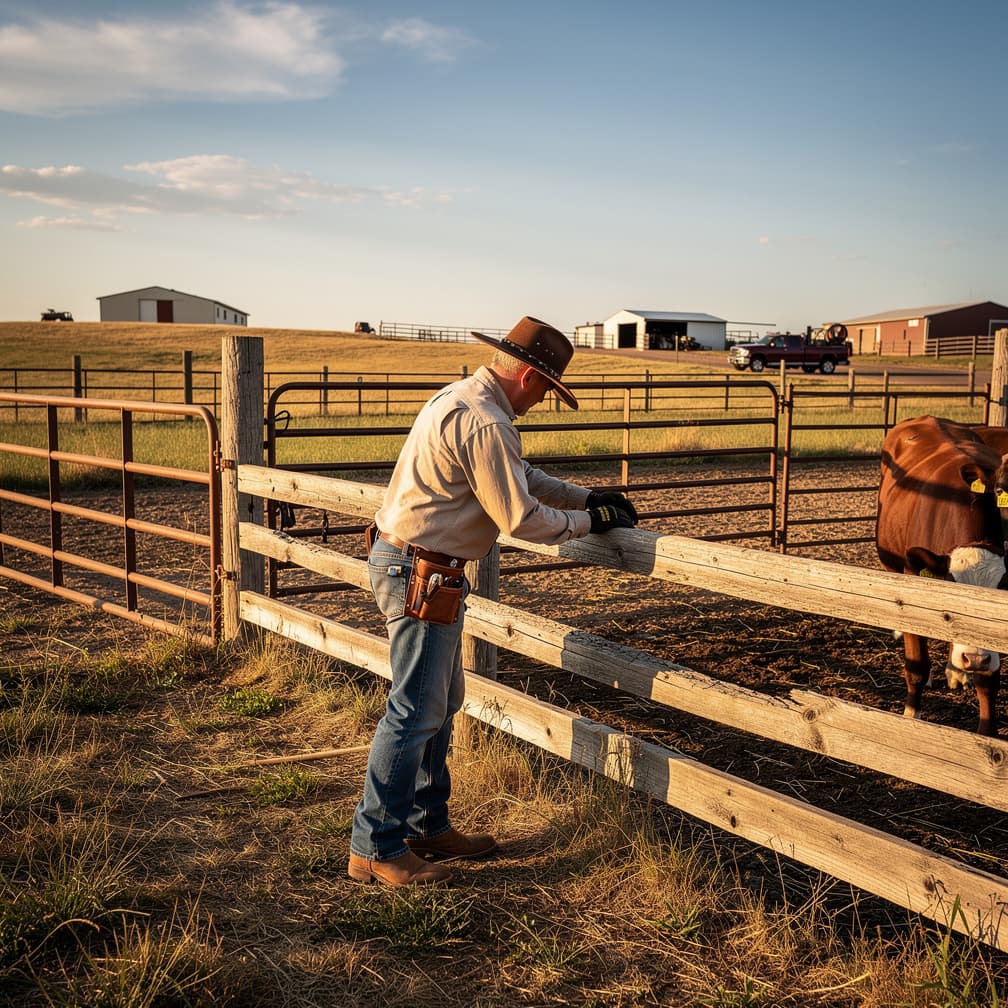

Tack, tools, and a hitch sit in an unlocked shed most of the year, and that shed is where theft claims tend to start. Ranch insurance in Baton Rouge has to account for property that moves: gear that leaves with a trailer, feed stacked outside, a saddle in the back of a truck. Distance is the complication. When buyers, vets, and hired help drive in from outside East Baton Rouge Parish, your work and your risk cross lines a policy schedule may not follow on its own. Ask how equipment is scheduled, and whether it stays insured once it leaves the home place. Ask what a locked door does to a deductible. Those two answers move a quote more than any adjective on a brochure.
What Makes Baton Rouge Different
Weather does not have to be extreme to cost a ranch a week of work and money. A stalled system turns pens to mud, delays a haul, and pushes a vet visit past its useful date. Insurance answers property damage cleanly and answers lost time far less cleanly than owners assume. That gap deserves attention before you assume a policy handles a bad stretch on its own. Ask what triggers an extra expense provision and what it leaves out, because the wording runs narrow. Physical damage usually has to come first, since a wet week by itself is not a covered event. Fencing spread across a large place in East Baton Rouge Parish is the property most exposed to a rough season. A haul out of Baton Rouge that misses its market window costs more than the fuel did.
Local Risk Factors in Baton Rouge
Before a named storm is on anyone's map, get your policy's protective requirements in writing. Many forms expect reasonable steps: securing panels, moving equipment inside, tying down whatever would otherwise become a projectile. Skipping them can turn a covered loss into a denied one, and that argument arrives when you have the least energy for it. Photograph the barn, the pens, and the equipment now, because an adjuster serving East Baton Rouge Parish may be weeks out and memory is not evidence. Ask how your windstorm deductible gets calculated, and whether it applies per storm or per season. Commercial Property is the line that would answer damage to the structures, and knowing its deductible in Louisiana ahead of time makes the number a decision rather than a surprise.
What Coverage Does a Ranch in Baton Rouge Need?
General Liability
Ask whoever leases you pasture what they want to see, and this is the line they name. It can help cover a third party's injury on your ground, damage you do to somebody else's property, and the defense if a demand turns into a suit. Injuries to your own workers and property left in your care generally sit outside it.
Example: A buyer steps into the wet alley beside the chute, catches a heel, and tears a knee. The medical bills and the demand letter behind them are the kind of claim this line is meant to take on.
Commercial Property
Flood and mechanical breakdown typically sit outside this form, which tells you what it is actually for: the barn, the loafing shed, the panels, the tack and tools inside them, and stored feed, when fire, wind, hail, or theft does the damage. Fencing and animals get treated unevenly, so ask how yours are scheduled.
Example: Wind lifts half the roof off a hay barn and rain finishes the feed stored under it that night. Structure and contents can land on one claim, with your deductible coming off the top.
Commercial Auto
Personal auto policies commonly exclude business use, and that gap is the reason this line exists for ranch trucks, feed rigs, and trailers. It might answer liability when a ranch vehicle injures someone or damages property, plus physical damage to the truck itself where that piece is added. Hauling for hire changes the classification, so disclose it.
Example: A loaded stock trailer sways on a county road out of Baton Rouge, clips a mailbox and a parked car, and the driver was a hand you pay by the day. Whether that claim goes anywhere often turns on who was authorized to drive.
Workers Compensation
Payroll is the meter: this line gets rated per $100 of what you pay hired help, and it can cover medical care and lost wages when a worker is hurt doing ranch work. Whether owners and family members are included varies, and requirements differ by state, so get the list of included people in writing.
Example: A hand loading panels at branding tears a shoulder and misses two months of work. Medical bills and part of the lost pay are where that claim goes, provided the payroll behind him was reported honestly.
How Much Does Ranch Insurance Cost in Baton Rouge?
Ranch Insurance is a bundle of separate policies, priced separately. The ranges below are typical figures for Baton Rouge for each line, except workers compensation, which is rated per $100 of payroll; a quote prices each one against your own operations.
| Coverage | Typical range | What moves your price |
|---|---|---|
| General Liability Insurance | $130 - $460 per month | Industry and risk classification, annual revenue, number of employees |
| Commercial Property Insurance | $380 - $1,325 per month | Building value and construction type, roof age and condition, fire protection class |
| Commercial Auto Insurance | $280 - $850 per month | Fleet size and vehicle types, driver records and experience, coverage limits and deductibles |
| Workers Compensation Insurance | $0.75 - $2.74 per $100 of payroll | Employee classification codes, total annual payroll, experience modification rate |
Prices shown are general estimates, not guaranteed rates or quotes. Your actual premium will depend on the insurer, coverage selected, business details, location, claims history, and other underwriting factors. Learn about our pricing methodology.
What Are the Insurance Requirements for a Ranch in Baton Rouge?
Workers' comp is generally required once you have your first employee. Louisiana generally requires employers to carry workers' compensation at that point. Common exemptions include sole proprietors, partners, and corporate officers (up to 2). Confirm current thresholds with your state's workers' compensation agency before you hire.
State auto liability minimums apply to business vehicles. Louisiana's minimum auto liability limits are $15,000/$30,000/$25,000 (bodily injury per person / per accident / property damage). Contracts and lenders often require more than the state floor.
Flood damage is typically excluded from standard policies. Standard commercial property and builders-risk-type policies typically exclude flood damage. Flood exposure varies address by address, so check your premises in FEMA's Flood Map Service Center before deciding; if you sit in a mapped flood zone, a separate policy through the National Flood Insurance Program is the usual starting point.
Where to verify licensing and coverage rules. The Louisiana Department of Insurance publishes consumer guidance and current insurance requirements for Louisiana businesses. When a contract or lease demands specific wording, the Louisiana Department of Insurance's guidance is the authoritative place to check.
Get Your Ranch Quote in Baton Rouge
Compare rates from multiple carriers. Free quotes, no obligation.
Operating in Baton Rouge
- Fuel gets delivered a few steps from a barn holding a season of hay. One spill or one spark turns that into a property claim and a cleanup bill in the same afternoon.
- Hay stacked outside is worth real money and cannot be locked up. Forms differ on whether feed sitting in the open is scheduled property or an exclusion, and the answer usually surfaces when a stack burns.
- A stock trailer parked at a gate overnight is the easiest thing on the place to steal. Whether it is insured as a vehicle or as equipment decides which policy the claim goes to, and owners guess wrong often.
- Hauling calves to a sale for a neighbor turns a personal truck into a commercial one in an underwriter's eyes. If that run leaves Baton Rouge under any fee arrangement, disclose it before the trip rather than after a wreck.
How to Buy: Advice for Baton Rouge Owners
Payroll records decide more of your quote than anything you can walk out and show an underwriter. Before you shop, total what you paid hired help over the last year and split it by what those people actually did. Feeding, fencing, hauling, and handling stock are different exposures, and Workers Compensation is rated off that split per $100 of payroll. Guess, and you get an audit bill later; document, and you get a price you can hold. Add a vehicle list with drivers and radius, and Commercial Auto stops being a placeholder in the quote. Rules on who must be covered vary across Louisiana, so check the Louisiana Department of Insurance's guidance before deciding what to leave off. With one accurate submission, CPK can put quotes from participating carriers in front of you without you retelling the story four times.
FAQ
Ranch Insurance in Baton Rouge: FAQ
Usually not, once the property earns money. Homeowners forms commonly exclude business property and business liability, and a barn holding feed, tack, and a loader reads as business use to an adjuster. Commercial Property is the line built for those structures and their contents. That gap tends to surface at claim time rather than at purchase, which is the expensive moment to find it.
Anyone whose money or land is at stake. A landowner leasing you pasture, a buyer contracting for calves, a stable boarding your horses, or a company sending a crew can each require a certificate before work starts. Lenders ask too. If a party in Baton Rouge wants additional insured status, your policy has to allow that wording, so read the request before you sign rather than after.
That is the claim ranch liability coverage exists for. General Liability may respond to a third party's injury on your property, including medical costs and the defense if they sue you. Your own workers are handled elsewhere, and harm you cause on purpose is excluded everywhere. The limit you picked is the ceiling on all of it, which is why the limit deserves more attention than the premium.
Sometimes, and the details decide it. Liability from a trailer in tow often follows the towing vehicle, while physical damage to the trailer itself usually has to be scheduled. A trailer sitting unhitched at a gate is a third question again. List every trailer on the Commercial Auto quote with values, and ask which of those three situations the form actually addresses.
Not automatically. Commercial Property forms are written around structures and contents, and animals commonly need scheduled livestock coverage or a separate form. Even then the cause matters: death from an accident, from disease, and from weather get treated differently, and some causes sit outside the form entirely. Ask for the list of covered causes in writing before you assume the herd is on the policy.
It puts the other party's name on your policy so your coverage can answer claims arising out of your use of their ground. Landowners and buyers ask for it because it moves the first line of defense to your insurer instead of theirs. Not every form grants it automatically, and some need an endorsement. Confirm your Louisiana quote allows the exact wording the contract names.
Sources
- 1.Louisiana Department of Insurance(Louisiana Department of Insurance publishes consumer guidance for insurance buyers.)
- 2.FEMA / FloodSmart(Flood coverage is typically purchased separately; FEMA administers the National Flood Insurance Program.)


