







































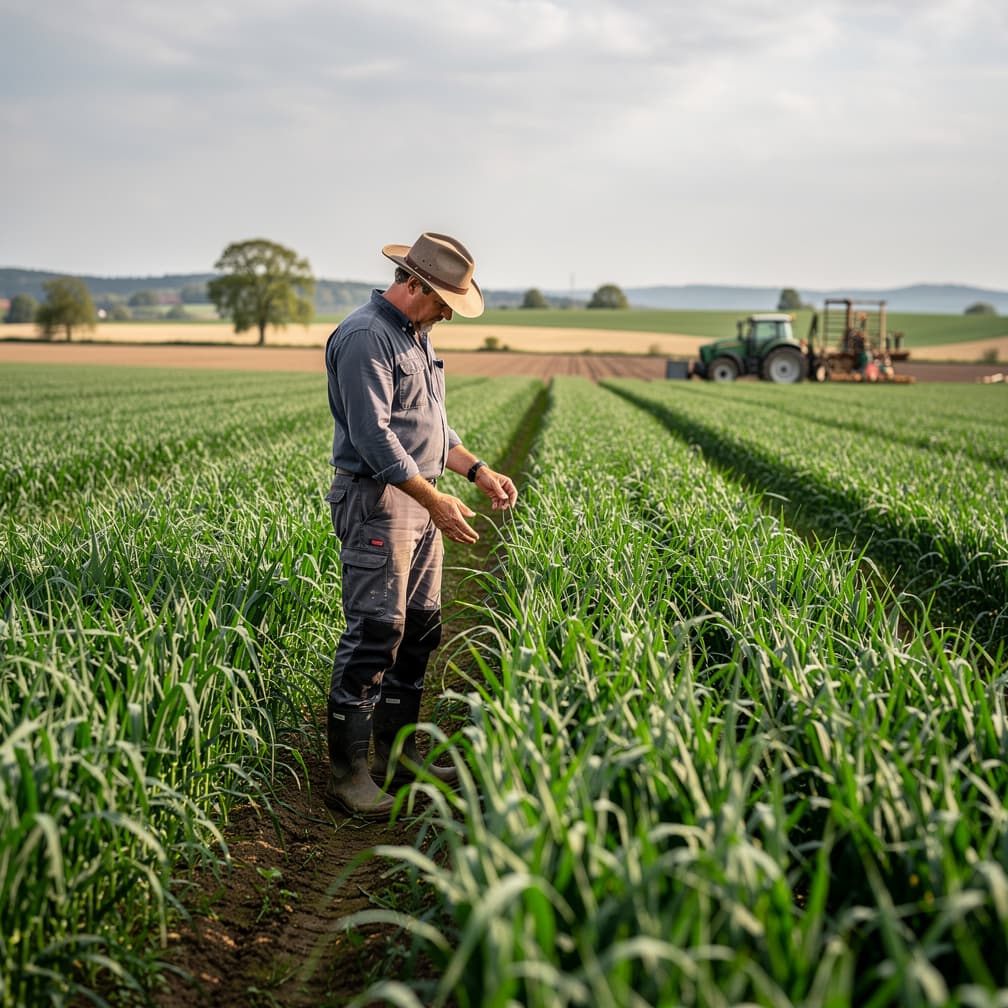

A pump quits in the middle of irrigation week and the acres behind it start drying while a replacement part ships. The machine is rarely the real loss. The real loss is the standing crop, the hired hours already paid, and the buyer holding a delivery date you agreed to. That gap between a broken part and a shortfall in harvest income is why farm insurance in Bangor gets bought at all. A barn that comes apart in a storm week, a visitor who slips near the loading area, a breeding animal that dies overnight: each one asks a different question of a policy. Your operation in Bangor carries its own mix of buildings, machines, animals, and people on the ground. This page walks through the parts of that mix that actually move a quote.
What Makes Bangor Different
Lenders are the counterparty nobody plans for, and they ask the hardest questions about property. Financing a combine or a grain bin usually comes with a requirement to insure the collateral. The lender wants proof, a loss payee endorsement, and notice if anything about the policy changes. In Penobscot County, a thin market does not soften it, because the paperwork travels with the loan itself. Miss a renewal and a lender holding paper on a Bangor operation can buy coverage and bill you. That forced placement tends to cost more and to serve the lender's interest ahead of yours. Nothing about it is negotiable once the note is signed, so read the insurance clause first. The simplest fix is a calendar reminder set two months before every renewal date.
Local Risk Factors in Bangor
Freezing weather finds every pipe, pump, and water line on a farm that nobody has thought about since the last cold snap. Livestock waterers fail, irrigation lines split, and a well house without heat becomes a repair bill and a herd without water on the same morning. Frozen ground also means equipment stays out, and machinery left in the open takes damage that gets argued about later. Commercial Property may respond to sudden damage from a burst line, though many forms condition that on maintaining heat or draining systems, and a vacant outbuilding can fall outside the condition entirely. Read those conditions before the first hard freeze in Bangor, because they are requirements rather than suggestions, and participating carriers in Maine word them differently.
What Coverage Does a Farm in Bangor Need?
General Liability
Buyers, lessors, and co-ops ask for this one by name before they sign anything. It generally answers third-party claims: a visitor hurt at the fence line, a vendor who goes down in the yard, damage your operation causes to someone else's property. Injuries to your own crew sit elsewhere, and so does damage to your own machinery.
Example: A feed delivery driver steps out onto wet concrete, goes down hard, and his employer's insurer sends the medical bill your way. That is a third-party claim General Liability may be asked to answer.
Commercial Property
Flood, wear and tear, and the crop standing in the field usually sit outside this form, which is the fastest way to understand what is inside it. Barns, sheds, grain bins, shops, stored inputs, and fixed equipment are the property it typically addresses against sudden accidental damage. A lender financing a structure will often require it.
Example: Wind peels sheeting off a machine shed and rain reaches the tools underneath overnight. With the building and its contents scheduled at current values, commercial property coverage could pick up the repair.
Commercial Auto
A personal auto policy may limit or exclude business use, which is where this line starts. Farm trucks hauling feed, grain, or livestock, plus the trailers behind them, generally belong here, along with the hired hands who drive them. Hired and non-owned use is a separate question worth asking, since a borrowed trailer is a common gap.
Example: A grain truck rolls a stop sign on the way to the elevator and clips a car. The other driver's injuries and vehicle damage are the kind of loss Commercial Auto typically exists to take on.
Workers Compensation
Payroll is the meter this one runs on, at a rate per $100 of it. When a hired hand is hurt clearing an auger or lifting feed, this is the road that claim travels, and it typically addresses medical treatment and lost wages under rules that vary by state. Family labor and independent contractors classify differently, and getting that wrong is expensive at audit.
Example: An auger jams, a seasonal hand reaches in to clear it, and one emergency room visit turns into six weeks off the job. Workers Compensation is usually the line that answers an employee injury like that.
Tools & Equipment (Inland Marine)
Machinery that moves is machinery a building policy may stop following. Tractors, harvesters, portable pumps, augers, welders, and hand tools generally sit on this schedule, listed by model, serial number, and value. Watch the sub-limits for property left in the open and for theft, and ask whether mechanical breakdown is included, because it often is not.
Example: A portable pump disappears from a back field overnight, along with the fuel can beside it. Photographed serial numbers and a current schedule are what let an equipment claim in Bangor go anywhere at all.
How Much Does Farm Insurance Cost in Bangor?
Farm Insurance is a bundle of separate policies, priced separately. The ranges below are typical figures for Bangor for each line, except workers compensation, which is rated per $100 of payroll; a quote prices each one against your own operations.
| Coverage | Typical range | What moves your price |
|---|---|---|
| General Liability Insurance | $70 - $250 per month | Industry and risk classification, annual revenue, number of employees |
| Commercial Property Insurance | $160 - $625 per month | Building value and construction type, roof age and condition, fire protection class |
| Commercial Auto Insurance | $150 - $470 per month | Fleet size and vehicle types, driver records and experience, coverage limits and deductibles |
| Workers Compensation Insurance | $0.75 - $2.74 per $100 of payroll | Employee classification codes, total annual payroll, experience modification rate |
| Inland Marine Insurance | $60 - $250 per month | Total insured value of the scheduled property, type and age of the equipment, where it is stored and how far it travels |
Prices shown are general estimates, not guaranteed rates or quotes. Your actual premium will depend on the insurer, coverage selected, business details, location, claims history, and other underwriting factors. Learn about our pricing methodology.
What Are the Insurance Requirements for a Farm in Bangor?
Workers' comp is generally required once you have your first employee. Maine generally requires employers to carry workers' compensation at that point. Common exemptions include sole proprietors and partners. Confirm current thresholds with your state's workers' compensation agency before you hire.
State auto liability minimums apply to business vehicles. Maine's minimum auto liability limits are $50,000/$100,000/$25,000 (bodily injury per person / per accident / property damage). Contracts and lenders often require more than the state floor.
Flood damage is typically excluded from standard policies. Standard commercial property and builders-risk-type policies typically exclude flood damage. Flood exposure varies address by address, so check your premises in FEMA's Flood Map Service Center before deciding; if you sit in a mapped flood zone, a separate policy through the National Flood Insurance Program is the usual starting point.
Where to verify licensing and coverage rules. The Maine Bureau of Insurance publishes consumer guidance and current insurance requirements for Maine businesses. When a contract or lease demands specific wording, the Maine Bureau of Insurance's guidance is the authoritative place to check.
Get Your Farm Quote in Bangor
Compare rates from multiple carriers. Free quotes, no obligation.
Operating in Bangor
- A property manager behind a leased storage yard in Bangor can withhold the keys until a certificate naming the right legal entity is sitting in the file.
- Serial numbers photographed before a theft are worth more than any adjective you use afterward, because a schedule that lists a pump generically settles like a generic pump.
- Harvest windows compress everything, so machinery that should be down for service keeps running, and the injuries in a farm claim file cluster in exactly those weeks.
- A neighbor helping load cattle for an afternoon can look like a favor and read like an employee on an application, and the rules governing that in Maine vary.
How to Buy: Advice for Bangor Owners
Trucks are where farm policies quietly leak. A pickup titled personally but used to haul feed, a grain truck driven by a hired hand, a trailer borrowed for one delivery: each raises a question a personal auto policy may answer badly, and General Liability will not fill that hole either. Commercial Auto exists for exactly this, and the line between business and personal use gets drawn by facts rather than intent. List every vehicle, who drives it, and what it hauls before you request quotes in Bangor. Ask whether hired and non-owned use is included, since a borrowed trailer is a common gap. The Maine Bureau of Insurance publishes consumer guidance on commercial vehicle coverage. Put the completed list in front of participating carriers through CPK, because driver records move this number more than anything else.
FAQ
Farm Insurance in Bangor: FAQ
That is a third-party bodily injury claim, and General Liability is the line usually asked to answer it. The driver's employer or its insurer may come after you afterward to recover what it paid, which is why limits matter more than owners assume. Wet ground, uneven surfaces, and equipment left where people walk are the usual facts in these files. Keep a written incident record.
You can, and it is one of the more common gaps. Personal auto forms may limit or exclude business use, and hauling feed, grain, or livestock counts as business use by most definitions. Commercial Auto exists for that, and the classification turns on facts rather than on the name printed on the title. List every vehicle and what it hauls before requesting quotes in Bangor.
Enough to see the spread. Participating carriers in Maine weigh acreage, payroll, machinery values, and loss history with their own formulas, so identical facts commonly produce very different numbers. A single offer teaches you nothing about whether it is reasonable. Send one complete submission to several and read the exclusions beside the price, because a cheap quote is sometimes cheap for a findable reason.
The per occurrence limit is the most a policy may pay for one event; the aggregate is the ceiling for the entire policy term. A farm in Bangor that hosts visitors through a season can produce several separate injury claims, and each one draws from that same aggregate. Two bad events early can leave very little behind for a third. Ask whether it resets at renewal.
It depends where those items sit on your program and what sub-limits apply. Property left in the open, and portable equipment generally, often carries a lower cap than property locked inside a building. Some forms want evidence of forced entry, which an open fuel tank cannot supply. Read the theft sub-limit before accepting a quote, and photograph serial numbers so a claim has something to work with.
That is an employee injury, so it travels down the Workers Compensation road rather than the liability road. General Liability is generally built for third parties instead of your own crew, and the two rarely substitute for each other. If nobody works for you, the question changes entirely. If someone does, the classification you report and the payroll you declare are what pricing runs on.
Sources
- 1.Maine Bureau of Insurance(Maine Bureau of Insurance publishes consumer guidance for insurance buyers.)
- 2.FEMA / FloodSmart(Flood coverage is typically purchased separately; FEMA administers the National Flood Insurance Program.)


