







































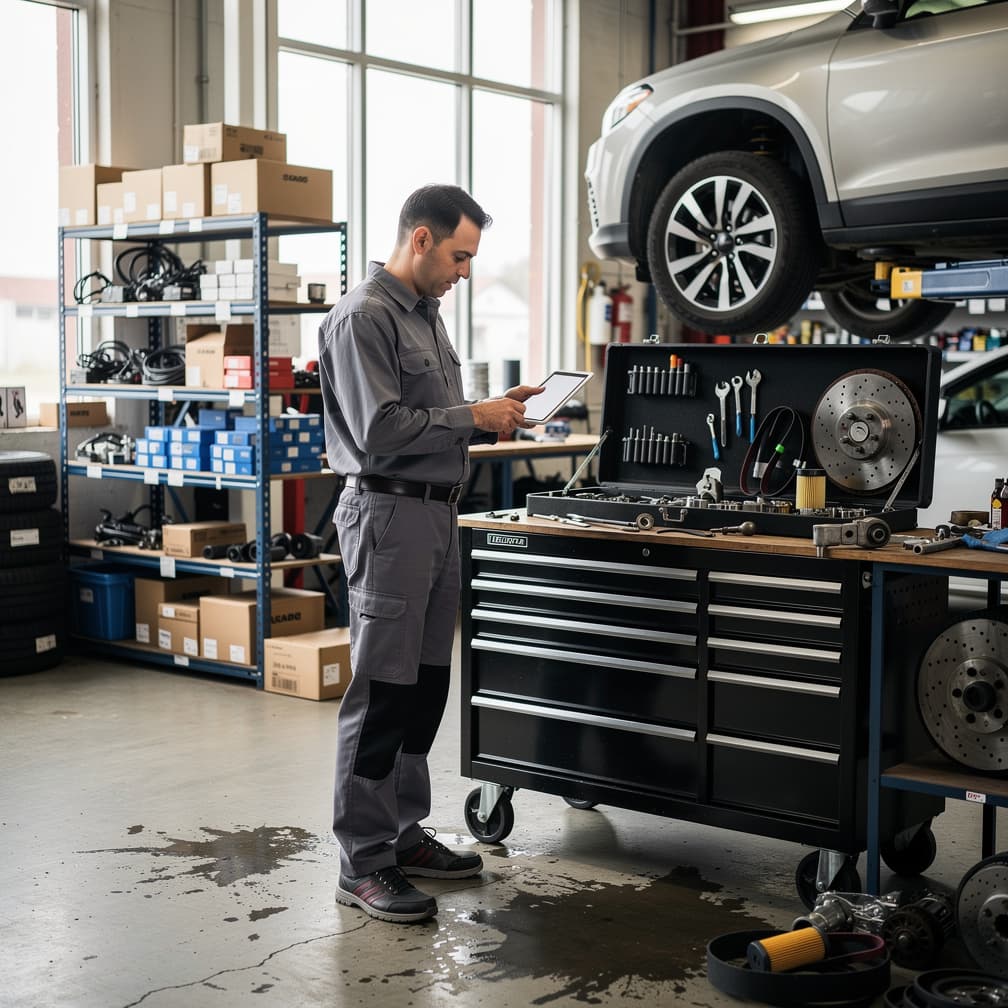

Water on the floor by the entryway is a claim waiting for a witness. Someone tracks in slush, a shopper hits the wet spot with a box of brake pads in both hands, and nobody saw the sign go missing. Auto parts store insurance in Portland exists mostly for the ten seconds after that. What comes next is paperwork: an incident report, a recorded statement, a demand letter that lands long after the bruise healed, sometimes years later depending on the filing deadlines that apply in Maine. The store keeps selling parts the whole time, which is the part owners forget. Your defense costs start the day the letter arrives, not the day anyone decides anything. Below, the coverage lines are broken out one by one so you can see which one answers that letter.
What Makes Portland Different
Employees create the obligation nobody chooses, because hiring one person changes the legal picture entirely. Requirements and thresholds vary by state, and a store with two part-timers may sit near a line. The Maine Bureau of Insurance publishes the current requirements for employers, and that is where the real answer lives. Guessing is expensive: an uninsured injury claim lands on the business with no limit above it. A stocker who lifts batteries all day is doing physical work, whatever the job title says. Back injuries are slow, cumulative, and hard to dispute once a doctor writes the history down. Get the classification right when you set up payroll for your Portland store, not at audit. The paperwork takes an hour now and settles an argument that would otherwise take a year.
Local Risk Factors in Portland
Ice in the parking lot and slush tracked to the entryway produce the injury claims that follow a cold week. A customer carrying a rotor has no free hand to catch a fall, and the incident report writes itself. Whether the General Liability form responds usually turns on the facts: who cleared the lot, what the mat log shows, and whether the sign was standing. That evidence exists only if somebody creates it during the weather rather than after the letter arrives. A Portland store with a written entryway routine and a timestamped log defends itself; a store without one relies on memory, and memory loses in Cumberland County the same way it loses anywhere.
What Coverage Does an Auto Parts Store in Portland Need?
General Liability
Landlords, suppliers, and fleet accounts ask for this one by name before they will deal with you at all. It aims at third parties: a shopper hurt in an aisle, a delivery driver injured on your dock, or a part that fails after it leaves the counter. It typically does nothing for your own stock or your own employees, which are separate purchases.
Example: A customer reaches past a top-shelf display, a case of rotors comes down on her shoulder, and a demand letter follows six weeks later. The policy may respond to the injury claim and to the defense behind it.
Commercial Property
Rising water sits outside this form, and so does wear and tear, and knowing that up front is half of buying it well. What sits inside is the building work you paid for, the racking, the counter, the register, and the stock on your shelves, against fire, theft, vandalism, and storm damage, subject to your deductible and to how the inventory was valued.
Example: A break-in through the back door empties a cage of batteries and alternators overnight, and the door frame goes with them. This line could pick up the stolen stock and the damage, less the deductible.
Workers Compensation
A stocker lifts batteries for six years and then cannot straighten up one morning. This line is meant for injuries arising out of the work, including the slow cumulative ones, and it generally handles medical care and a share of lost wages without anyone arguing fault. Requirements vary by state, and pricing runs on payroll rather than headcount.
Example: Someone catches a hand between a pallet and a rack while a delivery comes in, and the emergency room visit turns into three weeks off the floor. Benefits here might carry the medical bills and part of the missed pay.
Business Owners Policy
Bought separately, the liability form and the property form are two policies with two bills behind them. Packaged together for a small store they often price below the pair while covering the same ground, subject to sublimits on items like the sign outside, money in the register, and stock held off site. Workers Compensation never rides inside it.
Example: A rooftop leak soaks a pallet of filters, and a shopper goes down on the puddle it left in aisle three that same afternoon. One packaged policy is generally intended to take both of those claims at once.
How Much Does Auto Parts Store Insurance Cost in Portland?
Auto Parts Store Insurance is a bundle of separate policies, priced separately. The ranges below are typical figures for Portland for each line, except workers compensation, which is rated per $100 of payroll; a quote prices each one against your own operations.
| Coverage | Typical range | What moves your price |
|---|---|---|
| General Liability Insurance | $50 - $150 per month | Industry and risk classification, annual revenue, number of employees |
| Commercial Property Insurance | $85 - $280 per month | Building value and construction type, roof age and condition, fire protection class |
| Workers Compensation Insurance | $0.75 - $2.74 per $100 of payroll | Employee classification codes, total annual payroll, experience modification rate |
| Business Owners Policy Insurance | $95 - $280 per month | Annual revenue and industry class, building and contents values, square footage and building age |
Prices shown are general estimates, not guaranteed rates or quotes. Your actual premium will depend on the insurer, coverage selected, business details, location, claims history, and other underwriting factors. Learn about our pricing methodology.
What Are the Insurance Requirements for an Auto Parts Store in Portland?
Workers' comp is generally required once you have your first employee. Maine generally requires employers to carry workers' compensation at that point. Common exemptions include sole proprietors and partners. Confirm current thresholds with your state's workers' compensation agency before you hire.
Flood damage is typically excluded from standard policies. Standard commercial property and builders-risk-type policies typically exclude flood damage. Flood exposure varies address by address, so check your premises in FEMA's Flood Map Service Center before deciding; if you sit in a mapped flood zone, a separate policy through the National Flood Insurance Program is the usual starting point.
Where to verify licensing and coverage rules. The Maine Bureau of Insurance publishes consumer guidance and current insurance requirements for Maine businesses. When a contract or lease demands specific wording, the Maine Bureau of Insurance's guidance is the authoritative place to check.
Get Your Auto Parts Store Quote in Portland
Compare rates from multiple carriers. Free quotes, no obligation.
Operating in Portland
- Wet floors near the entryway generate more incident reports than anything else on a sales floor. The mat, the sign, and the timestamp on your mop log are what an adjuster asks for first.
- Batteries and electronics are the stock that walks out the door. A locked cage takes a weekend to install and then shows up on every insurance application you will ever fill out.
- A landlord in Portland can refuse to release keys until a certificate naming the building owner is on file, and that document depends on an endorsement your carrier has to issue first.
- Loose stock on a top shelf becomes a head injury the moment a customer reaches for the box behind it. Shelf heights and restocking habits are underwriting questions, not housekeeping preferences.
How to Buy: Advice for Portland Owners
Pull your lease before you pull quotes. The insurance exhibit tells you the limits, the additional insured wording, and the deadline, and those three facts decide what you are actually shopping for in Portland. Bring it along with payroll by job type, your stock values at replacement cost, and three years of loss runs. General Liability answers the customer who goes down in an aisle, Commercial Property answers the shelves and the building improvements, and a Business Owners Policy often bundles the two for a store your size. Ask each carrier to quote the bundle and the pieces separately so you can see what the packaging costs. The Maine Bureau of Insurance publishes the current requirements for employers with staff, which is worth checking before you set payroll. CPK lets you put one submission in front of participating carriers and compare what comes back.
FAQ
Auto Parts Store Insurance in Portland: FAQ
Two numbers sit on the liability form and they behave differently. One caps what a single claim may draw; the other caps the whole policy year across everything combined. A store producing several small aisle injuries can wear down that yearly ceiling before a serious claim ever shows up, and defense costs may wear it down further depending on the form. So the limit your lease demanded at signing might not still be standing in month ten.
Business income terms generally require physical damage from a covered cause of loss before anything begins, at your location or sometimes at a nearby one. A week of empty aisles under an intact roof usually triggers nothing at all. Civil authority and utility interruption wording can extend that in limited ways, and both are frequently optional. Ask what sits on the form rather than assuming a closure counts by itself.
Building details and square footage, stock values at replacement cost, payroll broken out by job class, annual revenue, years in operation, protective features such as alarms and cameras, and three to five years of loss runs. Photographs of the sales floor and stockroom help. A submission missing one of those pieces sits until you send it, which is how a two-week shop turns into a two-month one.
It packages liability and property for small retail, and for many stores that combination is most of the picture. It does not include Workers Compensation, which stays a separate policy wherever staff are on the payroll. Packaged forms can also carry sublimits on outdoor signs, money in the register, and stock held off site. Read the sublimit schedule against what your store actually holds.
You request it from whoever issues your policy, and they send it directly to the party named on it. Ask two things before you need one: how quickly can it be issued, and who at your store is authorized to request it. A delay there can hold up keys, a delivery account, or a supplier setup. If a property manager in Portland needs particular wording, send that wording with the request.
Several inputs move without a claim. Payroll grows with wages, and Workers Compensation is rated per hundred dollars of it, so the same staff can cost more. Stock values rise with inventory prices. Property rates in Maine can shift with what carriers paid across an entire book. An audit can also true up figures you estimated low at binding, which arrives as a bill rather than as a rate change.
Sources
- 1.Maine Bureau of Insurance(Maine Bureau of Insurance publishes consumer guidance for insurance buyers.)
- 2.FEMA / FloodSmart(Flood coverage is typically purchased separately; FEMA administers the National Flood Insurance Program.)


