







































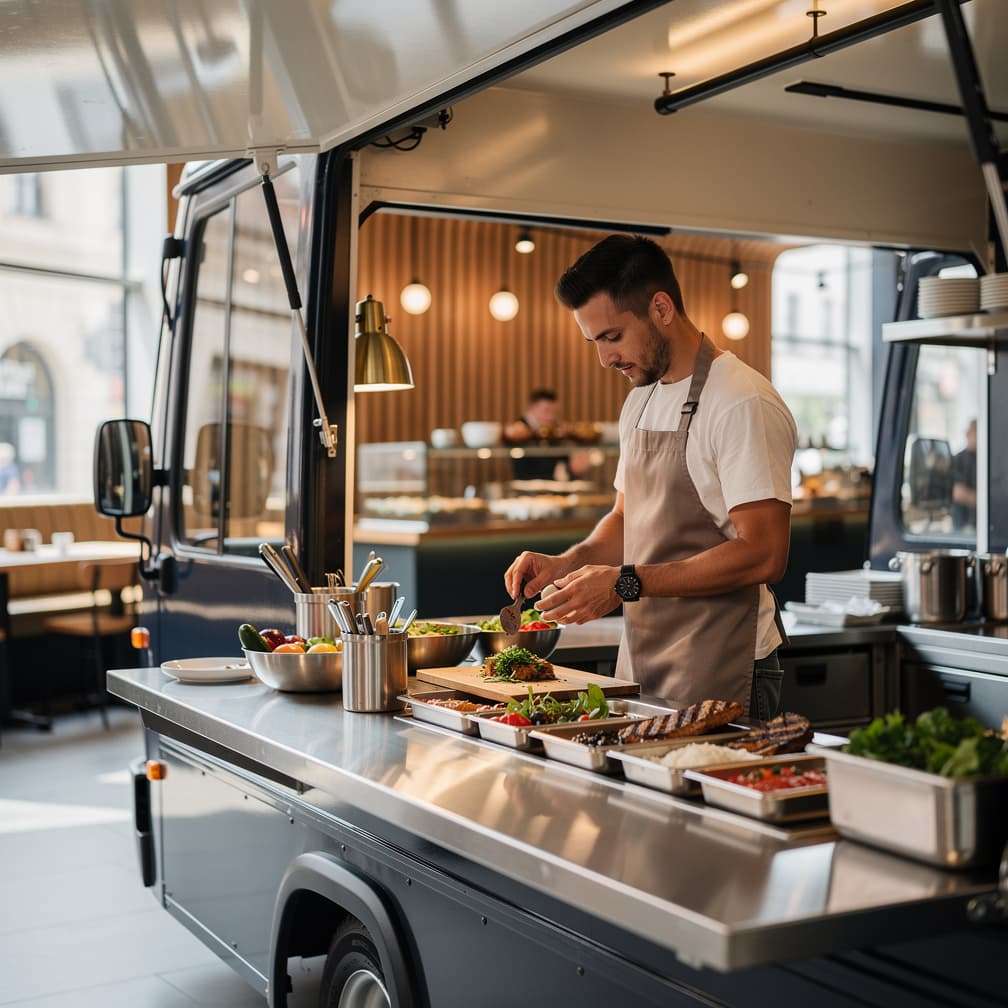

As a food truck working in Baltimore, two different desks want proof of coverage and neither accepts the other's paperwork. A permit office wants evidence a policy exists. A venue wants naming on it, at limits it picked, on a certificate dated before load-in. Food truck insurance in Baltimore is bought once and proved over and over, which is why the certificate process matters as much as the policy wording. Every request carries a lead time, and the ones that arrive late cost a service day. Set the policy up so certificates issue fast, and keep every requirements sheet anyone has ever sent you. The rest of this page is about getting that right the first time.
What Makes Baltimore Different
Wind is the quiet threat to a truck, because everything you set up outside of it is loose. Canopies, sandwich boards, and menu signs become other people's problems when they leave your site. A sign that hits a parked car is a liability claim rather than an equipment claim. That distinction decides which part of your program answers and which deductible comes out first. Owners tend to learn it while standing in a lot holding a bent canopy frame. Ask the question while participating carriers in Maryland are still competing for your signature. A weather week in Baltimore can stack both halves into the same forty-eight hours. Knowing which half is which beforehand is the entire point of reading the form early.
Local Risk Factors in Baltimore
A canceled festival weekend in Baltimore takes a month's margin with it, and a hurricane cancels festivals long before landfall. Deposits get returned, inventory bought for a crowd gets eaten by the crew, and none of that appears on a property claim. The rig may come through untouched while the business takes the real hit. That is the honest gap: coverage sold in Maryland generally follows physical damage, and a canceled booking is not physical damage. Where the truck does take wind damage, commercial property coverage can help cover the shell and the kitchen, subject to the deductible your policy applies to named storms. Ask what that deductible is, because storm deductibles are often written as a percentage rather than a flat figure.
What Coverage Does a Food Truck in Baltimore Need?
Commercial Auto
Every permit office and lot operator assumes the rig on the road is insured as a commercial vehicle, because a personal auto policy generally excludes business use. Commercial Auto is the line built for the truck itself: liability on the road, damage to the chassis, and theft of the vehicle. What it typically does not reach is the kitchen equipment bolted inside it.
Example: You back into a bollard leaving a lunch spot and crack the rear panel along with the propane cabinet door. The vehicle damage may fall to this line, subject to your deductible.
General Liability
A stranger standing on pavement you do not own, waiting for food you cooked, is the exposure this line exists for. General Liability may respond to a customer's injury near the window, or to a claim that what you served made someone sick, though products wording varies from form to form. It is also the coverage venues name on their certificates.
Example: A customer trips over your power cord at a brewery lot, breaks a wrist, and hires a lawyer within the week. Defense and any settlement could land here, depending on the limits you carry.
Commercial Property
Flood sits outside it, wear and tear sits outside it, and a compressor that slowly gave up sits outside it too. What Commercial Property is for is the sudden loss: fire in the hood, a storm through the roof, theft of equipment while the truck is parked. Whether your grill and refrigeration are scheduled or blanketed decides what a rebuild actually returns.
Example: A grease fire takes the hood and the flat top overnight in Baltimore, and the rig sits idle until an adjuster values the kitchen. That equipment loss might be answered here.
Workers Compensation
Where General Liability stops is where this one starts, because the injured person is your own crew rather than a customer. Workers Compensation rates per hundred dollars of payroll, and it typically responds to medical costs and lost wages when someone gets burned at the fryer or hurt loading the truck. Thresholds for who must carry it vary by state.
Example: Your window worker slips on grease during a rush, tears a knee, and misses six weeks of shifts. Medical bills and a share of the lost wages may be picked up under this line.
How Much Does Food Truck Insurance Cost in Baltimore?
Food Truck Insurance is a bundle of separate policies, priced separately. The ranges below are typical figures for Baltimore for each line, except workers compensation, which is rated per $100 of payroll; a quote prices each one against your own operations.
| Coverage | Typical range | What moves your price |
|---|---|---|
| Commercial Auto Insurance | $270 - $800 per month | Fleet size and vehicle types, driver records and experience, coverage limits and deductibles |
| General Liability Insurance | $70 - $260 per month | Industry and risk classification, annual revenue, number of employees |
| Commercial Property Insurance | $95 - $340 per month | Building value and construction type, roof age and condition, fire protection class |
| Workers Compensation Insurance | $0.75 - $2.74 per $100 of payroll | Employee classification codes, total annual payroll, experience modification rate |
Prices shown are general estimates, not guaranteed rates or quotes. Your actual premium will depend on the insurer, coverage selected, business details, location, claims history, and other underwriting factors. Learn about our pricing methodology.
What Are the Insurance Requirements for a Food Truck in Baltimore?
Workers' comp is generally required once you have your first employee. Maryland generally requires employers to carry workers' compensation at that point. Common exemptions include sole proprietors, partners, and corporate officers. Confirm current thresholds with your state's workers' compensation agency before you hire.
State auto liability minimums apply to business vehicles. Maryland's minimum auto liability limits are $30,000/$60,000/$15,000 (bodily injury per person / per accident / property damage). Contracts and lenders often require more than the state floor.
Flood damage is typically excluded from standard policies. Standard commercial property and builders-risk-type policies typically exclude flood. Given Baltimore's coastal flood exposure, a separate flood policy is worth pricing; FEMA's National Flood Insurance Program is the usual starting point.
Where to verify licensing and coverage rules. The Maryland Insurance Administration publishes consumer guidance and current insurance requirements for Maryland businesses. When a contract or lease demands specific wording, the Maryland Insurance Administration's guidance is the authoritative place to check.
Get Your Food Truck Quote in Baltimore
Compare rates from multiple carriers. Free quotes, no obligation.
Operating in Baltimore
- A menu board or canopy that blows into a parked car is a liability claim rather than an equipment claim, and the two carry separate deductibles.
- Certificates expire, and a venue in Baltimore that accepted last season's copy can bounce it this season without telling you why until you think to ask.
- The truck is worth less than the kitchen inside it on most rigs, which is why a quote built around the vehicle alone leaves the expensive half of your business undescribed.
- Bookings that pull you outside Baltimore city change the radius on your application, and a claim that happens beyond the radius you declared is a conversation nobody enjoys.
How to Buy: Advice for Baltimore Owners
Every quote wants numbers you may not have gathered: annual revenue, payroll, miles driven, equipment values. Write them down once and keep them current, because the same four figures drive General Liability and Commercial Auto pricing at every carrier you approach. Guessing high wastes money and guessing low creates an audit problem, so use your actual books. If revenue swings hard between the seasons your Baltimore route depends on, say so instead of averaging it into something tidy. Underwriters price honesty better than they price optimism. Ask what documentation each carrier wants at renewal so nothing gets recalculated behind your back. The Maryland Insurance Administration publishes consumer guidance on premium audits, which is worth reading well before renewal arrives. With one clean set of figures, CPK can put participating carrier quotes on the same footing.
FAQ
Food Truck Insurance in Baltimore: FAQ
It means the venue wants rights under your policy rather than a note saying the policy exists. That takes an endorsement, which your carrier has to issue and which sometimes carries a small charge. A certificate on its own lists them as a holder, which is a weaker thing and a common reason paperwork gets bounced at load-in. Ask for the endorsement by name and allow a few days for it.
Claims that someone got sick from what you served are usually argued under General Liability, and whether the products angle is included or excluded depends on the form in front of you. Some policies carve it out entirely. Ask the question directly and get the answer in writing, because it is not something you want to research after a complaint has already arrived.
The bill moves on drivers you can name: the value of the equipment inside the truck, how far you drive and where, your payroll, your claims history, and the limits a venue demands. The territory around Baltimore matters too, since carriers rate congestion and local loss patterns before they ever look at your record. The cost table on this page shows current ranges line by line.
Often, yes. Many carriers can issue an additional insured endorsement for a specific entity, and some can do it for a single booking. It takes lead time, so ask when you accept the date rather than on the morning of the event. Check whether the contract also wants primary and non-contributory wording, because that is a separate request and it changes what your policy does first.
Theft of the vehicle itself typically falls to Commercial Auto, while the equipment and inventory inside it may sit under a property form instead. That can mean two deductibles on one bad night. Where you park in Baltimore is a rating fact, so if the storage answer on your application does not match reality, expect a hard conversation. Photographs and receipts shorten every one of these claims.
Not automatically. Repair costs and lost income are two separate questions, and the second depends on wording that is missing from plenty of quotes. Ask whether the policy says anything about income while the rig is down, what triggers that language, and how long it runs. Then ask what has to be physically damaged first, because a breakdown and a collision get treated differently.
Sources
- 1.Maryland Insurance Administration(Maryland Insurance Administration publishes consumer guidance for insurance buyers.)
- 2.FEMA / FloodSmart(Flood coverage is typically purchased separately; FEMA administers the National Flood Insurance Program.)


