







































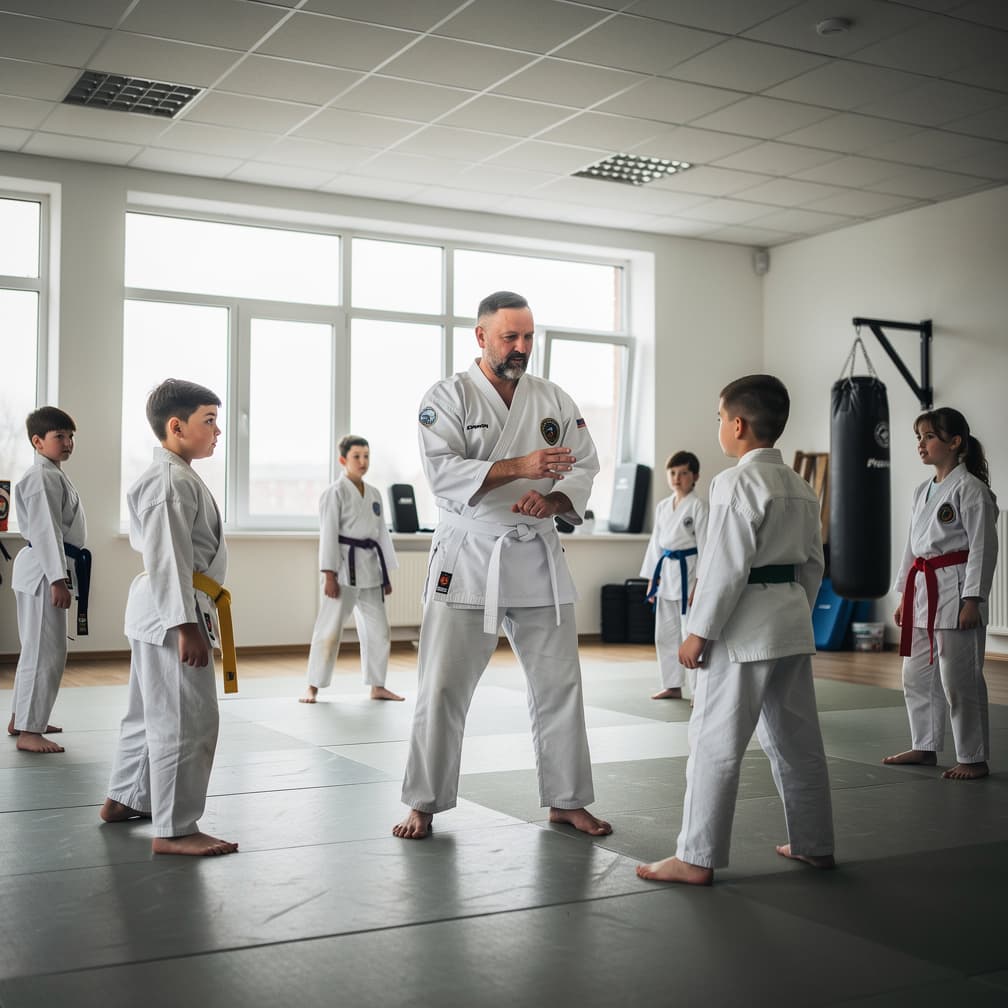

General Liability for a martial arts studio typically starts around $35 a month, which is small next to the cost of defending one injury claim out of an evening class. Martial arts studio insurance in Baltimore usually stacks a few lines on top of that, and the total lands where your payroll, your floor space, and your class mix put it. Instructors on the schedule move the payroll side of the quote; a room full of mats, mirrors, and hanging bags moves the property side. If a landlord in Baltimore sets limit requirements in the lease, the lease sets your floor, and your budget does not get a vote. Price is the last question worth asking, after you know what has to appear on the certificate and who has to be named on it. Compare identical limits or the comparison means nothing.
What Makes Baltimore Different
Proof of coverage gets demanded at three moments: at the lease, at the booking, and at the renewal. Owners plan for the first and get caught by the other two, usually on a short deadline. A seminar host in Baltimore can ask midweek for a certificate covering a weekend event. If your policy already contemplates off-site instruction, that is a phone call rather than a scramble. If it does not, you are chasing an endorsement while the host is chasing a document. Renewal is the sneaky one, because a lapse of a single day voids the certificate somebody has on file. A landlord checking dates in Baltimore can flag it before you notice the invoice went unpaid. Keep the dates, the limits, and the naming in one file, and none of these moments become emergencies.
Local Risk Factors in Baltimore
A boarded storefront and a dark room look survivable until you count the weeks. Reopening takes more than a patched roof: mats have to be certified dry, the sound system has to work, and students have to come back, which is the slowest part by far. Income lost during that stretch is not automatically part of a property claim, and a Baltimore owner who assumed otherwise learns it during the worst month of the year. Ask what triggers business income, how long the waiting period runs, and whether a named-storm deductible applies before anything begins. Then ask the same about a Baltimore city power outage, since a dark room cancels class just as effectively.
What Coverage Does a Martial Arts Studio in Baltimore Need?
General Liability
Landlords, host gyms, and event organizers ask about this line by name before they hand over keys or floor time. It generally sits behind third-party injury and property damage claims tied to your studio: a student hurt during a live round, a parent who slips near the entry, a bag stand that tips onto a child. Damage to your own mats and mirrors is a property question instead.
Example: A parent walks in from a wet lot, goes down on the entry tile, and breaks a wrist while class runs behind her; general liability limits are typically what the resulting claim gets paid from.
Professional Liability
Where General Liability answers for the fall in the lobby, this line answers for the coaching itself. Allegations that an instructor paired a beginner against an advanced student, pushed a technique past someone's level, or supervised a round badly all land here. It typically responds to claims about instruction, advice, and supervision rather than to a slip on your floor.
Example: A student is told to spar up a level, tears a knee, and the family's demand letter blames the coach's judgment rather than the mats; professional liability is generally the line that answers.
Commercial Property
Wear and tear on mats is excluded, and so is rising water from outside the building, which is worth knowing before you assume the room is handled. What this line generally covers instead is sudden loss to what you own: mats, mirrors, hanging bags, racks, pads, the sound system, and whatever tenant improvements your Baltimore lease calls yours.
Example: A rooftop unit lets go over a weekend and drips onto forty mat panels; commercial property may pick up the replacement, subject to the deductible you chose at binding.
Workers Compensation
An instructor tears an achilles demonstrating a throw and a cleaner slips on a wet floor at closing. Both are employees hurt at work, and this is the line built around that moment. It is rated on payroll, so how you classify coaches matters as much as how many of them you have. Student injuries are a liability question, not this one.
Example: A coach lands badly during a demonstration in Baltimore and needs surgery plus three months off the mats; workers compensation can typically take on the medical bills and part of the lost wages.
How Much Does Martial Arts Studio Insurance Cost in Baltimore?
Martial Arts Studio Insurance is a bundle of separate policies, priced separately. The ranges below are typical figures for Baltimore for each line, except workers compensation, which is rated per $100 of payroll; a quote prices each one against your own operations.
| Coverage | Typical range | What moves your price |
|---|---|---|
| General Liability Insurance | $180 - $575 per month | Industry and risk classification, annual revenue, number of employees |
| Professional Liability Insurance | $90 - $290 per month | The services you actually perform, annual revenue or billed fees, limit and retention selected |
| Commercial Property Insurance | $70 - $250 per month | Building value and construction type, roof age and condition, fire protection class |
| Workers Compensation Insurance | $0.75 - $2.74 per $100 of payroll | Employee classification codes, total annual payroll, experience modification rate |
Prices shown are general estimates, not guaranteed rates or quotes. Your actual premium will depend on the insurer, coverage selected, business details, location, claims history, and other underwriting factors. Learn about our pricing methodology.
What Are the Insurance Requirements for a Martial Arts Studio in Baltimore?
Workers' comp is generally required once you have your first employee. Maryland generally requires employers to carry workers' compensation at that point. Common exemptions include sole proprietors, partners, and corporate officers. Confirm current thresholds with your state's workers' compensation agency before you hire.
Flood damage is typically excluded from standard policies. Standard commercial property and builders-risk-type policies typically exclude flood. Given Baltimore's coastal flood exposure, a separate flood policy is worth pricing; FEMA's National Flood Insurance Program is the usual starting point.
Where to verify licensing and coverage rules. The Maryland Insurance Administration publishes consumer guidance and current insurance requirements for Maryland businesses. When a contract or lease demands specific wording, the Maryland Insurance Administration's guidance is the authoritative place to check.
Get Your Martial Arts Studio Quote in Baltimore
Compare rates from multiple carriers. Free quotes, no obligation.
Operating in Baltimore
- A single evening class can put twenty people on the mats at once, so one bad pairing produces one claim while a bad protocol produces a pattern.
- Hosting a seminar in a rented gym moves your exposure onto somebody else's floor, and their insurance requirements arrive with the booking rather than after it.
- Equipment invoices arrive over years and the loss arrives in one night, which is why the property limit a Baltimore owner set at opening is usually wrong by year three.
- Sound systems, card readers, and cameras run off the same circuit, and a surge can take the whole front desk with no visible damage to anything at all.
How to Buy: Advice for Baltimore Owners
Gather the inputs before you shop: annual payroll by role, student headcount, mat square footage, and a list of what hangs on the walls. Underwriters ask whether live sparring runs, whether minors train, and whether you host outside seminars. Answer those precisely, because a vague application produces a vague quote you cannot compare to anything. Equipment invoices set the Commercial Property limit; the instructor roster sets the Workers Compensation basis. Do not guess at either, since a payroll audit will find the difference later. Rules vary by state, and the Maryland Insurance Administration publishes consumer guidance on business policies. Once your inputs are fixed, CPK puts quotes from participating carriers next to each other on the same facts, in Baltimore or anywhere else you operate.
FAQ
Martial Arts Studio Insurance in Baltimore: FAQ
Rising water from outside the building typically sits beyond a standard property form, which is why flood gets priced as its own decision. Foam mats absorb water and rarely recover, so the gap bites harder here than it would in an office. A pipe bursting above the training floor is a different event and is often treated differently. Ask which is which before assuming the room is handled.
Two forces set it: what your contracts demand and what your worst realistic night costs. A lease in Baltimore or a host gym may name a number a lawyer chose years ago, and that number becomes your floor. Your own exposure can sit above it, especially where minors train and live contact runs weekly. Per-occurrence handles one incident; the aggregate behind it handles a bad year. Decide both on purpose.
Landlords ask before keys change hands. Host gyms ask before an outside seminar. Fairs and after-school programs ask before your demo team performs, sometimes on very little notice. A property manager in Baltimore can hold a lease renewal until the current certificate is on file. Keep one current copy where the front desk can reach it, and keep the renewal date somewhere visible.
Not automatically. Off-site instruction and performance are worth naming in the application, because a policy written for one address may treat other locations differently. Ask whether coverage travels, whether the host can be named without a fee each time, and how fast that happens. Booking first and asking later is how studios end up declining a Baltimore event they already promised.
Per-occurrence is the most that can be paid for one incident, such as a single injury out of an evening class. The aggregate is the ceiling across the whole policy term. A studio with one serious claim tests the first number; a studio with a run of small injuries tests the second. A contract naming only one of them has quietly left the other up to you.
Wear and tear is generally excluded, and mats are exactly where owners meet that exclusion. Property forms are usually written for sudden events: fire, theft, storm damage, vandalism, a burst line above the floor. A surface degrading over four years reads as maintenance instead. Photograph and date your equipment, replace on a schedule, and budget for aging separately from insuring against accidents.
Sources
- 1.Maryland Insurance Administration(Maryland Insurance Administration publishes consumer guidance for insurance buyers.)
- 2.FEMA / FloodSmart(Flood coverage is typically purchased separately; FEMA administers the National Flood Insurance Program.)


