Updated July 5, 2026

On-Hook Towing Insurance in Baltimore
Baltimore city reports 12,365 business establishments, so local towing operators often face dense vendor networks, tighter release expectations, and more counterparties asking for clean certificates before a vehicle ever moves. That matters when you shop on-hook towing insurance in Baltimore, because the question is not just whether you carry a limit. It is whether your paperwork, vehicle schedule, and operating description match the kinds of calls you actually take, from retail-center recoveries to hospital-area removals and commercial account work.
Here, a mismatch shows up fast. A body shop, fleet customer, or property manager may want evidence that customer autos are insured while loaded, unloaded, or in transit under your care. If your quote is built around occasional towing but your revenue depends on regular impounds, private-property work, or dealer moves, you should ask for wording and limits to be reviewed before a contract stalls. Bring your dispatch radius, truck count, storage-lot arrangements, and any subcontracted work to the quote request so the policy can be matched to your real operation, not a generic towing profile.
On-Hook Towing Insurance Risk Factors in Baltimore
Baltimore's top risk factors include Flooding, Hurricane damage, Coastal storm surge, and Wind damage.
Maryland has a moderate climate risk rating. Top hazards: Hurricane (High), Flooding (High), Severe Storm (Moderate), Winter Storm (Moderate). The state's expected annual loss from natural hazards is $680M, which influences on-hook towing insurance premiums and may affect coverage availability in high-risk areas.
What On-Hook Towing Insurance Covers
In Maryland, the practical review is not the basic definition of on-hook coverage. It is where your towing work creates the most claim pressure. If your company handles police-ordered tows, private property impounds, dealer transfers, roadside disablements, or post-collision recovery, ask the agent to walk through each handoff point where damage allegations usually start. That includes the condition of the vehicle before hookup, the loading angle, wheel securement, bed position, storage transfer, and final drop location. A policy review should focus on those operational moments because that is where a routine tow can become a disputed file.
Maryland routes can also change the exposure inside the same week. A truck that spends one day in tight city traffic and another on longer interstate or coastal runs may need a closer look at territory, vehicle types, and whether higher-value units are moved only occasionally or as a regular part of the schedule. If you tow for body shops, apartment communities, lenders, auctions, or public entities, confirm that your proof of coverage and policy language line up with the contracts you sign.
Maryland Insurance Administration oversees insurance regulation in the state, so if you are comparing forms or handling a complaint issue, keep your policy documents, endorsements, and certificates organized from the start. During quoting, ask for a plain-language review of exclusions, valuation method, reporting expectations after a loss, and whether your dispatch records and photo documentation support the way a claim would actually be investigated.
Coverage Included

Collision on Hook
Covers damage to towed vehicles from collisions during transport.

Comprehensive on Hook
Covers theft, fire, and weather damage to vehicles being towed.
Loading & Unloading
Covers damage during the process of loading and unloading vehicles.
Winching Coverage
Covers damage to vehicles during winching and recovery operations.
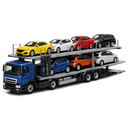
Multiple Vehicle
Covers all vehicles on multi-car carriers and rollback flatbeds.
Industries & Insurance Needs in Baltimore
County business mix is the local clue. In the county containing Baltimore, retail trade accounts for 13.3% of establishments, health care and social assistance 13.3%, and professional, scientific, and technical services 13.1%. So a towing company here often serves a broad mix of parking lots, medical campuses, office users, and service vendors rather than one narrow class of account.
That changes how you should present your operation to an underwriter. If your calls include retail parking enforcement, hospital-related removals, or commercial fleet pickups, say so clearly and separate those activities from heavy-duty recovery or roadside assistance if they are not the same exposure. The more precisely your submission describes where vehicles are picked up, how long they stay in your custody, and whether they move between lots, shops, or customer sites, the easier it is to review on-hook limits against the jobs that actually create loss potential.
What Makes Baltimore Different
Density is the difference. In a market with many businesses operating close together, towing work tends to involve more handoffs between property owners, managers, shops, fleets, and vehicle owners, and each handoff creates a documentation moment. That is why the local buying decision is less about carrying a token limit and more about making sure your on-hook coverage lines up with how vehicles move through your custody.
If your company handles private-property impounds in one part of town, dealer or repair-facility transfers in another, and after-hours commercial calls across the same week, ask for those workflows to be reviewed together. A policy built around one simple use case can leave questions once a loss involves loading, unloading, temporary storage, or a subcontracted leg of the job. The practical move is to map your most common trip types, note where custody begins and ends, and request a quote built around those actual transitions.
Our Recommendation for Baltimore
Start with your contracts and dispatch records, not a generic application. If a large share of your work comes from property managers, repair facilities, or commercial accounts, list those relationships and the kinds of vehicles you move most often. That gives the quote a better chance of matching your real custody exposure.
Next, review your on-hook limit against the highest-value vehicle you could reasonably have on the truck, not just the average call. If you use more than one truck type or split work between light-duty towing and account-based transport, ask whether each unit should carry the same assumptions. You should also flag any storage-lot involvement, after-hours releases, or subcontracted tows, because those details can change how a claim is evaluated.
Finally, if a customer base is price-sensitive, remember the local median household income is $59,623, so disputes over vehicle condition or release timing can become more contentious after a loss. Clear intake photos, signed condition reports, and a quote request that reflects your actual procedures are worth the extra step.
Get On-Hook Towing Insurance in Baltimore
Enter your ZIP code to compare on-hook towing insurance rates from carriers in Baltimore, MD.
Business insurance starting at $25/mo
FAQ
Frequently Asked Questions
Baltimore towing companies should include truck schedules, dispatch radius, storage-lot use, subcontracted work, and the kinds of vehicles they move. That helps the quote reflect real custody exposures instead of a simplified towing profile that can create problems later.
Baltimore city operators often work around dense commercial relationships, and Baltimore city reports 12,365 business establishments. That means more landlords, shops, and account customers may ask for clean proof of coverage before they release work or sign a vendor packet.
Baltimore area towing submissions should describe account types clearly, because county establishments are led by retail trade at 13.3%, health care and social assistance at 13.3%, and professional, scientific, and technical services at 13.1%. Different pickup environments can change how your exposure is reviewed.
Baltimore tow operators usually should not rely only on the average call. A better review starts with the highest-value vehicle you could reasonably load, unload, or transport, then checks whether your limit still fits mixed work across lots, shops, and commercial accounts.
Baltimore customers and vehicle owners may challenge condition, timing, or handling after a loss, especially when a release involves multiple parties. Intake photos, signed condition notes, and a clear chain of custody can make your coverage review and claim support much cleaner.
Maryland police rotation work often comes with strict proof-of-coverage expectations from the contracting party. If your trucks handle ordered tows, review your on-hook limit, certificate wording, and documentation process before you submit vendor paperwork or renew the agreement.
Most Maryland towing companies start with the highest-value vehicle they are reasonably likely to move, then compare that with contract requirements and actual dispatch history. That approach is more useful than choosing a limit based only on routine roadside calls.
Maryland dealer and auction moves can raise the value of the vehicles on your truck and increase the stakes of a damage dispute. If that work is part of your schedule, make sure the quote reflects it instead of treating your operation as roadside-only.
Sources
- 1.U.S. Census Bureau, County Business Patterns, Baltimore city(Baltimore city reports 12,365 business establishments, so local towing operators often face dense vendor networks, tighter release expectations, and more counterparties asking for clean certificates before a vehicle ever moves.; In the county containing Baltimore, retail trade accounts for 13.3% of establishments, health care and social assistance 13.3%, and professional, scientific, and technical services 13.1%.)
- 2.U.S. Census Bureau, ACS 5-Year Estimates, table B19013(The local median household income is $59,623, so disputes over vehicle condition or release timing can become more contentious after a loss.)
Updated July 5, 2026