
Updated July 16, 2026

Workers Compensation Insurance in Maryland
If you operate in Maryland, workers compensation insurance is part of staying aligned with state rules while protecting payroll, cash flow, and injured employees. The state requires coverage for employers with one or more employees. That means your process is tied to a specific regulator rather than a generic national workflow. It matters in a market with 480 active insurance companies and 153,800 businesses. Premiums here run about 16% above the national average, so budgeting matters. With that many carriers and employers, underwriting appetite is not uniform. One insurer may aggressively price healthcare payrolls while another prefers office-based professional services, so the spread between quotes for the same operation can be wider than you expect.
Maryland's economy leans heavily on Healthcare and Social Assistance, Professional and Technical Services, and Government. Employers often need a policy that fits a mix of desk work, patient care, and field operations. If your team works in Annapolis, Baltimore, Frederick, or along coastal counties exposed to storms and flooding, your safety practices and job classifications can affect both claims and quote options. Your first step is confirming who must be covered and how to request a quote that reflects your actual payroll.
What Workers Compensation Insurance Covers
Maryland workers compensation coverage can help pay benefits for work-related injuries and illnesses. In practical terms, an injured employee may receive medical expense benefits, lost wages, disability benefits, and vocational rehabilitation when recovery affects return-to-work timing. Death benefits are also part of the standard policy framework. The coverage is designed for workplace injury and occupational illness, so the claim focus is on whether the condition arose from job duties, not on fault.
For Maryland employers, the most important coverage question is whether your job mix is being classified correctly. A desk-based firm in Professional and Technical Services in Baltimore County will usually present a very different risk profile than a healthcare employer in Annapolis or a food-service operation near a busy tourism corridor. That classification affects how the policy responds and how premium is calculated. The policy also includes employer liability coverage, which can help protect the business from certain employee injury claims that fall outside the core benefits system.
Maryland requirements are straightforward on the front end. Coverage is mandatory for employers with 1+ employees, while sole proprietors, partners, and corporate officers are listed as exemptions. Keeping payroll, employee class codes, and injury documentation organized from day one can make benefit handling faster and help avoid delays when a claim is submitted.

Medical Expenses
Helps cover approved medical treatment for work-related injuries

Lost Wages
Replaces approximately two-thirds of lost income
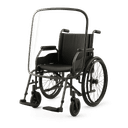
Disability Benefits
Temporary and permanent disability payments

Vocational Rehabilitation
Training to help injured employees return to work

Death Benefits
Financial support for dependents of deceased workers

Employers Liability
Helps protect against lawsuits from injured employees where workers comp benefits may not apply
Workers Compensation Insurance Requirements in Maryland
- Maryland requires workers compensation coverage for employers with 1+ employees, though sole proprietors, partners, and corporate officers are listed as exemptions.
- Employers should keep payroll, class codes, and incident records organized for the claim process.
- Maryland does not publish a separate list of state-specific endorsements, so confirm coverage decisions with the carrier based on your industry and employee duties.
- Because premiums here run above the national average, a policy may price differently than a national average quote even when payroll is similar.
How Much Does Workers Compensation Insurance Cost in Maryland?
Workers compensation insurance has no flat monthly sticker price. Insurers rate it per $100 of payroll, so the premium scales with what you actually pay your team.
Annual payroll
$100,000
example figure
Typical rate
$0.75 - $2.74
per $100 of payroll
Estimated premium
$750 - $2,740
per year
A business with $100,000 in annual payroll at a rate of $0.75 - $2.74 per $100 of payroll would see premiums of $750 - $2,740 per year. Construction and other manual classes rate toward the top of that range, while clerical work sits near the bottom. In North Dakota, Ohio, Washington, and Wyoming, employers buy this coverage from the state fund rather than from private carriers.
Workers compensation insurance cost in Maryland runs above the national average, which means budgeting matters. Many businesses see premiums in a typical monthly range starting at $55 to $300, but the actual amount depends on payroll, job classification, experience modification rate, claims history, and state regulations. Since the policy is priced per $100 of payroll, a higher payroll base or a more hazardous class code will move the quote upward. Cleaner claims history can help reduce the rate over time.
Maryland's market also has 480 active insurance companies, which creates room to compare offers. A business in Healthcare and Social Assistance, the state's largest employment sector, may see different pricing pressure than a Professional and Technical Services office with lower injury exposure. The state's small-business-heavy economy matters too. For those owners, a quote that flexes with seasonal headcount and tight payroll budgets is often the difference between staying insured and letting coverage lapse.
Risk conditions can also influence premium expectations. Maryland's overall climate risk is moderate, but hurricanes and flooding are rated high, and severe storms and winter storms are also relevant. Those hazards can affect workplace safety planning, missed work time, and claim frequency in some locations, especially coastal or low-lying areas.
| Benefit Type | What's Provided | Typical Amount |
|---|---|---|
| Medical Coverage | Approved work-related medical treatment | Covered medical costs, no deductible |
| Lost Wages | Income replacement while recovering | 60-75% of average weekly wage |
| Temporary Disability | Benefits during recovery period | Until return to work or MMI |
| Permanent Disability | Benefits for lasting impairments | Based on impairment rating |
| Vocational Rehab | Retraining if unable to return to prior job | State-determined benefits |
| Death Benefits | Income for surviving dependents | Funeral costs + ongoing income |
Medical Coverage
- What's Provided
- Approved work-related medical treatment
- Typical Amount
- Covered medical costs, no deductible
Lost Wages
- What's Provided
- Income replacement while recovering
- Typical Amount
- 60-75% of average weekly wage
Temporary Disability
- What's Provided
- Benefits during recovery period
- Typical Amount
- Until return to work or MMI
Permanent Disability
- What's Provided
- Benefits for lasting impairments
- Typical Amount
- Based on impairment rating
Vocational Rehab
- What's Provided
- Retraining if unable to return to prior job
- Typical Amount
- State-determined benefits
Death Benefits
- What's Provided
- Income for surviving dependents
- Typical Amount
- Funeral costs + ongoing income
Prices shown are general estimates, not guaranteed rates or quotes. Your actual premium will depend on the insurer, coverage selected, business details, location, claims history, and other underwriting factors. Learn about our pricing methodology.
Request a Quote Comparison
Enter your ZIP code to compare workers compensation insurance rates from top carriers.
Business insurance starting at $25/mo
Who Needs Workers Compensation Insurance?
Maryland employers with 1 or more employees need coverage under state requirements. That includes businesses in Baltimore, Annapolis, Frederick, and across the state's 153,800 business establishments, many of which are small operations that still need to meet the same coverage mandate once they hire. Sole proprietors, partners, and corporate officers are listed as exemptions, but the exemption list is not the same as a recommendation to go uninsured. It just means eligibility differs by ownership structure.
Healthcare employers are a major fit for this coverage because Healthcare and Social Assistance is Maryland's largest employment sector. Those employers often need protection for lifting injuries, exposure-related illness, and return-to-work coordination. Professional and Technical Services firms, which account for 13.2% of employment, also commonly need a policy even when most work is office-based. The state requirement turns on having employees, not just on physical labor. Government-related employers and retail trade businesses also represent meaningful parts of the Maryland economy and may need coverage for staff who split time between desks, service counters, warehouses, or field locations.
If your business has seasonal staff, growing payroll, or a mix of full-time and part-time employees, a quote should be built around current headcount and class codes rather than last year's assumptions. That is especially important in accommodation and food service, where employee turnover and job duties can change quickly.
| Requirement | What Maryland law says |
|---|---|
| Workers compensation | Generally required once you have your first employee. Some roles are exempt, so confirm current thresholds before you hire. |
| Where to verify | Maryland Insurance Administration publishes current requirements, consumer guides, and license lookups. |
Workers Compensation Insurance by City in Maryland
Workers Compensation Insurance rates and coverage options can vary across Maryland. Select your city below for localized information:
How to Buy Workers Compensation Insurance
Start by confirming whether your business structure and headcount place you under Maryland's requirements. Coverage is mandatory for employers with 1+ employees, so your buying process should be set up to match the state regulator's expectations. Before requesting a quote, gather current payroll totals, employee job descriptions, class codes, prior claims information, and any return-to-work or safety program details you already use.
Next, compare carriers that are active in Maryland. The state lists 480 active insurance companies, which gives you a starting point. The right policy depends on how each carrier treats your industry, payroll mix, and claims history. If you operate in healthcare, technical services, retail, or food service, ask how the carrier handles those class codes and whether it offers reporting tools that match your payroll cycle.
When you request a quote, be ready to explain where employees work, how often duties change, and whether any staff are exempt under the state rules. Maryland's exemption list includes sole proprietors, partners, and corporate officers, so ownership structure should be documented clearly. Because premiums here run above the national average, it is worth asking each carrier how they handle experience modification rate, payroll audits, and class code changes. If your workforce is spread between Annapolis, Baltimore, and other counties, ask how location and jobsite mix are reflected in the quote. Finally, confirm how the carrier and your agent will help you file and manage claims if a workplace injury or occupational illness occurs. Request a quote through CPK Insurance to compare your options with participating licensed providers.
How to Save on Workers Compensation Insurance
The most reliable way to lower your cost is to control the factors that actually move premium: class codes, payroll accuracy, claims history, and experience modification rate. Even small improvements in classification and reporting can matter for a Maryland small business. If you have a mixed workforce, make sure office staff, field staff, and clinical staff are separated correctly so you are not paying a higher rate on payroll that should be in a lower-risk class.
A formal safety program is especially useful in Maryland's larger employment sectors, including healthcare, professional services, and retail. Training that addresses lifting, slips, repetitive-motion injuries, and incident reporting can help reduce workplace injury frequency and support a cleaner claims record. Since Maryland has high hurricane and flooding risk, employers in affected counties should also plan for safer access routes, temporary work adjustments, and continuity steps that reduce injury exposure during severe weather and winter storms.
Use return-to-work planning to reduce lost wages benefits exposure when an employee is recovering. If employees can resume modified duties sooner, that can help contain claim duration. Also, keep your payroll records current, because the state's pricing structure is based on payroll and underreporting or overreporting creates problems at audit time. For many small businesses, pay-as-you-go billing can help match premium to actual payroll instead of a large estimated amount.
Our Recommendation for Maryland
For Maryland buyers, the best first step is matching your payroll, class codes, and employee mix to the state's mandatory coverage rules rather than shopping by price alone. If you have 1 or more employees, plan on carrying coverage and keep your records ready for the state filing process. With 480 insurers and premiums above the national average, a clean application can matter as much as the carrier name.
I would focus on three things: accurate job classification, a written safety program, and a quote comparison that includes payroll audit handling. If your business is in healthcare, professional services, retail, or food service, ask how the carrier handles those sectors specifically.
FAQ
Frequently Asked Questions
Yes. Workers compensation is mandatory in Maryland for employers with 1+ employees, so the requirement starts as soon as you hire beyond the exempt ownership structures listed by the state.
It may help pay for medical expenses, lost wages, disability benefits, vocational rehabilitation, and death benefits for work-related injuries or illnesses, and it also includes employer liability coverage in the product details.
The actual cost depends on payroll, class codes, claims history, experience modification rate, and industry risk, with typical monthly premiums ranging from $55 to $300.
Your rate is influenced by employee classification codes, total annual payroll, experience modification rate, state regulations, industry risk level, and claims history.
Start with payroll totals, job descriptions, and class codes, then compare carriers active in Maryland while confirming how they handle your industry and payroll reporting.
Sole proprietors, partners, and corporate officers are listed as exemptions, so their treatment depends on the business structure and how the policy is set up.
Claims are filed through the state regulator, so employers should follow that process and keep injury, payroll, and classification records ready.
Use accurate class codes, maintain a formal safety program, keep claims history clean, use return-to-work planning, and compare multiple carriers active in Maryland.
Updated July 16, 2026