







































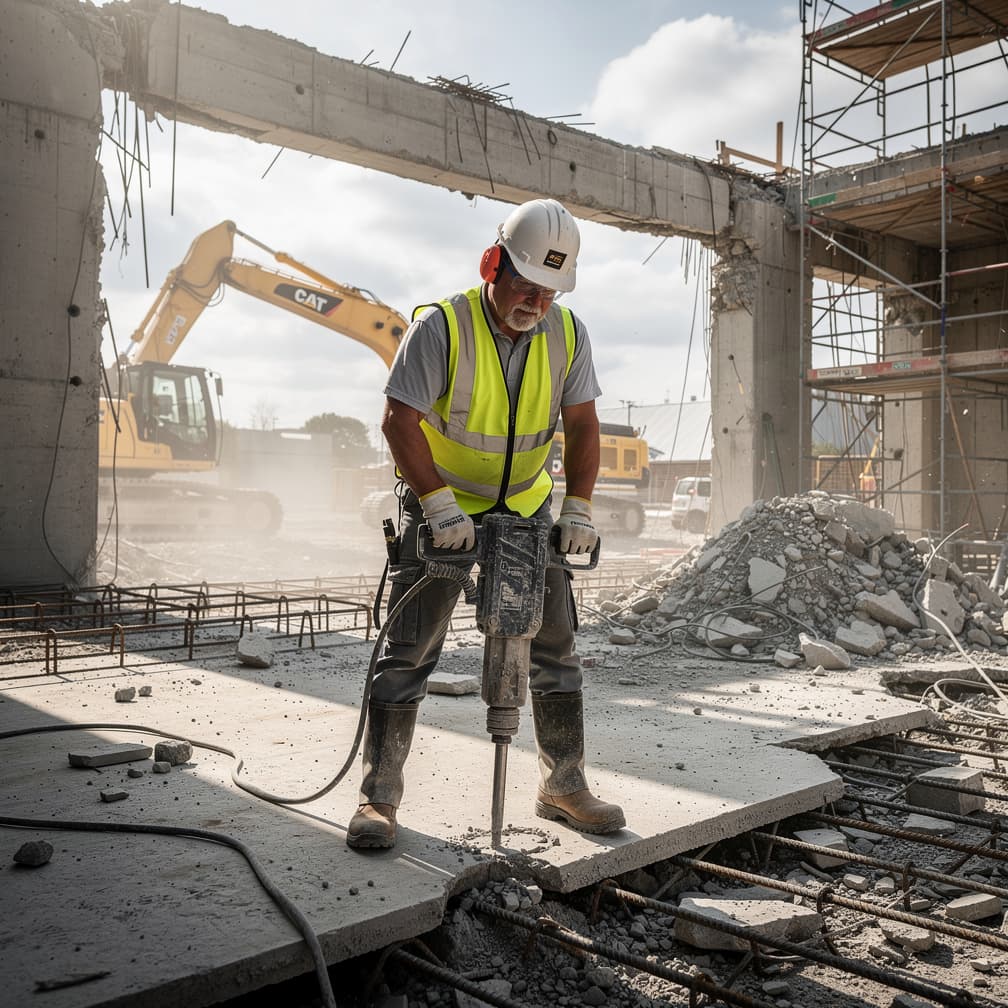

As a demolition contractor in Boston, you inherit every hazard the previous owner left inside the walls. Unstable framing, a floor that has been carrying water for a decade, and utility lines that the drawings put somewhere else: none of that is your fault and all of it is your liability once the machine starts. Demolition contractor insurance in Boston is priced against that reality. Your crew's injuries, a neighbor's damaged property, and a bystander who should not have been inside the fence are three different claims from one bad morning, and they do not all land on the same policy. Knowing which one answers which is the difference between a phone call and a lawsuit you fund yourself. The breakdown below sorts them out.
What Makes Boston Different
Additional insured is a phrase most owners use without knowing what they are asking for. It usually means the owner wants your policy to defend them if your work injures somebody or damages something. The endorsement form matters: some versions reach the owner only for your ongoing operations, and stop the day you leave the site. Demolition claims do not always arrive that day. A settling foundation or a wall that was compromised during a teardown can surface long after the last load left for the transfer station. Ask whether the wording your Boston contract demands includes completed operations, because that is the difference between a claim answered and a claim argued. Then make sure your certificate matches the endorsement, since a certificate is a summary and the endorsement is what a court reads. The Massachusetts Division of Insurance publishes consumer guidance on how policy documents fit together.
Local Risk Factors in Boston
Freezing weather slows a teardown in ways that create their own claims. Frozen ground resists an excavator, ice forms on ramps and temporary access paths, and the rubble underfoot becomes a surface nobody can walk safely. Slip and fall claims from anyone on the site, an inspector, the owner's rep, a delivery driver, start exactly there, and General Liability may answer for those third-party injuries depending on the circumstances and your site controls. Your own crew is a separate line and a separate claim. Salting and clearing paths on a demolition site is harder than on a finished property because there is no finished surface to clear. That is a cost worth budgeting and worth documenting in Boston, since what you did about the ice is the first thing anyone asks in Massachusetts after a fall.
What Coverage Does a Demolition Contractor in Boston Need?
General Liability
Owners, general contractors, and permit offices ask for this one by name before a crew comes through the gate. It is the line that typically answers when your teardown injures somebody who does not work for you, or damages property you were not hired to remove. Damage to the structure in your care, contamination, and earth movement often sit outside it, so read those exclusions before you lean on it.
Example: A brick parapet drops outside the fence line and cracks the windshield and hood of a car parked at the curb. The owner's repair bill and the claim behind it are the kind of third-party damage this line is meant to answer.
Workers Compensation
Crews work under unstable structures with heavy debris underfoot, which is why this is the line a general contractor checks first on your certificate. Medical costs and lost wages from an on-the-job injury are typically what it addresses, rated per $100 of payroll. Rules on who must carry it differ by state, and it does nothing for injuries to people who do not work for you.
Example: A laborer clearing rubble takes a chunk of masonry to the ankle and misses six weeks. Treatment and a share of the missed wages typically fall inside this line, and the claim follows your experience modification into next year's price.
Commercial Auto
Trucks, trailers, and the loads on them put your business on public roads, and that exposure never touches a general liability form. Damage you cause with a company vehicle, and damage to the vehicle itself, are what this line is usually written for. Personal auto policies commonly exclude business use, which is the gap contractors find after a crash rather than before one.
Example: A loaded trailer clips a utility pole on the way to the transfer station and spills concrete across a lane. The pole owner, the cleanup, and the damage to your truck could all run through this coverage.
Tools & Equipment (Inland Marine)
Everything that earns you money moves: breakers, saws, torches, hand tools, and the attachments that live on the trailer between sites. Scheduled equipment coverage is built around a list, and what is on the list is what gets settled. Wear and tear, mechanical breakdown, and gear you never added after buying it typically sit outside it, so the schedule is the whole game.
Example: A trailer is emptied overnight behind temporary fencing and the hydraulic breaker is gone by the first shift. If the breaker was on your schedule, replacement might be handled here; if it was not, it is your loss.
Commercial Umbrella
Contracts sometimes demand a limit that runs past what a primary policy carries, and buying that limit twice is expensive. An umbrella sits above your liability and auto lines and can extend the ceiling once the underlying limit is exhausted. It follows the underlying form, so an exclusion below is generally an exclusion above, and it does nothing to widen what is covered.
Example: A wall collapse injures two people and damages the storefront next door, and the primary limit is spent on the injuries alone. The remainder of the property claim could reach the umbrella sitting above it.
How Much Does Demolition Contractor Insurance Cost in Boston?
Demolition Contractor Insurance is a bundle of separate policies, priced separately. The ranges below are typical figures for Boston for each line, except workers compensation, which is rated per $100 of payroll; a quote prices each one against your own operations.
| Coverage | Typical range | What moves your price |
|---|---|---|
| General Liability Insurance | $650 - $2,600 per month | Industry and risk classification, annual revenue, number of employees |
| Workers Compensation Insurance | $0.75 - $2.74 per $100 of payroll | Employee classification codes, total annual payroll, experience modification rate |
| Commercial Auto Insurance | $575 - $2,000 per month | Fleet size and vehicle types, driver records and experience, coverage limits and deductibles |
| Inland Marine Insurance | $120 - $600 per month | Total insured value of the scheduled property, type and age of the equipment, where it is stored and how far it travels |
| Commercial Umbrella Insurance | $240 - $950 per month | Umbrella limit requested, limits carried on the underlying policies, loss history on those underlying policies |
Prices shown are general estimates, not guaranteed rates or quotes. Your actual premium will depend on the insurer, coverage selected, business details, location, claims history, and other underwriting factors. Learn about our pricing methodology.
What Are the Insurance Requirements for a Demolition Contractor in Boston?
Workers' comp is generally required once you have your first employee. Massachusetts generally requires employers to carry workers' compensation at that point. Common exemptions include sole proprietors and partners. Confirm current thresholds with your state's workers' compensation agency before you hire.
State auto liability minimums apply to business vehicles. Massachusetts's minimum auto liability limits are $25,000/$50,000/$30,000 (bodily injury per person / per accident / property damage). Contracts and lenders often require more than the state floor.
Where to verify licensing and coverage rules. The Massachusetts Division of Insurance publishes consumer guidance and current insurance requirements for Massachusetts businesses. When a contract or lease demands specific wording, the Massachusetts Division of Insurance's guidance is the authoritative place to check.
Get Your Demolition Contractor Quote in Boston
Compare rates from multiple carriers. Free quotes, no obligation.
Operating in Boston
- Payroll audits arrive after the year ends, and a crew that was classified casually at binding becomes an invoice nobody budgeted for once an auditor reads the actual job descriptions.
- An owner taking down one small structure may never have bought a certificate before, so a Boston teardown can start with an afternoon of explaining what additional insured status means and why a certificate is not a policy.
- Vibration travels further than dust. Work near an older structure and the complaint can arrive weeks later, from a party you never met, about damage nobody photographed before you started.
- A property manager in Boston can hold your gate key until a current certificate is on file, so a policy that lapses over a billing glitch stops the job before anyone notices the paperwork problem.
How to Buy: Advice for Boston Owners
Subcontracted crews are your exposure until you prove otherwise. If you hire another outfit to run an excavator or haul debris, collect their certificate before they arrive at your Boston site, verify it names you where the contract says it should, and diary the expiration date. A subcontractor exclusion on your own General Liability is common, and it turns their uninsured moment into your uninsured moment. Their truck matters too, since your Commercial Auto form may treat hired and non-owned use differently than you expect. The crews you call at short notice are the ones you know least, so the paperwork carries the whole relationship. Check the Massachusetts Division of Insurance's guidance before deciding how to document a subcontractor arrangement. Then compare what participating carriers charge to cover that arrangement properly rather than assuming yours already does.
FAQ
Demolition Contractor Insurance in Boston: FAQ
It depends on the form. Completed operations addresses claims that arise after your work is finished, and demolition produces exactly those: a settling foundation, a compromised party wall, a neighbor's cracked plaster that shows up months later. Some additional insured endorsements stop the day you leave the site. If a contract expects protection beyond that point, the wording has to say so and your endorsement has to match.
Payroll by class, annual receipts, the kinds of structures you take down, a vehicle and trailer list, an equipment schedule with replacement values, and three years of loss runs. Incomplete answers get priced defensively, and the equipment schedule is the one contractors most often send stale. Get it all on one page before you approach the market, then send the same file to every participating carrier in Massachusetts so the comparison is fair.
Binding can be quick when your file is complete, but an endorsement an owner demands, such as specific additional insured wording or a waiver of subrogation, can take days that nobody warns you about. Carriers and their timing sit outside your control. Start the conversation when you bid rather than when you mobilize, and compare quotes from participating carriers in Massachusetts while you still have time to switch.
Most owners and general contractors want proof of coverage before they let a crew on site, and many will not accept a bid without it. That is a contract practice rather than a rule, and it applies to a one-day teardown as often as to a large project. Getting a policy in place before you bid keeps you from losing work over a document you could have had in a week.
Price is built from your payroll, the structures you take down, how close they sit to occupied buildings, your equipment values, and your claim history. Two crews with the same revenue can land far apart on the same submission. Published ranges describe a market rather than your business. The fastest way to a real number is a clean file: payroll by class, a vehicle list, an equipment schedule, and three years of loss runs.
General Liability is the line that usually responds to third-party property damage caused by your work, subject to the form's exclusions. Damage from earth movement or vibration during a teardown can be treated differently, and property in your care and control often sits outside the form entirely. Ask a participating carrier to walk through those three situations with a real adjacent structure in mind before you assume the answer.
Sources
- 1.Massachusetts Division of Insurance(Massachusetts Division of Insurance publishes consumer guidance for insurance buyers.)


