







































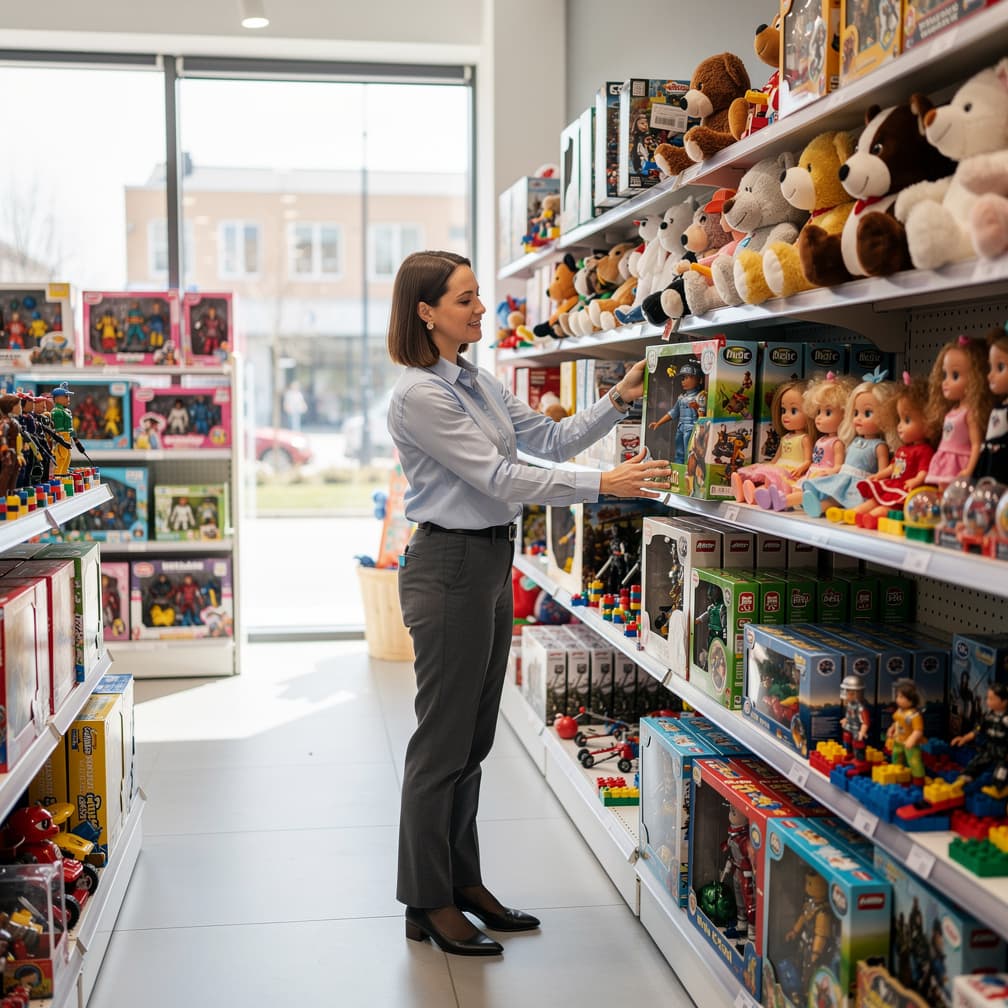

Payroll drives the Workers' Compensation piece of a toy store's bill, and square footage barely moves it. A part-time clerk climbing a ladder for a top-shelf playset is the claim that gets priced, and the rate arrives per $100 of payroll instead of as a tidy monthly figure. That is how two shops of the same size on the same block land in different places when they buy toy store insurance in Boston. Hours, duties, and whether anyone assembles bikes in the back all feed the class code. Your loss runs feed the rest. Participating carriers in Massachusetts weigh an identical submission differently, which is the whole reason an hour of comparing is worth spending. Below, each input is unpacked in the order a quote asks for it.
What Makes Boston Different
Importing your own line changes what a carrier thinks you are, and it changes the price accordingly. A shop buying from a distributor is a retailer; a shop importing containers is closer to a maker. Bring in your own branded toys and the manufacturer's share of a product claim lands on you. There is no upstream vendor left to point at once a parent's lawyer files something. Private label, direct import, and second-hand resale all raise questions a standard retail quote skips over. Say it up front, because a misdescribed operation can undo a policy at the worst possible moment. A quote in Boston built on the wrong description is a number you cannot safely rely on. Tell whoever prepares your submission in Massachusetts exactly where every product on the shelf came from.
Local Risk Factors in Boston
Freezing weather breaks pipes above ceilings, and the water comes down on whatever is stacked below, which in a toy store is the season's stock. A burst pipe over a backroom can ruin more value in an hour than a burglary would in a night. Commercial Property may respond to water damage from a burst pipe, though most forms expect the heat to have been left on and the building maintained, and a frozen pipe in an unheated closed store can be excluded on exactly that basis. Keep the thermostat honest through a holiday closure. Ask a carrier in Massachusetts what the form requires of a vacant or closed store, since a Boston shop that shuts for a week may meet a definition it never expected.
What Coverage Does a Toy Store in Boston Need?
General Liability
A landlord, a mall office, or an event host asking for proof of coverage is asking about this line. It is the one most likely to answer when a customer is hurt on your floor, or when a toy you sold injures somebody weeks later, subject to your limit and the form's exclusions. Damage to your own stock lives elsewhere.
Example: A four-year-old pulls a stacked display of board games down on herself while her father is at the register, and a demand letter with clinic bills follows six weeks later. That claim could fall to your per occurrence limit.
Commercial Property
Flood and slow wear typically sit outside it, and so does stock that simply is not there at count time. What it is built around is sudden damage to the space you occupy, your fixtures, and the inventory inside: fire, storm, a burst pipe, a break-in through the front door. Lost income is often attached to the same form.
Example: Wind lifts a corner of the roof overnight and rain reaches four pallets of boxed stock before anyone opens up. The ruined inventory and the ceiling repair might both land inside this form, after the deductible.
Workers Compensation
Payroll is the rating base, and staff are the reason to carry it. A clerk who falls off a ladder reaching for a top shelf, or strains a back unloading a pallet, travels this road rather than the liability one. Whether a sole owner is included is a choice made when the policy is written. It has nothing to say about a customer's injury.
Example: A seasonal hire steps off a stool holding a boxed playset, twists an ankle, and misses three weeks of shifts. Medical bills and a share of the lost wages are what this line is meant to handle.
Business Owners Policy
Buying the liability and property pieces separately works. For a small shop, this bundles them into one form, one bill, and one renewal date, commonly with lost income attached. Sublimits are the catch: property of others, signage, and equipment breakdown can each be smaller than an owner assumed, so read those numbers before the price.
Example: A fire in a Boston storefront takes the fixtures, the backroom stock, and six weeks of trading. One form can be written to answer for the property and the lost income together, subject to its limits.
How Much Does Toy Store Insurance Cost in Boston?
Toy Store Insurance is a bundle of separate policies, priced separately. The ranges below are typical figures for Boston for each line, except workers compensation, which is rated per $100 of payroll; a quote prices each one against your own operations.
| Coverage | Typical range | What moves your price |
|---|---|---|
| General Liability Insurance | $55 - $180 per month | Industry and risk classification, annual revenue, number of employees |
| Commercial Property Insurance | $85 - $250 per month | Building value and construction type, roof age and condition, fire protection class |
| Workers Compensation Insurance | $0.75 - $2.74 per $100 of payroll | Employee classification codes, total annual payroll, experience modification rate |
| Business Owners Policy Insurance | $100 - $280 per month | Annual revenue and industry class, building and contents values, square footage and building age |
Prices shown are general estimates, not guaranteed rates or quotes. Your actual premium will depend on the insurer, coverage selected, business details, location, claims history, and other underwriting factors. Learn about our pricing methodology.
What Are the Insurance Requirements for a Toy Store in Boston?
Workers' comp is generally required once you have your first employee. Massachusetts generally requires employers to carry workers' compensation at that point. Common exemptions include sole proprietors and partners. Confirm current thresholds with your state's workers' compensation agency before you hire.
Flood damage is typically excluded from standard policies. Standard commercial property and builders-risk-type policies typically exclude flood. Given Boston's coastal flood exposure, a separate flood policy is worth pricing; FEMA's National Flood Insurance Program is the usual starting point.
Where to verify licensing and coverage rules. The Massachusetts Division of Insurance publishes consumer guidance and current insurance requirements for Massachusetts businesses. When a contract or lease demands specific wording, the Massachusetts Division of Insurance's guidance is the authoritative place to check.
Get Your Toy Store Quote in Boston
Compare rates from multiple carriers. Free quotes, no obligation.
Operating in Boston
- Consignment toys from a local maker sit on your shelf as property of others, and a policy knows nothing about them until somebody writes down what they are worth.
- A dead point-of-sale terminal stops sales without breaking a window, and equipment breakdown is commonly sold as an add-on rather than something already sitting inside the form you bought.
- Shoplifting rarely looks like a break-in, and stock that goes quietly missing from a Boston shop is the kind of loss most property forms decline to treat as theft at all.
- Suppliers can require an authorized dealer in Massachusetts to carry stated limits, and that clause lives inside a dealer agreement most owners sign once and never reopen.
How to Buy: Advice for Boston Owners
Lenders and equipment finance companies ask for proof before funds move, and their clause usually names itself as loss payee on the gear it paid for. Loss payee is not additional insured, and a certificate that confuses the two comes straight back. Find out which one is wanted, and use the exact legal name and address the finance company behind a Boston storefront build-out gives you. The same discipline applies to the Commercial Property schedule: a point-of-sale system, a security system, or a lighting rig belongs on a list with a value beside it. Equipment breakdown is commonly an add-on to a Business Owners Policy rather than a given, so ask whether a dead register is a covered loss or an errand. The Massachusetts Division of Insurance publishes consumer guidance on commercial property coverage. Once the schedule is right, CPK can carry it to participating carriers and bring back numbers you can line up.
FAQ
Toy Store Insurance in Boston: FAQ
That is the claim General Liability is built around: bodily injury to a customer on your premises. It can respond to medical bills and to a lawsuit, subject to your limit, your deductible, and what the form excludes. Two things decide how it actually goes. The first is your per occurrence limit, since an injury to a child can outrun a small one. The second is the file you built that same day: photographs of the aisle, an incident note, and the names of whoever was working.
Goods sold are usually handled inside a general liability form, which might respond when something you sold injures somebody later. The shop gets named because the shop sold it, even though you did not make it. Ask two questions before leaning on that. Whether your suppliers list you on a vendor endorsement, and whether the form treats items you imported or private-labeled differently from items bought through a distributor. Importing moves you closer to the manufacturer's side of the argument.
Rarely in the way owners hope. Pulling stock is a cost rather than physical damage, and Commercial Property is generally written around damage to property, so boxes you may no longer sell can fall outside it. Recall expense is sold separately where a carrier offers it at all. The injury side is a different route: if a recalled item hurt somebody, that is a liability question rather than a stock question. Ask about both before a notice lands.
Not until renewal, under most forms. The per occurrence figure is what a single injured child's claim can reach, while the aggregate is the pot every claim that year drinks from. A slip at the demo table in one week and a product argument over a scooter in another are both drawing on that same pot, so the second one meets whatever the first left behind. Ask whether legal defense spends it as well, since a long product fight can drain money you meant for medical bills.
It depends on how the stock left. A forced entry through a broken door is a burglary, and Commercial Property can respond to it, subject to your deductible. Inventory that simply is not there at count time is a different matter: mysterious disappearance is commonly excluded, and shortage discovered only during a stocktake often lands in that exclusion. Cameras, an alarm, and a documented count help the claim you can prove and cannot rescue the one you cannot.
It bundles the common pieces, usually liability and property in one form, and for a small shop that is often the practical structure. Bundled is not complete. Employee injuries sit outside it, flood generally sits outside it, and equipment breakdown is commonly an add-on rather than a given. Ask a participating carrier in Massachusetts which sublimits apply, since property of others, signage, and stock away from the premises can each carry a smaller number than you assumed.
Sources
- 1.Massachusetts Division of Insurance(Massachusetts Division of Insurance publishes consumer guidance for insurance buyers.)
- 2.FEMA / FloodSmart(Flood coverage is typically purchased separately; FEMA administers the National Flood Insurance Program.)


