







































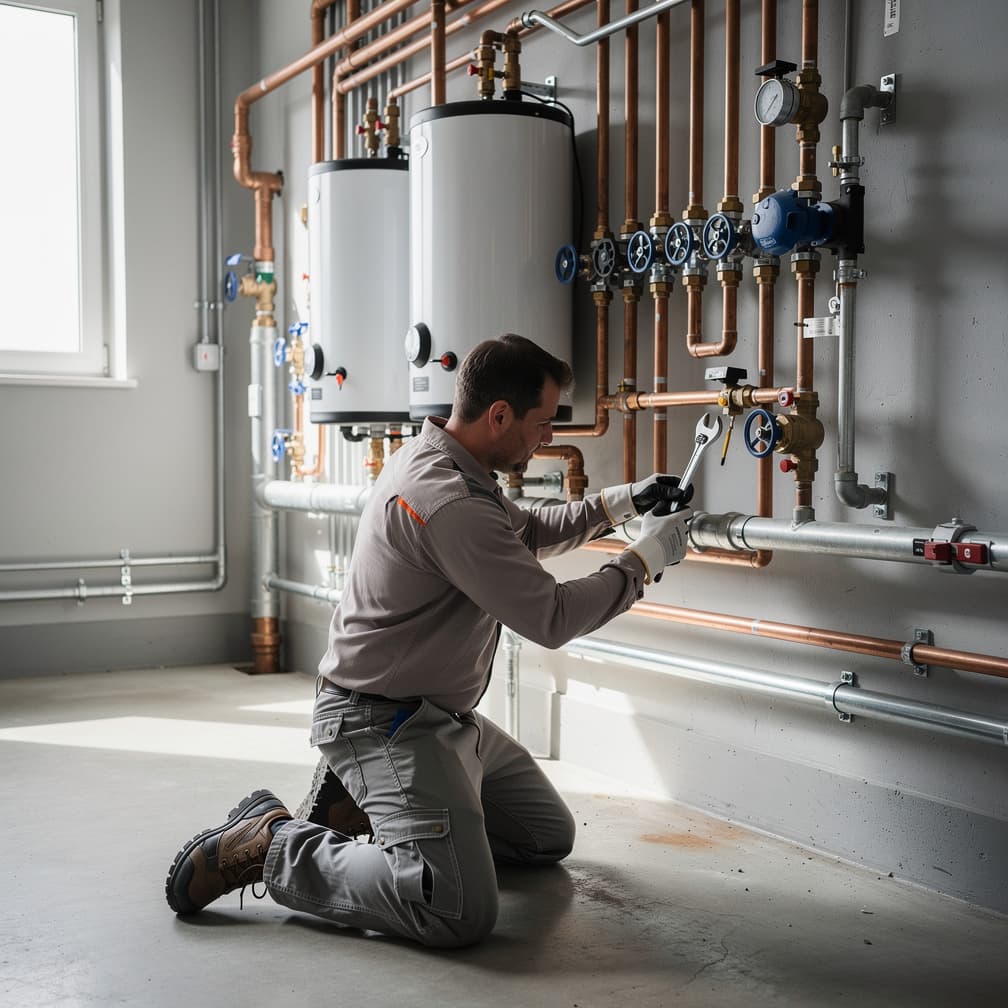

General Liability for plumbers is priced in a band, typically between $35 and $130 a month, and where you land inside it has little to do with luck. Payroll, the mix of service versus new construction, and whether you touch water heaters all move the number. Plumbing insurance in Cambridge gets quoted off those answers, so the accuracy of what you report is a pricing decision rather than paperwork. Underreport payroll and the audit finds it later; overstate revenue and you pay for work you never sold. Claims history matters more than most owners expect, and one water damage payout can follow you through three renewals. The cost table further down shows the ranges by line. Read them as the start of a conversation about limits, then weigh quotes from participating carriers before the next Cambridge job begins.
What Makes Cambridge Different
Payroll is the engine under a plumbing premium, and helpers, apprentices, and licensed techs are not priced alike. Dense markets pay more per hour, so an identical crew produces a bigger payroll figure and a bigger quote. That is not a penalty, since higher wages usually track the more valuable work that comes with them. A commercial account in Cambridge can demand higher limits, and limits cost money in a straight line. Claims history multiplies all of it: one open water damage file can outweigh five quiet years. Deductibles are the lever owners forget, and raising one on equipment can buy a limit somewhere useful. What you control is the accuracy of what you report and the shape of the work you accept in Cambridge. The rest is arithmetic somebody else does with your numbers.
Local Risk Factors in Cambridge
Freezing weather brings the busiest week this trade has, and the busiest week is the riskiest one. Burst supply lines, split hose bibs, and frozen mains fill a schedule with emergency work in buildings you have never entered. Thaw damage is already done when you arrive, and the customer will still remember who was standing there when the ceiling opened. General Liability may respond where your work damages a customer's property, though damage that happened before you arrived is not your claim to answer. Document the condition of a Cambridge property before touching a valve, since that photograph is the entire defense later on. A freeze job in Massachusetts pays well and needs paperwork discipline to stay profitable.
What Coverage Does a Plumbing in Cambridge Need?
General Liability
Landlords, general contractors, and property managers ask for this one by name before your first day on site. It typically answers third-party claims: warped flooring under a failed connection, a tenant who slips on water in a hallway, a ceiling that lets go two floors below. Redoing your own defective joint generally sits outside it.
Example: A shutoff valve fails overnight after a routine swap and the kitchen below is ruined; General Liability can help cover the restoration bill and the claim that arrives behind it.
Workers Compensation
An apprentice pinned by a water heater on a basement stair is what this line exists for. Medical care and lost wages for an injured employee are typically its job, and general contractors often want proof or a waiver before anyone walks onto a site. Rules differ by state, and a helper paid on a 1099 may still count.
Example: A helper strains his back pulling a cast iron section out of a crawl space and misses six weeks of work; Workers Compensation may pick up the treatment and part of the lost pay.
Commercial Auto
A personal auto policy typically steps back the moment a van is used for the business, and that gap is what this line fills. Vehicles, trailers, and the people driving them are what it rates on, and injury claims from an accident tend to be the largest ones a plumbing shop ever sees. Damage to your own truck is usually a separate choice.
Example: A loaded van rear-ends a car while merging on the way to a call in Cambridge; Commercial Auto is generally where the other driver's injuries and your truck's repairs both get sorted out.
Tools & Equipment (Inland Marine)
Tools live in a truck, and a policy written on a building does not follow them out there. A hydro jetter, a camera reel, press tools, and the fittings behind the seat are typically scheduled here, with theft from a locked vehicle the claim this trade files most often. Items above a set value usually have to be listed individually.
Example: A trailer is cut loose from a job site overnight with a jetter still strapped down; a scheduled Inland Marine claim could put that equipment back on the road inside a week.
Commercial Umbrella
Where a general contractor's requirement runs past what your base policy carries, this is the less expensive way to reach the number. It sits above liability and auto, coming into play when one loss, a flooded floor or a bad intersection, exhausts the underlying limit. It cannot repair a coverage the policy beneath it never had.
Example: Water from a burst riser reaches four units and a retail tenant, and the demands outrun the base limit; a Commercial Umbrella might absorb what is left once the underlying policy is spent.
How Much Does Plumbing Insurance Cost in Cambridge?
Plumbing Insurance is a bundle of separate policies, priced separately. The ranges below are typical figures for Cambridge for each line, except workers compensation, which is rated per $100 of payroll; a quote prices each one against your own operations.
| Coverage | Typical range | What moves your price |
|---|---|---|
| General Liability Insurance | $130 - $430 per month | Industry and risk classification, annual revenue, number of employees |
| Workers Compensation Insurance | $0.75 - $2.74 per $100 of payroll | Employee classification codes, total annual payroll, experience modification rate |
| Commercial Auto Insurance | $270 - $750 per month | Fleet size and vehicle types, driver records and experience, coverage limits and deductibles |
| Inland Marine Insurance | $40 - $150 per month | Total insured value of the scheduled property, type and age of the equipment, where it is stored and how far it travels |
| Commercial Umbrella Insurance | $75 - $240 per month | Umbrella limit requested, limits carried on the underlying policies, loss history on those underlying policies |
Prices shown are general estimates, not guaranteed rates or quotes. Your actual premium will depend on the insurer, coverage selected, business details, location, claims history, and other underwriting factors. Learn about our pricing methodology.
What Are the Insurance Requirements for a Plumbing in Cambridge?
Workers' comp is generally required once you have your first employee. Massachusetts generally requires employers to carry workers' compensation at that point. Common exemptions include sole proprietors and partners. Confirm current thresholds with your state's workers' compensation agency before you hire.
State auto liability minimums apply to business vehicles. Massachusetts's minimum auto liability limits are $25,000/$50,000/$30,000 (bodily injury per person / per accident / property damage). Contracts and lenders often require more than the state floor.
Where to verify licensing and coverage rules. The Massachusetts Division of Insurance publishes consumer guidance and current insurance requirements for Massachusetts businesses. When a contract or lease demands specific wording, the Massachusetts Division of Insurance's guidance is the authoritative place to check.
Get Your Plumbing Quote in Cambridge
Compare rates from multiple carriers. Free quotes, no obligation.
Operating in Cambridge
- Slab leaks mean cutting concrete inside a finished home, and the dust, the noise, and the saw create ways to damage property that have nothing to do with plumbing.
- Torch work near old framing puts a fire on a delay timer, which is why hot work questions turn up on an application well before the price does.
- Permit and inspection timing can strand a job half-finished, and an open wall in somebody's kitchen stays your responsibility while everyone waits for an inspector.
- A homeowner in Cambridge may never ask for proof of coverage, which is exactly why an uninsured plumber ends up sued personally instead of through a policy.
How to Buy: Advice for Cambridge Owners
Certificates are administration until the morning one stops your crew at a door. Make a list of everyone holding yours: property managers, general contractors, the building with your name in a vendor portal. Each needs the replacement when your policy renews, and a renewal does not deliver itself. Ask a carrier how certificates and additional insured endorsements get issued, and whether wording changes cost extra mid-term. General Liability is the line most requests reference, though a contract asking for proof of Commercial Auto is common once vans are involved. Check the Massachusetts Division of Insurance's guidance before deciding how much proof to keep on file. Then weigh what participating carriers serving Cambridge charge and how they handle paperwork, because one of those shows up monthly and the other shows up on a bad morning.
FAQ
Plumbing Insurance in Cambridge: FAQ
Tools taken from a truck or trailer are typically an Inland Marine question rather than a liability one, since a policy written on your shop rarely follows property that moves. What responds usually depends on the schedule: what is listed, at what value, and whether high-value items were named individually. Locked vehicle conditions can apply. Keep serial numbers and photographs, because these claims move on documentation.
Once a vehicle is used for the business, a personal auto policy typically steps back, and that gap tends to surface after an accident rather than before one. Commercial Auto is the line built for a van hauling tools and parts between job sites. Where a tech runs calls in a personal pickup, ask about hired and non-owned coverage. A quote for Cambridge work should list every vehicle and every driver.
It extends your policy to another party for the work you do, which is why general contractors and property managers ask for it before your first day on site. The certificate is only a summary; the endorsement carries the actual promise. Wording varies, so a demand for primary and noncontributory status is a different request than a plain addition. Get the endorsement in hand before you sign anything.
Start with what your contracts demand, because that figure is not up for negotiation, then look at the worst realistic loss. One failed connection in a multi-unit building can reach several tenants at once, and a limit sized for house calls will not stretch that far. Where a required number sits above your base policy, an umbrella is usually the less expensive way to reach it. Compare offers at identical limits.
Claims history is a loud signal to an underwriter, and water losses run expensive relative to the small job that caused them. A single open file can outweigh several quiet years, especially where a building and its tenants were involved. The effect does fade with time and clean renewals. Documentation on the next job matters more than arguing about the last one.
Yes, and this trade sees it more than most, because a slow leak inside a wall gets discovered long after the invoice cleared. Completed operations coverage is the part of a liability policy aimed at that tail, so confirm it is included rather than assuming it. The customer's own insurer may come looking too, which is what subrogation means in practice. Keep the job file.
Sources
- 1.Massachusetts Division of Insurance(Massachusetts Division of Insurance publishes consumer guidance for insurance buyers.)


