







































Updated July 16, 2026

On-Hook Towing Insurance in Springfield
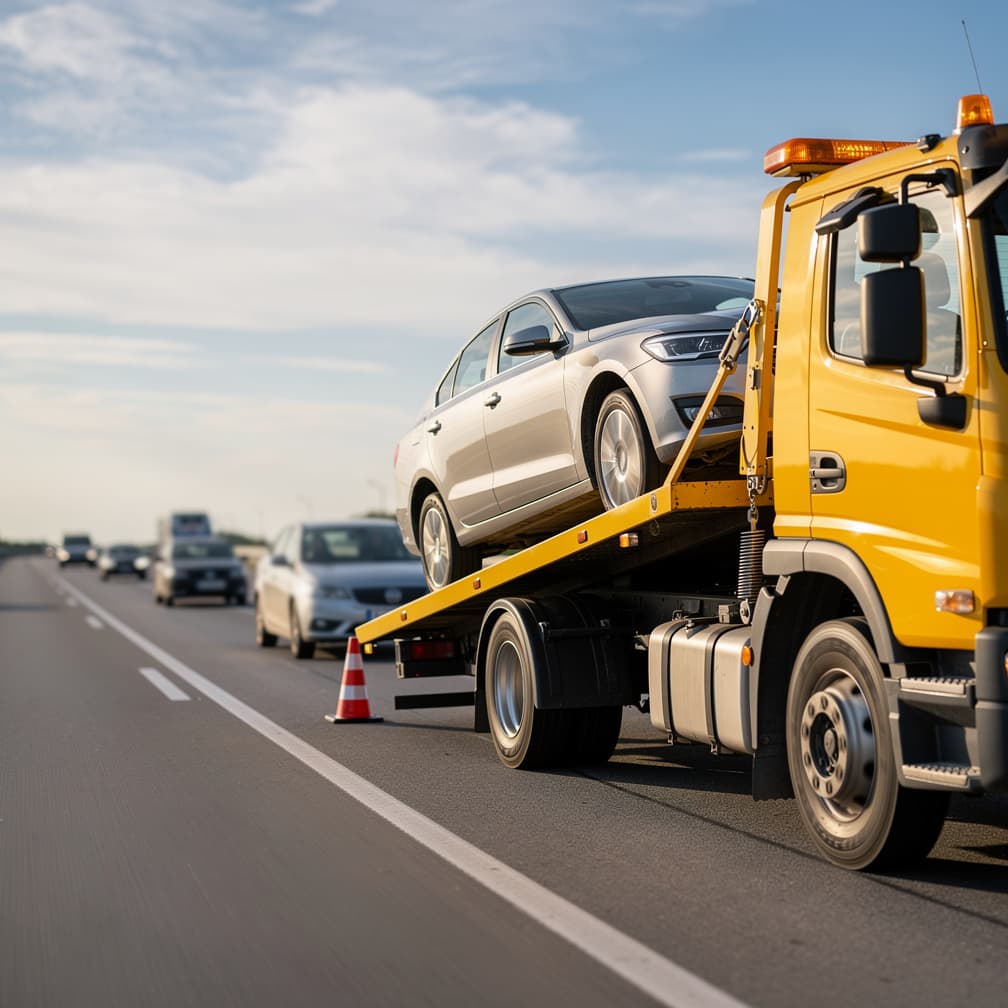
A single tow here can take you from a tight downtown curb to a hospital parking deck to a highway shoulder, all before lunch. Your policy review should center on where vehicles are picked up, how often your operators reload under time pressure, and what kinds of customer vehicles you handle. Claims in this market often come down to handoff details: when the vehicle was photographed, where it was hooked, whether a wheel-lift or flatbed was used, and who documented pre-existing damage before leaving the scene. Hampden County has 9,398 business establishments, which means your regular route likely runs through a dense mix of vendor lots and commercial properties where clients may demand proof of coverage before handing you an account. When you serve apartment complexes, repair shops, lenders, or private property managers, describe those specific dispatch patterns rather than labeling your operation as generic towing so your policy terms reflect how your trucks actually run.
On-Hook Towing Insurance Risk Factors in Springfield
Springfield's top risk factors include Winter storm damage, Ice dam damage, Frozen pipe bursts, and Snow load collapse.
Massachusetts has a moderate climate risk rating. Top hazards: Nor'easter (Very High), Hurricane (High), Flooding (High), Winter Storm (High). The state's expected annual loss from natural hazards is $1.2B, which influences on-hook towing insurance premiums and may affect coverage availability in high-risk areas.
What On-Hook Towing Insurance Covers
The practical question is not the basic definition of on-hook coverage. The real issue is where damage allegations tend to arise in your daily work and how your policy language responds to those moments. A tow through dense city blocks, a recovery from a snow-lined shoulder, or a removal from a narrow garage creates different contact points than a straightforward daytime transport from one open lot to another. You should review how the policy treats loading angle, wheel-lift use, bed approach, low-clearance vehicles, modified suspensions, and vehicles with pre-existing body damage that can be blamed on the tow after the fact.
This matters because operators often work in places where a customer is not standing beside the truck when the vehicle is picked up. That makes condition evidence and dispatch notes more important. Ask whether your form is written in a way that fits unattended tows, police-directed removals, dealer handoffs, and after-hours apartment or condominium calls. If your operation handles accident scenes, review whether the same procedures apply when a vehicle already has collision damage and the dispute later centers on what happened during winching, loading, or unloading.
A quote that works for older commuter cars may not fit late-model SUVs, electric vehicles, work vans with equipment inside, or specialty vehicles with low ground clearance. If your drivers switch between flatbeds and wheel-lift units, make sure the application and policy reflect that mix clearly.
Coverage Included
Collision on Hook
Covers damage to towed vehicles from collisions during transport.
Comprehensive on Hook
Covers theft, fire, and weather damage to vehicles being towed.
Loading & Unloading
Covers damage during the process of loading and unloading vehicles.
Winching Coverage
Covers damage to vehicles during winching and recovery operations.

Multiple Vehicle
Covers all vehicles on multi-car carriers and rollback flatbeds.
Industries & Insurance Needs in Springfield
Commercial property demand is what changes the conversation most. In Hampden County, retail trade accounts for 15.6% of establishments, health care and social assistance 13%, and other services 10.4%, so many towing accounts here are tied to parking control, customer vehicle movement, and time-sensitive pickups around businesses that want clean documentation. For an on-hook buyer, that means the exposure is not just the lift itself. It is also the volume of handoffs, after-hours authorizations, key control, lot conditions, and whether your operator notes existing damage before the vehicle leaves the property. If you pursue recurring work from shopping areas, medical offices, repair facilities, or service businesses, ask an agent to review how your policy fits private property towing versus transport for commercial clients. Underwriters usually get more comfortable when your submission shows who dispatches the tow, how releases are documented, and whether photos are taken at pickup and drop-off.
What Makes Springfield Different
The main difference is commercial account concentration. Many towing operators here are not building their coverage around occasional roadside recoveries alone. They are working to support repeat contracts from property owners, managers, shops, and other businesses that expect fast response and clean paperwork every time a vehicle changes custody. On-hook claims often become documentation disputes before they become repair disputes, so your coverage review should focus on how the vehicle is loaded, photographed, released, and stored, not just on a broad limit. If your operator moves a vehicle from a retail lot at night and the owner later alleges suspension, wheel, bumper, or undercarriage damage, the strength of your intake photos and release records can shape the outcome. Springfield's median household income sits at $51,339, meaning a customer facing repair delays after a tow may have fewer options for a rental or alternate transportation and could press a damage claim harder than someone in a higher-income bracket. That does not change policy language by itself, but it is a practical reason to tighten your intake process, keep timestamped photos, and make sure your quote reflects the kinds of vehicles and dispatch sources you actually handle.
Our Recommendation for Springfield
Begin by mapping out your dispatch mix. If a large share of your work comes from private property, repair shops, lenders, or fleet customers, say that clearly and break out how often you use flatbeds versus wheel-lifts. Giving an underwriter that level of detail lets them evaluate your actual handling process instead of guessing from a broad description. From there, gather your operating details for the quote request, including your service area, truck count, storage arrangement, driver experience, after-hours procedures, and sample tow tickets with photo steps. If you move vehicles for commercial clients, ask whether your policy review should account for higher handoff volume, lot-to-lot transfers, or vehicles left in your care after pickup. Note any written inspection routine you follow at both pickup and drop-off. When comparing forms, ask where exclusions, deductibles, and valuation language could matter most after a disputed damage claim. Pulling all of this into a specific submission gives underwriters enough detail to match coverage to the way your trucks actually work on local calls.
Get On-Hook Towing Insurance in Springfield
Enter your ZIP code to compare on-hook towing insurance rates from carriers in Springfield, MA.
Business insurance starting at $25/mo
FAQ
Frequently Asked Questions
Assemble your dispatch sources, tow tickets, photo procedures, truck types, and storage details into one packet before you request a quote. Hampden County has 9,398 business establishments, which translates to a high concentration of recurring property-management and vendor-driven towing that insurers will want to understand better than they would for occasional roadside calls.
Private property towing in this area is largely tied to ongoing business contracts rather than one-off breakdowns. In Hampden County, retail trade makes up 15.6% of establishments, so underwriters may expect you to explain how you handle lot enforcement, after-hours pickups, and vehicle condition documentation before leaving the property.
Shop and dealer moves can create disputes about when damage happened, especially when a vehicle changes hands quickly. Clear pickup photos, release records, and notes on wheel, bumper, and undercarriage condition help your insurer evaluate the risk more accurately before binding coverage.
You should mention those accounts because the county business mix includes health care and social assistance at 13% and other services at 10.4%. Those sectors generate frequent customer-vehicle movement, tighter parking conditions, and more handoffs that need consistent documentation.
Insurance questions at the state level fall under the Massachusetts Division of Insurance. If you are comparing policies, use that as a reference point, then focus your quote review on local dispatch patterns, vehicle types, and how your drivers document condition at pickup and delivery.
Private property towing can still create the same damage dispute as any other tow. If a customer vehicle is alleged to be damaged during loading, transport, or unloading, you should review on-hook coverage based on that exposure, not on how the job was dispatched.
Winter towing can make claims harder because snowbanks, ice, and poor shoulder conditions change loading angles and visibility. You should ask how your documentation process handles those jobs and whether your drivers record pre-existing damage consistently before hookup.
Insurance carriers operate within the state's insurance oversight framework. That matters when you compare policy forms and complaint handling, but your quote still depends on your trucks, services, limits, deductibles, and claims history.
Sources
- 1.U.S. Census Bureau, County Business Patterns, Hampden County(Hampden County has 9,398 business establishments, so local towing work can involve a steady mix of vendor lots, customer parking areas, and commercial properties where proof of coverage may be requested before you take on regular accounts.; In Hampden County, retail trade accounts for 15.6% of establishments, health care and social assistance 13%, and other services 10.4%, so many towing accounts here are tied to parking control, customer vehicle movement, and time-sensitive pickups around businesses that want clean documentation.)
- 2.U.S. Census Bureau, ACS 5-Year Estimates, table B19013(Springfield median household income is $51,339, so many claimants may be especially sensitive to downtime, rental costs, and repair disagreements after a tow.)
- 3.Massachusetts Division of Insurance(Springfield insurance questions at the state level fall under the Massachusetts Division of Insurance.)
Updated July 16, 2026





