







































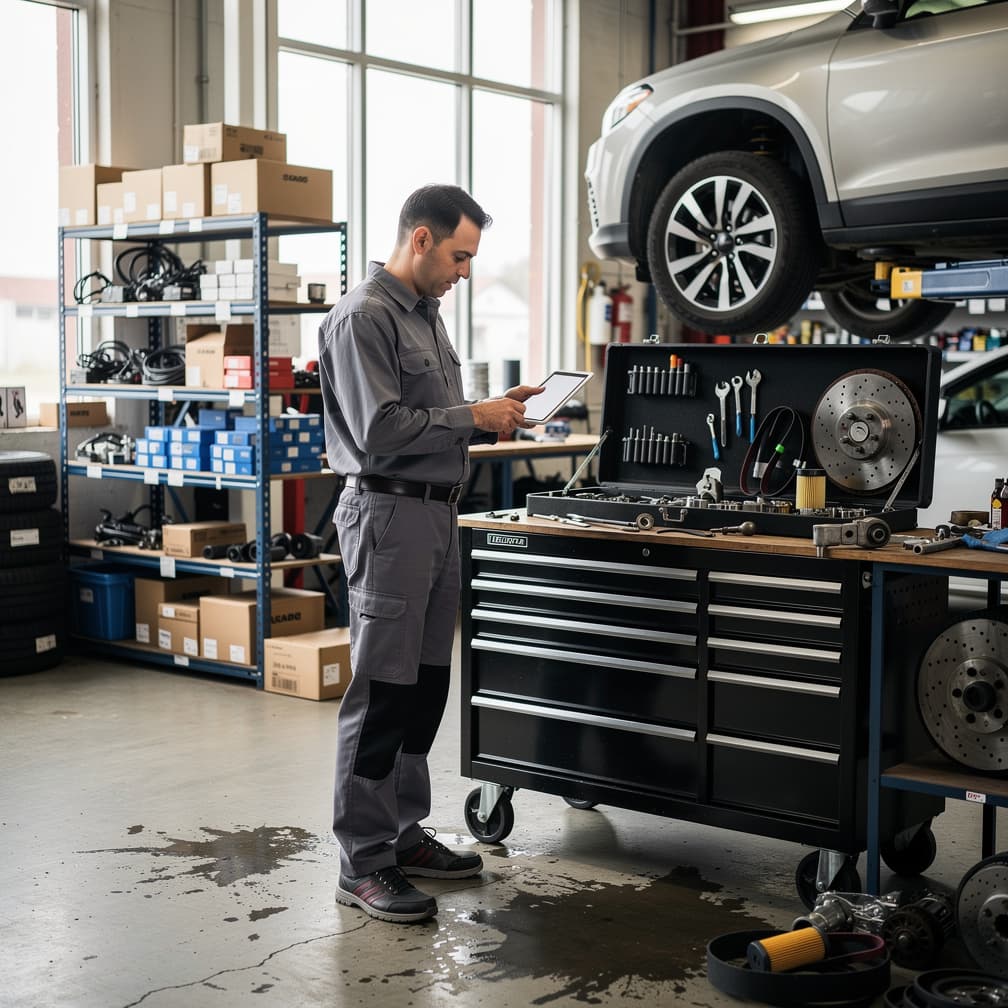

A customer carrying a brake rotor to the counter catches a foot on a pallet jack and goes down hard. That fall is the claim most owners underestimate, and it is where auto parts store insurance in Dearborn starts earning its keep. The injury itself is only the opening. A store that sells parts also inherits the argument about whether the part failed or the install did, months after the receipt printed. Then there is the stockroom, where one fire can take the racks, the fixtures, and the inventory in a single night. The wait for an adjuster in Wayne County after a bad storm week can stretch well past your reopening plan. This page walks through the inputs behind those numbers on your quote, one at a time.
What Makes Dearborn Different
Big suppliers send vendor agreements with insurance exhibits attached, and the exhibit is where the cost hides. Required limits, waiver of subrogation, primary and noncontributory wording: each one is a real endorsement. Each endorsement can carry a premium charge, and some carriers decline the requested wording altogether. So the account you won on price can become the account that reprices your entire policy. In Wayne County, with about 33,500 businesses, those exhibits circulate as standard forms and rarely get edited. Push back anyway, because a requesting party frequently accepts a narrower version when asked directly. Send the exhibit to every quoting carrier in Michigan before you sign it, never afterward. Signing first and shopping second is how a store ends up with exactly one option.
Local Risk Factors in Dearborn
Straight-line winds that never form a funnel still tear a rooftop unit loose and open the ceiling above your shelves. Staff spend the next two days moving stock away from a leak instead of selling parts, and the sales floor in Dearborn is closed while they do it. That labor is real and the policy generally does not reimburse it. Coverage may respond to the damage itself and to the ruined inventory underneath, depending on the cause of loss and the form you hold. In Michigan, wind and hail deductibles are sometimes separate from your standard one, so check which number applies before deciding a smaller loss is worth filing.
What Coverage Does an Auto Parts Store in Dearborn Need?
General Liability
Landlords, suppliers, and fleet accounts ask for this one by name before they will deal with you at all. It aims at third parties: a shopper hurt in an aisle, a delivery driver injured on your dock, or a part that fails after it leaves the counter. It typically does nothing for your own stock or your own employees, which are separate purchases.
Example: A customer reaches past a top-shelf display, a case of rotors comes down on her shoulder, and a demand letter follows six weeks later. The policy might respond to the injury claim and to the defense behind it.
Commercial Property
Rising water sits outside this form, and so does wear and tear, and knowing that up front is half of buying it well. What sits inside is the building work you paid for, the racking, the counter, the register, and the stock on your shelves, against fire, theft, vandalism, and storm damage, subject to your deductible and to how the inventory was valued.
Example: A break-in through the back door empties a cage of batteries and alternators overnight, and the door frame goes with them. This line could pick up the stolen stock and the damage, less the deductible.
Workers Compensation
A stocker lifts batteries for six years and then cannot straighten up one morning. This line is meant for injuries arising out of the work, including the slow cumulative ones, and it generally handles medical care and a share of lost wages without anyone arguing fault. Requirements vary by state, and pricing runs on payroll rather than headcount.
Example: Someone catches a hand between a pallet and a rack while a delivery comes in, and the emergency room visit turns into three weeks off the floor. Benefits here might carry the medical bills and part of the missed pay.
Business Owners Policy
Bought separately, the liability form and the property form are two policies with two bills behind them. Packaged together for a small store they often price below the pair while covering the same ground, subject to sublimits on items like the sign outside, money in the register, and stock held off site. Workers Compensation never rides inside it.
Example: A rooftop leak soaks a pallet of filters, and a shopper goes down on the puddle it left in aisle three that same afternoon. One packaged policy is generally intended to take both of those claims at once.
How Much Does Auto Parts Store Insurance Cost in Dearborn?
Auto Parts Store Insurance is a bundle of separate policies, priced separately. The ranges below are typical figures for Dearborn for each line, except workers compensation, which is rated per $100 of payroll; a quote prices each one against your own operations.
| Coverage | Typical range | What moves your price |
|---|---|---|
| General Liability Insurance | $60 - $180 per month | Industry and risk classification, annual revenue, number of employees |
| Commercial Property Insurance | $80 - $280 per month | Building value and construction type, roof age and condition, fire protection class |
| Workers Compensation Insurance | $0.75 - $2.74 per $100 of payroll | Employee classification codes, total annual payroll, experience modification rate |
| Business Owners Policy Insurance | $100 - $300 per month | Annual revenue and industry class, building and contents values, square footage and building age |
Prices shown are general estimates, not guaranteed rates or quotes. Your actual premium will depend on the insurer, coverage selected, business details, location, claims history, and other underwriting factors. Learn about our pricing methodology.
What Are the Insurance Requirements for an Auto Parts Store in Dearborn?
Workers' comp is generally required once you have your first employee. Michigan generally requires employers to carry workers' compensation at that point. Common exemptions include sole proprietors, partners, and corporate officers. Confirm current thresholds with your state's workers' compensation agency before you hire.
Flood damage is typically excluded from standard policies. Standard commercial property and builders-risk-type policies typically exclude flood damage. Flood exposure varies address by address, so check your premises in FEMA's Flood Map Service Center before deciding; if you sit in a mapped flood zone, a separate policy through the National Flood Insurance Program is the usual starting point.
Where to verify licensing and coverage rules. The Michigan Department of Insurance and Financial Services publishes consumer guidance and current insurance requirements for Michigan businesses. When a contract or lease demands specific wording, the Michigan Department of Insurance and Financial Services's guidance is the authoritative place to check.
Get Your Auto Parts Store Quote in Dearborn
Compare rates from multiple carriers. Free quotes, no obligation.
Operating in Dearborn
- A lender holding a mortgage on your building can force-place coverage the day your policy lapses, and the replacement costs more while answering to the bank instead of to you.
- Restocking after a loss takes as long as your suppliers take, not as long as the check takes. Empty shelves in Dearborn send customers to whoever has the part in hand today.
- A delivery driver wheels a pallet through your back door most mornings. The moment he sets a foot wrong on the dock, whose employee he is and who controlled that space become the only questions anyone cares about.
- Wet floors near the entryway generate more incident reports than anything else on a sales floor. The mat, the sign, and the timestamp on your mop log are what an adjuster asks for first.
How to Buy: Advice for Dearborn Owners
Certificates cause more trouble than premiums do. If a landlord or a supplier asks for proof, find out exactly what wording they need before you bind anything: the named entity, the limit, whether primary and noncontributory language is required, and whether a waiver of subrogation applies. Those are endorsements, and not every carrier writes every one. Ask each quoting carrier how fast a certificate gets issued for a Dearborn location and who is allowed to request one. Confirm the details with the Michigan Department of Insurance and Financial Services if you are unsure what an employer in Michigan has to carry before staff start. General Liability and a Business Owners Policy are the forms those requests usually land on. Comparing participating carriers through CPK on identical wording is how you see who charges for it.
FAQ
Auto Parts Store Insurance in Dearborn: FAQ
It extends part of your liability coverage to another party for claims connected to your operations. A supplier or a landlord wants it so their own policy is not the first one tapped when something goes wrong on your floor. It gets added by endorsement, it can carry a charge, and some carriers decline particular wordings outright. The certificate only reports it; the endorsement is what creates it.
Usually not. Standard property forms typically exclude flood, and rising water reaching your bottom shelf is precisely the loss they leave out. Flood cover gets bought separately where it is available at all, priced on its own terms. A burst pipe inside the building is a different question and may be handled by the property form. Find out which exposure your Dearborn store faces before renewal, not after.
Two numbers sit on the liability form and they behave differently. One caps what a single claim may draw; the other caps the whole policy year across everything combined. A store producing several small aisle injuries can wear down that yearly ceiling before a serious claim ever shows up, and defense costs may wear it down further depending on the form. So the limit your lease demanded at signing might not still be standing in month ten.
Business income terms generally require physical damage from a covered cause of loss before anything begins, at your location or sometimes at a nearby one. A week of empty aisles under an intact roof usually triggers nothing at all. Civil authority and utility interruption wording can extend that in limited ways, and both are frequently optional. Ask what sits on the form rather than assuming a closure counts by itself.
Building details and square footage, stock values at replacement cost, payroll broken out by job class, annual revenue, years in operation, protective features such as alarms and cameras, and three to five years of loss runs. Photographs of the sales floor and stockroom help. A submission missing one of those pieces sits until you send it, which is how a two-week shop turns into a two-month one.
It packages liability and property for small retail, and for many stores that combination is most of the picture. It does not include Workers Compensation, which stays a separate policy wherever staff are on the payroll. Packaged forms can also carry sublimits on outdoor signs, money in the register, and stock held off site. Read the sublimit schedule against what your store actually holds.
Sources
- 1.U.S. Census Bureau, County Business Patterns (2022), Wayne County(Wayne County has about 33,500 business establishments.)
- 2.Michigan Department of Insurance and Financial Services(Michigan Department of Insurance and Financial Services publishes consumer guidance for insurance buyers.)
- 3.FEMA / FloodSmart(Flood coverage is typically purchased separately; FEMA administers the National Flood Insurance Program.)


