







































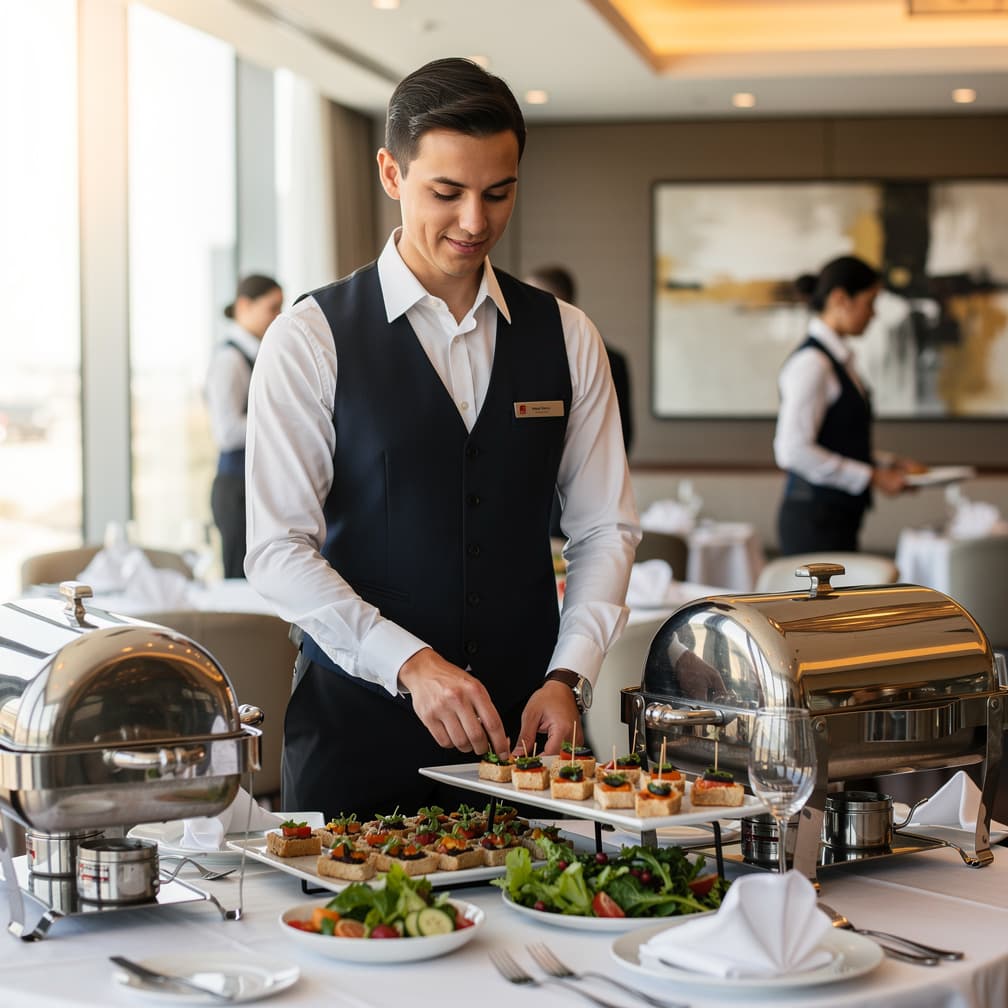

A guest catches a foot on a cable near the buffet line and lands hard, and the injury claim goes to the caterer who set that line up, not the venue that owns the floor. Catering business insurance in Dearborn sits on that split: your crew works inside property you do not own, and whatever happens during service follows your name home. Hot boxes get wheeled across finished floors. Chafing fuel burns within reach of a curious kid. A sauce spill in a service aisle turns into evidence months later, long after the last plate was washed. The sections below lay out what caterers usually carry, what the published ranges look like, and where the rules in Michigan come into it, so you can compare quotes against the jobs you actually book.
What Makes Dearborn Different
Landlords ask for proof of insurance before a caterer ever plates a dish in a rented kitchen. A commissary in Dearborn can require a certificate on file before it hands over a key or shelf space. Event venues ask next, usually on a form that names them and their property manager as additional insureds. Permit offices for public events often want that paperwork before a tent or a trailer shows up. None of those parties care what your policy costs, and every one of them cares what it says. In a crowded market that difference decides whether you work, since a replacement caterer in Dearborn is one call away. The certificate you cannot produce this week quietly costs you next week's booking. Treat proof of coverage as equipment rather than admin, and keep it as current as your permits.
Local Risk Factors in Dearborn
Before storm season, decide who calls off a job and when, then write it down where your staff can see it. That is a safety decision and a claims decision at the same time, and it should not be made by a server standing in a wind-blown tent. Equipment staged overnight at an outdoor event is exposed to whatever the sky does, and the policy may or may not follow it there. Ask that in plain terms, and ask whether a temporary structure counts as your property at all. An outdoor booking in Dearborn makes those answers part of the contract rather than an afterthought. Storm exposure varies across Michigan, and it is worth revisiting each renewal.
What Coverage Does a Catering Business in Dearborn Need?
General Liability
A guest trips near the buffet line and files a claim, and that is the exposure this line exists for. Venues and corporate clients name it in their contracts, and it commonly answers third-party bodily injury or property damage arising out of your work. It generally excludes injuries to your own staff and damage to property in your care.
Example: A server sets a chafing dish on a folding table that gives way, and a guest reaching past it is burned; the injury claim that follows is what general liability may answer.
Commercial Auto
Anyone financing your van wants proof of this, and an event contract usually assumes it exists the moment you deliver. Rating turns on the vehicles, the drivers, and the miles, and the line can help cover liability and damage after a crash on the way to a job. A personal auto policy typically steps aside once the trip is business.
Example: Your van gets rear-ended crossing town with two hundred covered plates in the back; the truck repair sits with Commercial Auto, while the ruined food is usually a separate conversation.
Commercial Property
Flood sits outside this form, and so does wear and tear, which is where an honest reading of it starts. What it typically handles is your own equipment and stock: warmers, cold storage, racks, china, and linens, when a named peril damages them. Theft and vandalism are commonly included, subject to the deductible you choose.
Example: Somebody pries open the van overnight in Dearborn and the warmers and cambros are gone by morning; commercial property can help cover the replacements once your deductible is met.
Liquor Liability
General Liability commonly excludes claims tied to serving alcohol, and this line exists to fill that hole. It is meant for the wedding or corporate event where your own staff pours, and it may respond when an overserved guest causes harm to someone. Venues often require it in writing before a bar opens in their room, and the terms vary by carrier.
Example: A guest keeps drinking well past the point your bartender should have stopped, then injures somebody on the way home; liquor liability is the line that gets tested.
Workers Compensation
Burns, knife cuts, and slips on a wet prep floor are the routine injuries in a catering kitchen, and this is the line built for them. Pricing runs per $100 of payroll and gets audited afterward, and the coverage might help cover medical costs and lost wages for staff hurt on the clock. Whether it is required depends on where you operate and how many people you employ.
Example: A server carrying a tray goes down in a wet service aisle in Dearborn and misses three weeks; workers' compensation is generally where that medical bill and those lost wages land.
How Much Does Catering Business Insurance Cost in Dearborn?
Catering Business Insurance is a bundle of separate policies, priced separately. The ranges below are typical figures for Dearborn for each line, except workers compensation, which is rated per $100 of payroll; a quote prices each one against your own operations.
| Coverage | Typical range | What moves your price |
|---|---|---|
| General Liability Insurance | $90 - $290 per month | Industry and risk classification, annual revenue, number of employees |
| Commercial Auto Insurance | $210 - $600 per month | Fleet size and vehicle types, driver records and experience, coverage limits and deductibles |
| Commercial Property Insurance | $70 - $270 per month | Building value and construction type, roof age and condition, fire protection class |
| Liquor Liability Insurance | $45 - $180 per month | Share of sales that comes from alcohol, type of venue and how late you serve, server training and service procedures |
| Workers Compensation Insurance | $0.75 - $2.74 per $100 of payroll | Employee classification codes, total annual payroll, experience modification rate |
Prices shown are general estimates, not guaranteed rates or quotes. Your actual premium will depend on the insurer, coverage selected, business details, location, claims history, and other underwriting factors. Learn about our pricing methodology.
What Are the Insurance Requirements for a Catering Business in Dearborn?
Workers' comp is generally required once you have your first employee. Michigan generally requires employers to carry workers' compensation at that point. Common exemptions include sole proprietors, partners, and corporate officers. Confirm current thresholds with your state's workers' compensation agency before you hire.
State auto liability minimums apply to business vehicles. Michigan's minimum auto liability limits are $50,000/$100,000/$10,000 (bodily injury per person / per accident / property damage). Contracts and lenders often require more than the state floor.
Flood damage is typically excluded from standard policies. Standard commercial property and builders-risk-type policies typically exclude flood damage. Flood exposure varies address by address, so check your premises in FEMA's Flood Map Service Center before deciding; if you sit in a mapped flood zone, a separate policy through the National Flood Insurance Program is the usual starting point.
Where to verify licensing and coverage rules. The Michigan Department of Insurance and Financial Services publishes consumer guidance and current insurance requirements for Michigan businesses. When a contract or lease demands specific wording, the Michigan Department of Insurance and Financial Services's guidance is the authoritative place to check.
Get Your Catering Business Quote in Dearborn
Compare rates from multiple carriers. Free quotes, no obligation.
Operating in Dearborn
- Public events often need paperwork on file before a tent goes up, and the office holding that file is rarely the client who booked you or the venue you are serving.
- Your gear list grows one warmer at a time, and the equipment schedule on your policy tends to lag a season or two behind what is actually in the kitchen.
- Kitchen staff work around flame, steam, and knives on a deadline, so burns and cuts are the routine claims in this trade rather than the dramatic ones owners worry about.
- Corporate clients pay well and audit hard. Their vendor onboarding can demand limits, endorsements, and a signed form before your first invoice for a job in Dearborn ever clears.
How to Buy: Advice for Dearborn Owners
Decide the deductible before you fall in love with a premium. Every property loss comes off your side first, so a high deductible on a business whose warmers and cold storage are the business is a cash decision worth making deliberately. Limits work the other direction: they cost less than owners expect and matter only on the day nothing else helps. Read per occurrence and aggregate separately, because a busy season in Dearborn can run through an aggregate long before the year ends. Commercial Property and General Liability are the two lines where this arithmetic actually bites caterers. Write both numbers down before you look at any quote, then hold every quote to them. The Michigan Department of Insurance and Financial Services publishes consumer guidance on policy limits and deductibles. Compare quotes from participating carriers only after the terms match, since identical prices on different terms tell you nothing.
FAQ
Catering Business Insurance in Dearborn: FAQ
Ask, because territory language matters. Commercial policies define where coverage applies, and a caterer taking jobs an hour away is relying on that definition without having read it. Rating can also vary by territory, so a policy priced for one area may be quoted differently for another. If your calendar regularly crosses Wayne County lines, say so at the quote rather than after a loss.
Usually payroll, revenue, or claims. Workers Compensation is audited, so a season with more staff than you estimated gets trued up at renewal rather than forgiven. Two small guest-injury claims read as frequency to an underwriter, and frequency reprices faster than one large loss. A new van, a client with higher limit demands, or a first year of pouring alcohol all move the number. Ask which factor changed before you shop.
Venues routinely ask for proof before a catering crew comes through the service door, and the contract names the limits they want. That requirement comes from the venue rather than a rule you can look up, so it changes from room to room. A venue in Dearborn can hold your crew at the door until the certificate is on file. General Liability is the line venues usually name, since a guest injury during service is the claim on their mind.
Cost tracks four things: payroll, revenue, whether you serve alcohol, and how many vehicles you run. A caterer with three part-time servers and one van quotes very differently than one staffing weddings every weekend with a bar. Claims history moves the number too, and frequency weighs more than the size of any single claim. Limits and deductibles are the levers you actually control. The table on this page shows the published ranges by coverage.
That is the claim the line exists for. A guest who slips on spilled sauce near a service table at an event in Dearborn and files a bodily injury claim is a third party, and General Liability commonly responds to that, subject to your limits and deductible. It does not answer for your own staff, who fall under workers' comp instead. It also does nothing for the pan you dropped.
An additional insured endorsement extends part of your policy to another party for claims arising out of your work. A venue wants it because a guest hurt at your buffet may sue the building owner as well as you. The certificate you email is only evidence; the endorsement on the policy is the thing that does the work. Ask your carrier to confirm the endorsement is actually attached before the event.
Sources
- 1.Michigan Department of Insurance and Financial Services(Michigan Department of Insurance and Financial Services publishes consumer guidance for insurance buyers.)
- 2.FEMA / FloodSmart(Flood coverage is typically purchased separately; FEMA administers the National Flood Insurance Program.)


