
Updated July 16, 2026

Builders Risk Insurance in Detroit
Retail corridors, health care facilities, and neighborhood service businesses shape much of the project flow around Detroit. That changes how a course of construction gets reviewed. The practical question is usually not the form itself, but how the site sits next to occupied storefronts, active clinics, or customer-facing spaces that cannot tolerate long interruptions.
Wayne County's business mix includes retail trade at 17%, health care and social assistance at 12.7%, and other services at 11%. Those three sectors alone account for roughly four in ten local businesses, so a large share of construction work happens inside or beside operating enterprises. Many jobs involve tenant build-outs, rehabs, and phased work where materials, temporary protection, and handoff timing matter. Owners, lenders, and tenants often focus closely on who carries the risk of partially completed work and when coverage should start or end. Before you request terms, pull together the construction contract, project budget, draw schedule, and any requirements tied to opening dates or tenant possession, then ask that the policy wording be matched to that timeline.
Builders Risk Insurance Risk Factors in Detroit
Local site security and valuation discipline stand out here. Detroit's median home value is $76,800, which can create a real mismatch on smaller residential rehabs if you insure the project based on surrounding resale assumptions instead of the **completed value**, the renovation scope, and the materials actually going into the job. Detroit median household income is $39,575, so on many entry-level or workforce-housing projects, a missed delivery, theft loss, or water damage event can quickly strain the owner's cash flow and delay the next draw. That does not change the need for coverage, but it does change how carefully you should review limits, deductibles, soft cost options, and vacancy or security expectations. For a rehab or infill build, ask your agent to test the insured value against the construction budget and completed value, not just the current market value of the structure.
Michigan has a moderate climate risk rating. Top hazards: Severe Storm (High), Winter Storm (High), Flooding (Moderate), Tornado (Moderate). The state's expected annual loss from natural hazards is $1.4B, which influences builders risk insurance premiums and may affect coverage availability in high-risk areas.
What Builders Risk Insurance Covers
For a Michigan project, the useful question is not whether builders risk exists, but which property and soft cost exposures belong on the schedule before work starts. A ground up build near the lakeshore, an urban infill renovation, and a tenant improvement inside an occupied structure can all need different treatment for temporary works, stored materials, and property that will be installed later in the job. If your contract is vague, ask for the exact list of covered property categories and the valuation basis used for each one.
Michigan conditions make that review practical, not theoretical. Water intrusion during framing, freeze related damage to partially enclosed spaces, wind driven loss to unsecured materials, and theft from lightly staffed sites can all create disputes if the form is too narrow or the reporting is incomplete. You should confirm whether the policy is written to include materials in transit, materials at temporary storage locations, and existing structure exposure if you are remodeling rather than building from scratch. Those details matter because a renovation loss can involve both new work and parts of the original building.
Owners, developers, lenders, and general contractors often need to appear in specific ways for draws and claim handling to move smoothly. Ask your agent to compare the insurance requirements in the construction agreement against the draft policy, then resolve any mismatch before materials or equipment start arriving.
Coverage Included

Structure Coverage
Covers the building or structure under construction.

Materials on Site
Covers building materials stored at the construction site.

Materials in Transit
Covers materials being transported to the job site.
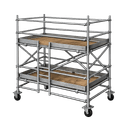
Temporary Structures
Covers scaffolding, fencing, and temporary buildings.

Soft Costs
Covers additional expenses from construction delays due to covered losses.

Equipment Coverage
Covers permanently installed fixtures and equipment.
What Makes Detroit Different
Renovation work around occupied spaces is what changes the calculus here. In a market tied closely to storefronts, clinics, and neighborhood service locations, the exposure is often less about a ground-up shell on an isolated site. It is more about work happening around existing operations, partial occupancy, and tight reopening schedules.
Wayne County has 33,343 business establishments. With that many active businesses, even smaller projects can involve a landlord, a lender, a tenant, and multiple trades all looking at the insurance section from different angles. That raises the odds of confusion over whose policy is supposed to cover materials, installed work, and change orders during the build. Timing matters more in that environment. A policy that starts too late, ends too early, or does not fit phased turnover can leave a gap right when the project is most vulnerable. Ask that the coverage trigger, reporting expectations, and end-of-coverage provisions be reviewed against the actual construction schedule.
Our Recommendation for Detroit
The contract set, not the application, is where you should start. On local renovation and infill work, you should compare the owner-contractor agreement, lender requirements, and any lease obligations before deciding who buys the policy and how the insured parties are listed.
If the job touches an occupied retail or care-related space, ask specifically about temporary storage, materials in transit, water damage controls, theft protections, and whether delay-related expenses are worth reviewing. For residential rehab, do not let the existing structure's market value stand in for the project exposure without pressure-testing it. For commercial work, map the policy term to permit timing, inspections, and phased completion so coverage does not fall off before final turnover. When you request terms, have the full scope of work, project address, construction budget, timeline, security details, and any lender or tenant insurance language ready, since those details shape the form.
Get Builders Risk Insurance in Detroit
Enter your ZIP code to compare builders risk insurance rates from carriers in Detroit, MI.
Business insurance starting at $25/mo
FAQ
Frequently Asked Questions
Storefront projects should start with the lease, construction contract, and opening timeline. Wayne County's business mix includes retail trade at 17%, so a significant share of local jobs are tenant-sensitive build-outs where start dates, handoff terms, and occupancy timing need to match the policy.
Residential rehab projects should not rely only on current neighborhood sale prices. The median home value here is $76,800, well below the national figure, so the safer approach is to review the construction budget, completed value, and materials schedule so the limit fits the actual project exposure rather than an unrelated number.
Smaller-budget owners often feel deductible choices more sharply because cash flow can be tight during a delay. Median household income sits at $39,575, roughly 40% below the national median, which is why a lower deductible may better fit your ability to keep the project moving after a loss, even if the premium is slightly higher.
Wayne County projects often involve several decision-makers at once. The county has 33,343 business establishments, so even modest jobs can bring in landlords, tenants, lenders, and contractors. Confirm who is responsible for the policy before work starts and avoid costly gaps.
Michigan renovation projects often need a separate review because the risk can involve both new work and parts of the existing building. If the site stays occupied, ask how the builders risk form and the current property policy divide responsibility before work starts.
The construction contract decides. Read the insurance clause carefully and make sure the policy matches the party responsible for the site, the financing, and the materials in place.
It depends on the form. Some include temporary storage by default, while others cap it or exclude it entirely. If materials will sit in a warehouse or yard before delivery, name the location and confirm in writing that the policy picks it up.
Michigan lender financed projects often require specific wording for insured interests before draws are released. Review mortgagee, loss payee, and named insured language early so the policy supports funding instead of delaying it.
Sources
- 1.U.S. Census Bureau, County Business Patterns, Wayne County(In Wayne County, retail trade accounts for 17% of establishments, health care and social assistance 12.7%, and other services 11%.; Wayne County has 33,343 business establishments.)
- 2.U.S. Census Bureau, ACS 5-Year Estimates, table B25077(Detroit's median home value is $76,800.)
- 3.U.S. Census Bureau, ACS 5-Year Estimates, table B19013(Detroit median household income is $39,575.)
Updated July 16, 2026