







































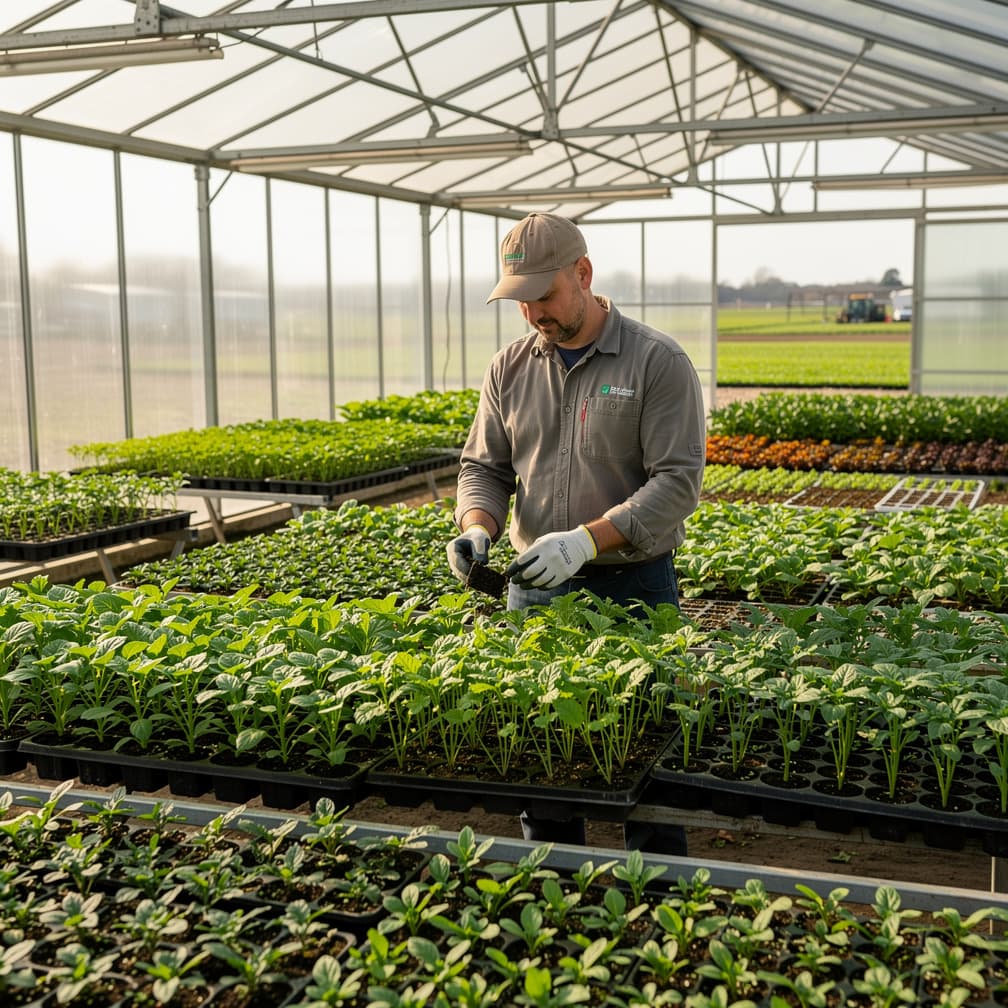

As a nursery and greenhouse business in Detroit, your busiest weeks are also your most exposed: temporary help you barely trained, aisles packed to the edges with stock, and a parking area doing double duty as a dock. Injuries cluster where hurry meets heavy objects. Workers compensation questions get sharper with a seasonal crew, because payroll guessed in the quiet months rarely survives the rush. Guess low and the audit finds you later. Guess high and you funded someone else's float all year. Nursery and greenhouse insurance in Detroit should be quoted on the payroll you will really run, in the weeks you will really run it. Tell participating carriers the truth about your season and let them price it honestly.
What Makes Detroit Different
Density decides who you compete with for a repair crew, not who you compete with for a customer. Wayne County counts about 33,500 businesses, and after a rough storm week every one of them is calling the same glaziers, electricians, and restoration outfits. Your torn poly house sits in that queue behind a lot of ordinary roofs. The lost weeks are the real injury, because stock does not wait for a contractor's calendar. The income provisions in a policy are worth reading closely for exactly this reason, and the waiting period buried inside them is the number to find. Ask underwriters what happens when repairs stall for reasons nobody controls. Ask whether rented heat, a generator, or leased cooler space counts as an expense worth submitting. Those answers are worth more here than a small difference in premium.
Local Risk Factors in Detroit
Ask where the plants go when the sirens run, and you will learn something about your insurance in the process. A crew with a plan moves carts inside, drops the benches, and gets people into a solid building, which is the part that genuinely matters. An injury during a storm is a claim that starts in chaos and gets reconstructed months later by strangers. Write the plan down. General Liability may respond to a third party hurt on your property, though what happened and who was responsible gets decided long after the weather clears. Run the drill once before the season, and note it somewhere an underwriter in Michigan can see. A yard in Detroit that documents its routine has something to show; the rest have a story.
What Coverage Does a Nursery & Greenhouse in Detroit Need?
General Liability
Landlords, wholesale buyers, and event coordinators ask for this one by name before you open, ship, or set up a stand. It generally answers third-party injury and property damage: the shopper who goes down on a wet aisle, the basket that falls off its hook onto someone. Your own crew's injuries and damage to your own stock sit elsewhere.
Example: A customer reaches for a pot near the top of a display, the stack shifts, and a falling planter breaks her wrist beside the register. A claim like that can respond to her medical bills and the suit that follows.
Commercial Property
Glass, poly film, hoop ribs, benches, heaters, controllers, and the stock standing under all of it: this line is built around the things you own. Fire, storm damage, theft, and vandalism are the usual covered causes, subject to your values and your deductible. Flood typically sits outside it, and wear on hard-run equipment usually does too.
Example: A heater in the propagation house shorts overnight and fire takes the structure, the benches, and six weeks of seedlings with it. Commercial Property could pick up the rebuild and the lost stock, up to the values on your schedule.
Workers Compensation
General Liability does nothing for your own people, and that gap is what this line exists to fill. Medical care and lost wages after a work injury are the core of it: a back strained on a balled tree, a hand caught under a cart, heat illness in a closed house. Rules vary by state, and the Michigan Department of Insurance and Financial Services publishes the current requirements for employers.
Example: A seasonal hire lifts a heavy container off a low bench, feels something give in his back, and is out for a month at the worst point of the year. Workers Compensation might handle the treatment and part of his lost pay.
Business Owners Policy
Buying the property and liability pieces separately works fine; bundling them into a single form is often cheaper for a small yard, and that bundle is the Business Owners Policy. It typically packages buildings, stock, and third-party injury together, sometimes with income provisions attached. Unusual structures or heavy outdoor inventory can outgrow the form.
Example: Hail perforates the film on two houses in Detroit, the stock beneath is stripped bare, and sales stop for a month. One packaged policy might take the repairs, the ruined plants, and a share of the lost income together.
How Much Does Nursery & Greenhouse Insurance Cost in Detroit?
Nursery & Greenhouse Insurance is a bundle of separate policies, priced separately. The ranges below are typical figures for Detroit for each line, except workers compensation, which is rated per $100 of payroll; a quote prices each one against your own operations.
| Coverage | Typical range | What moves your price |
|---|---|---|
| General Liability Insurance | $90 - $300 per month | Industry and risk classification, annual revenue, number of employees |
| Commercial Property Insurance | $180 - $675 per month | Building value and construction type, roof age and condition, fire protection class |
| Workers Compensation Insurance | $0.75 - $2.74 per $100 of payroll | Employee classification codes, total annual payroll, experience modification rate |
| Business Owners Policy Insurance | $180 - $525 per month | Annual revenue and industry class, building and contents values, square footage and building age |
Prices shown are general estimates, not guaranteed rates or quotes. Your actual premium will depend on the insurer, coverage selected, business details, location, claims history, and other underwriting factors. Learn about our pricing methodology.
What Are the Insurance Requirements for a Nursery & Greenhouse in Detroit?
Workers' comp is generally required once you have your first employee. Michigan generally requires employers to carry workers' compensation at that point. Common exemptions include sole proprietors, partners, and corporate officers. Confirm current thresholds with your state's workers' compensation agency before you hire.
Flood damage is typically excluded from standard policies. Standard commercial property and builders-risk-type policies typically exclude flood damage. Flood exposure varies address by address, so check your premises in FEMA's Flood Map Service Center before deciding; if you sit in a mapped flood zone, a separate policy through the National Flood Insurance Program is the usual starting point.
Where to verify licensing and coverage rules. The Michigan Department of Insurance and Financial Services publishes consumer guidance and current insurance requirements for Michigan businesses. When a contract or lease demands specific wording, the Michigan Department of Insurance and Financial Services's guidance is the authoritative place to check.
Get Your Nursery & Greenhouse Quote in Detroit
Compare rates from multiple carriers. Free quotes, no obligation.
Operating in Detroit
- When the nearest glazier who repairs commercial growing structures works outside Wayne County, a torn house waits on their calendar. A claim payment shortens the paperwork, never the wait.
- An event coordinator in Detroit can demand limits somebody set years ago without ever seeing a plant stand. Meeting the number is usually faster than arguing about whether the number makes any sense.
- Stock stands outdoors under shade cloth for months, and policy forms treat outdoor property differently than goods behind a locked door. That distinction surfaces only after something is already gone.
- A misting line that lets go overnight can soak product, wiring, and floor before anyone arrives. Water from your own equipment and water that fell from the sky are two separate conversations with an adjuster.
How to Buy: Advice for Detroit Owners
Certificates are an operational tool rather than a filing chore. Know who issues yours, how fast, and what wording your policy already approves, because a buyer's deadline does not move for paperwork. Ask whether additional insured status arrives by blanket endorsement or one request at a time, since that difference surfaces every time a new account opens. General Liability is the line those requests usually target, and a Business Owners Policy carries the same liability piece inside it, so the certificate reads similar either way. If a property manager in Detroit needs a specific entity named, send the contract instead of a description of it. A demand that looks unreasonable is worth questioning before you buy an endorsement to satisfy it. Ask participating carriers in Michigan how they handle certificate volume before you pick one, because that service gap outlives the quote.
FAQ
Nursery & Greenhouse Insurance in Detroit: FAQ
Often, though it turns on the form and the location. Policies describe covered premises specifically, and a tent or lot on ground you do not own can sit outside that description. If a site in Detroit requires proof of coverage naming the property owner, that request is a separate step from extending your own coverage to the spot. Ask about both before you commit to the space.
Payroll by job type, annual revenue, square footage under glass, values on every structure, an equipment list with ages, your retail versus wholesale mix, and a few years of claims. If your Wayne County operation runs both retail and growing, they want the split. Anything left vague gets filled with an assumption, and assumptions favor the carrier. Send the identical file to everyone you ask.
That turns on whether the work is finished and what the form says about completed operations. Liability forms draw a line between damage to someone else's property while you are working and damage to the work itself, and the second is often excluded. Planting that dies weeks after installation is exactly where the argument lands. Ask how your form handles completed work before quoting a large install.
A serious claim moves your number further than any amount of shopping will, and it sits in the file for years. Frequency counts as much as severity, since three small injury claims can read worse to an underwriter than one large one. That is the argument for spending on lighting, walkway routines, and bench guards first. Ask participating carriers in Michigan how they weigh recent claims, because they differ.
Owning the ground removes the landlord who would have demanded proof. It does not remove the customer who falls. Ownership raises the property question instead, since the glass, the poly, the growing structures, and the sheds are all yours to replace. Wholesale buyers and event coordinators still ask for certificates regardless of the deed. If your Detroit yard is paid off, the risk moved onto your own balance sheet.
Nobody hands you a slip that says insurance, but the people around you ask anyway. A landlord in Detroit can want proof before keys change hands, and a wholesale supplier can want a certificate before the first delivery lands. Past the paperwork, the day you let strangers walk your aisles is the day a fall becomes your problem. General Liability is the line those requests usually name.
Sources
- 1.U.S. Census Bureau, County Business Patterns (2022), Wayne County(Wayne County has about 33,500 business establishments.)
- 2.Michigan Department of Insurance and Financial Services(Michigan Department of Insurance and Financial Services publishes consumer guidance for insurance buyers.)
- 3.FEMA / FloodSmart(Flood coverage is typically purchased separately; FEMA administers the National Flood Insurance Program.)


