Updated July 16, 2026

Builders Risk Insurance in Grand Rapids
Kent County supports 17,562 business establishments, which means owners, lenders, and commercial landlords around Grand Rapids often expect tighter documentation before a project starts. Multiple parties usually need to see the same certificate, named insured setup, and valuation approach. On a local build, you are often not just insuring lumber and fixtures. You are showing that the project team can document soft spots before they become closing delays, draw issues, or contract disputes. A county market this active also means your paperwork passes through more hands, so vague project descriptions, incomplete reporting values, or unclear responsibility for temporary structures can slow things down. Before you request terms, line up the construction contract, project budget, timeline, and who needs to be included on evidence of coverage. A well-organized submission tends to produce terms you can actually use.
Builders Risk Insurance Risk Factors in Grand Rapids
Grand Rapids's top risk factors include Severe weather, Property crime, Flooding, and Vehicle accidents.
Michigan has a moderate climate risk rating. Top hazards: Severe Storm (High), Winter Storm (High), Flooding (Moderate), Tornado (Moderate). The state's expected annual loss from natural hazards is $1.4B, which influences builders risk insurance premiums and may affect coverage availability in high-risk areas.
What Builders Risk Insurance Covers
For a Michigan project, the useful question is not whether builders risk exists, but which property and soft cost exposures belong on the schedule before work starts. A ground up build near the lakeshore, an urban infill renovation, and a tenant improvement inside an occupied structure can all need different treatment for temporary works, stored materials, and property that will be installed later in the job. If your contract is vague, ask for the exact list of covered property categories and the valuation basis used for each one.
Michigan conditions make that review practical, not theoretical. Water intrusion during framing, freeze related damage to partially enclosed spaces, wind driven loss to unsecured materials, and theft from lightly staffed sites can all create disputes if the form is too narrow or the reporting is incomplete. You should confirm whether the policy is written to include materials in transit, materials at temporary storage locations, and existing structure exposure if you are remodeling rather than building from scratch. Those details matter because a renovation loss can involve both new work and parts of the original building.
Owners, developers, lenders, and general contractors often need to appear in specific ways for draws and claim handling to move smoothly. Ask your agent to compare the insurance requirements in the construction agreement against the draft policy, then resolve any mismatch before materials or equipment start arriving.
Coverage Included

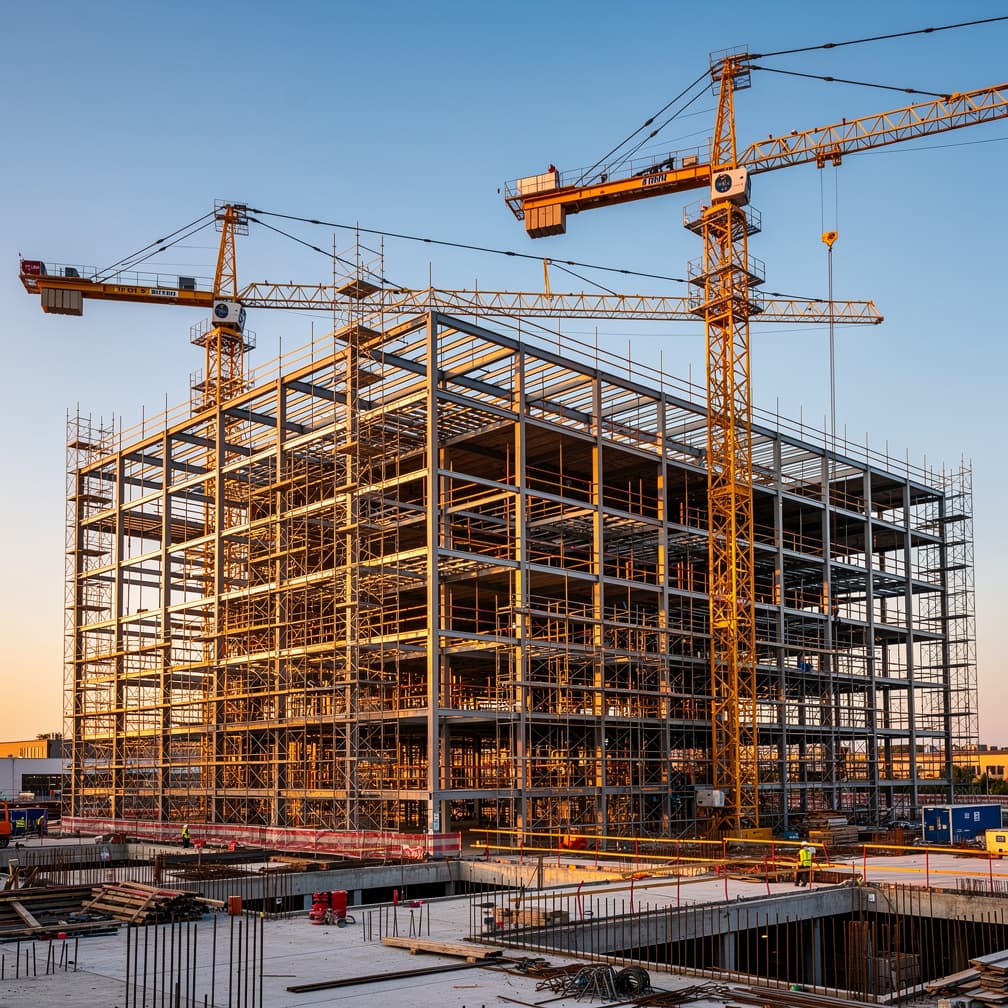
Structure Coverage
Covers the building or structure under construction.
Materials on Site
Covers building materials stored at the construction site.

Materials in Transit
Covers materials being transported to the job site.
Temporary Structures
Covers scaffolding, fencing, and temporary buildings.

Soft Costs
Covers additional expenses from construction delays due to covered losses.

Equipment Coverage
Covers permanently installed fixtures and equipment.
Industries & Insurance Needs in Grand Rapids
Kent County's business mix changes the conversation because the leading sectors are retail trade at 12.3%, health care and social assistance at 11%, and professional, scientific, and technical services at 10.7%. So a lot of local projects are not isolated ground-up builds on empty sites. They are tenant improvements, occupied-building renovations, medical office updates, storefront work, and professional space reconfigurations where access, phasing, and business interruption concerns can shape what the owner asks you to insure. For a builders risk review, that means you should describe whether the structure stays partially occupied, whether materials are delivered in stages, and whether the job depends on a fixed reopening date. If the project serves a retail tenant, clinic, or office user, ask for the policy terms to be matched against the lease, lender requirements, and construction schedule before work begins.
What Makes Grand Rapids Different
In a county with this many active businesses, your policy decisions are often shaped as much by paperwork quality as by the structure itself. A lender may want one valuation basis, an owner may want another, and the contract may assign responsibility in language that does not match how the job is actually being run. Local projects tend to stall when the application leaves those gaps open. Your application needs to clearly state the completed value, the construction type, the renovation versus new-build scope, and who has an insurable interest at each phase. If you are working on a house in a market where the median home value is $225,500, underreporting the finished value or leaving upgrades out of the budget can create a claim dispute later. At that price point, even a modest kitchen upgrade can shift the insured value enough to matter at claim time. The buyer who prepares the cleanest project file usually gets the most usable terms.
Our Recommendation for Grand Rapids
Start with the contract, then build the insurance request around the actual job file. For a local renovation or infill project, ask your agent to review the completed value, not just the hard construction line items, and confirm whether existing structure exposure needs to be addressed separately. If the property is residential, keep neighborhood sale expectations in view. Even modest additions or full-gut renovations can move the insured value faster than owners expect. If the project is commercial, identify whether the building stays occupied during construction and whether a tenant, lender, or landlord needs special wording or evidence of coverage on a deadline. You should also document where materials are stored, who controls site security, and whether long-lead items could push the project past a key deadline. When you compare options, weigh valuation method, covered property, exclusions, and reporting requirements rather than simply whether a policy can be issued quickly.
Get Builders Risk Insurance in Grand Rapids
Enter your ZIP code to compare builders risk insurance rates from carriers in Grand Rapids, MI.
Business insurance starting at $25/mo
FAQ
Frequently Asked Questions
Local jobs with lender draws, landlord requirements, or multiple named insureds tend to pass through more hands. Your lender, owner, and contractor may each want clear values, named insured details, and evidence of coverage before funds are released or work starts.
When the median home value sits at $225,500, even a modest kitchen upgrade can shift the insured value enough to matter at claim time. You should review the completed value carefully so the policy reflects the finished project, not just the contractor's labor and material budget.
Kent County sees retail trade at 12.3%, health care and social assistance at 11%, and professional, scientific, and technical services at 10.7%. That mix points to more occupied-space renovations and tenant improvements, so phasing, access, and reopening dates deserve extra attention. In practice, a medical office that needs to stay partly operational during a build-out carries different scheduling and liability concerns than an empty retail shell.
You should usually review the finished value, because the policy needs to match the completed project exposure. If upgrades, owner-supplied materials, or site improvements are left out, the insured amount may not track the real stake in the build.
Michigan renovation projects often need a separate review because the risk can involve both new work and parts of the existing building. If the site stays occupied, ask how the builders risk form and the current property policy divide responsibility before work starts.
The construction contract decides. Read the insurance clause carefully and make sure the policy matches the party responsible for the site, the financing, and the materials in place.
It depends on the form. Some include temporary storage by default, while others cap it or exclude it entirely. If materials will sit in a warehouse or yard before delivery, name the location and confirm in writing that the policy picks it up.
Michigan lender financed projects often require specific wording for insured interests before draws are released. Review mortgagee, loss payee, and named insured language early so the policy supports funding instead of delaying it.
Sources
- 1.U.S. Census Bureau, County Business Patterns, Kent County(Kent County supports 17,562 business establishments.; The leading sectors in Kent County are retail trade at 12.3%, health care and social assistance at 11%, and professional, scientific, and technical services at 10.7%.)
- 2.U.S. Census Bureau, ACS 5-Year Estimates, table B25077(Grand Rapids has a median home value of $225,500.)
Updated July 16, 2026